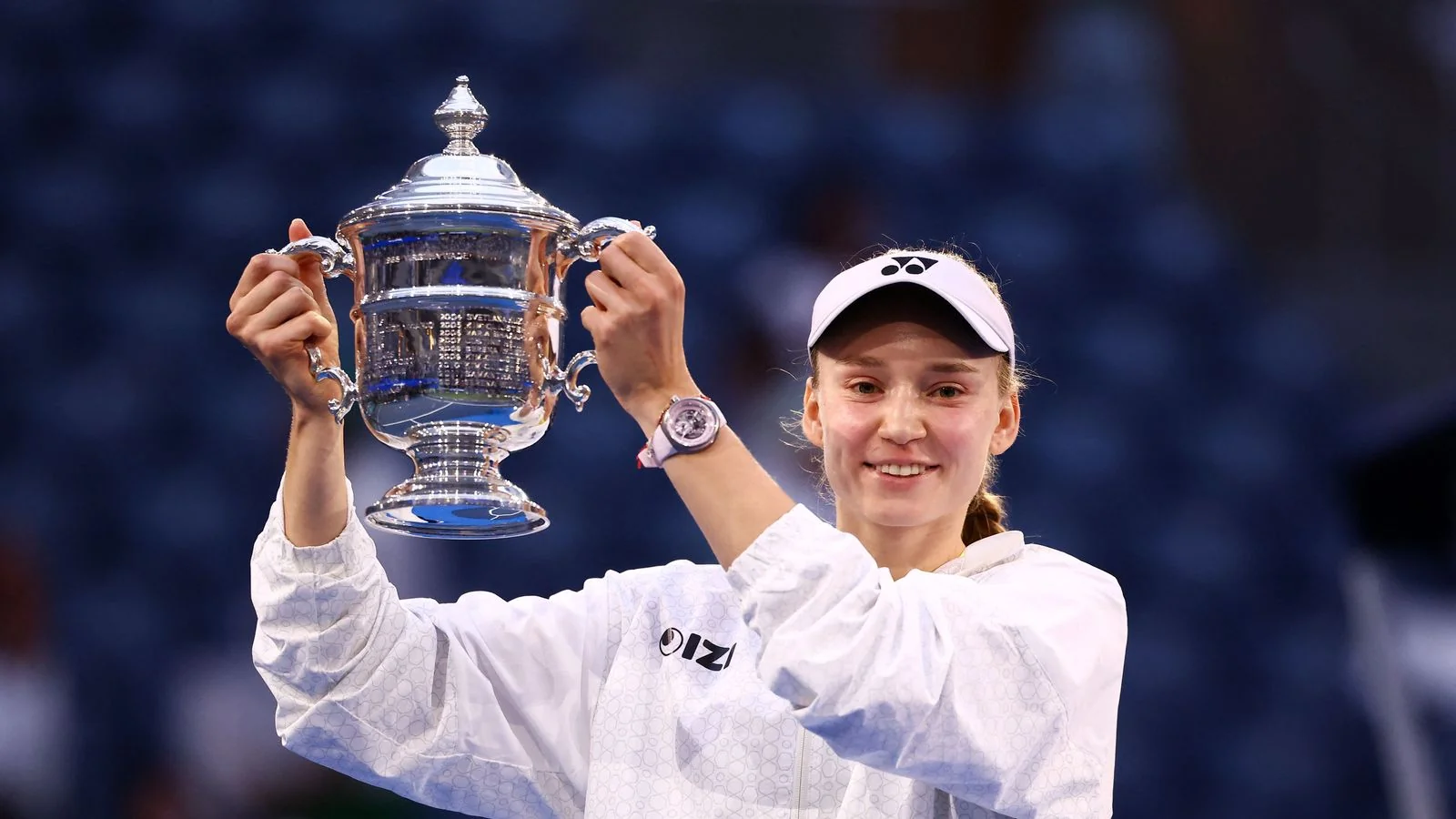
Elena Rybakina won the 2026 US Open women's singles title by beating Aryna Sabalenka 6–4, 5–7, 6–2 on Saturday, September 12. A day earlier, Katerina Siniakova and Taylor Townsend beat Ashlyn Krueger and Robin Montgomery 5–7, 6–0, 6–2 to win the women's doubles title. Both finals took place at Arthur Ashe Stadium in New York and went to a deciding set. Rybakina defeated the two-time defending champion after coming from a set down in both the quarterfinal and semifinal. Siniakova and Townsend finished a career Grand Slam together in women's doubles, adding the New York title to their wins at the other three majors. The completed draws below show every match of Rybakina's title run, how the semifinals set up the singles final, and where the doubles final turned.
Who won the 2026 US Open women’s titles?
Elena Rybakina won women's singles, and Katerina Siniakova and Taylor Townsend won women's doubles. The New York dates were Saturday, September 12, and Friday, September 11, respectively. Both finals went to a full third set. In the singles final, top seed Aryna Sabalenka drew level after losing the first set. In the doubles final, Ashlyn Krueger and Robin Montgomery took the opening set before the top seeds won the next two. Official US Open champions recap · Women's doubles final scorecard
| Draw | Date | Winner | Runner-up | Final score |
|---|---|---|---|---|
| Women's singles | Sept. 12 | Elena Rybakina | Aryna Sabalenka | 6–4, 5–7, 6–2 |
| Women's doubles | Sept. 11 | Katerina Siniakova / Taylor Townsend | Ashlyn Krueger / Robin Montgomery | 5–7, 6–0, 6–2 |
The singles winner ended Sabalenka's run of two consecutive New York titles. It was Rybakina's first US Open singles trophy and her third major singles title. Rybakina led after the first set, and Sabalenka took the second by the same two-game margin. They were even on sets and on games when the decider began. Rybakina then won the third set by four games, the widest margin of the final. WTA report from Arthur Ashe Stadium
The women's doubles result completed all four major titles for Siniakova and Townsend as a partnership. Both their names belong in the champion column, alongside the names of both finalists. The organizer lists women's doubles separately from mixed doubles, with a different final and result. That label is useful when you find a replay or search for a box score by one player's name.
For a match you remember from another day, start with the completed tournament page and find the round. This review follows the named women's main draws from the earlier results through the final weekend, where the singles and doubles trophies were decided on separate days. The event page keeps the broader score and highlights archive. Completed 2026 US Open tournament archive
Elena Rybakina’s round-by-round singles results
The No. 2 seed won seven matches in New York. The first four took two sets apiece, and the quarterfinal, semifinal and final all went to three sets. The table gives the opponents she actually played and the scores in her order. A player shown in the same part of an early draw can still lose before the projected meeting. Completed USTA women's singles draw
| Round | Opponent | Rybakina won |
|---|---|---|
| First round | Thea Frodin | 6–3, 6–2 |
| Second round | Jessica Bouzas Maneiro | 6–2, 6–4 |
| Third round | Yuliia Starodubtseva | 7–6(6), 6–3 |
| Fourth round | Naomi Osaka | 6–1, 6–4 |
| Quarterfinal | Zheng Qinwen | 3–6, 6–1, 6–4 |
| Semifinal | Coco Gauff | 3–6, 6–4, 6–4 |
| Final | Aryna Sabalenka | 6–4, 5–7, 6–2 |
From the first round to the last sixteen
Rybakina opened against American wild card Thea Frodin and dropped five games. She conceded six in the next match, against Bouzas Maneiro, but the second set gave her a late problem. Bouzas Maneiro broke when Rybakina served for the match at 5–3. Rybakina broke back to finish 6–4. The USTA recorded seven aces and an 81 percent win rate behind her first serve. The return game at the end was also necessary to close the match. USTA second-round report
Starodubtseva was the third-round opponent after saving three match points against No. 32 seed Maria Sakkari. She pushed Rybakina to a first-set tiebreak. The draw's 7–6(6) means Starodubtseva scored six points in that tiebreak, which Rybakina won 8–6. Rybakina finished the second set 6–3. She then beat 13th seed Osaka in the last sixteen, 6–1, 6–4, and crossed into the quarterfinals with every set won. Those four scores show how much room she had early, with one set going all the way to a tiebreak. USTA completed draw
What changed in the quarterfinal and semifinal
Qualifier Zheng Qinwen had beaten Iga Swiatek to reach the last eight. She took the first set from Rybakina, who answered with a 6–1 second set. Zheng still led 4–3 in the third when she earned a break point. Rybakina saved it, won the last three games and reached her first US Open semifinal. That result also secured the upcoming No. 1 ranking. The draw still shows Rybakina's tournament seed as No. 2, which was set before play. WTA quarterfinal report
Gauff also won the opening set. The USTA report describes Rybakina stepping inside the baseline more often and coming forward after the set break. She broke to finish the second set 6–4 and put herself in position to serve for the match in the third. Gauff broke back, leaving herself a hold away from 5–5, but Rybakina won the next return game and the match. The two comeback wins gave Rybakina a first US Open final and show why her route changed once she reached the last eight. USTA semifinal report
How Rybakina beat Sabalenka in the singles final
Rybakina broke serve three times in two hours and 21 minutes at Arthur Ashe Stadium. One break came in the opening set and two in the decider. Sabalenka converted once, at the end of the second set. That timing mattered as much as which player held more often. Sabalenka's one break gave her a set, while Rybakina's two in the third let her serve for the championship with a cushion. Completed singles final result and match stats
How they split the first two sets
Rybakina got the first break for 3–2 and followed it with a hold to love. She served out the set 6–4. The WTA reported that she landed only 27 percent of her first serves in that opening set. The score shows that her return games and ability to hold after the break still gave her the advantage. A low first-serve percentage can make each service game harder and still leave plenty of room for the player to win the set.
Rybakina got more first serves in during the second set, with the WTA recording 61 percent. Sabalenka nevertheless kept the match within reach. Rybakina saved set points on her own serve to get to 5–5. Sabalenka held the next game and converted a set point on return for 7–5. The winning game came late enough to give Rybakina no chance to break back before the set ended. It also reset the match at one set apiece even though Rybakina's first serve had been more consistent. WTA final analysis
What separated them in the deciding set
A break for 2–1 gave Rybakina an early lead again. She broke for 5–2 when a wide ball pulled Sabalenka away from the court and left Rybakina a volley to finish the game. She then double-faulted on her first championship point. Her next serve was an ace, her twelfth of the match. Those last two points show both the risk of an aggressive serve and the effect when it lands. USTA final match report
The full scorecard gives the serve numbers different denominators. Rybakina put 41 of 87 first serves in. Once the first serve landed, she won 35 of those 41 points. Making about 47 percent of her first serves and winning about 85 percent behind the ones she made describe two different parts of the same performance. Read them alongside her twelve aces and the three breaks she earned. The serve helped her hold the advantage, and the return gave her a way to create it. Official WTA singles final scorecard
This was Rybakina's second major final win over Sabalenka in 2026. She had beaten her for the Australian Open title and now had her first New York trophy. Her other major title came at Wimbledon in 2022. The No. 2 beside her name belongs to the US Open seed list. She had already done enough in New York to take over No. 1 in the rankings after the tournament.
The other results that shaped the women’s semifinals
The top four seeds all reached the last four, the first time that had happened in the US Open women’s singles draw since 1975. The bracket looked orderly by Thursday, but all four quarterfinals went the distance. Sabalenka, the top seed, won two tiebreaks. Rybakina, Jessica Pegula and Gauff each had to recover from losing the opening set. Two Americans made the semifinals in opposite halves, so a Pegula–Gauff final remained possible until play started. Neither advanced. USTA semifinal breakdown
Sabalenka faced No. 6 Linda Noskova on Tuesday, September 8. She took the first-set tiebreak comfortably, lost the second set and prevailed in the deciding tiebreak for a 7–6(1), 3–6, 7–6(7) victory. The parenthetical number in the official draw gives the points won by the player who lost each tiebreak. Noskova won one point in the first and seven in the decider. That detail shows how different the two sets recorded as 7–6 actually were. It also helps explain how close the top half came to producing a semifinal without the defending champion. USTA completed singles draw
Pegula advanced the same day with a 3–6, 6–4, 6–3 win over No. 26 Emma Navarro. Navarro took the first set and got ahead by a break in the third, but Pegula recovered and broke again to move ahead 4–2. She held the rest of the way. The win set up Pegula’s third straight US Open meeting with Sabalenka. Their 2024 meeting was the final, while their 2025 and 2026 matches were semifinals. All three were played at the same tournament, so the year or round matters when choosing a replay. USTA Pegula–Navarro recap
No. 4 Gauff faced two match points in the second-set tiebreak against No. 5 Mirra Andreeva on Wednesday. She saved both and won 2–6, 7–6(7), 6–2. Her reward was a semifinal the next day. Rybakina also won her quarterfinal on Wednesday, while Sabalenka and Pegula had a day between matches. That scheduling detail explains why different parts of the draw show different gaps, without establishing what fatigue contributed to either semifinal. If you want a single quarterfinal replay with the clearest turning point, the second-set tiebreak in Gauff–Andreeva is the place to start.
Sabalenka beat Pegula 7–5, 6–2 on Thursday, September 10. A tight opening set gave way to a second in which Sabalenka earned a break for 3–1 on her fourth chance of that game and broke again to finish. Pegula had rallied after losing a set to Navarro. Sabalenka kept her from repeating that comeback and reached a fourth straight US Open final. Gauff also went out on Thursday, leaving the top two seeds to play for the title on Saturday. USTA Sabalenka–Pegula recap
How Siniakova and Townsend won the women’s doubles title
The No. 1 seeds needed three sets on Friday, September 11, to beat American wild cards Ashlyn Krueger and Robin Montgomery. The result was 5–7, 6–0, 6–2. It is easy to remember the middle set and miss how much the Americans tested the champions in the opener and in the final service game. The scoreboard records three full sets of games. That final 6–2 is the score of the deciding set. USTA completed women’s doubles draw
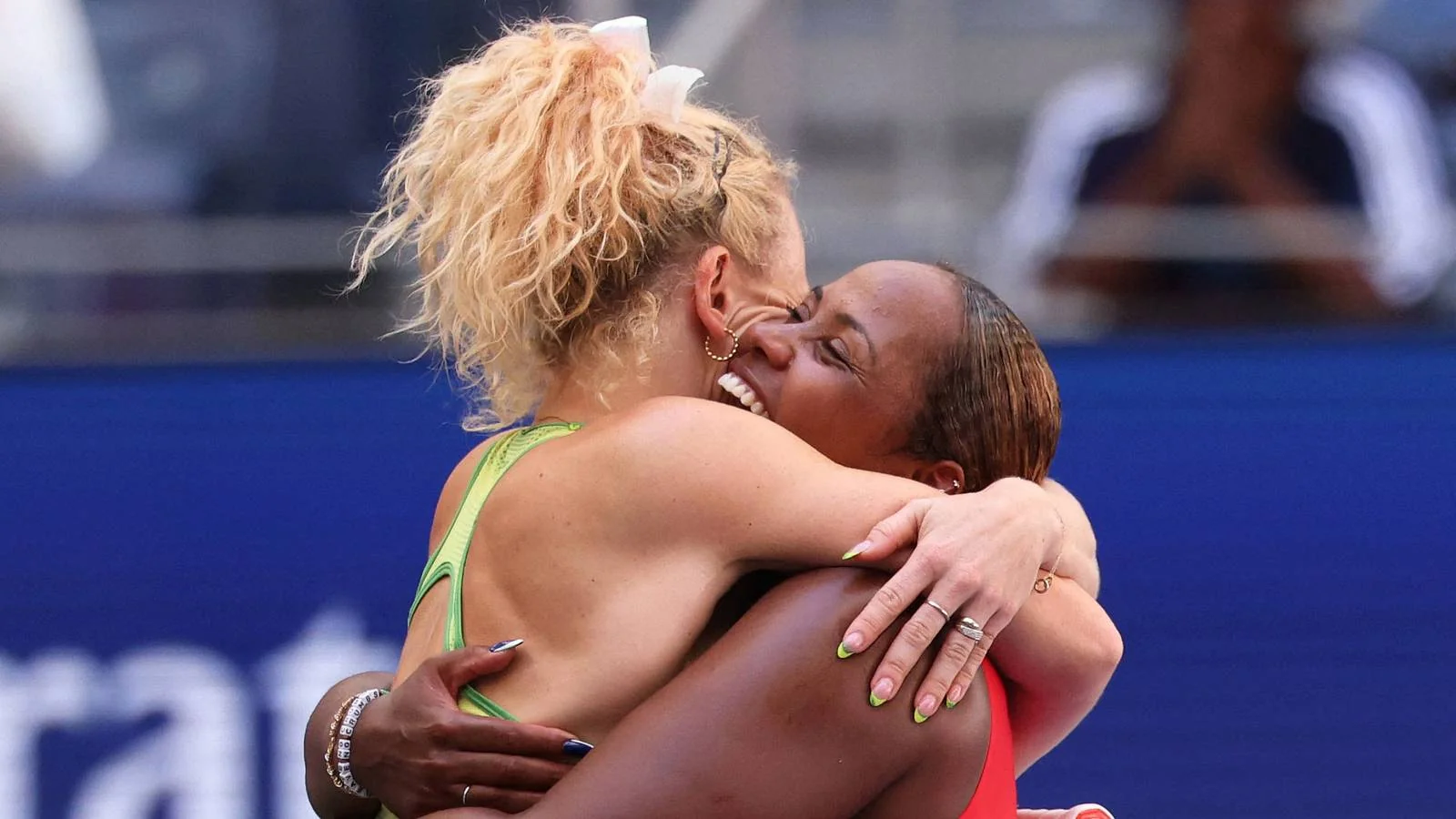
Krueger and Montgomery had won the US Open junior doubles title together in 2021. Their route to the senior final ran through both reigning women’s doubles champions, who were competing with different partners. The wild cards beat Erin Routliffe and Aldila Sutjiadi in the quarterfinal, then recovered from 2–8 in the third-set tiebreak to beat Gabriela Dabrowski and Luisa Stefani in the semifinal. Siniakova and Townsend had beaten Elise Mertens and Diana Shnaider in their own semifinal, clinching it with a second-set tiebreak. Each team already had experience handling a close finish before it met the other. USTA women’s doubles final report
The wild cards led 4–1 in the first set, held off a comeback and broke to win it. Then Siniakova and Townsend conceded just seven points in the entire second set, which took 24 minutes. The third turned on a longer game. At 1–1, Krueger had five chances to hold before the top seeds converted their chance to break. Siniakova and Townsend kept that lead, and Townsend did important work at the net as they saved five break points in the game that ended the match. The scoreboard credits the winners with six breaks in 11 chances across the final. They also won 42 of the 55 points on which they landed a first serve. Those are team totals, which reflect both the server and her partner’s work in the point. WTA doubles final score and stats
The career Grand Slam as a team
Siniakova and Townsend had already won women’s doubles titles together at Wimbledon in 2024, the Australian Open in 2025 and Roland Garros in 2026. New York supplied the fourth major. In this case a career Grand Slam means winning at least one title at each of the four majors in the same discipline across a career. The tournament wins spanned three seasons. For this record, the same two players also had to be on the winning side at all four events.
The two players had different histories in New York before the final. Siniakova had already completed a career Grand Slam in doubles with Barbora Krejcikova. Townsend had made the 2022 New York final with Caty McNally, when Siniakova and Krejcikova beat them. Townsend and Siniakova reached the final together in 2025 and came back as the top seeds in 2026. The September 11 result gave Townsend her first US Open women’s doubles title and made this partnership the second with which Siniakova had won all four majors. The two women’s doubles draws tell that story more directly than individual rankings. Follow the pair’s names through each round to see their results together, and open the separately labeled mixed doubles draw if that is the championship you meant to find. WTA account of the career Grand Slam