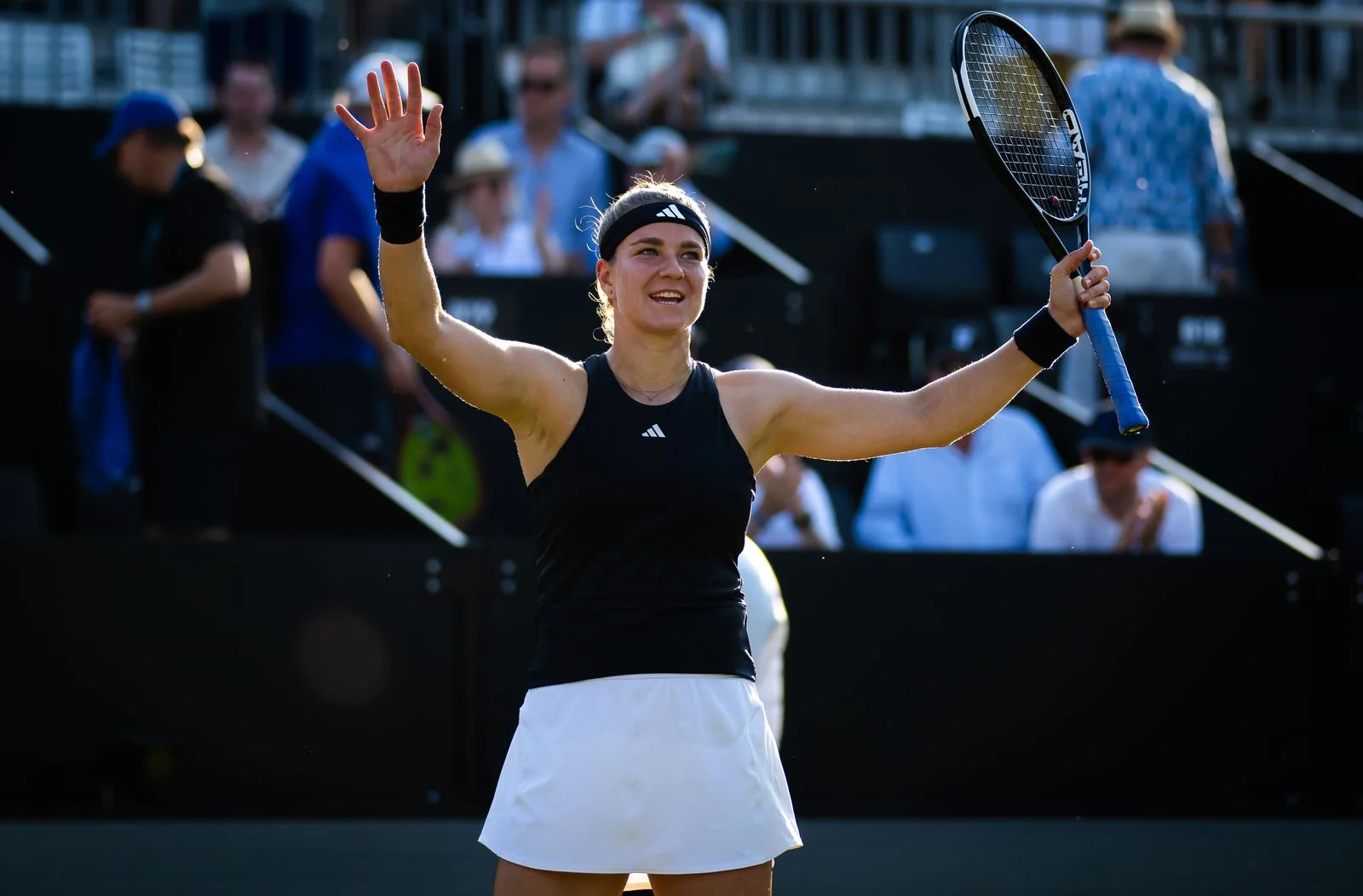
What is the Bad Homburg Open?
The Bad Homburg Open is a women's WTA 500 tournament on outdoor grass at TC Bad Homburg in Germany. Played in the town's Kurpark, it sits in the grass-court stretch immediately before Wimbledon. The 2026 tournament is complete; Karolina Muchova won the singles title.
The official sponsored name is Bad Homburg Open powered by Solarwatt. Bad Homburg is the tournament's location, rather than the name of a player or a separate ranking system. If you are arranging a trip through Frankfurt, keep the tennis venue in Bad Homburg in your itinerary instead of assuming the matches take place in central Frankfurt.
| Edition | Dates and status |
|---|---|
| 2026 WTA main week | June 21–27; completed |
| 2027 advertised event period | June 19–26, including qualifying |
| 2027 WTA main week | June 20–26; upcoming |
The WTA's 2026 overview lists the completed week. Its 2027 page lists the next main week, while the tournament's 2027 ticket page includes qualifying on June 19. That extra opening day explains why the full event period starts earlier than the WTA main-week listing.
For a fan, choosing the right edition is the first step. A 2026 results search should lead to an archive, not a ticket for next summer. A 2027 event date tells you when to plan a visit, but it does not yet tell you which player will play on a particular court. Those details come with the draw and daily order of play.
Use the WTA calendar to place Bad Homburg alongside the other grass events. If you remember a match rather than its year, add the two players' names when searching the archive. This guide starts with the latest completed finals, then explains the tournament's background and practical ways to enjoy it.
Bad Homburg Open 2026 final results
The 2026 championship matches were played on June 27. The singles final ended with a retirement, while the doubles final was decided by a match tiebreak. The different endings matter when reading the scores:
| Event | Winners | Runners-up | Final score |
|---|---|---|---|
| Singles | Karolina Muchova | Naomi Osaka | 6-1, 1-0; Osaka retired |
| Doubles | Aldila Sutjiadi / Vera Zvonareva | Ellen Perez / Demi Schuurs | 6-1, 4-6, [10-5] |
Karolina Muchova takes the singles title
Muchova won her first grass-court singles title after Osaka stopped because of a foot injury. The WTA's final report records a 46-minute match: Muchova took the opening set 6-1 and led 1-0 in the second when Osaka retired. At that point in the season, it was Muchova's third career singles title and her second of 2026, following Doha.
The retirement marker is part of the result. The second set was not completed, so 1-0 should not be turned into a 6-0 set or described as a conventional straight-set finish. It is also different from a walkover, where the match does not begin. For a replay search, look for the June 27 final and both names rather than a generic highlight collection.
Both finalists were playing their first tour-level grass final. The previous day's official semifinal recap records Osaka's 6-3, 6-3 win over Wang Xinyu and Muchova's 6-4, 6-4 victory against qualifier Elena-Gabriela Ruse. Osaka had not lost a set on her way to the final. The short championship match therefore should not overshadow the matches that brought each player there.
Aldila Sutjiadi and Vera Zvonareva win doubles
Sutjiadi and Zvonareva defeated Perez and Schuurs 6-1, 4-6, [10-5]. The official doubles draw records the complete result and identifies Perez and Schuurs as the third seeds. Sutjiadi and Zvonareva were unseeded.
The champions won the first set, the runners-up won the second, and the bracketed 10-5 is the deciding match tiebreak. Those final numbers are points, not a third set of ten games to five. Reading them that way gives you a much clearer picture of the finish than treating every number in the score as the same kind of unit.
A doubles title belongs to the partnership at that event. Include both names when looking up the match; a player's singles archive or a doubles result with another partner will not answer the same question. The draw also shows how the team reached the final, making it a useful companion to a replay when you want to follow the whole tournament.
From a 2021 debut to WTA 500 status
Bad Homburg's first tour edition was held in 2021, with Angelique Kerber becoming the inaugural singles champion. She beat Katerina Siniakova 6-3, 6-2 in the final. The WTA's original championship report places that home victory in the context of Kerber's grass-court career, which already included her 2018 Wimbledon title.
The event began at WTA 250 level. Caroline Garcia and Siniakova followed Kerber as champions before a change in category. In January 2024, the WTA announced that Bad Homburg would be staged as a WTA 500 that season. The singles winner's ranking-points award doubled from 250 to 500.
That category change is useful when comparing editions. A 2021 match belongs to the same tournament's history, even though the event had a different level then. The number in “WTA 500” is not the size of the player field and is not a €500 ticket or prize cheque. For the field and money awarded in a specific year, look at that year's draw and financial information.
The 2025 title went to Jessica Pegula, who beat Iga Swiatek 6-4, 7-5. The WTA's June 28, 2025 report is the place to revisit that final. It is a separate championship from Muchova's win in 2026; both players' names can appear in recent Bad Homburg search results.
Kerber's connection with the event continued beyond competing. The tournament's 2026 farewell-event announcement describes her as sporting director since the previous year, following her earlier role as ambassador. Seeing her name on an event page therefore does not automatically mean she is an entrant in the current singles draw.
For older footage, keep the date and role together: champion, entrant, ambassador and sporting director describe different connections to the tournament. The history is easier to follow when you choose one edition at a time rather than mixing a past trophy, a new ticket announcement and an old player list into one season.
Grass-court tennis in the week before Wimbledon
Bad Homburg provides competitive grass matches close to the major. In 2026 its final was on June 27, and Wimbledon began on June 29. For a viewer, that makes the tournament an opportunity to see players working on grass immediately before they head to London. It does not make a Bad Homburg result a prediction of their Wimbledon finish.
The LTA's court-surface guide describes natural grass as growing over a firm soil base and generally producing a lower, faster and less predictable bounce than hard or clay courts. A strong serve, a low slice and an early move forward can all become particularly interesting parts of a grass-court match.
When watching Bad Homburg, follow the first two shots after the serve. Does the returner get a balanced swing, or does the server earn a short reply she can attack? Watch what happens after a sliced ball lands: can the opponent lift it cleanly, and does the player who hit the slice move toward the net? Those questions help you see the construction of a point rather than only the finishing winner.
Grass also rewards attention to movement. Notice the small adjustment steps before a low ball and how quickly the player recovers after reaching wide. The surface gives you useful context, but it cannot explain every error or every win on its own. The opponent, serving performance and conditions on the day still belong in the picture.
Reading the draw and the daily order of play
The final 2026 singles draw has 32 numbered positions, including four byes. That means 28 players, not 32 players who all played a first-round match. The top four seeds had byes, including Muchova, whose opening match was in the round of 16. A bye advances a player without an opponent in that round; it is not a match win with a missing score.
This explains why the same tournament can be described through a 32-position bracket and a 28-player field. For a player's title route, start at her first actual match and follow the bracket forward. Qualifying entries marked “Q” have come through a separate competition before joining the main draw.
The draw tells you the route; the order of play tells you the court and sequence for a specific day. Check the date printed on it. The archived 2026 final-day sheet is useful for that edition, but its start times should not be copied into a 2027 visit. A future daily schedule needs its own current sheet.
Visiting the Kurpark tennis grounds
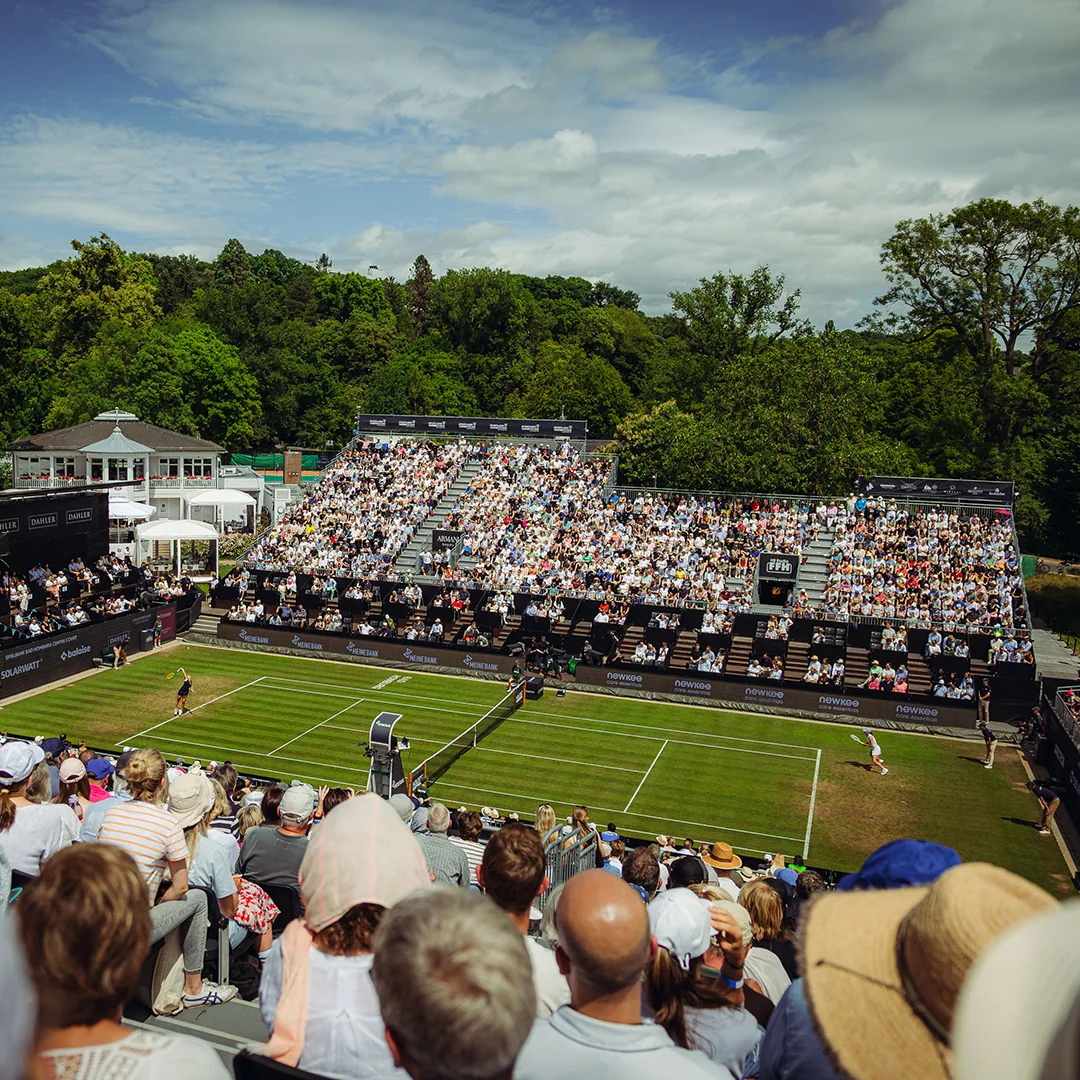
The setting is part of Bad Homburg's appeal: grass-court tennis at a club in the Kurpark, with trees around the stands. The official tournament information identifies TC Bad Homburg as the venue. Choose the tennis grounds as your destination, then check the event's current entrance information before traveling.
Centre Court tickets and free qualifying
For 2027, the official ticket page advertises a free opening day on Saturday, June 19. Qualifying takes place on Helvetia Match Courts 1 and 2, with no ticket required and seating subject to availability. This is a useful choice if you want to discover players trying to reach the main draw, rather than planning only around the final.
The same page describes paid tickets for Spielbank Bad Homburg Centre Court and access to Helvetia Match Courts 1 and 2 without a separate ticket, subject to seating availability. Free qualifying on the opening day does not mean the Centre Court competition is free all week. Check your selected date and seat category in the booking page.
Start with the official links to Reservix, the tournament's ticket partner. Compare a single-day visit with an all-days ticket based on how much tennis you actually expect to attend. For an early-round visit, leave room to explore matches on more than one court; for a final, focus on your chosen stadium seat and the championship schedule.
Families should read the ticket and entry FAQ: children through age six have free admission without an entitlement to their own seat. The FAQ also says a box office operates, with remaining tickets subject to availability. If a specific seat matters, avoid building your trip around the assumption that it will still be available on arrival.
Getting to the venue and enjoying the day
If you are using public transport, the RMV journey planner lets you check the journey for your departure point and date. Plan the whole route to the tennis entrance, including the last part after arriving in Bad Homburg. A train arrival time is not your time in the stands. Recheck tournament transport information closer to the event for any special arrangements rather than assuming a previous year's shuttle will operate again.
Make a return plan as well. A tightly timed connection can be frustrating if you want to stay for a long final set. Keep your ticket accessible, charge your phone and allow a little extra time for finding the entrance and your seat. Comfortable shoes are helpful if you expect to move between courts.
Bring sun protection and check the actual forecast before deciding what to wear. The photograph's bright sky is a view of one past tournament day, not a forecast for your visit. Once inside, settle into the match: the smaller setting is an opportunity to notice court movement and doubles teamwork up close.
Watching Bad Homburg from home
Bad Homburg's 2026 tournament is over, so a search for a live stream now should lead you to another current event or an archive, rather than a match still taking place in the Kurpark. For the next edition, start with the tournament date, then check the broadcaster serving your country. A channel carrying women's tennis does not necessarily carry every tournament in every territory.
Tennis Channel's 2026 tournament list included Bad Homburg for June 21–27. That is useful evidence of coverage for that edition, but it is not confirmation of the 2027 rights or of a particular match appearing on a particular linear channel. Before subscribing, check the provider's current event listing, the country where the service is available and whether your chosen match is included.
For other countries, use the WTA's regional viewing guide and the broadcaster's own schedule. Our WTA on TV Today page helps connect upcoming matches with viewing information, while today's WTA matches helps you find the opponents and start times. Choose your local time zone before planning an evening around a German afternoon match.
Keep the order of play and the television schedule side by side. The first explains the court sequence; the second explains what the provider plans to show. A match marked “not before” can start later if the preceding match runs long. If the broadcast begins with another contest, check whether a separate court feed is offered before assuming your match has been cancelled.
If you are catching up, look in the official WTA video collection and search by player, tournament and year. Highlights show selected points; a full replay follows the entire match. Check the date and label carefully: watching an earlier Bad Homburg final is an enjoyable way to revisit the grass season, but it does not tell you who won in 2026.