What is Berlin's WTA grass-court tournament?
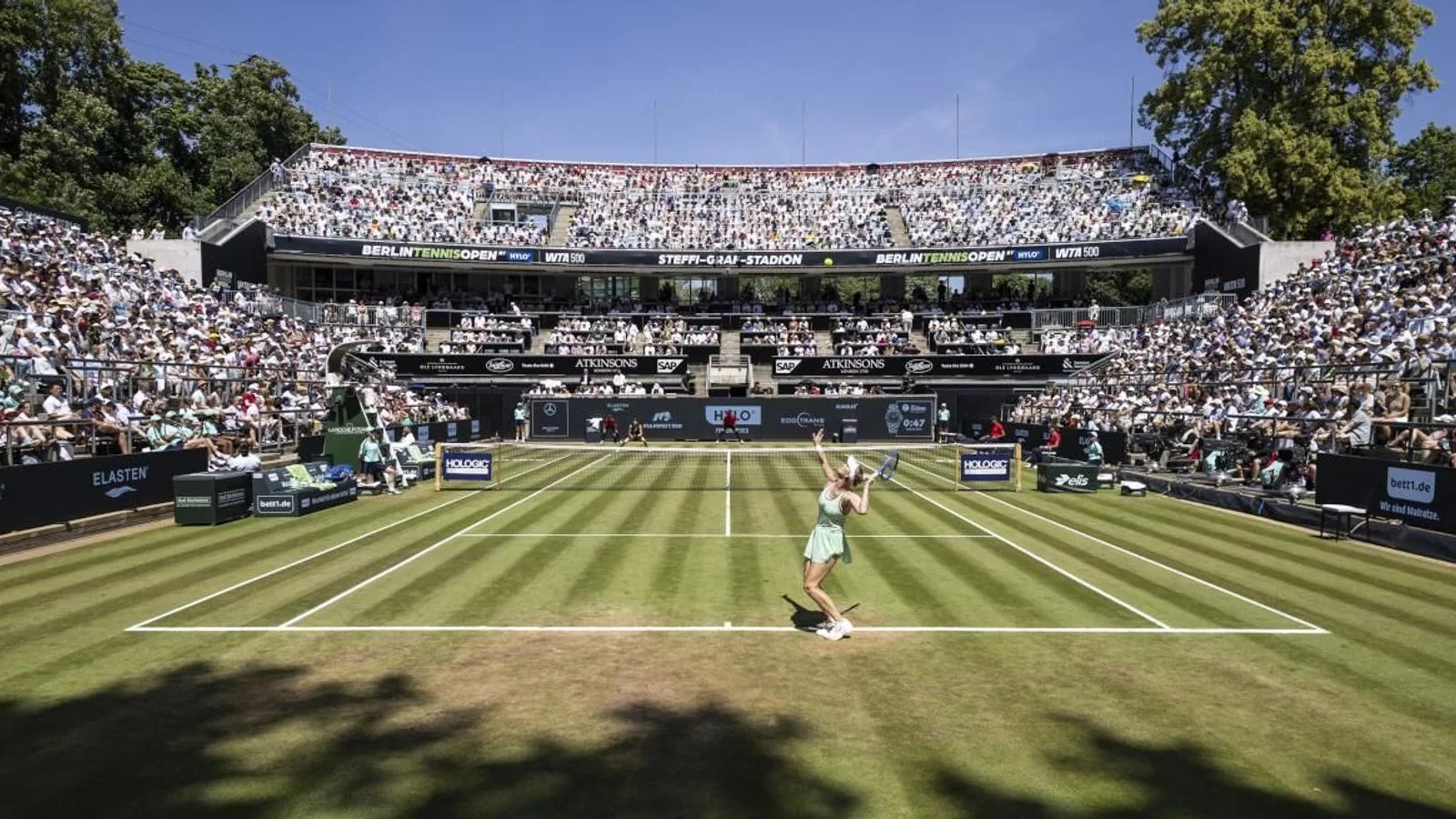
Berlin's women's grass-court tournament is the Berlin Tennis Open, a WTA 500 event played at Steffi Graf Stadium on the LTTC Rot-Weiß Berlin grounds. It belongs to the short grass season before Wimbledon. If you searched for “Grass Court Championships Berlin,” this is the professional women's event you are looking for.
The WTA's 2026 tournament page identifies the surface as grass and the edition as completed. This guide separates that finished tournament from the dates and tickets now being advertised for 2027. An old result, a forthcoming ticket day and today's match schedule answer different questions.
Berlin Tennis Open, German Open and the current name
The 2026 official name is VANDA Pharmaceuticals Berlin Tennis Open. Older coverage may use German Open or bett1open. The organizer's tournament introduction describes the modern grass event and its venue. A sponsor change does not mean a different city or a different surface for that edition.
There is a further historical distinction: Berlin also hosted a prominent women's clay tournament. The modern grass tournament began in 2021. When comparing past champions, check which period you are reading about; a clay-era victory is part of Berlin's tennis heritage, but it is not a win in the current grass competition.
For a quick orientation, remember three details: women's tennis, outdoor grass and WTA 500. Berlin is not an ATP tournament and is not one of the four Grand Slams. It has its own draw and champion, even when players use the week to prepare for Wimbledon. Start with the edition year, then choose whether you need the draw, a match result or a ticket. That small distinction makes both historical searches and live tournament following much clearer.
Berlin dates: the tournament week and the daily schedule
A tournament's advertised week is useful for planning, but it does not tell you when a particular player walks onto court. Separate the overall event dates, the main-draw week and the daily order of play. The WTA calendar helps place Berlin in the season; a day's match list answers the more immediate viewing question.
The completed 2026 edition
The WTA lists the 2026 tournament week as June 15–21. The organizer advertised a broader June 13–21 event period. Those listings have different scopes and should not be treated as conflicting times for one match. Neither is a promise that every match began and ended within the printed main-week dates.
There is a concrete reason to keep the daily document separate: the official order of play for Monday, June 22, 2026 still lists doubles play, while its tournament header retains June 15–21. It was released on June 21. A late competition day can therefore appear beyond the planned week. Read the date of the order of play itself when checking an archive.
What has been announced for 2027
As checked on October 12, 2026, Berlin's official tourism listing advertises June 12–20, 2027. The organizer's ticket page lists main-draw ticket days from Monday, June 14, through Sunday, June 20. These are announced event and ticket dates; they do not establish an individual player's opponent or start time.
For advance planning, choose the part of the week you want to experience. Early rounds offer more players still in the competition; later rounds concentrate the remaining matches. For following a favorite, wait for the draw and then consult the latest order of play. An entry announcement says a player intends to compete, but it cannot say how far she will progress.
Once the tournament begins, check for updates before leaving home or starting a stream. A calendar date remains useful even when the court assignment or running order changes. Keep the edition year visible in saved links: a 2026 archive will remain a historical record when the 2027 event comes around.
The draw and the latest completed results
Linda Noskova won the 2026 singles championship, beating Jessica Pegula 6–4, 4–6, 6–3 on June 21. The WTA championship report identifies it as her first grass title and second tour singles title. A severe storm delayed the final by five and a half hours, illustrating why an original start time cannot always predict the day's finish.
Noskova also won doubles alongside Ekaterina Alexandrova. They defeated Sara Errani and Nicole Melichar-Martinez 6–2, 6–4 on Monday, June 22. The organizer's doubles report documents the extra day. These are two separate championships, even though Noskova appears in both winning entries.
A bracket is different from an order of play
The 2026 official draw shows 28 singles players and four first-round byes in a 32-position bracket. This explains why a page may call the opening round the “Round of 32” without 32 players actually competing. The doubles draw contains 16 teams.
A bye is an advance without playing an opponent in that round. It is not a completed straight-sets victory, and it should not be counted as a match when judging someone's workload. A qualifying win belongs to the qualifying draw; a main-draw win advances the player in the championship bracket. Check the selected draw before comparing runs.
Use the bracket to trace who remains and where possible opponents sit. Use the order of play to locate the next match: its court, its position in the running order and any stated starting restriction. Two players can be potential opponents in the draw without being scheduled to meet that day.
When following a result, read the score from the winner's perspective and check the competition label. Noskova's singles final went three sets; the doubles final ended in two. The same surname on the same tournament page does not identify the same match. During the next edition, today's WTA match list is the quicker route to the current day's action.
Why Berlin matters before Wimbledon
Berlin gives fans a chance to see players compete on grass shortly before the season's grass-court major. In 2026, its planned June 15–21 week preceded Wimbledon's June 29–July 12 tournament. The connection is preparation and timing, not a shared draw.
The ITF's surface guide describes grass as fast, with a potentially low and unpredictable bounce. A player who has just spent weeks constructing rallies on clay faces a different set of decisions. Berlin is interesting because those adjustments happen in meaningful competition, with opponents trying to expose any uncertainty.
What to watch when players move onto grass
The LTA's clay-to-grass explanation highlights changes in movement, tactics and technique. Well-placed serves, volleys and low slices can become especially useful; shorter swings help players deal with the ball arriving quickly. It also cautions that grass courts do not all behave identically.
Try watching the first two shots rather than only counting aces. Does the server use placement to open the court? Can the returner get the ball back deep enough to prevent an immediate attack? A serve that receives a weak reply can be valuable even when it is not an ace. This makes service games more revealing than a highlights reel of untouched deliveries.
In rallies, notice the response to a low ball. One player may slice to keep the exchange low; another may move forward and take a volley before the bounce. Follow the next shot as well: an approach is successful only if it puts the opponent under enough pressure. Net play is a decision within a point, not an obligation on every grass-court rally.
Keep those observations separate from a prediction of the Wimbledon winner. Berlin provides evidence about that week's form, opponents and conditions. A title does not put someone through Wimbledon's rounds, and an early loss does not settle the rest of her summer. For a fan, the useful question is what a player is doing well on grass and what she may still need to adjust.
Recent champions and Berlin's longer history
The modern grass tournament already has a varied group of singles champions. The WTA honor roll records the following winners. This list begins with the grass event in 2021; it is not a complete list of Berlin's older clay champions.
| Grass edition | Singles champion |
|---|---|
| 2021 | Liudmila Samsonova |
| 2022 | Ons Jabeur |
| 2023 | Petra Kvitova |
| 2024 | Jessica Pegula |
| 2025 | Marketa Vondrousova |
| 2026 | Linda Noskova |
Vondrousova's 2025 victory offers a particularly useful example of looking beyond a player's entry ranking. She arrived ranked No.164 after significant time away, then beat Chinese qualifier Wang Xinyu 7–6(10), 4–6, 6–2 in the final. The June 22, 2025 report describes it as her first title since winning Wimbledon in 2023. That No.164 belongs to the start of that tournament, not her current ranking.
The historical German Open and the modern Berlin grass competition belong to different periods. The venue name keeps Steffi Graf's connection to Berlin visible, while the current event creates its own grass-court record. It is possible to appreciate both without describing every historical match as a Wimbledon warm-up.
A champions list is a good starting point for finding an old match, but it leaves out how the tournament unfolded. For a fuller comparison, select the year and follow the champion's opponents through the draw. Check whether she played qualifying, received a bye or competed in doubles as well. Those details explain the route to a trophy more clearly than a bare winner's name.
Likewise, “defending champion” refers to the previous edition's winner, not a guarantee that she will enter or remain in the next draw. Use the historical record for past achievements and the new player list for the next tournament. Combining those views lets you follow returning champions without mistaking an archive for an entry announcement.
Visiting Steffi Graf Stadium
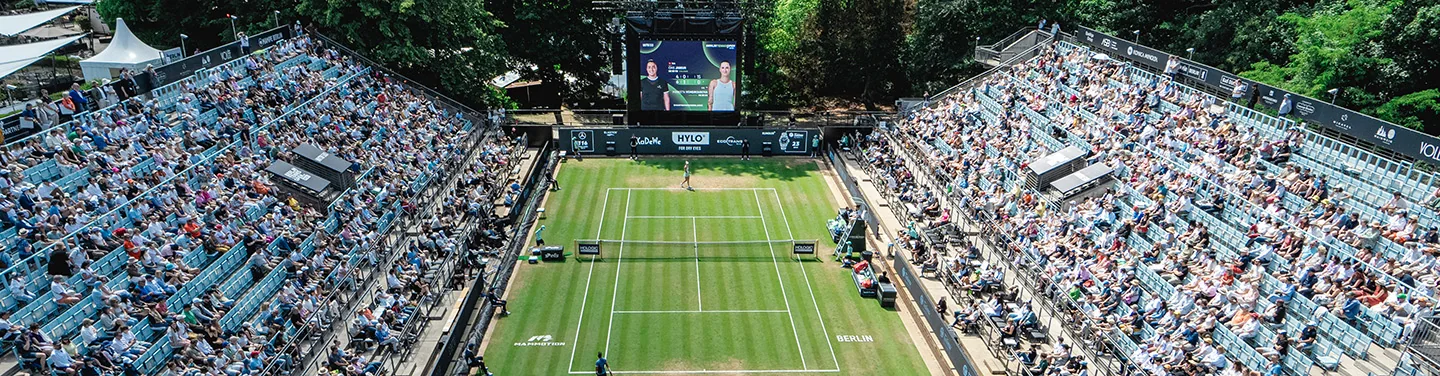
Steffi Graf Stadium is the Centre Court on the LTTC Rot-Weiß grounds. The organizer describes approximately 4,500 Centre Court seats, with additional viewing at side courts. This is an outdoor tennis setting: the court, stands and surrounding trees are part of the experience, rather than an enclosed arena.
Choosing a day and a ticket
As checked on October 12, 2026, the official 2027 ticket page advertises starting prices of €45 for the first two main-draw days, €55 for the last-16 days, €65 for quarterfinal Friday and €75 for semifinal Saturday or final Sunday. “From” is a starting price, not a guarantee that every seat costs that amount.
The page also offers a seven-day ticket with a reserved Centre Court seat. Compare that with a single-day ticket according to how much tennis you want to see and how flexible your trip is. Before buying, check the date, seat category and included access in the seller's checkout. A ticket for a round does not promise a particular player will reach it.
Families should check seating as well as admission. The organizer's FAQ says children aged six and under may enter free but have no separate seat entitlement. Eligible discounts require the relevant identification. Contact the organizer about accessible seating requirements before choosing a block.
Arriving and planning an outdoor tennis day
The published FAQ recommends public transport, with Grunewald S-Bahn station and Hagenplatz bus stop within walking distance. It says there is no on-site parking and the tennis ticket does not include local transport. Plan the journey separately, including the return trip after a potentially late finish.
Currently published bag guidance limits bags to A4 size. Check the latest entry rules again before the next edition, particularly before bringing camera equipment or packing for a full day. An older tournament's permissions are not a reliable substitute for the organizer's current instructions.
Allow time to find your entrance and seat before the match you want. Check the weather forecast, bring suitable sun protection and plan breaks around the tennis rather than assuming every match will last the same length. During interruptions, follow venue announcements; an outdoor match can resume on a revised timetable. A little flexibility makes the visit easier to enjoy.
Watching Berlin from home
Start with the match you want and the country where you will watch it. The WTA's viewing page directs fans toward regional coverage. The WTA on TV Today guide is useful for matching an event and date with available viewing information. Confirm the actual match in the platform's schedule before relying on a general tennis-channel listing.
For the next Berlin edition, keep broadcast announcements separate from the existing ticket dates. A 2027 seat on sale does not establish a 2027 television arrangement. Check the broadcaster's own Berlin listing, subscription requirements and coverage of the court you need. A service showing some matches may not offer every match simultaneously.
Match times, regional coverage and replays
Berlin uses Central European Summer Time, UTC+2, during June under the published 2026 and 2027 clock-change schedules. For example, 14:00 in Berlin corresponds to 12:00 UTC and 20:00 in Beijing. This is a conversion example, not an announced match time. Check whether the schedule you are reading already displays your local time before converting it again.
“Not before” gives an earliest possible start, while “followed by” puts a match after the one ahead of it. Neither guarantees that the preceding match will end quickly. Gate opening times and television-program starting times can also differ from the first point of the match.
If you missed the completed 2026 competition, its WTA archive lists highlights and a full replay of the Noskova–Pegula final, with registration indicated for that replay. Availability and access conditions should be checked when you open it. Highlights provide a short selection of points; a full replay is the better option for following how the match developed.
Before the next live session, check the edition year, today's running order, the displayed time zone and your regional service. Then keep an eye on updates if play is interrupted. Those four checks connect the tournament guide to the match you actually want to watch.