What and when is the Charleston Open?
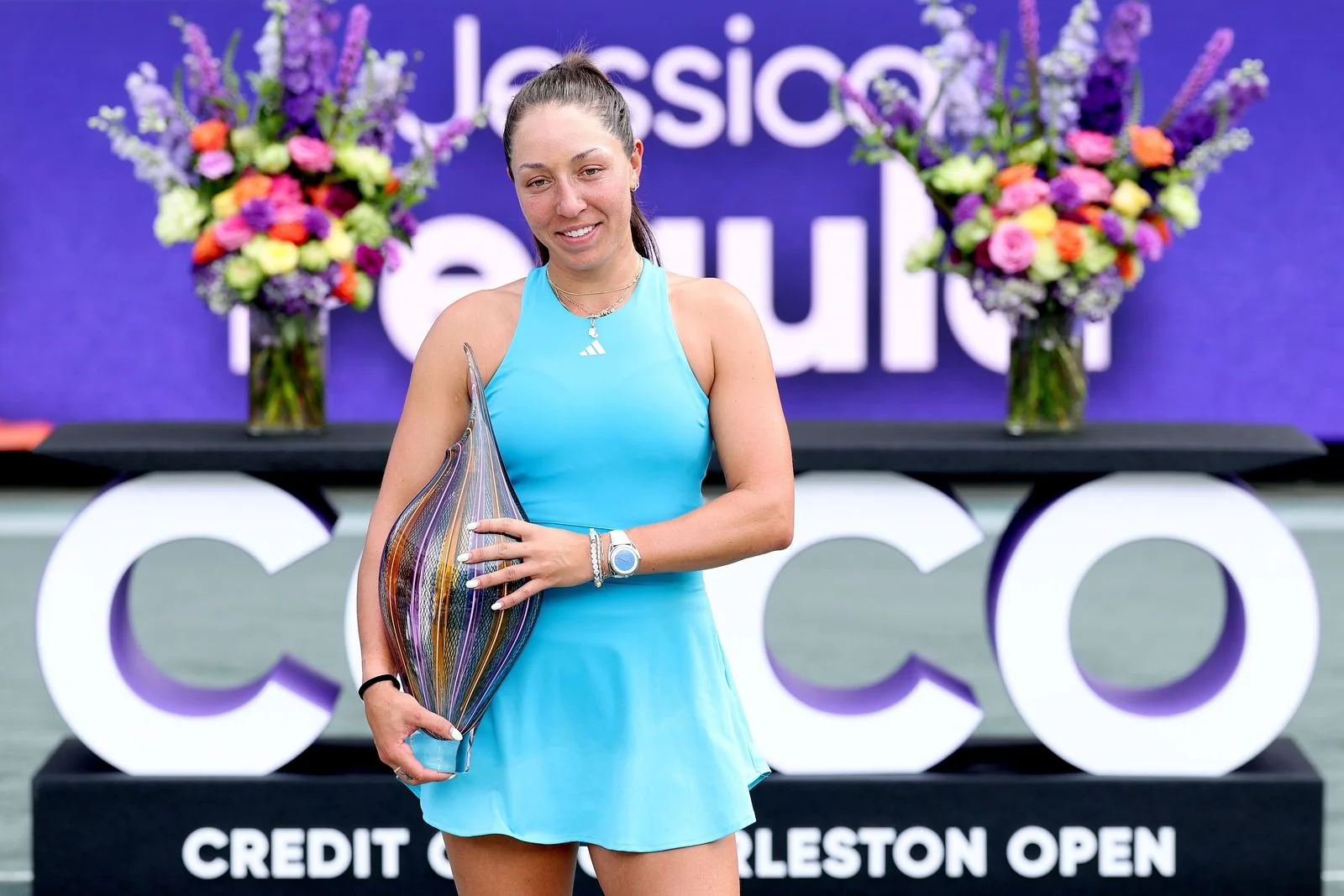
The Credit One Charleston Open is a women's WTA 500 tournament played on outdoor green clay on Daniel Island in Charleston, South Carolina. The 2026 main-draw week ran from March 30 to April 5 and is complete. Jessica Pegula won singles; Caty McNally and Desirae Krawczyk won doubles.
For the next visit, the tournament's official website currently advertises March 27–April 4, 2027. Those dates cover the full event period, including qualifying. They are a different edition from the completed 2026 tournament. Check the year on a ticket or schedule before making plans.
| Question | Charleston answer |
|---|---|
| Level | WTA 500 |
| Surface | Outdoor green clay |
| Location | Daniel Island, Charleston, South Carolina |
| 2026 main draw | March 30–April 5; completed |
| 2026 field size | 48 singles players; 16 doubles teams |
| Next advertised event period | March 27–April 4, 2027, including qualifying |
The WTA's 2026 tournament page gives that edition's level, dates and field sizes. A doubles field is counted in teams, with two players per entry. It is not an extra group of 16 singles competitors.
Charleston's name may appear as Credit One Charleston Open or simply Charleston Open. Searching “WTA de Charleston” leads to the same women's event. For match information, add the year and the discipline: a singles draw, doubles draw and qualifying draw answer different questions. An event's overall dates also do not tell you when a particular player will walk onto court.
Use the WTA calendar for the tournament's place in the season, then open its daily order of play when you want a court assignment. If you are revisiting 2026, go straight to the archived results below. If you are planning for 2027, use the current event schedule and ticket information, which can be updated as the tournament approaches.
Charleston Open 2026 champions and results
Both 2026 finals were played on April 5. The singles championship went to the defending champion, while the doubles champions had each won Charleston before with a different partner. Here are the two final results:
| Event | Champions | Runners-up | Final score |
|---|---|---|---|
| Singles | Jessica Pegula | Yuliia Starodubtseva | 6-2, 6-2 |
| Doubles | Caty McNally / Desirae Krawczyk | Anna Bondar / Magdalena Frech | 6-3, 6-2 |
Jessica Pegula defends the singles title
Pegula's 2026 victory followed her 2025 title. She became Charleston's first consecutive singles champion since Serena Williams won in 2012 and 2013. The tournament's final report records that repeat achievement and Starodubtseva's first tour-level final.
The straight-set final was different from Pegula's route there. She had won four three-set matches before Sunday, coming from a set down in her first three. The title match lasted 82 minutes. As the WTA's championship recap notes, Charleston was her second singles title of 2026 after Dubai. That describes her season at the time of the April final, rather than a running total for the whole year.
Starodubtseva's runner-up finish remains an important part of the event story. She reached her first WTA Tour final, having beaten McCartney Kessler and Madison Keys earlier in the week. For fans revisiting her breakthrough, search the Charleston 2026 singles bracket rather than relying only on a final highlights clip. The bracket shows how far each player progressed and which opponents stood between her and the championship.
Caty McNally and Desirae Krawczyk win doubles
McNally and Krawczyk beat Bondar and Frech in 71 minutes to take their first title together. They recovered from an early deficit in the opening set. The official doubles recap explains that both Americans were already Charleston champions: McNally with Hailey Baptiste in 2021, and Krawczyk with Danielle Collins in 2023.
Those records are individual achievements within different teams. Calling 2026 their first Charleston title together is consistent with each having a previous trophy. When exploring older doubles results, include both partner names and the year. A search for only Krawczyk can lead to several editions and pairings.
The doubles bracket is separate from the singles bracket even when a player appears in both. Bondar and Frech, for example, were a team in the doubles final; the team result belongs to both players. Read a slash between names as a partnership, not as two singles opponents.
Why Charleston's green clay is different
The green colour is a clue to a different court material, rather than a grass surface. Charleston uses Har-Tru green clay. The material comes from crushed stone, and the court has a firm base beneath a looser top dressing. The tournament's April 2026 feature on its courts explains the surface through the venue's facilities director and players competing that week.
Har-Tru's description of green clay identifies the stone as metabasalt from Virginia's Blue Ridge Mountains. It is crushed, screened and blended for the playing surface. Green clay therefore has a material identity of its own; the name does not mean the red court at Roland Garros has simply been painted another colour.

Players' descriptions help explain how it feels in competition. In that feature, Jessica Pegula described Charleston's courts as tending to play fast, while Iva Jovic discussed the grainier feel and differences in sliding compared with red clay. Those are accounts of playing conditions, not a promise that every Charleston match will have identical pace or bounce.
Maintenance matters too. Har-Tru's court-care guidance describes brushing to redistribute the loose top dressing, watering to maintain stability and traction, and rolling to make the surface firmer. The courts are prepared throughout an event. A television close-up of court staff working between sessions is part of keeping the surface playable.
What to watch during a green-clay match
Look beyond the colour and watch the recovery after a wide shot. Can the player stop, change direction and get back into position before the next ball? Watch whether a slide ends in balance or leaves the player reaching. These are useful viewing questions when a commentator discusses adjustment to the surface.
Also compare where the player stands to return serve and how she handles a short ball. A successful point may depend on movement and court position as much as the final winner. A highlights clip can make an attacking finish look effortless while leaving out the steps that created it.
Charleston can provide context for the following red-clay events in Europe, but a result here is not a forecast for Roland Garros. The venue, material and conditions differ. Enjoy the green-clay tournament on its own terms, then use later matches to see how each player adapts rather than assuming one surface label tells the whole story.
From the Family Circle Cup to Credit One Stadium
The tournament began as the Family Circle Cup on Hilton Head Island in 1973. Rosie Casals was its first champion. The event offered $100,000 in prize money, a milestone for women's tennis, with $30,000 going to Casals. The official tournament history connects those early years with today's Charleston event.
In 2001 the tournament moved to Charleston. Credit One Bank's title sponsorship was announced in 2021, and the stadium's renovation was completed in 2022. The upgraded venue expanded from 7,500 to 11,000 seats. If you watch a much older Family Circle Cup clip, its branding and stadium configuration may look different from the current tournament.
The long list of champions also explains why Charleston has a place in tennis history beyond a single season. Chris Evert won the event eight times. The tournament's 25-year Charleston retrospective covers those achievements and the venue's development. The count of years in Charleston refers to the relocation era, not to the event's original beginning in 1973.
Another milestone arrived in 2026 with the financial package for players. The WTA announced a total of $2.5 million, comprising $2.3 million in on-site prize money and $200,000 toward player benefit programs. Its February 2026 announcement identifies Charleston as the first standalone WTA 500 to proactively offer equal prize money in line with the required ATP 500 level.
That breakdown explains why one page can show $2.3 million while another discusses a $2.5 million package. They refer to different scopes. Neither figure is the cheque awarded to the singles champion, and the benefit contribution should not be added to her individual payout. Charleston is a women's tournament; the comparison with ATP 500 financial standards does not mean a men's draw was played alongside it.
For an archive search, try the event's name from the year you remember as well as “Charleston Open.” Historical names can appear on score sheets, trophies and video titles. Confirm the year and location before comparing records, particularly when looking at the Hilton Head years. That gives older matches their proper context while keeping current travel planning focused on Daniel Island.
Planning a visit to Daniel Island
A Charleston tennis trip starts with choosing what kind of day you want. Watching several players across different courts calls for a different plan from sitting in the stadium for a final. Once you have chosen your session, work backward from its gate-opening time to allow for travel, entry and finding your seat. The tournament takes place on Daniel Island, so a downtown hotel address alone does not tell you how long the journey to the grounds will take.
Choosing a session and managing tickets
Early rounds offer more opportunities to discover players while the draw is still large. Finals weekend gives you the decisive matches, with fewer competitors remaining. A ticket for a particular day cannot guarantee that your favorite player will appear: the draw, results and daily scheduling determine that. If one player is your main reason for attending, wait for the order of play before making a decision you can still change.
The official session schedule lists gates and match starts separately, with day and night sessions during the main week. Check the actual ticket's session and seating description before paying. A stadium seat, access to other courts and a hospitality package are different things; the package details should tell you what is included.
For the next edition, begin at the tournament's current ticket links. Charleston announced its move to SeatGeek in May 2026, and the 2027 renewal guide uses that account system. Older Ticketmaster instructions remain online. Follow the guide attached to your current purchase rather than an old account tutorial. Open your tickets before leaving your accommodation and make sure every member of your party knows how they will enter.
Getting there and preparing for the grounds
The tournament's parking page currently describes free general parking with shuttles, alongside other parking arrangements. Recheck it near your visit for the lot locations and any changes. Allow time for the shuttle rather than treating arrival at a parking lot as arrival at your seat. Make a note of your lot before heading inside, particularly if you expect to leave after a night match.
There is also a Daniel Island ferry option from downtown Charleston. Check both the outward and return services for your actual date; a timetable from a previous tournament is not a promise for the next edition. A match can finish later than you expected, so decide how you will get back if your first-choice departure no longer works.
Pack for several hours outdoors: comfortable shoes, sun protection and a layer for later in the day are useful. Consult the grounds policies before choosing your bag, bottle or camera. Traveling light makes moving between courts easier and leaves your attention on the tennis.
Following Charleston from home
Start with the edition you want to follow. For 2026, the tournament is over: results, replays and highlights answer your questions. For the next Charleston Open, the event calendar gives you the week, while the daily order of play tells you which match is on which court. Those are useful at different stages of planning.
The official results page offers year and discipline choices. Choose singles or doubles deliberately, then match the result to the round. If you want to revisit a player's route through the tournament, work through her matches from the first round she played rather than relying only on the final score. That helps explain how a champion arrived at Sunday, including close earlier contests that a trophy photograph cannot show.
Television, streaming and time zones
For the completed 2026 edition, the tournament's broadcast guide listed Tennis Channel and the Tennis Channel App. Tennis Channel's own Charleston viewing guide described main-draw singles and doubles coverage through the app, live and on demand. This is a United States viewing route; it does not establish rights everywhere or guarantee an unchanged arrangement for 2027.
A television package and a streaming subscription are separate access routes. Check the provider's current options for what your account includes. Its free service carries selected matches and replays, which should not be read as a promise that every Charleston match is available free. Outside the United States, use the WTA's regional viewing guide and our WTA on TV Today page, then confirm the event in the listed platform's own schedule.
Charleston's local schedule uses United States Eastern time. When following from another country, set your location in the today's WTA matches tool before comparing start times. A studio program's start is not necessarily the first ball of your match. “Not before” means the match will not begin earlier than that time; preceding matches or a weather interruption may make it later.
For a replay, search by both players' names and the round. Decide whether you want the full match or a short highlights package, and avoid the result page first if you would rather discover the score while watching. Green-clay movement and the way a rally develops are easier to appreciate in a full set than in a sequence of winning shots.