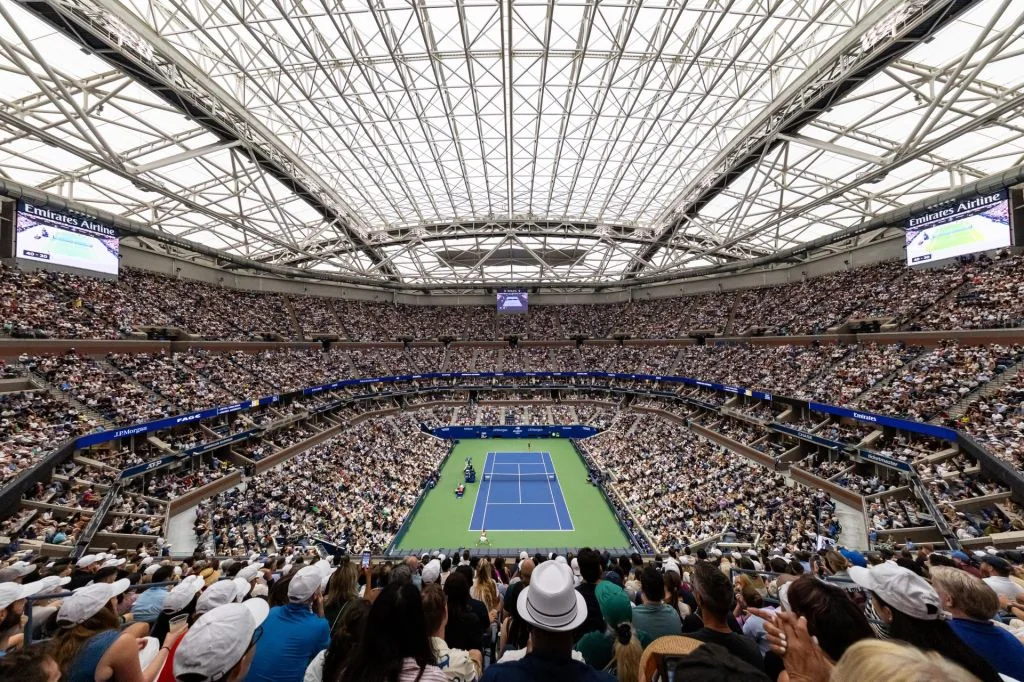
The 2026 US Open crowd debate concerns people interrupting professional tennis with noise, lights and content creation during play. It does not establish that all influencers are disruptive, or that the people in the most circulated clip belonged to the tournament's creator credential program. As of September 6, the useful question for anyone attending is how to enjoy the atmosphere while giving players and neighboring spectators room to experience the match.
What happened at the 2026 US Open?
Videos of audience behavior during Naomi Osaka's opening match helped turn spectator etiquette into a tournament talking point. Separate complaints involved photographic lighting while tennis was underway. In ABC's September 3 reporting, USTA spokesperson Brendan McIntyre made an important clarification: the attendees who disrupted Osaka's match were not among the officially credentialed content creators.
That distinction changes how the controversy should be understood. A video can demonstrate an action at a particular moment. It cannot, by itself, establish a person's employment, invitation arrangements, experience of tennis or connection to a media program. Calling every person posing for a phone an influencer turns an observable conduct problem into a much broader accusation.
Credentials are not proof of who caused a disruption
There are several separate questions here. Was a spectator making distracting noise? Was a light directed toward the playing area? Was the person an invited guest, a ticket buyer or a credential holder? The answer to the first question does not supply the answer to the others. An event can review disruptive behavior regardless of how the person entered.
For readers following the story online, this is also a reason to resist conclusions based on clothing, a camera or an edited caption. Neither expensive seats nor a large following establish permission to interrupt. Equally, dressing up or documenting a first visit does not establish misconduct. The standard becomes easier to apply when it describes the action and its timing.
The Associated Press's account placed differing player and creator views alongside the incidents. That range matters: the argument is not a unanimous demand to remove newcomers. There is room to welcome people who discovered tennis through fashion or social media and still expect them to pay attention when competition begins.
Nothing in the documented controversy justifies assigning a match result to a spectator clip. A useful account can explain why interruptions frustrate players without pretending to measure their effect on a particular point, set or tournament outcome.
What Osaka, Gauff and Pegula are asking spectators to respect
The women's players' comments are more nuanced than a simple rejection of social media. In Sky Sports' September 4 report, Osaka asked visitors to learn the sport's etiquette. Gauff welcomed a new demographic while asking it to respect tennis. Pegula acknowledged the value of showcasing the event but objected to distracting photography while people were doing their jobs.
Those positions leave plenty of space for an enthusiastic first visit. You do not need to know a player's entire career or understand every tactical exchange before buying a ticket. You do need to notice when the activity around your seat begins competing with the activity on court. An unfamiliar spectator can meet that standard; a longtime fan can fail it.
Why timing matters more than general crowd volume
Think of two different moments. In the first, a rally finishes and the crowd responds together. In the second, a server prepares to start the next point while a nearby group calls instructions to someone recording them. Both moments contain noise, but they serve different purposes. The first responds to the match. The second asks other people to accommodate a separate performance.
This distinction helps explain the players' frustration without requiring an argument that tennis should be silent throughout an entire evening. It also offers a workable standard for photographers and guests: look toward the court before starting an activity that needs talking, standing or repeated takes. If the point is underway, your own production can wait.
Respect applies to both ends of the court. Supporting one player does not mean treating the opponent's preparation as an invitation to distract. A tense score makes it especially tempting to shout encouragement immediately; waiting until the point ends lets you support your favorite without inserting yourself into the contest.
There is an equally useful distinction between explaining a request and diagnosing a player. Spectators need not decide whether someone is unusually sensitive, sufficiently focused or mentally tough before following an umpire's instruction. The request can be addressed on its own terms. For a fan interested in the competition behind the headlines, today's women's tennis matches offer a better starting point than a debate about which audience member looked most out of place.
The current US Open guidance on lights, sound and movement
The tournament's September 4 visitor guide gives a practical starting point. It asks spectators to avoid flash and ring lights during match play, keep voices down during serves and points, and avoid leaving a seat within the server's view during the service action. Cheering after a point is welcome. Photo opportunities are better timed for changeovers or set breaks.
Photography and lighting
A sensible personal precaution is to check your phone settings before the players begin. If you are unsure whether a camera mode will activate a flash, test it elsewhere instead of discovering the answer courtside. The same applies to a friend who offers to take your picture: explain the lighting constraint before handing over the phone.
Distinguish possession from use. Guidance against lighting during play is not evidence that every phone is prohibited, that all photographs are forbidden, or that a particular device will automatically be confiscated. Equipment admission and permitted use are separate questions; consult the venue's current entry information if bringing anything beyond a normal personal phone.
For a group photograph, consider what taking it actually involves. Rotating seats, calling people into position and checking repeated attempts can create more disturbance than the final image suggests. Choosing a concourse backdrop or another appropriate photo area removes the need to coordinate that activity beside an active court.
Movement and cheering
Do not rely on the old blanket instruction that tennis spectators must always wait for a changeover to enter. The US Open introduced expanded movement in 2024. Its explanation at the time distinguished controlled access after games from designated areas allowing free movement, with ushers managing the flow. That historical announcement is not a substitute for directions in your actual seating area in 2026.
Follow the local usher's cue and look at the court rather than assuming an open aisle means a good moment to cross it. If a player is preparing to serve directly in front of your route, a short pause may avoid an unnecessary distraction. People who need assistance should ask staff for help instead of trying to interpret a busy crowd on their own.
Likewise, one cheer does not need to continue into the next point. Enjoy the response to a great rally, then notice when the players reset. This rhythm lets a stadium feel lively while preserving the moments in which both competitors are trying to begin the next exchange.
Why the tournament is inviting more creators
The expansion was part of a media strategy, not a policy invented in response to a viral clip. Before the tournament, Front Office Sports reported that the US Open expected approximately 100 creator credentials in 2026, compared with 54 in 2025. Its account described an effort to reach audiences beyond traditional tennis coverage, including through lifestyle content and established media companies' social teams.
The logic is understandable. Someone who does not search for a backhand analysis may still encounter a tournament through food, clothing or a creator they already follow. A useful introduction can make the venue and the sport feel approachable. It can also explain practical details that an experienced tennis audience takes for granted.
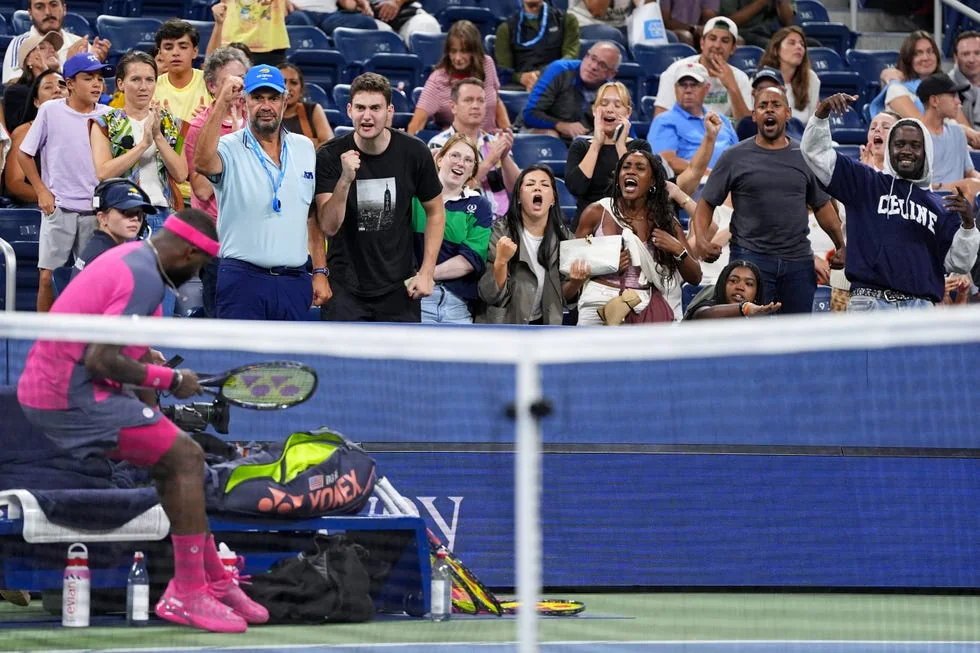
In his September 2 Town & Country interview, Tiafoe welcomed the possibility that somebody drawn by a creator or the atmosphere could discover a lasting interest in tennis. That is one player's positive view, rather than evidence that every player experiences the crowd in the same way.
Reach does not measure respectful attendance
The number of issued credentials answers an access question. It does not tell us how many posts taught someone about a player, how many viewers became regular fans, or how many guests behaved well. Those would require different evidence. It is therefore a mistake to use the growth of the program as a shortcut for either declaring it a success or blaming it for every audience problem.
For a tournament, the editorial opportunity is more specific than generating another photograph of a famous court. A creator can introduce a women's match, explain the stakes in plain language, and show a newcomer what to watch. A post that names both competitors and gives a little context offers a route into the competition itself.
For the reader, the same test is useful when choosing accounts to follow. Does the coverage help you understand what happened on court, or only tell you that somebody attended? Both can be entertaining, but the former makes it easier to return for the next match with a reason to care about the players.
What suite hosts, brands and creators can do better
The USTA's response has included more signs and messages to ticket and suite holders, with chair umpires addressing distractions when they occur, according to its statement to ABC. That is the reported official action. The suggestions below are practical editorial recommendations for hosts and guests, rather than additional tournament regulations.
Before the match
A good invitation can prepare someone to attend a sporting event as well as a social occasion. Alongside arrival details, send the current visitor guide and a short explanation of when spectators should pause conversation or photographs. Do not assume a guest has learned the rhythm of tennis simply because they have attended other major events.
Give content plans an appropriate setting. If a group needs an introduction, an interview or several takes of a sponsored message, schedule that activity somewhere suitable before entering the seating area. A plan that requires everyone to talk over a match creates an avoidable conflict between delivering the content and respecting the event.
Choose one person in the group who can answer basic questions and communicate with venue staff. This need not become a formal policing role. It means that a first-time guest knows whom to ask about entering a row, finding an appropriate photo location or understanding why an usher has paused movement.
When play begins
Hosts should model the transition they want guests to follow. Continuing a loud conversation while telling somebody else to be quiet makes the expectation difficult to understand. Looking toward the court, pausing a presentation and saving an introduction for a break communicate the same expectation more clearly.
If an official requests a change, resolve the immediate distraction before debating the policy. A guest can lower a device, stop speaking or wait in the indicated place without losing the opportunity to ask a question later. Keeping the interaction brief also protects neighboring spectators from a second interruption.
Afterward, review the production plan rather than treating a warning as entertaining footage. Was the photograph attempted during a point because nobody checked the court? Did the invitation omit basic guidance? Was there a better place to film? These questions produce changes a host can actually make before the next session.
Creators have an opportunity to make this preparation useful content in its own right. Explaining how a newcomer can follow a match, enjoy a break and respect the people nearby is a more durable service than turning every correction into a conflict. It lets the invitation create an informed fan rather than merely another appearance in the stands.
A first-time fan's guide to enjoying the tennis
You can arrive curious without arriving unprepared. The official US Open app provides the schedule of play, court assignments, scores and player information. A few minutes with those details before finding your seat can make the difference between watching an unfamiliar activity and following a contest with recognizable stakes.
Read the match before recording
Start with the names of both players and the stage of the tournament. Once seated, watch the court for a few points before deciding what to photograph. Notice when the players settle into their positions, when the crowd responds and when the official signals that it is time to resume. You can learn that rhythm without mastering the entire scoring system first.
If attending with someone who knows tennis, save longer questions for a suitable break. Ask them to explain one thing at a time: who is serving, whether the next point could finish the game, or why the players are changing ends. That approach makes the match more accessible without turning the row into a running commentary booth.
Keep plans flexible enough to watch something unexpected. A less familiar player may produce the most memorable exchange of your visit. Taking a photograph is compatible with paying attention, but a schedule built entirely around getting specific shots can leave little room for the sporting event you came to experience.
Respond to a problem without becoming one
If someone nearby is repeatedly obstructing your view or creating a distraction, ask an usher for help. Describe the action and location clearly. You do not need to identify the person's social account, film an argument or speculate about who invited them to explain what is happening.
If you are the person corrected, a quick adjustment is usually more useful than a lengthy defense of your intentions. First-time mistakes can be corrected without deciding that the sport is unwelcoming. The same courtesy works in the other direction: an experienced fan can offer a brief explanation without humiliating a newcomer.
Finally, give yourself a reason to follow tennis after the visit. Use the WTA calendar to find the next events, or explore the tournament guide when a player catches your attention. The best outcome of the US Open's broad appeal is that more people discover the competition. Learning how to share the stands helps those new fans, established spectators and the players enjoy that discovery together.