A chair umpire normally cannot replace an electronic line call merely because a player, a visible clay mark or a television replay makes the decision look wrong. The remedy depends on the system in use and the tournament’s approved procedure. A live automated call, a challenge-based review, a broadcast graphic and a confirmed technical malfunction are four different things.
Accuracy dispute
A player believes the system located the bounce incorrectly. At a live-calling event, the electronic decision is generally the official call.
Operational failure
Officials establish that the technology was unavailable, incorrectly configured or failed to produce the required call. The published contingency procedure then matters.
The distinction became urgent again in 2026 after disputed calls involving Elena Rybakina and Mirra Andreeva in Madrid and Anna Kalinskaya at the US Open. This guide explains what viewers can conclude from those incidents—and what a viral camera angle cannot prove.
What happened in the 2026 WTA line-calling disputes?
Three widely discussed episodes put the same question in front of fans: if the ball appears to have touched the line, why can nobody simply correct the machine? The answer starts with separating what a player saw from what officials were authorized to do. Elena Rybakina and Mirra Andreeva disputed automated decisions on Madrid clay, where a physical mark made the ruling feel especially open to inspection. Anna Kalinskaya then faced a disputed live call on a hard court at the US Open. Each incident generated understandable anger, but the procedural details were not identical.
Rybakina and Andreeva in Madrid
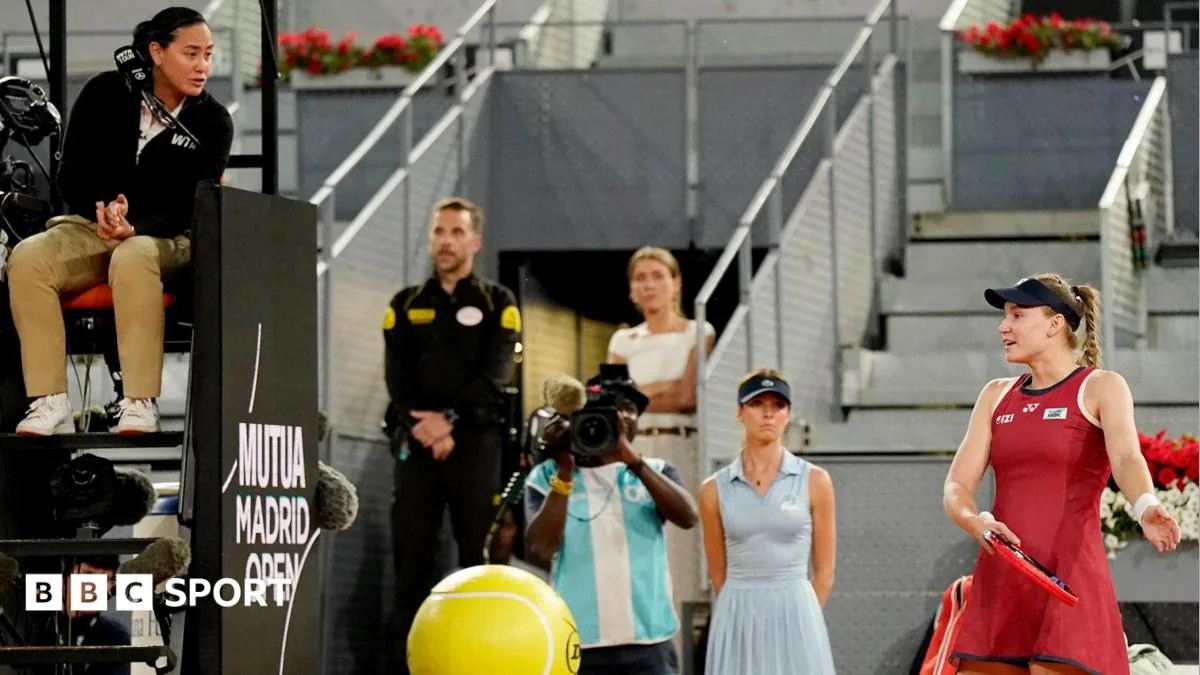
BBC Sport reported that Rybakina argued an electronic call was wrong and wanted the chair to inspect the mark. The chair could not replace the approved live system with a visual judgment. A separate Madrid dispute involving Andreeva occurred during the second-set tiebreak of her 6-4, 7-6(8) win over Hailey Baptiste. The visible mark gave television viewers a compelling picture, yet a photograph or broadcast angle does not establish the exact calibrated bounce position. The useful conclusion is narrower: players and viewers did not trust a process that offered no immediate, legible route to review.
Kalinskaya at the US Open
Kalinskaya's case added another layer. At 6-4, 2-2, 40-15 on Court 5, an apparent winner was called out. Reports said the chair explained that live electronic calls could not be overruled, and Kalinskaya asked for a supervisor. The USTA later acknowledged a protocol error, according to Just Women's Sports. Kalinskaya won 6-4, 6-3, so the point did not decide the match, but that does not make the process concern trivial. It shows why an accuracy complaint and a failure to follow an incident protocol must be investigated separately.
The responsible takeaway
The 2026 controversies do not prove that every automated call is unreliable. They do show that players need a clear explanation of which system made the call, whether it was operating normally, and what happens when officials suspect an operational problem.
What does electronic line calling actually do?
Electronic line calling is a category, not one universal setup. Approved systems use cameras or other sensors and software to determine where a ball landed relative to a line. The ITF classifies a product for particular settings, surfaces and functions after evaluation. That qualification matters: approval for a hard-court review system does not automatically mean approval for live calling on clay. Fans should ask which product and operating mode a tournament used before comparing incidents.
Live calls versus challenge review
A review system waits for a player to challenge an on-court call and then supplies the official review decision. Live ELC instead judges every relevant bounce and triggers the audible “out” call without a line judge making the first decision. A player-challenge model therefore contains an obvious review step. With live calling, the electronic output is already the first official decision, so allowing an ordinary challenge to the same system can amount to asking it to review its own calculation rather than supplying an independent answer.
Broadcast graphics are a separate product
The image shown on television or a stadium screen is a presentation of tracking information. It may use the officiating data, but viewers should not assume that a freeze-frame, a phone photograph or every graphic is the certified decision interface used courtside. Camera perspective, frame timing, compression and the width of a drawn landing mark can all alter what a screenshot seems to show. This is why a viral image can raise a legitimate question without becoming a calibrated measurement.
Human call
A line official calls the bounce; the chair may apply the event's overrule rules.
Challenge ELC
Technology reviews a disputed human call after a timely player challenge.
Live ELC
Technology supplies the initial call on each bounce, with failure procedures in reserve.
The practical lesson for anyone following WTA matches today is to listen for the umpire's description of the problem. “The call is final” usually addresses a disagreement over accuracy. “The system was unavailable” signals a different operational question.
Can the chair umpire overrule an electronic call?
Usually no—not when live electronic line calling is operating normally and the complaint is simply that its in-or-out decision looks wrong. At such an event, the system has replaced the line umpire for that factual decision. Giving the chair an informal power to consult a mark, a television monitor or crowd reaction would create a second, undefined officiating method. It would also make identical calls depend on how persuasive a player is.
Normal accuracy disputes
Tennis rules distinguish a question of fact—where the ball landed—from a question of law, such as whether the correct rule was applied after an interruption. A supervisor can resolve an appeal about the rule, but is not a second pair of eyes for the landing spot. In the traditional human system, a chair may make a prompt overrule only after a clear mistake under the applicable procedure; a player's later protest is not enough. In a live ELC match, the approved electronic output is the primary factual call, so that traditional overrule language should not be assumed to create a free-form machine appeal.
Confirmed malfunction or unavailable system
A technical failure changes the question. If tournament staff establish that microphones, cameras, power, configuration or the decision feed were not functioning as required, officials must use the event's contingency procedure. That may mean pausing play, testing the system, using designated human officials or replaying a point when the rules justify it. At Wimbledon in 2025, the operator acknowledged that ELC had been inadvertently deactivated for three points. The important fact was not that a chair disliked a particular call; the service supplying calls was unavailable.
Ask the right appeal question
“Was that ball actually in?” is a factual disagreement. “Was live ELC operating, and did officials follow the failure protocol?” is a procedural question that a supervisor can investigate. Players deserve a prompt answer to the second question even when the first call cannot be casually overturned.
Why are clay-court disputes different?
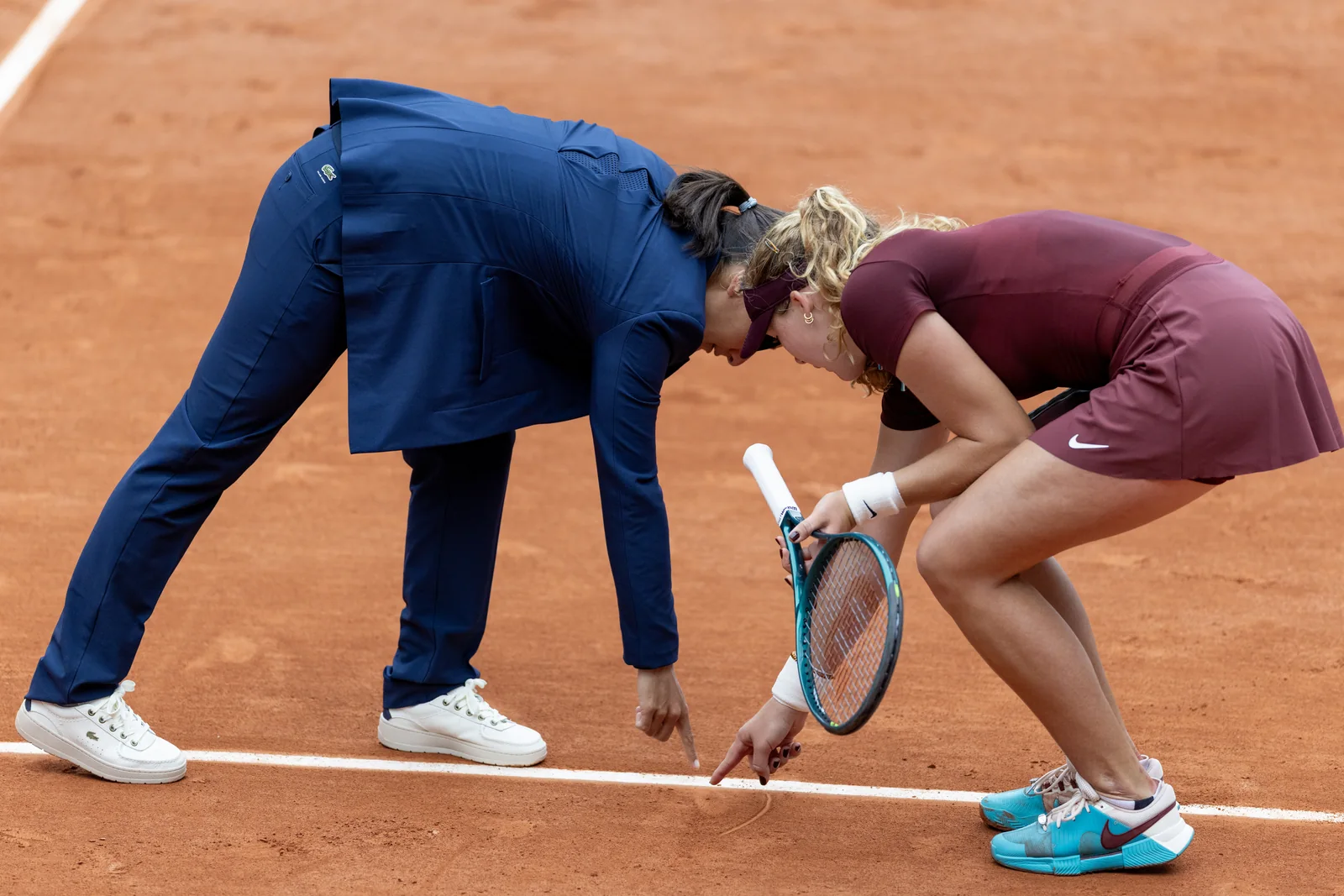
Clay creates a powerful form of apparent evidence: the ball usually leaves a mark. A player can point to it, the chair can climb down, and a television camera can zoom in. That ritual feels transparent in a way that a computer voice does not. Yet the presence of a mark does not settle which officiating system governs the point. At a tournament using live ELC, inspecting clay after the fact would mix two methods with different procedures and tolerances.
Physical marks and court maintenance
A mark can be persuasive without being infallible. Several balls may land in the same area, a slide can disturb the surface, and brushing or watering changes what remains visible. Human systems therefore include a procedure for identifying the correct mark and a final ruling by the chair. Live electronic systems instead model the trajectory and impact, including characteristics of the clay surface. The two processes may occasionally appear to disagree because neither the model nor a fan's photograph is simply a ruler laid across an untouched court.
Roland Garros's human-call approach
Roland Garros remained the Grand Slam exception when the WTA described its 2025 approach: line judges made the calls and chairs could inspect marks under the event procedure. That choice makes mark inspection part of the official process, rather than an improvised appeal from automation. Other clay events may choose live ELC. Check the rules for the specific event in the WTA tournament directory instead of assuming every red-clay match is officiated alike.
The Madrid backlash came partly from this mismatch in expectations. A visibly inspectable surface invited a human check, while the approved system made the electronic decision final. Tournament communication should explain that tension before the first match, including why officials will or will not use a mark.
How accurate is the technology?
Approved ELC is designed to be more consistent than unaided human sight across thousands of fast bounces, but “approved” does not mean incapable of error. The ITF evaluates systems for accuracy and reliability as well as practical operation. It classifies them for specific surfaces, settings and functions. In 2026, for example, the ITF described a multi-stage assessment involving controlled accuracy work, match-play and live tests, shadow operation and reliability audits before granting a real-time classification.
Accuracy tolerances and presentation
Every measurement system works within a tested performance envelope. Cameras must be positioned and calibrated, court geometry must be mapped, and software must interpret a fast, deforming ball. The audible call also has to reach the court at the right moment. There is no responsible universal error number to paste onto every WTA match: different products, surfaces, installations and certification levels may apply. A supplier's headline figure cannot prove what happened on one point unless the event confirms the equipment and audit data involved.
Why one viral frame is not a measurement
A tennis ball changes shape as it hits and rebounds. A photograph captures one instant from one angle, while a tracking system combines observations through the flight and impact. Broadcast video can also be cropped, compressed or out of alignment with the exact contact frame. Consequently, a screenshot that appears to show felt touching paint is a reason to ask for an explanation, not enough evidence to calculate the certified landing position.
What would establish a real error?
- A system health log showing lost cameras, bad calibration or missing calls.
- An event statement confirming the wrong protocol or configuration.
- A technical review using the original tracking data, timing and court map.
Trust therefore requires two things at once: rigorous technology and a process that acknowledges failures. Defending automation as perfect is no more convincing than declaring it broken from a single social-media clip.
What should change after the 2026 controversies?
The best response is a clearer incident protocol, followed by public explanations when that protocol is triggered. This is an editorial recommendation rather than an announced WTA rule change. It accepts the speed and consistency benefits of live ELC while recognizing that players should not have to diagnose a technical problem from the baseline during a match.
Transparent incident protocol
Before a tournament starts, players should receive a short description of the system, its approved mode and the failure procedure. Officials should know who monitors system health, who can pause play and when a supervisor must come to court. If a disputed point leads to a technical audit, the event should later state whether the system was operating normally, whether the procedure was followed and whether any correction affects only future points. That would answer the question fans actually have without pretending a complex vendor log can be litigated during the 25 seconds between points.
Limited technical review and public explanations
A narrow review should be available when the system signals a fault or officials have objective evidence of missing or inconsistent output. The review should test system health and protocol compliance, rather than become an unlimited challenge to every close call. Repeated player challenges querying the same live data would add delay without providing an independent measurement. A post-match technical team can examine calibration, camera status and timing much more reliably.
| Trigger | Immediate response | After-match response |
|---|---|---|
| Player disputes a normal call | Explain that the live call stands | No special audit unless other evidence appears |
| System reports a fault | Pause and use the approved contingency | Review the technical log and publish the outcome |
| Protocol was not followed | Supervisor applies the rules available at that stage | Acknowledge the error and retrain or revise |
This framework would also help commentators avoid turning uncertainty into certainty. Viewers could distinguish a close official call from a verified outage and track future technology changes through the WTA calendar.
Electronic line calling FAQ
Is Hawk-Eye the same thing as ELC?
Hawk-Eye is one technology brand. Electronic line calling is the broader category, and the ITF lists multiple classified systems. Always check the product, surface approval and whether it is operating in review or real-time mode.
Does every WTA tournament use live ELC?
No. Event procedures vary by level, court and surface. Some use live calls, some use electronic review after player challenges, and some clay events use human calls and ball-mark inspection. Roland Garros has retained human line judging even as other majors adopted live technology.
Is a ball in if it touches the line?
Yes. A ball that touches any part of the line is good. The controversy is usually about how the official system determines that contact at match speed, not the underlying rule.
Can a player challenge a live electronic call?
Normally the live output is already the official call, so the familiar challenge procedure may not apply. A player can ask what happened and raise a suspected malfunction, but that is different from receiving an ordinary visual replay challenge.
Why does a supervisor sometimes come to court?
A supervisor may address a question about how the rules or contingency procedure should be applied. The supervisor is not normally there to make a fresh factual judgment about where the ball landed.
Did the 2026 disputes create a new WTA rule?
No tour-wide change should be assumed from the incidents alone. They intensified calls for clearer review and communication. Consult official event notices and the current rulebook before treating a proposal or commentator's demand as adopted policy.
For match dates and event pages, use the site's current WTA calendar. The officiating method belongs to the tournament's rules and operational notices, not to a generic schedule listing.