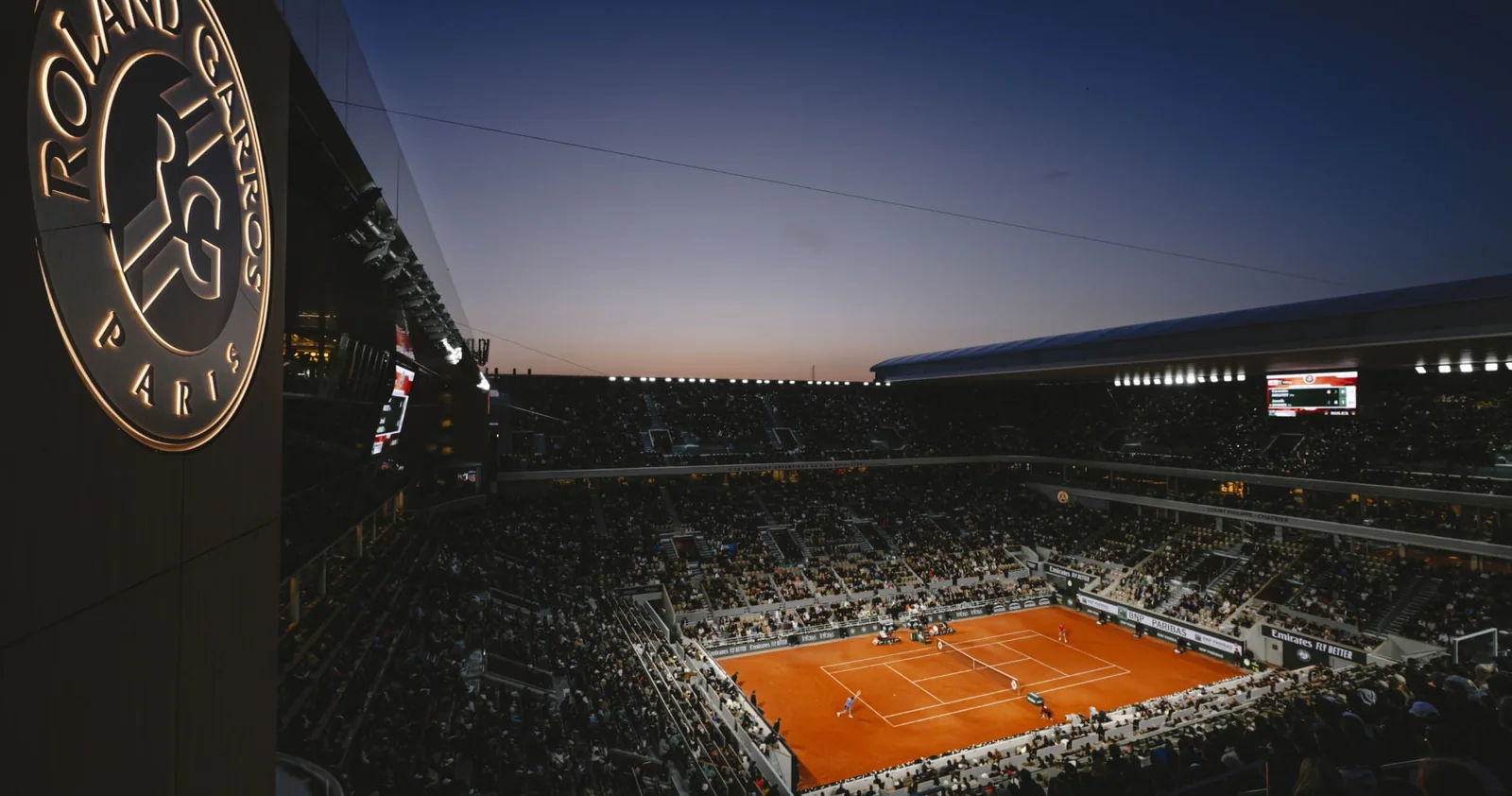
Roland Garros schedules so few women's featured night matches largely because its evening product centers on one match, and organizers give considerable weight to its potential length. Women's singles is best of three sets; men's singles is best of five. That explains the scheduling preference, but it does not settle the criticism that women's tennis receives too few opportunities to headline. The completed 2026 tournament also requires an important correction: women did play a featured night match that year.
What actually happened in 2026?
On June 1, Aryna Sabalenka defeated Naomi Osaka 7-5, 6-3 in the fourth round on Court Philippe-Chatrier. The official tournament recap identifies the Monday night contest, and the official scorecard records a duration of one hour and 27 minutes. A headline written before that match saying women had not appeared in the slot since 2023 became incomplete afterward.
The exception did not erase the wider pattern. In its June 7 closing-day coverage, L'Equipe described Sabalenka-Osaka as the only women's night-session match across the previous three editions. That is the relevant completed-tournament perspective as of September 6, 2026: an appearance in 2026, following none in 2024 or 2025, rather than a permanent prohibition.
A featured session is not simply tennis after dark
The debate concerns the designated evening session on the main court. A match elsewhere can continue late, and a daytime program can run beyond its expected finish, without becoming the separately featured night event. Counting every point played under floodlights would answer a different question.
That distinction matters for both comparisons and criticism. When someone asks which draw receives the night slot, they are examining an intentional scheduling choice. They are not claiming that women never play in the evening anywhere in Paris, or that women's tennis is absent from the principal courts throughout the day.
It also changes what a useful comparison should include. A list of selected night matches can show the allocation of that particular platform. To judge overall exposure, you would additionally need daytime court placements, broadcast availability and audience information. Those measures can complement one another, but none should quietly substitute for the others.
The question worth carrying forward is therefore specific: how should a tournament select the match that represents its evening session, and how much weight should it give to expected duration compared with competitive appeal and an equitable opportunity to headline?
Why the single-match format favors longer contests
In her June 1 press conference, transcribed from FFT audio, tournament director Amelie Mauresmo described Sabalenka-Osaka as the best match of the day and an obvious evening choice. Asked about earlier selections, she again identified potential match length as one of several considerations. Her explanation was a selection rationale, not a rule excluding women's matches.
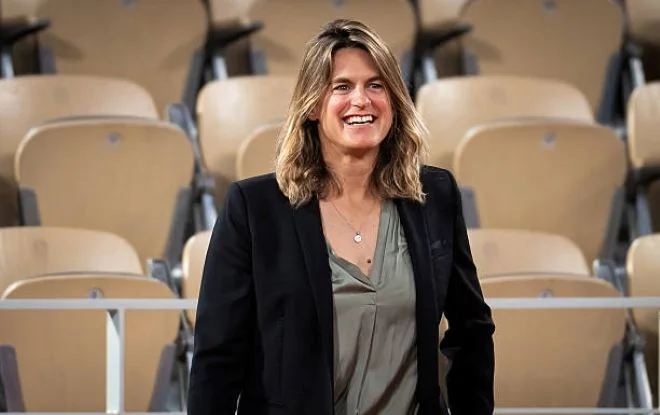
The format creates an obvious difference in the possible amount of tennis. A completed women's singles match requires two or three sets; a completed men's singles match requires three, four or five. Retirements are a separate possibility. A spectator attending for one match may therefore associate the men's format with more playing time, even though the exact duration remains unknown.
Expected duration is not guaranteed entertainment
The difficulty is deciding how much that expectation should govern the selection. A closely contested two-set match and a one-sided three-set match offer different experiences. The number of sets alone cannot tell a scheduler which contest will contain more drama, better shotmaking or a more satisfying finish.
Sabalenka-Osaka illustrates the distinction without resolving it. Its 87-minute duration was short enough to fit the concern about a compact evening. Yet the official recap described an accomplished performance against a strong opponent. You can acknowledge its length without treating a stopwatch as a complete review of its sporting value.
There is also a difference between selecting one particular matchup and designing a product around an assumption. Choosing a compelling men's match on a given evening does not automatically establish unfairness. Repeatedly using the longer format as the decisive advantage, however, makes it difficult for a women's match to compete for the slot even before the names and form of the players are considered.
A useful response would explain the relative weight of those factors. Does the tournament prioritize a likely close contest, recognizable champions, local interest, player requests or time on court? Several can matter simultaneously. The recurring argument becomes harder to resolve when the public hears that many factors exist but cannot tell why one outweighs the others on a particular day.
Broadcast reach and the meaning of the prime slot
The French broadcast arrangement helps explain why this is more complicated than daytime versus primetime on one television channel. The FFT's agreement covering 2024 through 2027 gives France Televisions daytime coverage and Prime Video the featured matches across 11 evening sessions. Semifinals and finals are shared under the announcement's specified arrangements. These are French rights, not a universal description of how every country watches.
At the end of the 2026 tournament, Mauresmo argued that the larger French audience was in the daytime, as reported by L'Equipe. That is an attributed statement about the domestic audience. It should not be converted into an unsupported numerical comparison, or into a claim that a night slot is always the least useful placement for a player.
Daytime audience and headline status measure different things
Several forms of exposure can exist at once. A freely available daytime broadcast may reach people who do not subscribe to the evening service. A separately promoted night match may receive concentrated attention as the session's sole attraction. The ticket holder choosing one evening and the viewer following a day of television are also making different choices.
Consequently, saying that women appear on major courts during the day does not fully answer a question about who gets to headline at night. Conversely, showing that the night selections heavily favor men does not establish that all daytime women's matches are poorly watched. Each argument needs to be tested against the measure it actually invokes.
The broadcast contract is sometimes treated online as if it automatically requires a men's match. The public rights announcement does not establish that restriction, and the Sabalenka-Osaka selection is a concrete example of women occupying the slot. A limit on the format of the evening package should not be confused with a ban on which draw can supply its match.
For a more informative comparison, ask for like-for-like evidence: the same territory, the same audience definition, and comparable stages of the event. Total viewers across a long day are not directly equivalent to average viewers of one match. Social impressions are not the same as people who watched the competition. Without those distinctions, an impressive number can answer a question nobody actually asked.
The broader issue is how the tournament uses its different platforms together. A balanced strategy can value accessible daytime coverage while still giving women's matches recurring opportunities to carry a distinct evening identity. Those goals do not inherently cancel each other out.
Why players and critics still object
The objection is not simply that every player wants a late start. It is that women's tennis can supply the stars, rivalries and quality needed to carry a major session, yet is rarely selected to do so in Paris. In comments discussed by Tennis Now's June 8 analysis, Coco Gauff emphasized the quality and star power on the women's side, drawing on her positive experience of an evening crowd at the US Open.
That argument should be evaluated as a request for opportunity, not as a promise that every women's match will be close. Men's matches are also selected before anyone knows whether they will become classics. Requiring women to guarantee both exceptional drama and an unusually long contest would create a standard no scheduler can reliably apply.
Visibility is an opportunity as well as an outcome
A headline session can introduce a player to someone who would not otherwise choose that match. This is an opportunity, not proof that any particular placement will produce a measurable audience increase. Still, if recognizable stars are one reason to award the slot, it is reasonable to ask how less familiar players are supposed to become recognizable without comparable occasions to lead the presentation.
The distinction is especially relevant when discussing a strong performance that finishes efficiently. A player who serves well and closes a match in straight sets has done her sporting job successfully. Treating that efficiency as a reason the match should not have been featured places the interests of a ticket product above the accomplishment itself.
None of this means organizers must disregard the spectators who want a substantial evening. It means that the promised experience deserves a broader definition than a minimum number of minutes. Competitive stakes, the personalities involved and the way a contest is introduced can all contribute to that experience.
Nor should a discussion of equal opportunity erase individual scheduling preferences. One player may welcome the atmosphere; another may prefer an earlier match. A fair debate can consider those requests while still examining the overall allocation. It does not need to portray the women's field as a single voice with identical priorities.
The strongest criticism therefore targets the repeated pattern and the criteria that produce it. It does not require declaring every men's selection unworthy, questioning the talent of the chosen players, or treating one woman's appearance as enough to close the subject permanently.
Could a different evening format solve it?
Changing the product could reduce the pressure to select a single match expected to last a long time. But each alternative creates a different scheduling problem. The proposals discussed around the 2026 tournament should be understood as options and arguments, not as an announced replacement for the current format.
Earlier starts and two matches
One proposal reported by Tennis Now was Gauff's suggestion of a 7 p.m. start with a women's match followed by a men's match. Mauresmo, by contrast, stressed the uncertainty of match duration and the problems of a second contest beginning very late. Adding another match is not a guarantee of a convenient finish.
The attraction of two singles matches is straightforward: both draws can appear in the same evening, and the session does not depend on one contest filling the entire experience. The practical question is what happens when the first match runs long. Starting earlier creates more room, but it also changes the space available to the daytime program and the transition between ticketed sessions.
A workable plan would need to specify more than an appealing starting time. Which match goes first? Does that order rotate? What happens if earlier play overruns? How are players and ticket holders informed of changes? An arrangement intended to improve opportunity should not simply make one group the permanent second match waiting for an uncertain start.
Doubles and a second court
Adding doubles has also appeared in the discussion. It could provide more tennis around a women's singles headline, but doubles players have their own competition and scheduling needs. Their match should be treated as a meaningful event with a clear place in the program, rather than a disposable extra used only when a singles match ends quickly.
A separate evening on Suzanne-Lenglen is another possibility. In June 7 reporting, Mauresmo pointed to the additional spectators and the site's limited capacity as obstacles. A second court could run concurrently, but it would require decisions about admissions, circulation, staffing and how the two evening products are presented.
The simplest option to discuss is also easy to overlook: select women's matches more regularly within the existing single-match format. That avoids adding a second late contest, although it asks organizers to accept a wider range of possible session lengths. Whether that tradeoff is acceptable depends on what the tournament wants the night ticket to promise.
None of these approaches removes uncertainty from tennis. A sensible reform would make the tradeoffs explicit and assess both the sporting opportunities and the experience of the people who play, work at and attend the session.
What would count as a meaningful change?
One evening can establish that women are eligible to headline. A sustained pattern would tell us more about whether the selection process has changed. After the 2026 tournament, the useful questions concern repeatability, transparency and the practical experience of the session, rather than whether the June 1 exception technically occurred.
A repeatable policy
A more informative approach would explain how competitive appeal and potential duration are balanced, then examine the choices across an entire edition. It could also compare how matches are introduced and promoted. A nominal opportunity has less meaning if the presentation continually implies that one draw is the natural attraction and the other needs a special justification.
Any review should include the consequences of late scheduling as well. An increased number of women's evening appearances would not automatically be an improvement if it came with routinely unreasonable starts. The aim should be a useful opportunity to play before an engaged audience, with a workable timetable for the competitors and the people attending.
These are criteria for evaluating a possible change, not a claim that Roland Garros has adopted a quota or a new two-match policy. A statement that organizers will keep reviewing options is different from a published format with dates, entry arrangements and an operational plan.
Reading the schedule as a spectator
Use the official daily program to identify the selected match and session. The June 1, 2026 program, for example, placed Sabalenka-Osaka in the evening from 20:15 Paris time while listing other singles contests earlier in the day. That is a dated example, not a promise about a future edition.
Check the court, the session label and any not-before time together. A player appearing in the draw does not tell you which ticketed session will contain her next match. Similarly, a calendar establishes when a tournament takes place, whereas the order of play establishes who is assigned to a particular court and time window.
The WTA calendar and tournament listings can help you follow the broader season; today's women's matches bring attention back to the current competition. For the Paris controversy, the most useful test remains whether future choices give women's tennis recurring, well-presented opportunities to headline while honestly addressing the constraints of the evening format.