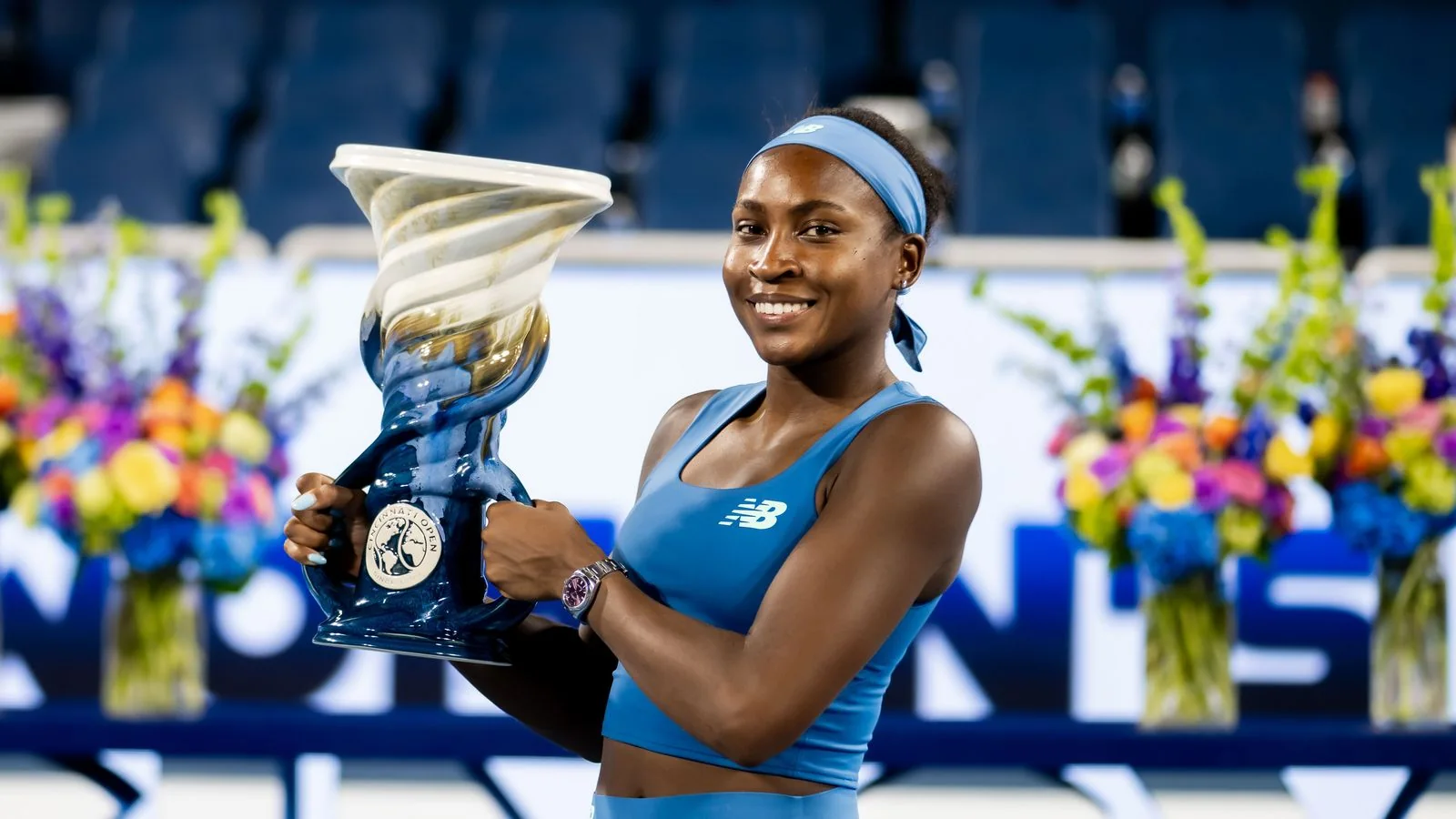
Which WTA events will reach equal prize money in 2027?
Rome, the National Bank Open in Canada and Cincinnati will reach equal prize money in 2027, completing the group of combined WTA 1000 events. They join Indian Wells, Miami, Madrid and Beijing. The WTA confirmed the milestone in its October 1, 2026 calendar announcement.
The word combined defines the scope. This is a commitment covering that group of major events, rather than a statement that every women's tennis tournament will pay the same amount as every men's tournament. This guide reflects the policy as checked on October 29, 2026; exact 2027 payouts still need the relevant event's published distribution.
| Group | Events named in the WTA announcement |
|---|---|
| Reaching the milestone in 2027 | Rome, National Bank Open, Cincinnati |
| Already in the equal-prize-money group | Indian Wells, Miami, Madrid, Beijing |
The official WTA announcement is the clearest place to start because it identifies the events and the effective year together. An older article about a target date, an earlier tournament edition or an individual champion's cheque answers a different question. None should silently become a table of finalized 2027 awards.
For a fan, the immediate change is the expectation attached to these tournaments' next editions. The longer explanation involves how prize funds are compared, how events generate the money and how much a published award tells us about an athlete's income. Those distinctions allow the achievement to be understood accurately without turning it into a broader promise than the WTA has made.
What combined WTA 1000 actually means
A combined event brings women's and men's competitions into the same broader tournament operation or event structure. The WTA 1000 label identifies the women's tour category. Combining those ideas helps identify the policy group, but neither term by itself tells you the amount of a particular round's award.
Canada is a useful reminder that a joint event identity need not put every player at the same venue. The WTA's Canadian tournament profile describes the women's competition alternating between Toronto and Montreal. A reference to Montreal/Toronto in a policy announcement is therefore a reference to the National Bank Open framework, rather than a promise that the women's draw will run simultaneously in both cities.
Fans should also separate the tournament's sporting category from its business arrangements. The category helps explain ranking significance and the place of an event in the season. The commercial operation must still produce a prize fund and publish its distribution. Shared branding or a shared date range does not allow a reader to infer every payment detail without that information.
Why the label does not cover every WTA 1000 or WTA 500
The WTA's June 2023 pathway distinguished combined events from single-week events and set different target timelines. It referred to combined WTA 1000 and 500 events reaching parity by 2027, with single-week WTA 1000 and 500 events targeted for 2033. That was a strategy announcement, with progress expected over time.
The October 2026 update confirms a specific upcoming milestone for the combined 1000 group. Reading the older strategy beside it is helpful, but the two documents should not be merged into a claim that all of the earlier targets have already been delivered. A category-wide assertion needs category-wide evidence. Naming one tournament that offers parity cannot establish the position of every other event at that level.
For the same reason, the practical question is which edition and which group a statement covers. A commitment for the next season is meaningful even before the events take place. It remains different from a complete record of what every player has actually received. The WTA calendar helps identify the event; its own prize-money release supplies the financial details when those are announced.
What equal prize money tells you about a player's cheque
Prize-money discussions become clearer when three quantities are kept separate: the total fund, the published award for a particular result and the money a player ultimately retains. Each is useful, but they measure different things. A tournament-wide headline cannot answer all three questions at once.
Total prize funds and round-by-round awards
A total fund is the amount allocated across the competitions or draws included in that definition. A round-by-round distribution explains how that fund is divided. When comparing two announcements, check whether each total covers singles, doubles and qualifying in the same way. An overall financial commitment may also be labelled differently from a prize-money-only figure.
A purely mathematical example shows why detail matters. Imagine two invented prize funds of $1 million each. One could award $100,000 to the champion and distribute $900,000 elsewhere. The other could award $120,000 to the champion and distribute $880,000 elsewhere. The totals are identical, but the champion's awards differ. These figures describe no actual WTA tournament; they illustrate why the aggregate alone cannot reveal the full allocation.
This is not a prediction that the 2027 events will use different men's and women's distributions. It explains the evidence needed to answer a specific question about a specific payout. Once an official table is published, compare corresponding rounds directly. For doubles, check whether a listed award belongs to a team or an individual before setting it beside a singles cheque.
Currency deserves the same attention. A euro amount and a dollar amount can look close while representing different values, and an exchange-rate conversion can change between the announcement and payment. The most direct comparison uses the original currency and the same edition. Rounding should be stated if a calculation turns precise awards into a readable summary.
Prize money, ranking points and take-home earnings
Ranking points are a sporting measure. Prize money is a financial award. A change in the size of a fund does not itself tell you that the ranking points for a round have changed. Follow the WTA rankings for the sporting calculation and the event's payout table for the financial one.
Published prize money is also not a personal net-income statement. The WTA's current rules provide for applicable tax withholding in the payment process. Individual costs and financial circumstances then differ. A player may pay for coaching, training, travel or other support from her overall resources, while sponsorship is a separate source of income.
Equal published awards for comparable results therefore create equal earning opportunities within that competition; they do not make every player's annual finances identical. Two athletes receiving the same tournament award can have different expenses, outside contracts and numbers of paid weeks. Readers comparing earnings should identify which of those questions they mean rather than using one tournament cheque as a complete picture of either career.
How Canada's pathway illustrates the funding challenge
The National Bank Open offers a concrete explanation of how a tournament plans to close a prize-money gap. Its original 2023 announcement identified support from title sponsor National Bank and additional resources from WTA Ventures, the commercial operation bringing together rights and assets. It described a staged pathway toward parity in 2027.
The event's format explanation also connects the expanded 12-day main draw and 96-player field with revenue growth. The larger format began in 2025. In the organizer's explanation, extra commercial opportunity is part of the mechanism for supporting greater compensation. The pathway is therefore about funding arrangements and event design together.
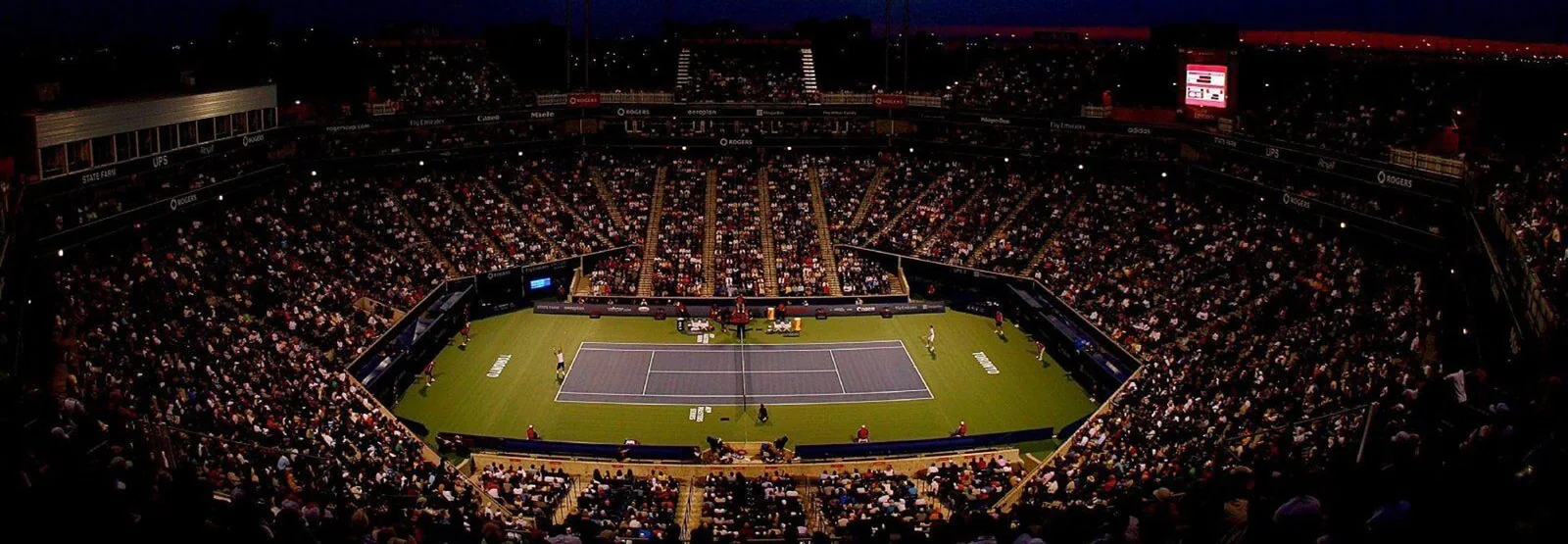
The business logic is understandable without assuming a particular profit figure. More sessions can create more inventory for ticketing, hospitality and commercial exposure. A sponsor may see value in connecting its name to a broader audience and a stated equity initiative. Central commercial resources can contribute another part of the funding package. Different sources can help support a commitment that a single revenue stream would struggle to fund alone.
Expansion also brings expenses. Additional days require a functioning venue, staffing and services; the fact that an event has more sessions does not prove that every extra dollar collected becomes available for prize money. The relevant question is the balance between additional revenue and the costs of producing that revenue. The public pathway describes the approach, while a complete assessment would require more detailed operating information.
Historical projections should be kept in that historical role. Canada's early announcement included estimates for the pace of growth. Those figures help explain the ambition at the time, but they should not be relabelled as the final payout table for a future edition. For the most recent completed tournament's separate sporting and financial context, our Toronto 2026 prize-money and ranking-points guide keeps that edition distinct.
The Canadian example also shows why the equal-prize-money commitment is more substantial than changing the wording on a presentation cheque. A tournament needs a repeatable way to finance the whole distribution. Connecting a sponsor, central commercial support and the event format makes the intended pathway visible, even though no single photograph or headline can establish its eventual operating margin.
Why the milestone matters beyond the champion's payout
The history explains why a prize-money policy carries significance beyond one winner's photograph. The WTA's timeline traces the Original 9's break with the established structure in 1970 and the founding of the WTA in 1973. The US Open introduced equal prize money in 1973; the ITF notes that all four majors have offered it since 2007.
That major-tournament milestone did not make the rest of the circuit financially uniform. A professional season includes different levels, markets and operating models. Progress at another group of major tour events therefore reaches competitions outside the four Grand Slams. It also concerns a field of players, rather than only the person lifting the trophy on the final day.
A distribution matters at every stage where an athlete earns an award. The champion can have a lucrative week while many others leave earlier, and a season is made of more than winning weeks. Evaluating how compensation supports the field requires looking beyond the largest cheque. Questions about qualifying, opening rounds and doubles remain useful even when a headline focuses on the champion.
The difference between equal opportunity and identical careers
The promise of parity is a promise about the opportunity to earn comparable awards. Competition will still produce different results, and players will still choose different schedules. An athlete who repeatedly advances deep into draws will generally earn differently from one who exits early. Equality of the prize framework can coexist with substantial differences in sporting outcomes.
There are also two separate policy debates that often become tangled. One asks whether women and men should have equal prize money at a given event. Another asks whether the share of an event's overall revenue going to players is sufficient. A tournament could meet the first objective while athletes still dispute the second. Our Grand Slam prize-money protest explainer addresses that separate revenue-sharing issue.
Recognizing the distinction improves the discussion of sustainability too. Whether a commitment is desirable and how an event finances it are related questions, but neither is answered by one attendance photograph or one television rating. The Canadian funding pathway offers a concrete business example. The broader sporting significance is that another major group of tournaments is committing to the same prize-money principle.
How fans should compare 2027 prize-money announcements
Start with a specific comparison. Asking whether Rome's women and men receive equal prize money in the same edition is a different exercise from asking whether Rome pays more than Canada, or whether a 2027 award is higher than its 2026 equivalent. The first comparison concerns parity; the second concerns two events; the third concerns growth over time.
For parity, place the corresponding men's and women's published distributions side by side. For growth, compare the same round, competition and currency across editions. For two events, consider whether the figures include the same draws and whether they represent the total fund or a single athlete's award. The basic principle is to keep the thing being measured constant while changing only the factor you are examining.
A larger percentage increase can also coexist with a smaller absolute award. A hypothetical award rising from 10 to 15 has grown by 50 percent; one rising from 100 to 120 has grown by 20 percent. The first has faster percentage growth, while the second has a larger final value and a larger absolute increase. These abstract numbers are not WTA payouts, but they show why a growth headline should be read alongside the underlying amounts.
The WTA also announced a targeted Tournament Investment Fund for selected markets, intended to support the tour's strategic objectives and equal-prize-money initiative. The announcement does not provide an event-by-event allocation. It should therefore be discussed as a funding mechanism rather than inserted into a spreadsheet as an assumed subsidy for every tournament.
As the 2027 distributions appear, the useful questions become concrete: what is available for each result, which players benefit across the field, and how does the event support the commitment over successive seasons? Those questions recognize both the significance of parity and the work required to make it durable. They are more informative than assuming a future champion's cheque from an old projection or treating prize equality as a complete answer to every question about tennis economics.