WTA players’ 2026 dispute with the Grand Slams is about the share of tournament revenue returned to competitors, contributions to long-term welfare programs, and a formal voice in decisions affecting the calendar and health. It is broader than equal prize money between women and men, which the four majors already provide in their singles draws, and no Grand Slam boycott had been formally scheduled as of September 6, 2026.
What the campaign asks for
The player group has sought a larger and more predictable prize-money share, Grand Slam funding for pensions, health care and maternity support, and consultation through a player body. The public dispute is therefore about both annual purses and the structure supporting players outside a headline final.
This guide reconstructs the demands and the responses without treating confidential revenue figures as audited facts. It also explains why stars such as Aryna Sabalenka and Coco Gauff can lead a campaign whose strongest argument often concerns players much farther down the rankings.
What are WTA players asking the Grand Slams to change?
The campaign combines money, benefits and decision-making. Leading women and men have asked the four Grand Slams to move toward paying 22% of tournament revenue in prize money by 2030, with increases designed to help players beyond the late rounds. They have also sought major-event contributions to pension, health-care and maternity programs, plus a formal channel for consultation about the calendar, late finishes and other working conditions.
Prize money as a share of revenue
A revenue-share target is different from asking for a larger nominal purse. A Slam can announce record prize money and still face criticism if its income rose faster or if players believe the percentage remains too low. The argument immediately creates an accounting question: should the denominator include hospitality, media, sponsorship and year-round revenue, and how should investment in facilities or national tennis programs be treated? Players' public percentages and tournament descriptions should therefore be presented as positions in a negotiation, not audited like-for-like facts.
Welfare contributions and player consultation
The second demand looks beyond the cheque awarded after one tournament. Independent players pay coaches, travel, accommodation, medical support and taxes while earning nothing when injured or eliminated early. Grand Slam funding for shared welfare programs could spread support across a longer career. The consultation demand is similarly structural: players want a dependable voice before events lengthen, schedules create very late nights or media obligations expand.
Share
A phased target tied to a mutually defined revenue base.
Security
Pension, health and maternity support beyond one result.
Voice
Regular consultation over calendar and welfare decisions.
Those strands explain why calling the 2026 action a simple pay demand misses much of its purpose.
How did the dispute reach the 2026 protests?
The media walkouts did not begin as a sudden complaint during Roland Garros. In March 2025, 20 leading players signed a letter to the heads of the Australian Open, Roland Garros, Wimbledon and the US Open. Associated Press reporting identified 10 leading women and 10 leading men among the signatories. They requested a meeting and set out the themes that remained visible in 2026: revenue-linked prize money, welfare funding and influence over decisions affecting competition and health.
The top-player letters and meetings
The correspondence gave the players unusual collective weight across the WTA and ATP. Later reporting described a more specific path toward a 22% share by 2030, annual welfare contributions and a player council. Representatives met tournament leaders, but agreement proved difficult because the Slams are independent organizations with different accounts, currencies and domestic responsibilities. The tours also do not employ players in the same way that a single-team league employs its athletes, so there was no conventional collective-bargaining table.
Roland Garros's 15-minute media action
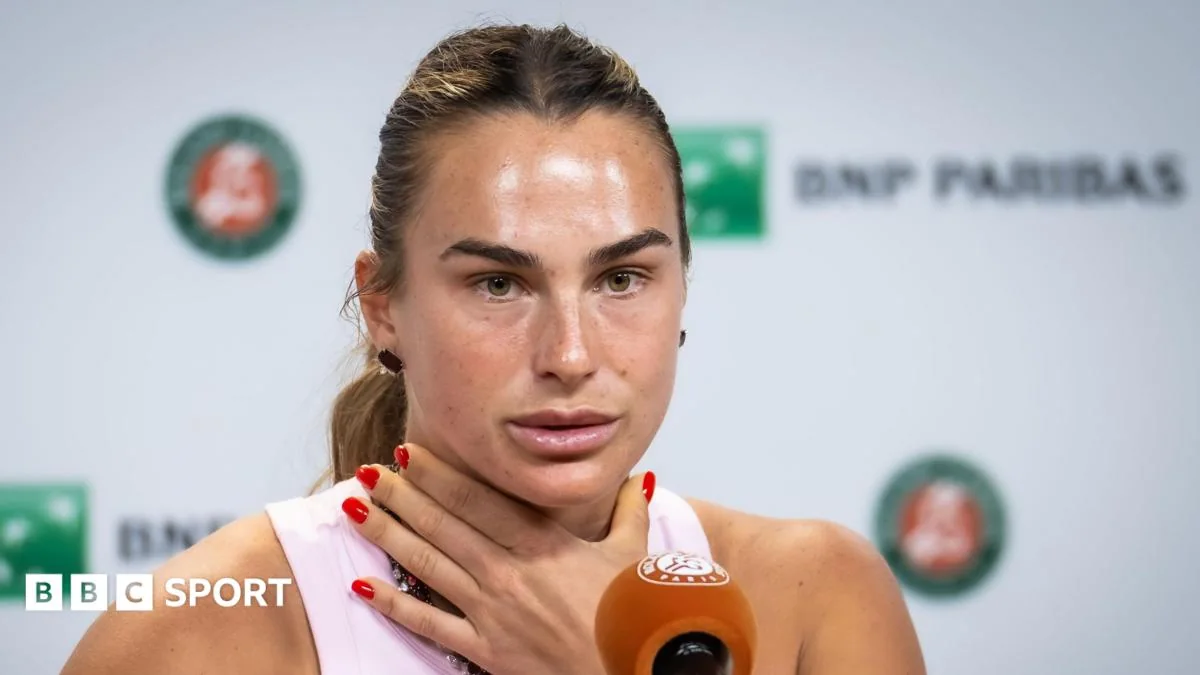
At the 2026 French Open, top players limited selected media commitments to 15 minutes. The number symbolized their broad claim that the majors direct roughly 15% of revenue to prize money. Aryna Sabalenka ended a news conference once the agreed time had elapsed. The action was deliberately modest: players still competed, answered questions and met a core obligation, but withdrew the longer access that helps tournaments and broadcasters create coverage.
How to read the 15% figure
It was a campaigning benchmark across four distinct events. It should not be treated as a jointly audited percentage for each Slam, because players and organizers have disputed which revenue and reinvestment belong in the calculation.
The tactic also made the conflict visible to fans without changing a draw or abandoning a match. That balance helped it spread to the next major.
Why did the protest continue at Wimbledon?
The campaign moved from Paris to London because a large purse increase did not resolve the requested revenue formula or the welfare and consultation demands. Players initially planned another 15-minute media limit during Wimbledon's first week. Reporting shortly afterward said that specific action was called off following talks with player agents. The pressure campaign therefore continued at Wimbledon even though its announced tactic changed.
The 2026 purse and competing percentages
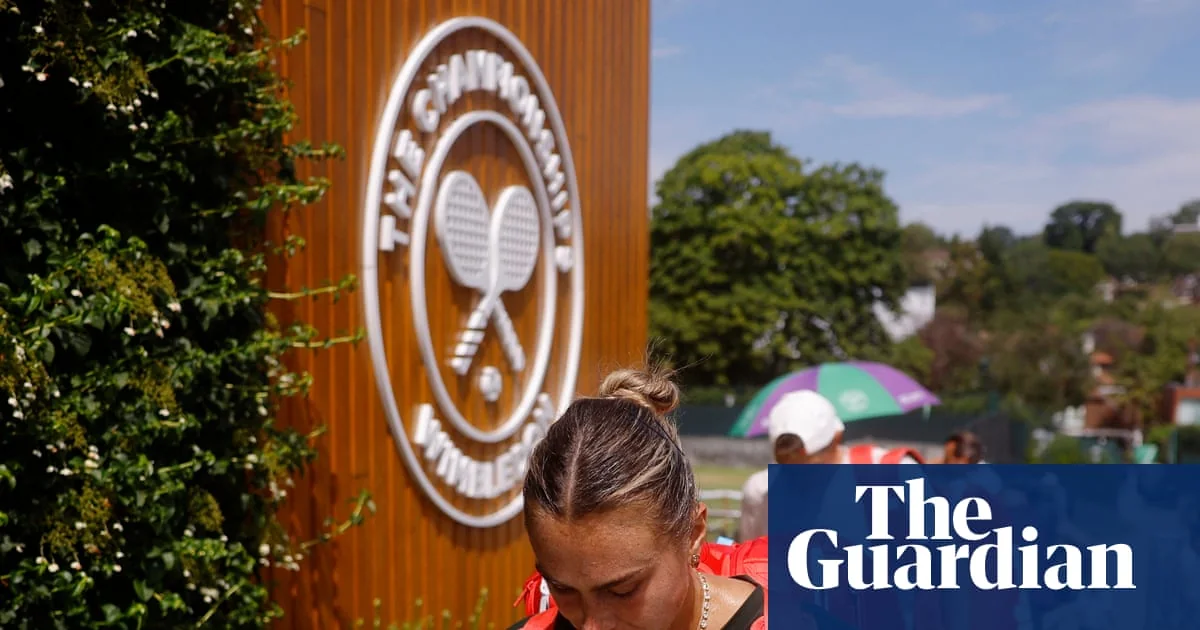
The All England Club set a £64.2 million prize-money fund, a reported 20% increase from the previous year. The Guardian reported it as 14.4% of revenue under the cited calculation, while players had sought 16% for 2026 on the way to their longer-term 22% target. The Club emphasized its consistent increases and wider investment in British tennis. Both statements can coexist: the cash pool rose sharply, while the sides continued to disagree over the appropriate share and denominator.
Why negotiations remained difficult
Wimbledon questioned whether the players' comparison with ATP and WTA tour events used equivalent financial information and requested supporting data. Players, in turn, sought fuller disclosure from tournaments. Confidential media and sponsorship contracts make a public comparison difficult. Capital projects, operating costs and national-development spending further complicate a single percentage. Without agreed definitions, each side can present a valid number that answers a different question.
What changed by the start of play?
The public plan for a first-week media limit was reportedly withdrawn after talks. That was a tactical pause, not evidence that the full revenue-share and welfare dispute had been settled.
Is this the same as the equal-prize-money debate?
No. Equal prize money asks whether women and men receive the same amount for equivalent results. The 2026 campaign asks how much total Grand Slam revenue reaches players, how that money is spread through the field, and what the tournaments contribute to shared benefits. The two debates share a history of player organizing, but they measure different relationships.
Equal men's and women's purses at majors
The US Open became the first major to offer equal prize money in 1973, awarding the women's and men's singles champions $25,000 each. The Australian Open later joined, and parity at Roland Garros and Wimbledon in 2007 meant all four Slams offered equal prizes. WTA's 2026 Roland Garros guide, for example, listed equal amounts for the women's and men's draws at each corresponding round. The present campaign does not seek to undo or replace that principle.
Distribution through the draw
A tournament can pay equal champion cheques while still deciding how much of its purse goes to champions, qualifiers, first-round losers, doubles teams and wheelchair events. Players advocating a larger revenue share have repeatedly emphasized those who do not reach finals. Increasing early-round and qualifying payments can have a larger effect on career viability than adding the same percentage to every round, because travel and coaching costs arrive before prize money does.
| Question | Comparison |
|---|---|
| Gender parity | Women's amount versus men's amount for an equivalent result |
| Revenue share | Total player compensation versus an agreed measure of tournament revenue |
| Distribution | How the player pool is divided across rounds, draws and benefits |
Keeping these questions separate makes it possible to support equal pay and still scrutinize whether lower-ranked women receive enough from the sport's richest weeks.
Why are highly paid stars leading the campaign?
The famous players have the access and visibility needed to make four powerful tournament organizations respond. Their names generate television audiences, ticket demand and media coverage; their cooperation across the women's and men's tours gives the campaign credibility. Sabalenka explicitly framed the action as support for players who struggle even to hire a coach. A leading player can also absorb the reputational and financial risk of speaking publicly more easily than someone fighting to enter qualifying.
Lower-ranked economics
Published prize money is gross income, not salary. A player generally pays travel, hotels, coaching and training expenses, and may go weeks without a main-draw win. Injury removes earning opportunities while many costs continue. There is no single honest expense figure because a solo traveler and a top player with a large team operate very differently. The consistent point is that early-round payments and reliable benefits matter most to athletes whose results fluctuate around the cutoffs.
Pensions, health care and maternity support
The WTA already has benefit structures. Its externally backed maternity fund, launched in 2025, offered eligible players up to 12 months of paid leave and fertility grants, with more than 320 players eligible at launch. The Grand Slam campaign asks the majors to contribute to wider shared programs rather than leaving that burden solely to tours and sponsors. This is a funding and governance demand; it should not be read as a claim that no support exists today.
Why star leadership can help
- Stars can make a technical financial dispute visible to casual fans.
- They can coordinate across tours and nationalities.
- They can press for early-round gains from a position of relative security.
Fans can compare the ranking pressures involved through the current WTA rankings, where a few results can separate direct entry from qualifying.
Will WTA players really boycott a Grand Slam?
No boycott had been formally scheduled by September 6, 2026. Sabalenka raised the possibility in May, saying players might eventually need that level of action. Other leading women supported the campaign while differing on tactics; Iga Swiatek emphasized communication and negotiation. A warning from an influential player is meaningful pressure, but it is not a strike notice or a confirmed collective vote.
What changed before the US Open
There was measurable movement. The US Open announced $108 million in total player compensation for 2026 and an initial $2 million, divided equally for men and women, to be held in escrow while a new welfare program was finalized. It also announced a Grand Slam Player Council as a regular forum for welfare and compensation discussions with each major. Those steps address parts of the campaign's structure, although they do not by themselves create the requested 22% formula across all four Slams.
Why collective action is difficult
Professional tennis has no single roster or league-wide collective bargaining agreement covering every entrant. Players have different rankings, sponsors, national associations and financial reserves. Missing a major can cost ranking points, prize money and a rare career opportunity; lower-ranked alternates may accept newly available places. A credible boycott would therefore require unusually broad coordination across women and men and a clear answer for players who cannot afford to abstain.
Status check
- Boycott: discussed publicly, not scheduled.
- Media limits: used at Roland Garros; later tactics varied.
- Negotiating forum: a Grand Slam Player Council was announced before the US Open.
- Long-term revenue target: still a negotiating objective, not a universal agreement.
Future event dates remain available on the WTA calendar; a real withdrawal action should be confirmed through official player and tournament notices rather than rumors.
What would a workable settlement look like?
A durable settlement needs a shared accounting framework before it needs another headline percentage. This is analysis based on the public disagreement, not a prediction of confidential negotiations. Each Slam has different revenue sources, governance and domestic commitments, so one formula may require event-specific adjustments while preserving a comparable player share.
Transparent definitions and phased targets
The sides could define tournament revenue, eligible costs and the treatment of capital projects in a confidential agreement verified by an independent accountant. Public reporting could then show a consistent summary without exposing individual contracts. A phased path would reduce budget shocks and allow purses to respond to weak as well as strong years. The agreement should also specify distribution: how much goes to qualifying and early rounds, how much to later rounds, and whether welfare contributions sit inside or outside the prize-money percentage.
Formal consultation without harming fans
The newly announced Grand Slam Player Council offers a practical forum if meetings have a calendar, agendas and written outcomes. Players could raise schedule length, late finishes and benefit design before operational decisions become public. Tournament leaders would retain authority over their events while having to answer proposals through a defined process. Negotiation deadlines several months before each Slam would reduce the chance that ticket holders learn of protests or format uncertainty after making travel plans.
Four elements to watch
- A common definition of revenue.
- Independent verification with a publishable summary.
- A phased share plus explicit welfare funding.
- A player council with regular meetings and recorded responses.
Progress should be judged against those structures, not only the next champion's cheque. The site's guide to WTA tournament prize money and ranking points also shows why cash awards and ranking rewards must be tracked separately.
Grand Slam prize-money protest FAQ
Are women paid less than men at the Grand Slams?
The four majors pay equal prize money to women and men for equivalent rounds in their corresponding draws. The 2026 dispute concerns the total player share, distribution and benefits for women and men together.
Did players ask for 50% of Slam revenue?
No. Public reporting described a target of 22% by 2030. References to roughly 50% usually compare tennis with some unionized team sports; that was not the stated Grand Slam target.
Is prize money a salary?
No. Players are independent professionals who earn tournament prizes based on results and generally pay their own career expenses. Benefits and minimum support therefore matter alongside the published purse.
Did every WTA player join the protest?
No such claim is supported. The campaign was led by a group of top women and men, and participation in individual media actions varied. Players also expressed different views about a possible boycott.
Is a Grand Slam boycott official?
No formal boycott was scheduled as of September 6, 2026. It was discussed as possible leverage while meetings and less disruptive protests continued.
What development matters most now?
Watch whether the Grand Slam Player Council produces an agreed revenue definition, multi-year targets and funded welfare commitments across events. A record purse alone answers only part of the dispute.
Check official Slam announcements for updated totals and the WTA calendar for dates. Negotiating claims can change faster than tournament schedules.