What is a WTA medical timeout?
A WTA medical timeout is a limited treatment break for a distinct, treatable medical condition after assessment by the tour's medical professional. The familiar three minutes refers to treatment, rather than every second between the last rally and the next one. Being behind in the score does not itself make a request invalid, and winning after treatment does not establish that a condition was invented.
The 2026 WTA rulebook is the governing reference for this guide, checked on October 29 against the July 27 revision. It separates requesting an assessment, determining whether a condition can be treated, and authorizing additional treatment time. These are related steps with different purposes. A player asking to see the physio has not automatically obtained an unrestricted break.
The rulebook calls the relevant professional the Primary Health Care Provider, abbreviated PHCP. The medical assessment determines what is treatable and what is needed; the supervisor or chair administers the timeout within the competition rules. It is not a diagnosis decided by the opponent, a television commentator or a social-media poll. Nor should the chair need to have witnessed a dramatic fall before an assessment can take place.
For viewers, the useful comparison is with other kinds of stoppage. An ordinary changeover is part of the match schedule. A medical evaluation establishes what action is appropriate. A medical timeout allows treatment that needs additional time. A tactical timeout would simply permit a competitor to interrupt play for strategic reasons. The medical rule is not a general entitlement to the last of those.
That structure explains why two superficially similar interruptions can have different outcomes. One assessment might lead to treatment at a normal break, another to a formal timeout, and another to no permitted treatment. Before calling the decisions inconsistent, identify which category the medical staff actually assessed. The distinction does not make every ruling beyond discussion; it makes the discussion about the relevant decision instead of an assumed motive.
When does the three-minute medical timeout begin?
The treatment clock starts after evaluation and diagnosis, when the PHCP is ready to begin treatment. That is why timing the entire television interruption from the last ball struck can give a misleading result. The WTA medical procedures distinguish evaluation from the formal timeout, and the chair announces when the latter begins.
Evaluation time is different from treatment time
An assessment answers whether there is a treatable condition and what response it requires. Treatment is the action taken once that decision has been made. The rules require evaluation within a reasonable time and recommend that it not exceed three minutes. That recommendation is not an automatic extra three-minute allowance for every request, nor a guarantee that every assessment will take exactly that long.
As an illustration, imagine a physio arriving, speaking to the player, assessing the issue and then informing the chair that additional treatment time is needed. Starting a personal stopwatch when the player first asks for help combines several different stages. Starting it at the formal treatment announcement answers a narrower question. Neither illustration gives an athlete permission to extend the break indefinitely.
Why the interruption can look longer on television
A broadcast may show the request, the wait, the evaluation and the treatment as one continuous sequence. It may also return from advertisements halfway through that sequence. Without the chair's announcements or an uninterrupted feed, viewers can easily confuse which clock they are watching. The official Australian Open rules overview likewise describes a medical timeout as additional treatment time, although individual WTA procedures must still be checked in the WTA book.
Off-court treatment can be permitted for privacy and modesty. Its absence from the camera does not establish that no treatment occurred. At the same time, a player's departure is not a reason to assume every rule has been satisfied. The correct question remains whether the authorized assessment and treatment procedures were followed, rather than whether a viewer could personally observe the medical work.
A sensible timing complaint should therefore identify its starting point. Was the concern an unusually long evaluation, treatment beyond the announced allowance, or a delay after treatment ended? Those are different allegations. Naming the stage makes a complaint testable; presenting one unexplained total makes the conclusion much less secure.
Can a player stop in the middle of a game?
Yes, an acute, treatable medical condition requiring immediate attention can justify stopping before the next changeover. A non-acute condition is handled at a change of ends or set break. The distinction concerns the need for immediate attention, rather than whether a player is winning, serving or facing a significant point.
Acute conditions and normal changeover treatment
Consider two hypothetical cases. A competitor suddenly sustains a condition she believes needs immediate evaluation and tells the chair she cannot continue. The medical process can begin immediately. Another player has a developing issue that can wait until the next normal break and asks the chair to arrange the physio then. Both can be legitimate requests, but they need not interrupt play at the same time.
The WTA procedures require the player to be forthright about whether she believes an acute condition warrants stopping. Misuse can be addressed as unsportsmanlike conduct. That safeguard is different from insisting that the opponent must agree with the request before the player receives an assessment.
A further distinction concerns general fatigue. The medical exception does not provide extra recovery time simply because a player is tired. ITF Rule 29 sets continuous play as the starting principle. Medical treatment is a defined exception to that principle, rather than an alternative way to take a rest whenever a match becomes physically difficult.
| Situation being assessed | Relevant distinction |
|---|---|
| Sudden condition requiring immediate attention | An immediate stop can be justified; medical assessment determines treatment. |
| Treatable issue that can wait | Arrange evaluation or treatment at the next changeover or set break. |
| Ordinary general fatigue | No general medical-timeout entitlement for recovery. |
This also explains why the absence of a visible collision is not decisive. The chair need not have seen the condition develop. The athlete's report initiates assessment; it does not settle the eventual diagnosis. Looking for a dramatic fall in a replay therefore cannot answer every medical eligibility question.
Why muscle cramps have a different rule
Muscle cramping on its own does not qualify for a WTA medical timeout. Treatment is limited to normal changes of ends or set breaks, with a total of two changeover treatments for cramping in the match. That specific limit is worth checking in the WTA book: a generic explainer covering another competition may give a different numerical allowance.
If a player stops claiming an acute condition and assessment determines it is muscle cramping, officials order play to resume. A player unable to continue because of severe cramps can concede the points or games necessary to reach the next changeover or set break for treatment. That has a sporting cost; it is not a way to freeze the score until she feels ready.
For example, imagine an athlete assessed as having isolated cramps during a game. The fact that a normal break is approaching does not turn the remaining time into a medical timeout. She must continue or accept the relevant conceded points and games to reach a permitted treatment break. The hypothetical is about the competition procedure, rather than advice to an injured person about whether it is safe to play.
Cramping within a wider illness needs medical assessment
The exception is significant. Under the WTA medical rule, cramping can be a manifestation of illness or heat illness, and the PHCP determines whether a medical timeout is appropriate for that assessed condition. The Australian Open's official 2026 overview also places that judgment with medical staff.
This does not mean any player can claim heat illness as a password for extra rest. It means that seeing a cramped muscle does not establish the complete medical condition. The assessment is what connects symptoms to the correct rule category. A viewer's belief about the weather or the appearance of a player's movement is not the same evidence.
The practical viewing distinction is therefore between isolated cramping and a medically assessed wider condition that includes cramping. Asking which one was identified is useful. Declaring that all cramps always permit a timeout, or that any visible cramp always proves a timeout was illegal, skips the very decision the rule requires.
How many medical timeouts can a player receive?
The basic WTA allowance is one medical timeout for each distinct treatable condition in a match. It is not simply one timeout per match, and it is not a fresh timeout whenever the same problem becomes uncomfortable again. Medical staff assess whether conditions are genuinely distinct. Related musculoskeletal problems forming one kinetic chain are treated as one condition for this purpose.
That distinction matters in two contrasting hypothetical cases. A player who has already received a timeout for one condition cannot create a new allowance merely by asking for more treatment of it. A player who later develops a genuinely separate treatable condition is not automatically barred because an earlier timeout occurred. Neither conclusion can be reached just by counting how many times the physio's bag appears on television.
- Normal-break treatment: further treatment can occur within the permitted changeover or set-break limits. It is not necessarily another formal timeout.
- Simultaneous distinct conditions: two consecutive medical timeouts can be authorized in the special circumstance of at least two distinct treatable conditions developing together. They are evaluated and administered under the specific rule, with separate timeout announcements.
- Early completion: treatment finishing before three minutes does not create a right to spend the unused time resting.
- Bleeding: a specific provision can allow up to five minutes to control bleeding when requested and authorized. It is not the standard allowance for every injury.
The current rulebook also provides penalties for delaying the restart after treatment and for abuse of the medical rule. Those are separate questions from whether the original condition justified assessment. A player can have a legitimate reason for receiving treatment and still be required to resume within the applicable procedure.
For a viewer tracking repeated visits, the useful record is therefore the assessed condition, whether a timeout was formally announced, and whether a later visit was ordinary-break treatment. Writing down only “second physio visit” removes the information needed to decide whether an allowance has actually been repeated.
What Ostapenko's Wuhan comeback can and cannot prove
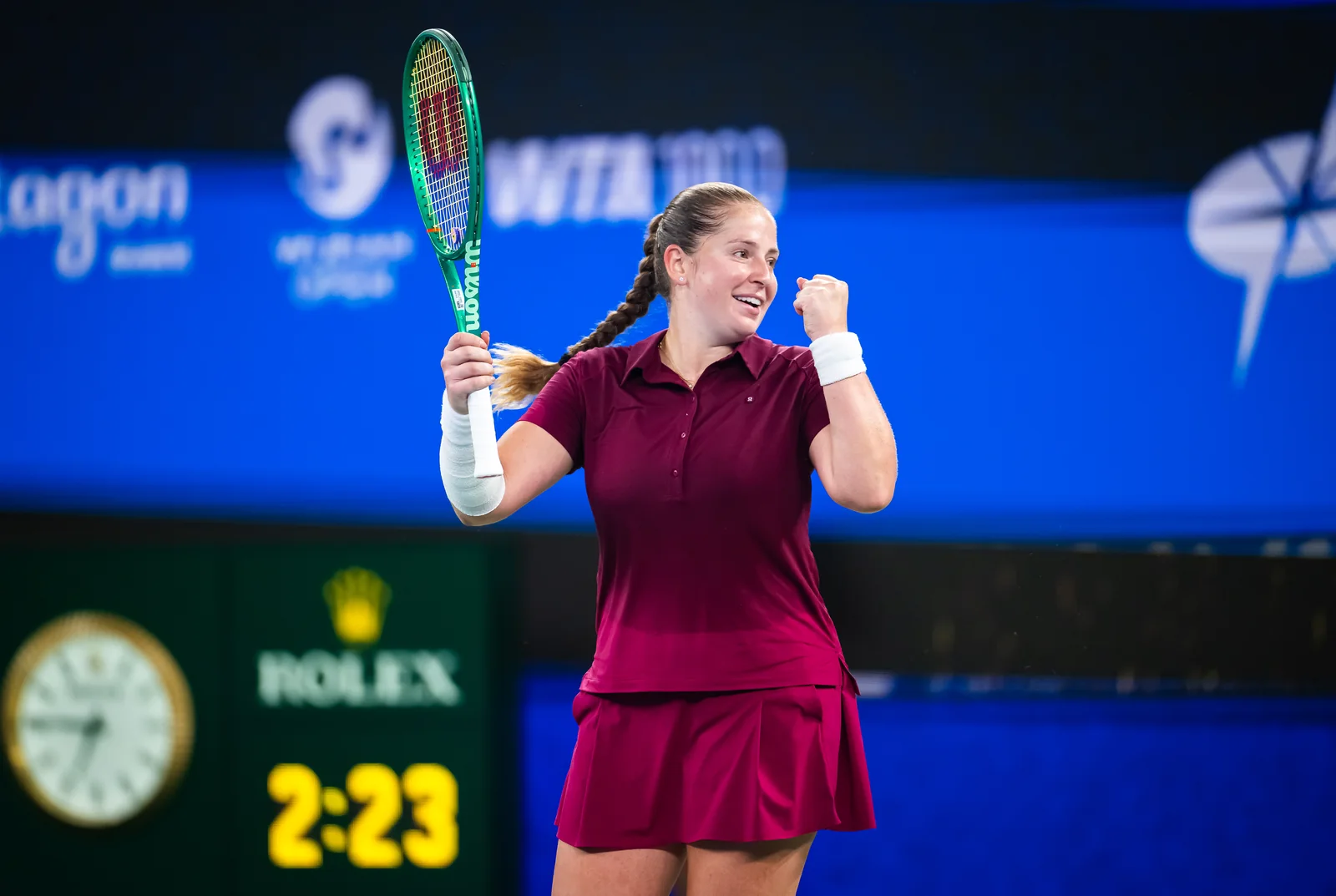
Jelena Ostapenko's October 14 win over Jessica Pegula provides a recent example of why spectators ask these questions. Treatment occurred while she was behind, and she later recovered to win. That sequence is verified. Any conclusion that the break was fabricated needs separate evidence.
The verified October 14 match sequence
The official WTA report records a 2-6, 7-6(7), 6-3 second-round victory. Pegula led 3-2 in the second set when Ostapenko received a medical timeout and returned with her right arm strapped. Ostapenko attributed the issue to arm pain. Later, she saved three match points in the tiebreak before winning the deciding set.
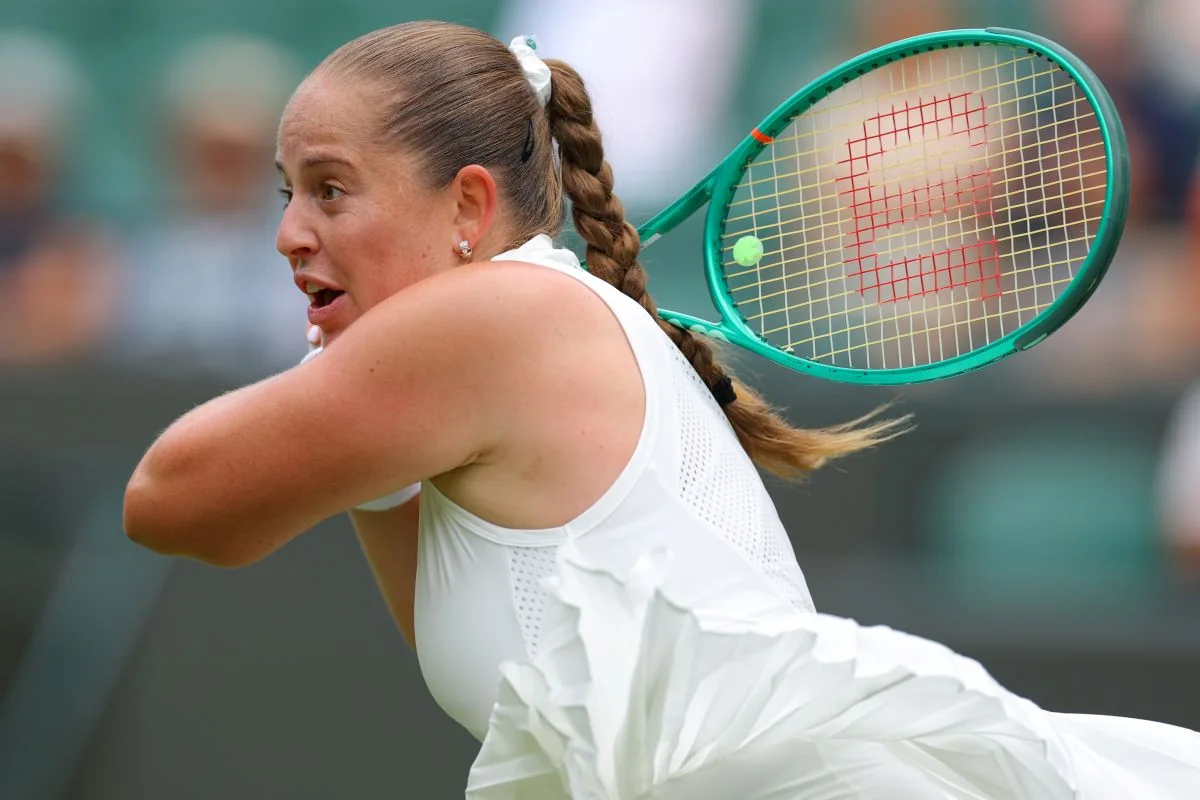
TennisNow's contemporaneous report also describes the forearm treatment. Neither the treatment nor her improvement erased the tennis still required afterward. Pegula continued to create winning opportunities. Describing the entire match as decided at the timeout would omit the subsequent match points and the exchanges in which they were saved.
Momentum is not evidence of a fabricated injury
Comments in the post-match discussion focused on the timing and the change in Ostapenko's play. It is reasonable to discuss a break's possible effect on rhythm. It is a different claim to say the condition did not exist. The scoreline establishes neither a diagnosis nor dishonesty.
A simple causal check helps: treatment is intended to make a treatable problem more manageable. Improvement afterward can therefore be consistent with legitimate treatment. That does not prove treatment explains every improved shot; confidence, decisions and the opponent's play can also be discussed as tennis factors. The public evidence here supports a comeback after medical attention, not a finding of abuse of the medical rule.
Our Wuhan guide follows the tournament more broadly. The rule lesson from this match is narrower: assess whether the process was appropriate using the medical and officiating evidence, rather than make the eventual winner's identity the test of whether the earlier request was legitimate.
What to listen for when the physio comes on court
The chair's announcements make the process easier to follow than a running television timer. Listen first for whether the physio has merely been requested or whether a formal medical timeout has begun. Then distinguish ordinary changeover treatment from treatment requiring the additional timeout allowance.
- The assessment: has the medical professional finished evaluating, or is the condition still being assessed?
- The start: has the chair publicly announced a medical timeout? That is the relevant signal for the formal treatment period.
- The category: is this an acute treatable issue, treatment during a normal break, isolated cramping or a medically assessed wider illness?
- The finish: treatment completion and the call of time matter. A completed treatment does not create permission for an indefinite delayed restart.
- A later visit: is it another timeout for a distinct condition, or permitted follow-up treatment at an ordinary break?
That record also makes legitimate complaints stronger. If treatment appears to continue beyond an announced allowance, the issue is the timing of treatment. If a player delays restarting after completion, the issue is resumption. If someone alleges fabricated symptoms, that is a much more serious factual claim requiring evidence beyond the score before and after the break.
The official rules page should be checked again when a new season or revision changes the procedure. For the match you are watching, the WTA matches today page helps identify the event and round, while the calendar supplies tournament context. Use the applicable competition's rules: a remembered allowance from a men's major, a recreational match or an old season is not automatically the current WTA rule.
Medical timeouts combine two interests that both matter: enabling appropriate assessment and treatment, and keeping competition moving fairly. Understanding the stages, limits and decision makers lets a fan assess that balance without mistaking every successful treatment for gamesmanship or every long television interruption for a three-minute violation.