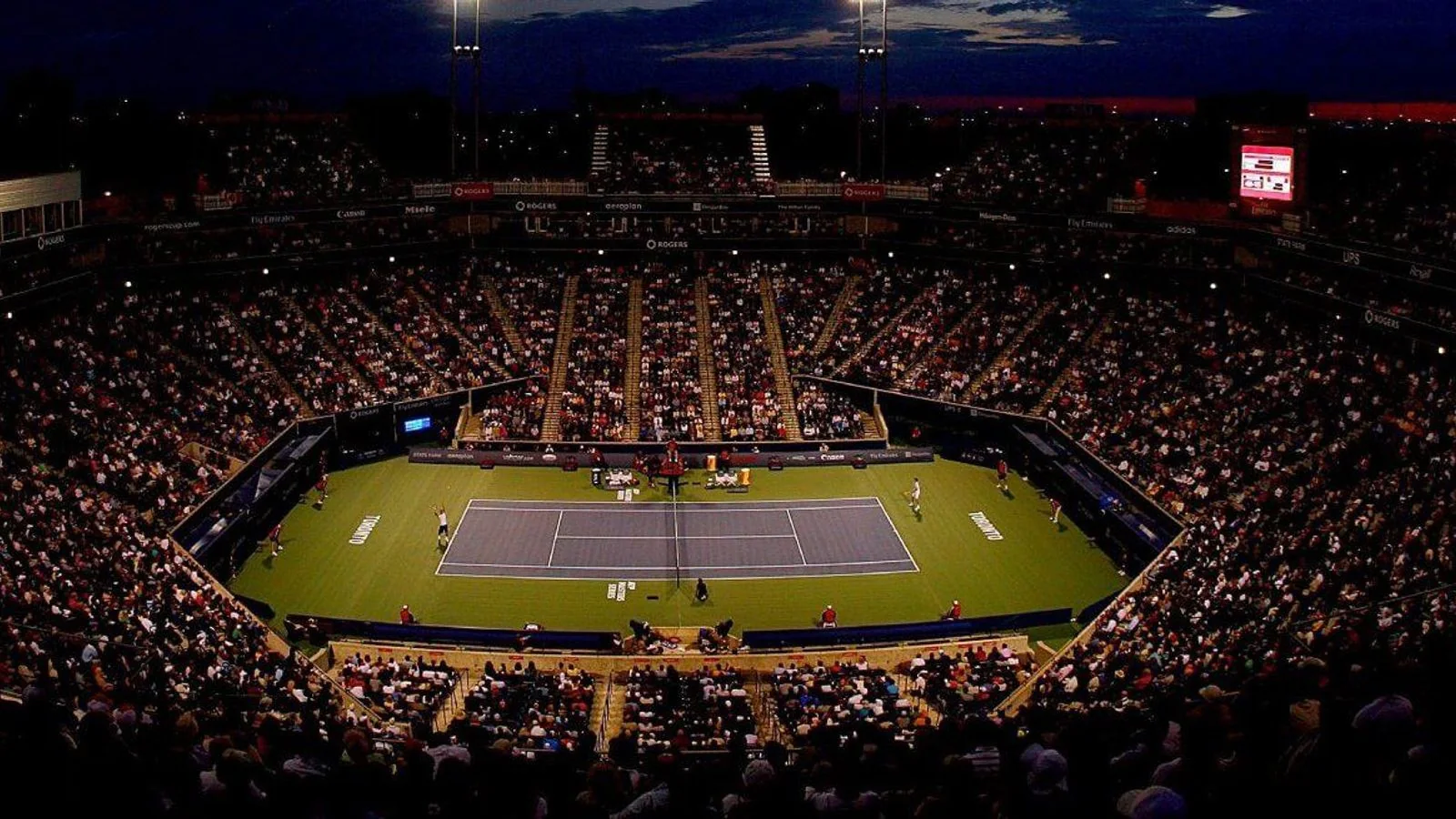
WTA Toronto final prediction: a narrow Rybakina lean
Prediction: Elena Rybakina has a narrow, low-confidence edge over Iga Swiatek in the 2026 Toronto final, with three sets the most plausible match shape. This is a tennis forecast, not a guarantee or a betting instruction. The matchup was still pending when checked on August 13.
Lean
Rybakina, narrowly
Likely shape
Competitive, possibly three sets
Confidence
Low: head-to-head is 6-6
The lean begins with the newest direct evidence. Rybakina beat Swiatek 7-5, 6-1 in the 2026 Australian Open quarterfinal, using a highly effective first serve to level their completed head-to-head at 6-6. She also arrived in Toronto with consecutive comebacks against Osaka and Gauff and a tour-leading hard-court win total.
The case is intentionally narrow because Swiatek has repeatable answers. Her return can reduce Rybakina's free points, and she reached the final by recovering after a 1-6 second set against Svitolina. An even rivalry is a warning against converting the newest result into a permanent matchup rule.
No single “official WTA odds” price exists. Sportsbook lines differ by operator, country, margin and timestamp. Searches did not produce a stable universal quote that could be published responsibly, so this guide does not invent one. Readers comparing a local regulated market should verify the time and exact market before interpreting it.
The forecast changes if early evidence changes. If Rybakina repeatedly wins short first-serve points and controls the next ball, the lean strengthens. If Swiatek returns deep, exposes second serves and extends neutral rallies, the matchup can swing toward her. A useful prediction defines those conditions instead of pretending the outcome is known.
For non-bettors, the same framework works as a viewing guide. Watch the first two return games, second-serve pressure and rally length. For bettors, remember that a plausible analysis can still lose; never treat a forecast as income or chase a result after the match moves against you.
Why Rybakina can win the Toronto final
Rybakina's clearest route is to make the final a serve-and-first-strike contest. Her best delivery does more than create aces: it produces short returns, opens the next forehand and prevents Swiatek from establishing the deep return position that drives her pressure. That pattern matters more than a raw ace total because even a returned serve can leave Rybakina in control of ball three.
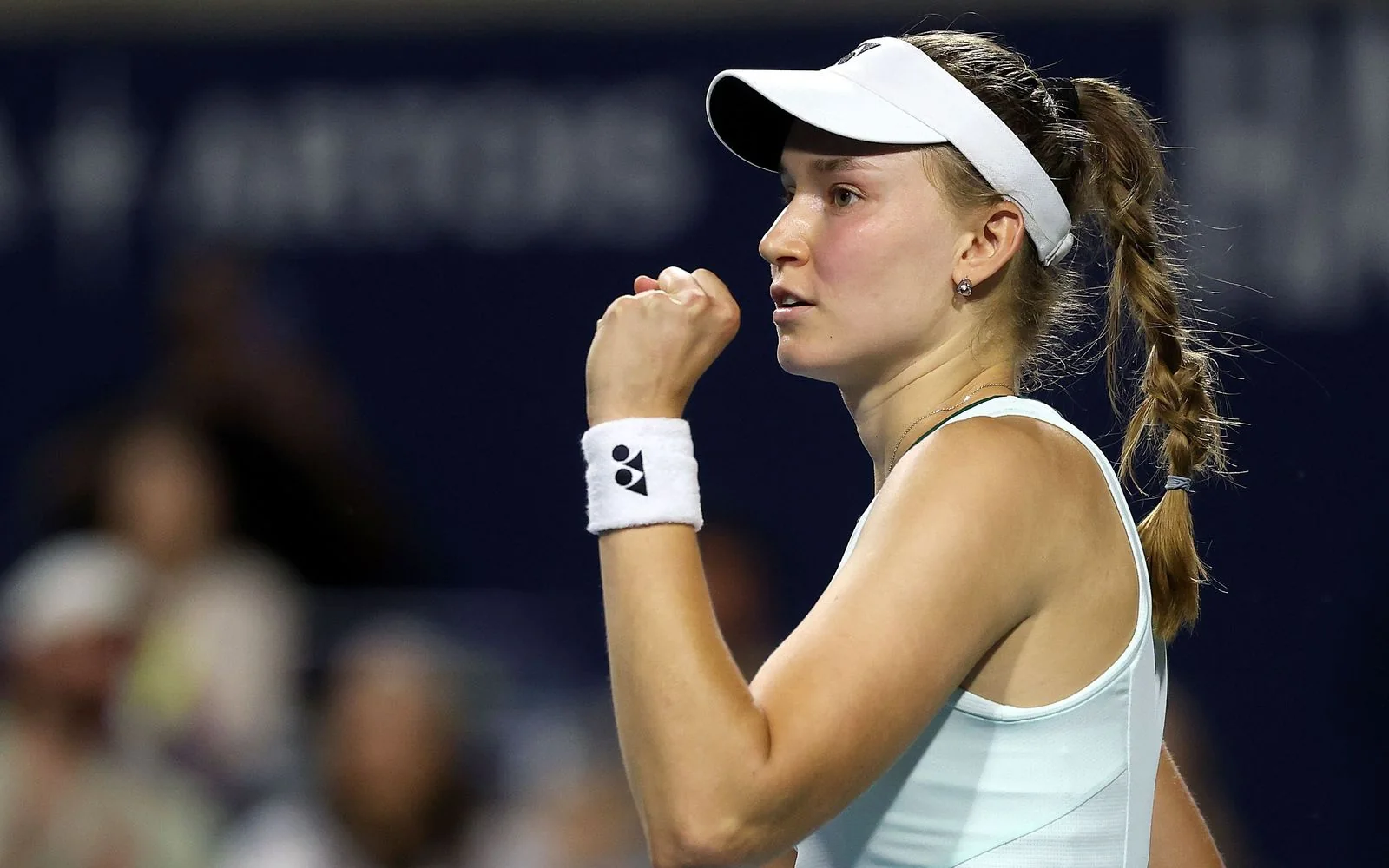
Their latest completed meeting supplies useful, though not decisive, evidence. In the 2026 Australian Open quarterfinal, Rybakina beat Swiatek 7-5, 6-1 and won eight of the final nine games. She struck 11 aces, won 79.3% of her first-serve points and still won 56.7% behind the second serve. Those numbers describe what her winning script looks like; they do not promise the same percentages in Toronto.
| Rybakina indicator | Why it helps | Warning sign |
|---|---|---|
| High first-serve effectiveness | Shortens points and protects service games | A low first-serve rate gives Swiatek more second serves |
| Forehand control after serve | Keeps Swiatek from taking the baseline | Rushed errors can erase the serve advantage |
| Calm after losing a set | Her Gauff semifinal comeback shows reset ability | Repeated early deficits increase physical and scoreboard pressure |
There is also broader serve context. WTA's 2025 season review listed Rybakina as the tour ace leader with 516, but that is a prior-season marker rather than a Toronto prediction model. The more relevant live question is whether she lands enough first serves under final-round pressure and earns an attackable next ball.
Her Toronto semifinal adds a resilience signal: she recovered from a set down to beat Coco Gauff 5-7, 6-2, 6-2. Still, the Rybakina case weakens quickly if Swiatek blocks returns deep, extends exchanges beyond the opening shots, or repeatedly attacks second serves. A serve-led favorite can look dominant and vulnerable within the same service game, which is one reason the overall pick remains narrow.
Why Swiatek can overturn the matchup
Swiatek's path starts with turning Rybakina's service games into exchanges rather than isolated explosions. She does not need to crush every first serve. A compact block returned deep through the middle can deny an immediate angle, make Rybakina hit one more ball and create a chance to take the baseline on the next shot. Repeating that neutralizing return is more realistic than hunting clean winners from the first point.
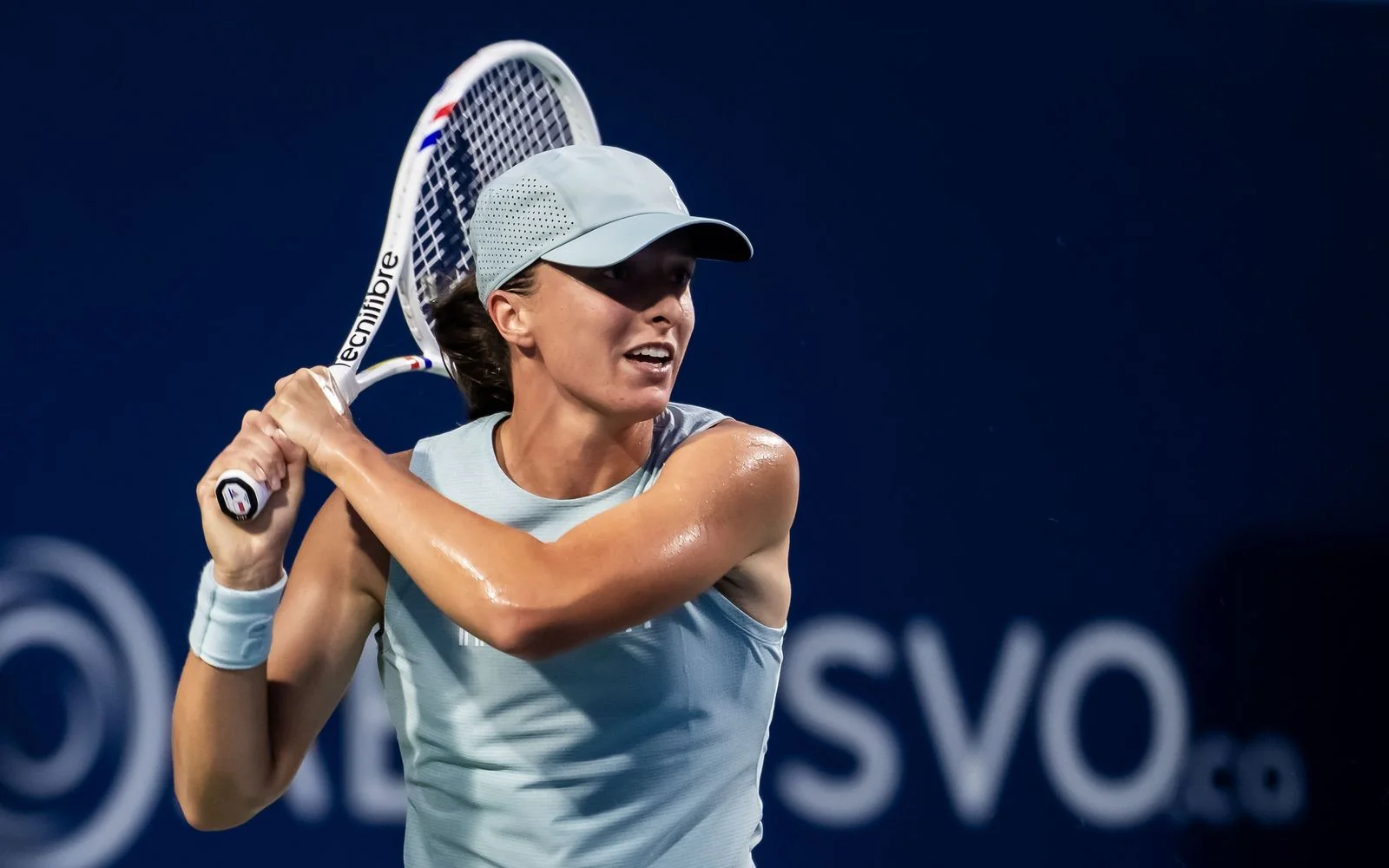
The Australian Open loss shows both the problem and the opportunity. Swiatek won just 20.7% of first-return points and 40.0% on Rybakina's second serve in that match. Improving the second number is especially important: it can create more 15-30 and deuce pressure even when first serves remain difficult to touch. One or two extra contested service games can reshape an otherwise serve-dominated set.
Swiatek's positive signals
- Deep returns that land beyond the service line
- Early pressure on second serves
- Neutral rallies reaching four or more shots
- Comfort changing direction without overhitting
Signals the lean is holding
- Rybakina routinely starts at 30-0
- Short returns invite immediate forehands
- Swiatek presses for low-percentage return winners
- Second-serve points still end quickly
Historical return quality supports the counterargument. WTA's 2025 season review credited Swiatek with winning 47.5% of return games, an exceptional prior-season figure rather than a promise for this final. It explains why a single poor return performance should not erase her ability to apply sustained scoreboard pressure.
Toronto has already shown her capacity to reset. Swiatek defeated Elina Svitolina 6-3, 1-6, 6-3 in the semifinal, stopping a match that had swung sharply away from her. Combined with the even 6-6 completed head-to-head, that recovery keeps this prediction close. If she varies return depth, attacks second serves selectively and accepts neutral balls instead of forcing immediate damage, she can overturn the Rybakina lean.
How to read Toronto tennis odds and implied probability
Betting odds combine a price with the operator's margin; they are not an official WTA prediction. Toronto markets can change after news, warmups, weather or customer action, and two licensed operators can post different prices at the same moment. That is why an odds discussion should include its format, market and timestamp instead of presenting one number as universal.
Implied probability translates a price into a percentage. For decimal odds, divide one by the decimal number and multiply by 100. Decimal 2.00 therefore implies 50%. For positive American odds, divide 100 by the odds plus 100; +150 implies 40%. For negative American odds, divide the absolute price by the absolute price plus 100; -150 implies 60%.
| Hypothetical price | Calculation | Implied probability | What it does not mean |
|---|---|---|---|
| 2.00 decimal | 1 ÷ 2.00 | 50% | The player will win exactly half of comparable finals |
| +150 American | 100 ÷ 250 | 40% | A current Toronto line or recommendation |
| -150 American | 150 ÷ 250 | 60% | Certainty merely because the price is negative |
All three rows are teaching examples, not live Rybakina-Swiatek quotes. Returns also need careful reading. At decimal 2.00, a successful $10 stake would return $20 in total, including the original $10 stake; the profit would be $10. Confusing total return with profit makes a price look more generous than it is.
The margin becomes visible when both sides are converted. If two hypothetical players were each priced at 1.91, each would imply about 52.36%. Together they total roughly 104.72%, not 100%. The excess represents the built-in market margin before any more advanced attempt to estimate a margin-free probability.
Practical rule: compare like with like. Match-winner, first-set winner, handicap and total-games prices answer different questions. Record the operator, jurisdiction and time, then calculate the percentage. A model edge exists only if a well-supported personal estimate exceeds the market's adjusted probability; a confident tennis opinion alone is not enough.
This article leaves out a live number because searches did not find a stable, universally applicable quote. Readers who choose to view a market should use a locally licensed operator and recheck the displayed terms. Anyone who only wants a match forecast can use the same implied-probability math to understand public prices without placing a wager.
Live odds, line movement and responsible betting limits
A live price can move after a break point, medical timeout, visible serving issue or simply a run of bets. The direction is descriptive, not prophetic. A shorter Rybakina price might reflect stronger serving, but it can also reflect an operator balancing exposure. A movement by itself does not prove that informed bettors know the result.
In-play markets also magnify recency bias. One brilliant return game can make a player look unstoppable, while one loose hold can make a sound pre-match analysis feel obsolete. Tennis momentum is real in a tactical sense, yet the belief that a player is “due” after losses is a gambling myth. Past losses and near misses do not force the next point, set or wager to win.
Before the match
Set one affordable money limit and a time limit. Check the market type, price format and operator licence. Never borrow to bet.
During the match
Do not increase a stake to recover an earlier loss. Pause if emotion, frustration or urgency replaces the original plan.
After the match
Stop at the preset limit regardless of the result. Do not treat a win as proof of skill or a loss as a debt that must be repaid.
Sports betting is gambling, not an investment or dependable income stream. A responsible cap should be small enough that losing the full amount does not affect rent, food, bills, savings or other obligations. Someone who feels pressure to hide activity, chase losses or continue beyond a limit should step away and use local support or self-exclusion tools.
Access and regulation depend on location. For an Ontario reader, operator status should be checked through iGaming Ontario rather than inferred from a logo or advertisement. Readers elsewhere need their own local regulator because a site licensed in one jurisdiction may not be legal or available in another. This guide does not direct readers to an operator.
A safer viewing alternative: write down the two tactical indicators you expect—such as Rybakina's first-serve points won and Swiatek's pressure on second serves—then watch whether they occur without staking money. The prediction remains testable, and the match remains engaging, without financial risk.
If betting stops feeling optional or entertaining, the correct response is not a better model or a new live line. It is to stop. Limits work only when they are fixed before the emotional swings of a final and honored after both wins and losses.
Final prediction scenarios and FAQ
The final call remains Rybakina narrowly, with three sets the most plausible route. The official WTA tournament page still listed the event in progress, on Day 12 of the final, with Rybakina and Swiatek marked as playing when this section was researched on August 13. No completed result is being folded backward into the forecast.
| Possible outcome | Match pattern | Early clue |
|---|---|---|
| Rybakina in two | First serve and forehand keep points short | Comfortable holds with few second-serve rallies |
| Rybakina in three | Swiatek raises return pressure, but Rybakina resets | Each player controls a distinct tactical phase |
| Swiatek in two or three | Deep returns expose second serves and lengthen exchanges | Rybakina repeatedly starts service games under scoreboard pressure |
The three-set lean is not an exact-score promise. Both semifinal scores support the possibility of swings: Rybakina beat Gauff 5-7, 6-2, 6-2, while Swiatek beat Svitolina 6-3, 1-6, 6-3. Their completed rivalry was also level at 6-6 after Rybakina's 7-5, 6-1 Australian Open win. Those facts argue for humility more than precision.
Who is predicted to win the 2026 Toronto final?
Rybakina is the narrow pick because her serve-first-strike pattern worked in the latest meeting and has held up through difficult Toronto matches. Confidence is low because the overall head-to-head is even and Swiatek's return supplies a direct counter.
Is there a predicted exact score?
No high-confidence exact score. Three sets is the preferred match shape, but a few points in early return games could produce a straight-set result in either direction.
Are the odds in this guide live Toronto prices?
No. The 2.00, +150, -150 and 1.91 figures are hypothetical examples used to teach implied probability and margin. A live price must be checked with a licensed local operator and a timestamp.
Does the prediction mean someone should bet?
No. A tactical opinion can be wrong, and abstaining removes financial risk. Anyone who chooses to gamble should use an affordable preset limit and never chase losses.
What would change the forecast during the match?
Repeated deep Swiatek returns and pressure on Rybakina's second serve would move the read toward Swiatek. A stream of short returns and controlled plus-one forehands would strengthen the Rybakina case. Those observations explain performance; they still cannot guarantee the next set.
The best use of this prediction is as a falsifiable match guide. Note the serve quality, return depth and rally length, then compare the evidence with the scenarios above. Whether the pick wins or loses, do not rewrite uncertainty as certainty after the result.