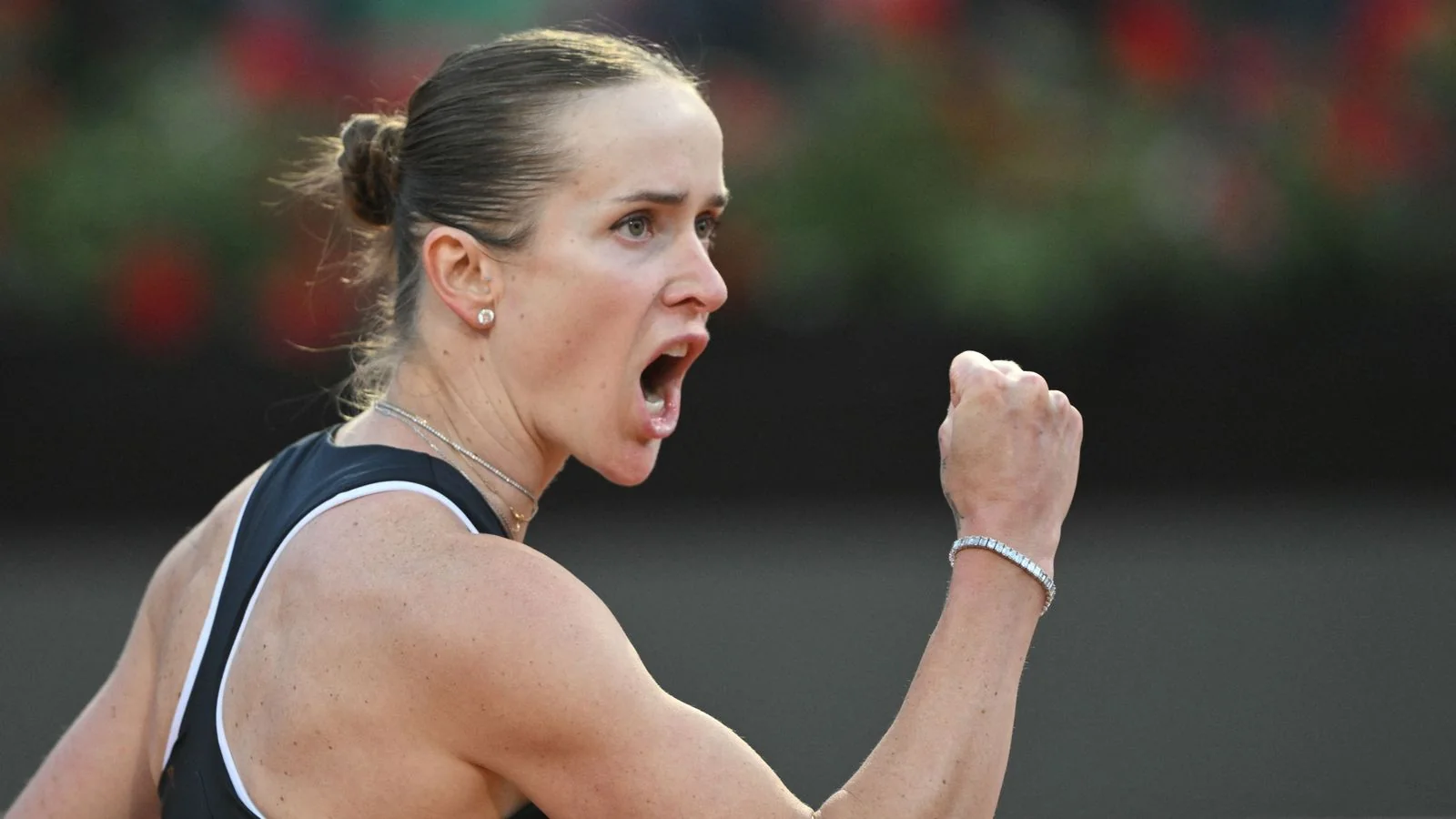
Elina Svitolina won the 2026 Italian Open women's singles title by defeating Coco Gauff 6-4, 6-7(3), 6-2 in Rome. Mirra Andreeva and Diana Shnaider won the women's doubles, beating Cristina Bucsa and Nicole Melichar-Martinez 6-3, 6-3. Both competitions are finished; this is a review of their results and the matches that shaped the tournament.
Svitolina's third Rome trophy was the headline, but the route deserves as much attention as the final. Three demanding closing rounds, Gauff's repeated recoveries, Sorana Cirstea's run and a doubles draw with its own turning points made this edition more than a two-name scoreboard.
The 2026 women's champions and final scores
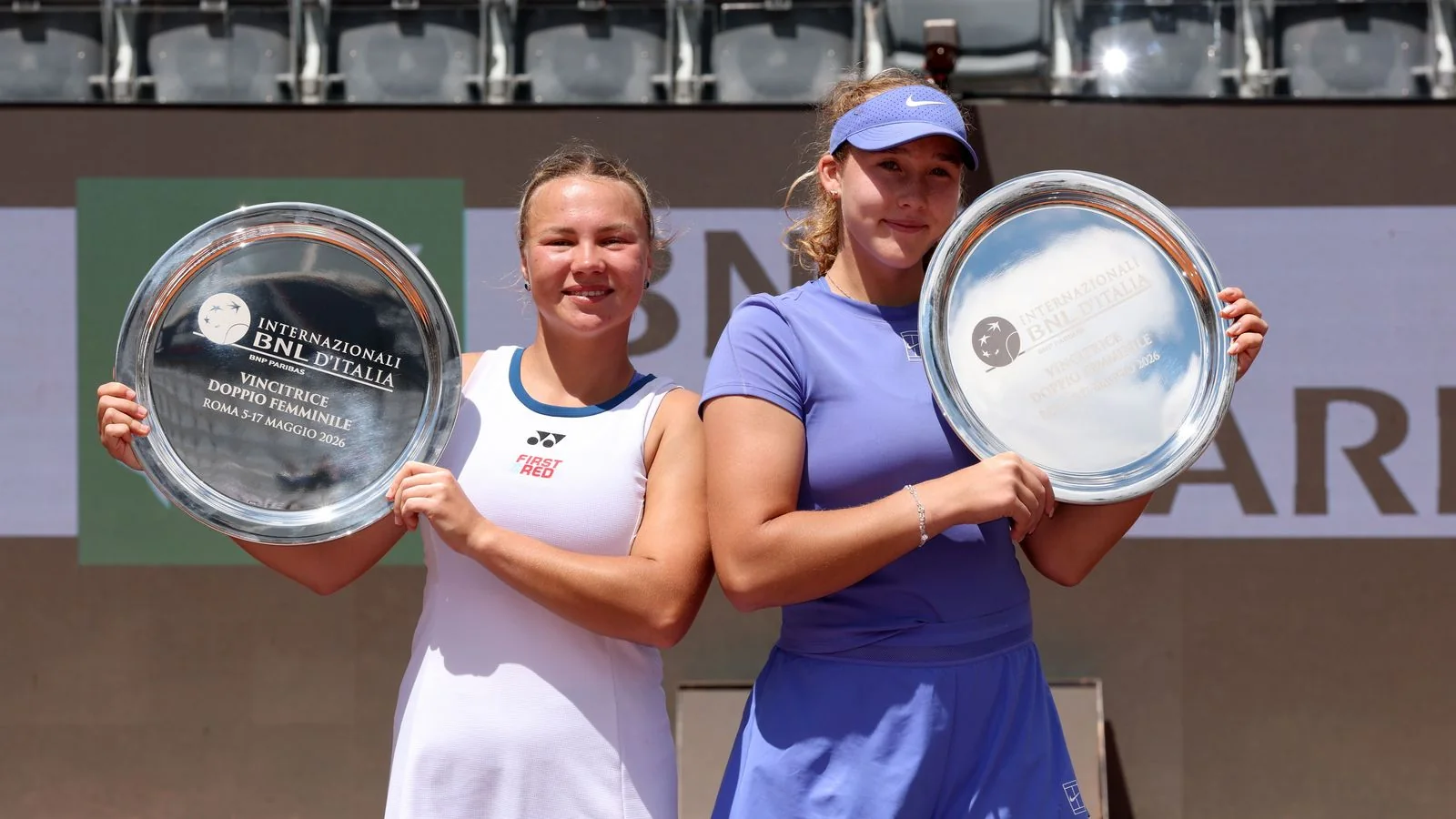
Elina Svitolina won the women's singles title and Mirra Andreeva partnered Diana Shnaider to win women's doubles. The two finals finished on different days: singles on Saturday, May 16, and doubles on Sunday, May 17. Both competitions are complete; these results belong to the 2026 edition.
| Final | Champions | Runners-up | Winning score |
|---|---|---|---|
| Singles, May 16 | Elina Svitolina | Coco Gauff | 6–4, 6–7(3), 6–2 |
| Doubles, May 17 | Mirra Andreeva / Diana Shnaider | Cristina Bucsa / Nicole Melichar-Martinez | 6–3, 6–3 |
Rome was a WTA 1000 tournament on outdoor clay at the Foro Italico. The event's published May 5–17 window describes the wider competition, rather than the date of every championship match. That distinction matters when an archive puts the overall end date beside a singles final played the previous afternoon.
The singles story combined Svitolina's return to a familiar trophy with a demanding finish against three major opponents. The doubles story followed a different path: Andreeva lost in the singles quarterfinals but remained in another competition with Shnaider. Reading only one draw would miss that second achievement.
Use the scores above for a quick answer, then follow the individual routes below to understand how the titles were won. The WTA calendar provides season-wide context. A completed Rome review explains this particular tournament; a current-day schedule is the appropriate place to look for tennis being played now.
How Svitolina won the singles final
The final lasted two hours and 49 minutes, with Svitolina having to recover both within a set and after losing one. Its most revealing feature was the difference between creating pressure and turning that pressure into breaks. Gauff had opportunities throughout the contest, but Svitolina repeatedly prevented those moments from becoming a lasting advantage.
Taking the opening set after falling behind
Gauff led 2–0 and later 4–2 in the first set. Svitolina recovered, saved three break points while holding for 5–4, then broke to secure the set. That sequence changed the match's direction without making the earlier exchanges irrelevant: Gauff had already demonstrated that she could trouble the Ukrainian's service games.
The distinction helps explain why a 6–4 set can contain more uncertainty than the final two-game margin suggests. A player can spend substantial time defending her serve yet still leave with the set if she survives those games and takes a later return opportunity. The score records the successful holds and breaks, rather than every chance that preceded them.
Across the final, Svitolina saved 14 of the 17 break points she faced. Gauff converted three of those chances; Svitolina converted six of her own 15. The opportunities were plentiful on both sides. The difference was not that one player never came under pressure, but how often the pressure produced a change in the game score.
The response that decided the third set
Gauff broke for 6–5 in the second set, Svitolina immediately forced a tiebreak, and the American won that breaker to level the match. The third set therefore began with the championship still unsettled. Svitolina broke in the fifth and seventh games, reached 5–2, then saved three more break points before closing on her third match point.
Her response is the central reason to revisit the final beyond its headline result. Losing a close second set did not stop her from establishing a new advantage. Equally, the 6–2 deciding set should not be read as an entirely comfortable finish: the last service game still required her to protect the lead she had built.
For a replay, watch the vulnerable service games as closely as the spectacular winners. They show how a match can remain competitive while the eventual champion consistently solves the most consequential situations. Rome's final was an example of surviving repeated challenges and then converting enough return opportunities to complete the job.
The champion's route became harder at the finish
Svitolina began with a first-round bye, then defeated Noemi Basiletti, Hailey Baptiste and Nikola Bartunkova without dropping a set. A bye advances a player through the bracket without adding a played victory. She therefore needed six match wins for the title, with the final three requiring a markedly different kind of effort from the earlier rounds.
Her finish brought together the second, fourth and third seeds. Those numbers describe the 2026 Rome draw, not the players' current rankings when you read this review. The sequence matters because it was a sustained test against prominent opponents rather than one upset followed by an uncontested passage.
| Round | Opponent | Svitolina's winning score |
|---|---|---|
| Quarterfinal | Elena Rybakina, seed 2 | 2–6, 6–4, 6–4 |
| Semifinal | Iga Swiatek, seed 4 | 6–4, 2–6, 6–2 |
| Final | Coco Gauff, seed 3 | 6–4, 6–7(3), 6–2 |
Rybakina and Swiatek posed different tests
Against Rybakina, Svitolina had to overturn a first-set deficit. The WTA's quarterfinal report records that she saved 16 of 20 break points. That detail gives the comeback substance: recovering the set score required repeatedly preventing Rybakina from making further progress on return, rather than simply waiting for the earlier deficit to disappear.
The semifinal presented the opposite set sequence. Svitolina won the first set against Swiatek, lost the second, then took the third. A player protecting an initial advantage faces a different scoreboard situation from one chasing a match after an early setback. Svitolina handled both routes to a deciding set in consecutive rounds.
Her final then added another version of the same demand: an opening set secured, a second set lost narrowly, and the need to establish control again. The common feature was her ability to win a fresh contest after the match had reached one set each. That is a useful way to understand the title without reducing three different opponents to an identical tactical story.
There is also a limit to what a score alone can explain. The bracket establishes who won and how the sets were divided; it cannot identify every reason a particular rally or service game changed. For a fuller viewing, pair those results with the match footage and focus on how the players handled the transition into the deciding set.
Gauff's resilience and Cirstea's breakthrough
Gauff's tournament deserves to be read as more than the losing half of the final. She reached a second successive Rome championship match through a sequence that repeatedly required recovery. Elsewhere in her half, Cirstea produced one of the tournament's most consequential runs, removing the top seed before reaching her first Rome semifinal.
Three comeback wins before the semifinal
Solana Sierra, Iva Jovic and Mirra Andreeva each won the first set against Gauff. The American came back to defeat all three, including a 4–6, 6–2, 6–4 quarterfinal win over Andreeva. It was a route that demonstrated her ability to remain competitive after an unhelpful opening, while also requiring more work than a run of straight-set victories.
Her 6–4, 6–3 semifinal win over Cirstea changed that pattern. Gauff still trailed 4–2 in the first set before winning four consecutive games, but she completed the match in two sets. She could therefore arrive in the final with evidence of both extended comebacks and a more direct finish.
Those observations can coexist. Repeated recovery is a strength; regularly needing to recover also creates another challenge to solve. Neither point proves why the final went against her, and the length of earlier matches alone cannot establish a fatigue explanation. The result shows what happened, while any claim about its cause needs stronger evidence.
The Coco Gauff player page is the place for her ongoing schedule and results. The Rome sequence is a dated chapter in that record, not a permanent description of her form.
Cirstea's run changed the top half
Cirstea was 36 when she reached the Rome semifinals for the first time. Her victims included top seed Aryna Sabalenka and Jelena Ostapenko, whom she beat 6–1, 7–6(0) in the quarterfinals. That achievement was specific to Rome: it was her fourth career WTA 1000 semifinal, rather than her first appearance at that level anywhere.
Her progress also explains why a tournament's original projected matchups differ from its completed route. A seed's presence in the draw does not mean the eventual champion must beat her. Cirstea removed Sabalenka; Svitolina's final challenge was Gauff. Following the actual chain of results gives each player credit for the work she did, rather than the opponents somebody expected her to face.
Andreeva and Shnaider took the doubles title
Andreeva and Shnaider defeated seventh seeds Bucsa and Melichar-Martinez 6–3, 6–3 in Sunday's doubles final. It was their third tour-level trophy together and their second at WTA 1000 level. Their unseeded position in this draw therefore did not describe a partnership without experience of winning major tour events.
Their earlier route contained a much closer escape than the final scoreline. In the quarterfinals, they beat Anna Danilina and Asia Muhammad 4–6, 6–3, [11–9]. The bracket then records a 6–1, 6–2 semifinal victory over Storm Hunter and Jessica Pegula. A tight deciding match tiebreak and a straight-set championship match were different stages of the same successful run.
When reading that quarterfinal score, the bracketed numbers describe the deciding match tiebreak's points. They are not another ordinary set of eleven games against nine. Keeping the notation clear helps distinguish how close the pair came to elimination from how decisively they finished the final.
Why a walkover is different from a played defeat
Defending champions Sara Errani and Jasmine Paolini won their opening match, then withdrew before facing Linda Noskova and Tereza Valentova. The official doubles draw lists Paolini's left ankle injury and records the advance as a walkover. It does not supply a losing match score for the Italian pair because that match was not played.
That distinction changes the story of a title defense. A pair can leave the draw without being beaten on court, while its next scheduled opponents advance without winning a played contest. Neither outcome should be converted into a fictional straight-set result to make a bracket look complete.
It also reinforces why the doubles tournament deserves its own account. Andreeva's singles quarterfinal loss ended one campaign, while she and Shnaider continued another. The doubles trophy was the product of their separate partnership and route, with its own close matches, opponents and final.
Why Svitolina's third Rome title mattered
Svitolina had won Rome in 2017 and 2018. Her third title arrived eight years after the second and brought her career total to 20 WTA singles titles, a milestone no Ukrainian player had previously reached. Those are two different measures of achievement: one describes her special connection with this tournament, while the other places the week within a much longer career.
The interval matters because this was more than another trophy added to an uninterrupted sequence. Svitolina became a mother in 2022 and received the WTA's Comeback Player of the Year award in 2023. By the start of 2026 she had already rebuilt enough form to win Auckland and reach the Australian Open semifinals. Rome therefore belongs to a developing body of evidence. It was a particularly demanding demonstration that her rebuilt level could hold up through the closing rounds of a major clay tournament.
The opponents give that claim substance. A title can be remembered mainly through the final, but Svitolina had already needed deciding sets against Rybakina and Swiatek before meeting Gauff. The last three matches tested her repeatedly rather than offering one isolated upset followed by a comfortable finish. Winning all three is the strongest reason to treat this as a significant competitive achievement alongside the personal milestone.
There is also a useful distinction between experience and invulnerability. Svitolina lost a set in each of those matches. In the final, she failed to end the contest in two sets and still had to defend her lead while serving for the championship. Her success did not depend on avoiding every difficult passage. It depended on making the result hers after those passages had occurred. That is a more precise reading of this draw than describing the champion as simply cruising through Rome.
The third title also connects two periods of women's tennis without making them identical. Her earlier Rome victories explain her history at the Foro Italico; they do not automatically explain how she beat this particular field in 2026. The recorded sequence of opponents and scores supplies that explanation. For a season review, both perspectives belong together: the career landmark tells us why the celebration carried weight, and the individual matches tell us why the title was earned.
Use the completed Rome archive for the right question
The 2026 women's event is complete. Its overall dates were May 5 to 17, with the singles final on May 16 and the doubles final on May 17. A search for Italian Open results now should lead to a finished competition, not imply that these players are meeting in Rome today. The championship scores at the top of this review are the quickest answer when the question is simply who won.
For a particular earlier match, open the official 2026 Rome draw. A bracket adds information that a list of finalists cannot: which half a player occupied, the opponents she actually faced and the round in which a result occurred. Read each score from the named winner's perspective. In doubles, preserve a walkover label rather than turning it into a score or a played defeat. That small distinction changes how a team's run should be described.
For the wider season, the 2026 WTA 1000 tournament guide places Rome alongside the other events at this level, while the WTA tournament calendar helps compare dates and surfaces. Those pages answer a different question from a match report. They are useful for locating the clay swing and planning what to follow; this review explains the completed women's competition in Rome.
The most revealing result remains the combination of the last three singles rounds. Svitolina beat Rybakina, Swiatek and Gauff in succession, recovering from a lost set every time the match required another. Alongside Andreeva and Shnaider's doubles success and Cirstea's semifinal run, that sequence gives the 2026 edition its identity. It is a tournament worth remembering through the full path to the trophies, as well as the names engraved on them.