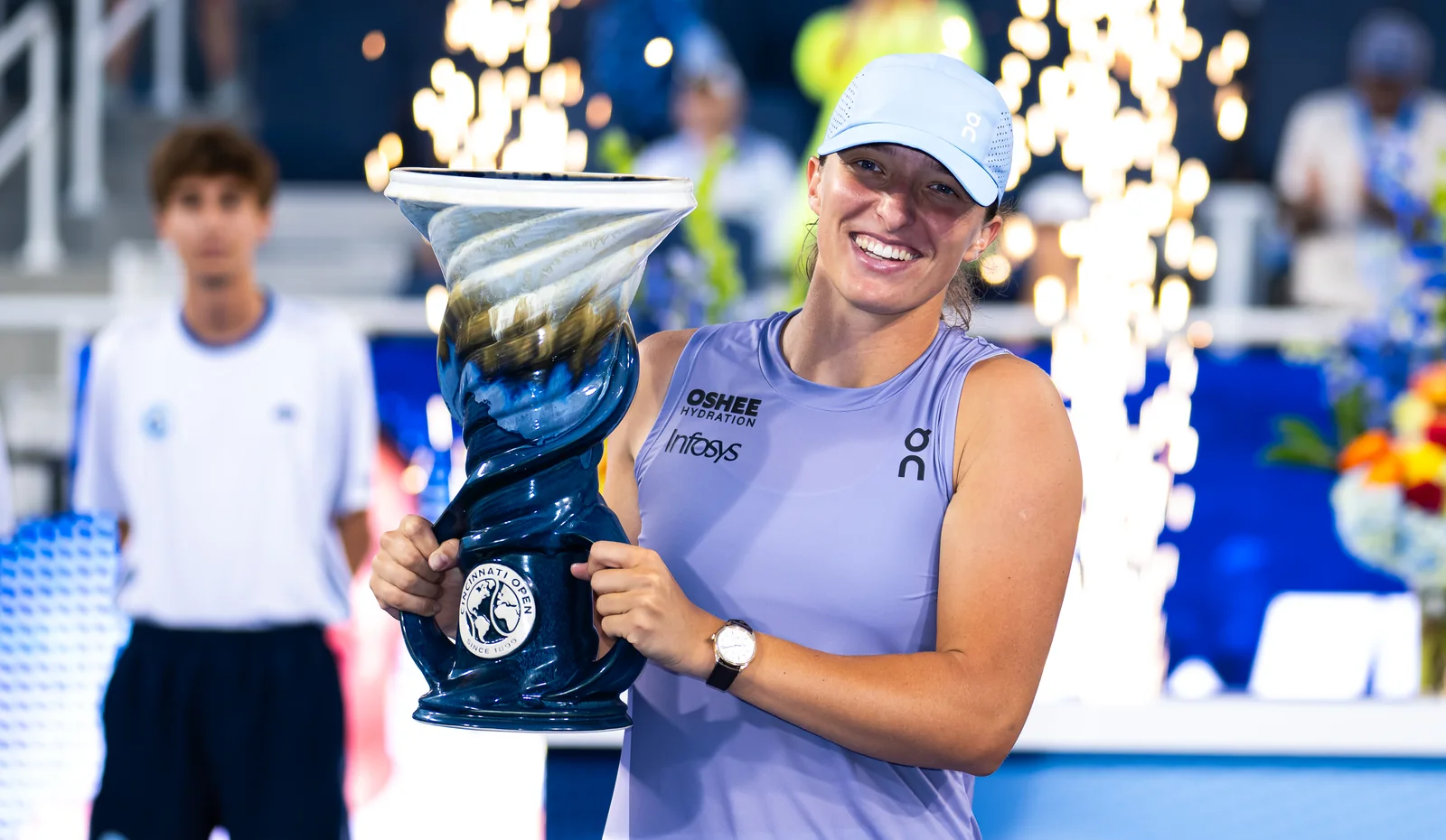
The 2026 Cincinnati women’s field included Aryna Sabalenka, Elena Rybakina, Jessica Pegula, Coco Gauff, Mirra Andreeva, Iga Swiatek, Amanda Anisimova, Alexandra Eala and many more leading WTA players. But an entry-list name is not proof that a player ultimately competed. This guide separates the July announcement from the final August draw, then records seeds, wild cards, qualifiers and verified withdrawals.
Main-draw format
96 singles players, with seeded players receiving first-round byes.
Field check
The final WTA draw, not the earlier promotional list, confirms who occupied a draw line.
Champion
No. 4 seed Coco Gauff finished the event as women’s singles champion.
The distinction matters because the field changed between the original announcement and first ball. Karolina Muchova, Jasmine Paolini, Jaqueline Cristian and Naomi Osaka were among the verified pre-event withdrawals, while alternates and a newly seeded Katerina Siniakova moved into the draw. The sections below use dated official sources so a reader can tell an initial commitment, a final draw place and an in-tournament withdrawal apart.
Cincinnati 2026 women’s field at a glance
The final draw brought together the leading tier of the WTA field and a broad second group of established contenders, young players and qualifiers. Aryna Sabalenka occupied the No. 1 seed line, followed by Elena Rybakina, Jessica Pegula and Coco Gauff. Mirra Andreeva, Linda Noskova, Iga Swiatek, Elina Svitolina, Amanda Anisimova and Marta Kostyuk completed the first ten seeded positions.
Leading seeds
Sabalenka, Rybakina, Pegula, Gauff, Andreeva, Noskova, Swiatek, Svitolina, Anisimova and Kostyuk carried the top ten seed numbers in the final draw.
Notable depth
The draw also included Madison Keys, Belinda Bencic, Barbora Krejcikova, Alexandra Eala, Amanda Anisimova, Emma Navarro, Clara Tauson and Leylah Fernandez.
The official tournament player directory is useful for an alphabetical lookup, but its displayed rankings can continue to change as the season moves on. Seed numbers are a fixed part of the Cincinnati draw and are therefore safer for reconstructing this tournament. A player can also appear in the directory without sharing the same entry route: direct acceptance, wild card, qualifier, special exemption, alternate and lucky loser are separate paths into the bracket.
The deepest runs show why a final-field guide needs outcomes as well as celebrity names. Gauff, seeded fourth, won the title. Pegula, seeded third, finished runner-up. Seventh seed Swiatek reached the semifinals, while unseeded Sara Bejlek reached the other semifinal after eliminating top seed Sabalenka. Readers interested in every matchup should use the completed Cincinnati women’s draw rather than infer results from billing or ranking.
Entry list versus the final main draw
The July 23 entry list was a commitment snapshot, not a permanent roster. At that point WTA described a field containing the entire top ten and 75 of the top 77 players. It also set out the intended 96-player composition: 75 direct entrants, 12 qualifiers, eight wild cards and one special exemption. The same announcement clearly said the list was subject to change.
Changes arrived before the draw. WTA confirmed on August 8 that Karolina Muchova, Jasmine Paolini and Jaqueline Cristian would miss Cincinnati. Kamilla Rakhimova, Maria Timofeeva, Taylor Townsend and Simona Waltert moved into the main draw as the entry list shifted. That movement also changed how a previously allocated wild card could be used because Townsend no longer required it after gaining direct entry through withdrawals.
A second important change came on August 12. Naomi Osaka withdrew citing fatigue after the draw had been made. Because the first Thursday order of play was not yet released, Katerina Siniakova moved into Osaka’s seeded position and received the bye. A qualifier or lucky loser then took Siniakova’s original draw line. This is a concrete example of why a final draw can contain a seed number that was absent from an earlier preview.
Entry list
Shows intended participation at the publication cutoff.
Final draw
Shows who held a place after replacements and qualifying.
Results
Show who actually played, advanced by walkover or withdrew during the event.
For historical accuracy, this article uses all three layers. It does not delete the original entry context, but it never treats that context as the final answer to “Who played Cincinnati in 2026?”
Complete WTA Cincinnati 2026 seed list
The following numbers reflect the final WTA draw labels rather than an earlier projection. Osaka had been projected at No. 11 but withdrew after the draw. Siniakova subsequently moved into the seeded position and appears as No. 33 in the completed bracket.
| Seeds 1-8 | Seeds 9-16 | Seeds 17-24 | Seeds 25-33 |
|---|---|---|---|
| 1 Aryna Sabalenka | 9 Amanda Anisimova | 17 Alexandra Eala | 25 Emma Navarro |
| 2 Elena Rybakina | 10 Marta Kostyuk | 18 Anna Kalinskaya | 26 Jelena Ostapenko |
| 3 Jessica Pegula | 11 withdrawn: Naomi Osaka | 19 Maja Chwalinska | 27 Clara Tauson |
| 4 Coco Gauff | 12 Belinda Bencic | 20 Madison Keys | 28 Ann Li |
| 5 Mirra Andreeva | 13 Iva Jovic | 21 Elise Mertens | 29 Maria Sakkari |
| 6 Linda Noskova | 14 Diana Shnaider | 22 Marie Bouzkova | 30 Leylah Fernandez |
| 7 Iga Swiatek | 15 Sorana Cirstea | 23 Barbora Krejcikova | 31 Donna Vekic |
| 8 Elina Svitolina | 16 Ekaterina Alexandrova | 24 Anastasia Potapova | 32 Janice Tjen; 33 Katerina Siniakova |
The table preserves Osaka at the withdrawn No. 11 line so the later No. 33 label makes sense. It should not be read as 33 simultaneous seeds. Cincinnati planned 32 seeded positions; the unusual number records a post-draw replacement procedure. The final bracket also places Svitolina at No. 8 and Anisimova at No. 9, superseding the reverse order in an earlier WTA preview.
Seed numbers are tournament-specific snapshots. They should not be replaced with a player’s live ranking after Cincinnati, which may move every week. Readers wanting the latest tour order can check the current WTA singles rankings.
Former champions, contenders and notable debuts
The final field contained five women who had already won Cincinnati: Karolina Pliskova (2016), Madison Keys (2019), Coco Gauff (2023), Aryna Sabalenka (2024) and Iga Swiatek (2025). That label requires care. Swiatek was the defending champion because she won the immediately preceding edition; the other four were returning past champions.
The tournament did not simply follow its former-winner hierarchy. Sabalenka lost to Sara Bejlek in the round of 16. Swiatek reached the semifinals before losing to Jessica Pegula. Keys made the quarterfinals, and Gauff became the only returning champion to lift the trophy again, joining the select group of women with two Cincinnati titles in the Open Era.
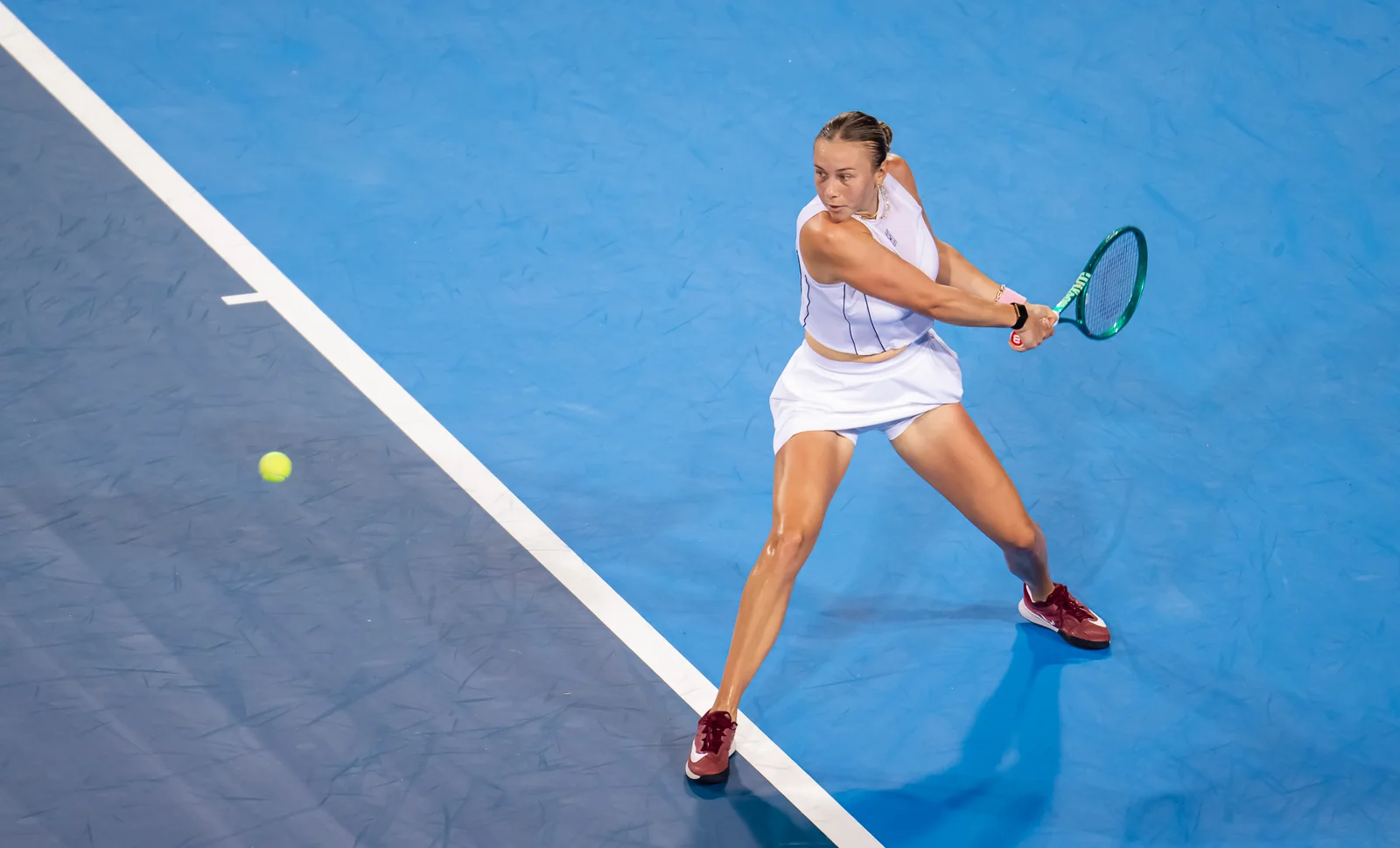
Amanda Anisimova represented another important contender. She defeated No. 17 seed Alexandra Eala 4-6, 6-4, 6-2 in the round of 32 and advanced to the quarterfinals, where Pegula edged her in a final-set tiebreak. Eala’s appearance was itself notable: Cincinnati’s official preview identified 2026 as her tournament debut, and she arrived as a seed rather than an unplaced newcomer.
Those examples show why “players list” intent is broader than a list of famous names. Readers also want to know who defended a title, who debuted, who justified a seed with a deep run and who became a surprise semifinalist. The completed Cincinnati results page supplies the round-by-round timeline behind those field stories.
Wild cards, qualifiers and other entry routes
Cincinnati’s planned 96-player composition combined 75 direct acceptances, 12 qualifiers, eight wild cards and one special exemption. These labels describe access to the field. They do not create different scoring rules once a player begins a main-draw match, and they do not predict how far she will advance.
Direct acceptance
A player entered through the acceptance list and applicable ranking/cutoff process. Alternates could move into this group when places opened.
Wild card
The tournament nominated a player for a reserved place, subject to WTA eligibility and approval rules.
Qualifier
One of 48 women won through two qualifying rounds to claim one of 12 main-draw places.
Special exemption or replacement
A reserved procedural route or later movement can fill a place without being the same thing as a wild card.
The August 10 WTA guide named Venus Williams, Sloane Stephens, Darja Vidmanova, Elvina Kalieva, Caroline Dolehide and Lois Boisson among the announced singles wild cards, while stating that more were still to come. It also noted that Taylor Townsend had originally received a wild card but moved into the main draw after withdrawals, reopening that invitation. That is why an early six-name announcement should not be copied as a final eight-player list.
Qualifying produced its own movement. The 48-player field competed August 11-12 for 12 positions, and those successful players then appeared on the main bracket with qualifying labels. When checking an individual player, use the final draw rather than assuming that everyone in the qualifying entry announcement won through.
Verified withdrawals, replacements and notable absences
Withdrawal reporting needs a date and a source because the consequences differ depending on when the player leaves. A pre-draw withdrawal changes the acceptance list; a post-draw withdrawal can trigger seed movement or a lucky-loser opening; an in-tournament withdrawal can create a walkover. Cincinnati 2026 contained examples of each kind of field change.
| Player/change | Verified status | Draw consequence |
|---|---|---|
| Karolina Muchova | Withdrew before the event after a small post-Wimbledon procedure; WTA did not specify its nature | An alternate moved toward or into the main draw |
| Jasmine Paolini | Missed Cincinnati with a continuing left-foot problem | The 2025 finalist was removed from the 2026 field |
| Jaqueline Cristian | Included by WTA among the August 8 withdrawals | Part of the movement that brought alternates in |
| Naomi Osaka | Withdrew August 12 citing fatigue | Siniakova moved to Osaka’s seeded line; another entrant filled the open line |
| Elina Svitolina | Withdrew during the event with a right ankle injury | Qualifier Xiyu Wang advanced to the round of 16 by walkover |
WTA named Kamilla Rakhimova, Maria Timofeeva, Taylor Townsend and Simona Waltert as players who moved into the main draw following the earlier withdrawals. A “moved in” label should not automatically be changed to “lucky loser”: alternates can enter before qualifying or draw deadlines through different procedures.
Emma Raducanu does not appear in the official final Cincinnati women’s player directory or completed singles draw checked for this article. That supports a limited statement: she was not listed in the final field. It does not establish an injury, a formal withdrawal or any private scheduling reason. Without a reliable player, tournament or WTA statement, this guide does not invent one.
Cincinnati Open 2026 players FAQ
Who were the top women playing Cincinnati in 2026?
The final draw was led by Aryna Sabalenka, Elena Rybakina, Jessica Pegula and Coco Gauff as the top four seeds. Mirra Andreeva, Linda Noskova, Iga Swiatek, Elina Svitolina, Amanda Anisimova and Marta Kostyuk completed the top ten seed numbers after final field movement.
How many women were in the Cincinnati main draw?
There were 96 main-draw places. The intended composition was 75 direct acceptances, 12 qualifiers, eight wild cards and one special exemption. Withdrawals and replacements could change the individual names or routes while the total draw size remained 96.
Was Emma Raducanu playing Cincinnati in 2026?
Raducanu is not listed in the official final women’s player directory or completed singles draw checked on August 28. No reliable source reviewed for this guide supplied a specific withdrawal or injury explanation, so the accurate answer is limited to her absence from the final field.
Did Naomi Osaka play Cincinnati in 2026?
No. Osaka appeared in pre-event material and was projected as the No. 11 seed, but she withdrew on August 12 citing fatigue. Because the draw had been made, Katerina Siniakova moved into Osaka’s seeded line and a qualifier or lucky loser filled the newly open position.
Who were the returning Cincinnati champions?
The field included Karolina Pliskova, Madison Keys, Coco Gauff, Aryna Sabalenka and defending champion Iga Swiatek, winners in 2016, 2019, 2023, 2024 and 2025 respectively. Gauff ultimately won again in 2026, defeating Pegula in the final.
How many seeds were there?
The 96-player format reserved 32 seeded positions, all with first-round byes. The final bracket’s Siniakova No. 33 label reflects her movement into Osaka’s seed position after the draw, not an original plan for 33 simultaneous seeds.
How were qualifiers added to the player list?
A separate 48-player qualifying draw produced 12 main-draw qualifiers over August 11-12. Their final placement appears in the completed singles bracket. Simply appearing in the qualifying entry announcement did not guarantee that a player reached the main draw.
Why does the final player list differ from the July announcement?
The July entry list was subject to change. Muchova, Paolini, Cristian and Osaka were among the verified players later removed, while alternates moved in and wild-card allocation changed. The final draw is the authoritative source for occupied bracket lines; the earlier article documents the field’s original strength and intent.