How to find Brazilian women in the WTA rankings
To find Brazil's women in professional tennis, check the WTA singles and doubles lists separately and look for the country code BRA. The numbers are world rankings. Filtering for Brazil does not turn them into a separate domestic ranking system.
For a dated starting point, the official lists for October 12, 2026 show the following selected Brazilian players. This compact snapshot includes familiar names and the leading three Brazilian singles entries in that week's list; it is not a complete roster of everyone representing Brazil.
| Player | Discipline | World rank | Points |
|---|---|---|---|
| Laura Pigossi | Singles | 243 | 312 |
| Carolina Alves | Singles | 317 | 220 |
| Gabriela Ce | Singles | 342 | 197 |
| Beatriz Haddad Maia | Singles | 428 | 140 |
| Luisa Stefani | Doubles | 3 | 8,545 |
The figures come from the official singles list and official doubles list bearing that date. Those files update over time. For a later week's positions, use the latest dated list rather than assuming this article's snapshot is still current.
Official rankings, live estimates and country filters
A live ranking site can show an estimate during a tournament before the next official update. Its “next” or “maximum” columns may describe possible points after another win. That is useful for following a ranking race, but a projected number should be labeled as a projection.
For a straightforward lookup, open the WTA singles rankings, check the displayed date, then search the player's full name or use the available country filter. For Stefani and other doubles players, switch to the doubles rankings. Read the discipline heading before comparing two positions.
Career peaks are another separate measure. Haddad Maia's top-ten achievement remains part of her history even when her current ranking is lower. Likewise, an Olympic medal describes a tournament achievement rather than a permanent ranking. The player stories below put those milestones beside the lists without treating them as today's positions.
Beatriz Haddad Maia's singles milestones
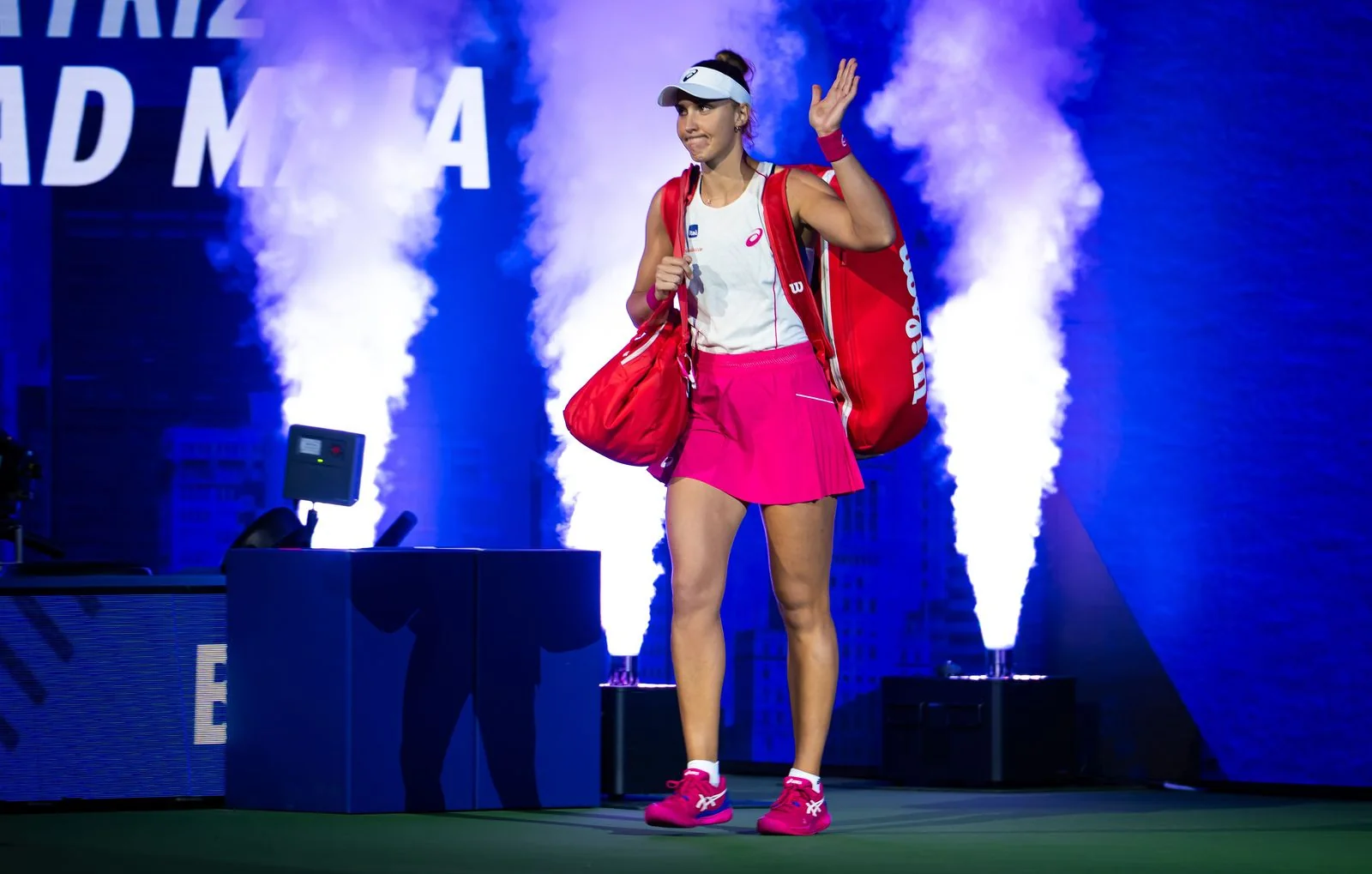
Beatriz Haddad Maia, often called Bia, is a central name in recent Brazilian women's singles. Her important results span clay, grass and hard courts. Her official WTA profile records a career-high singles ranking of No. 10 and distinguishes her singles titles from her doubles achievements.
There is a current availability point for fans searching for her next match. In its August 8, 2026 report, the WTA said Haddad Maia had announced a break for the rest of 2026 and planned to return in 2027. That is an announced plan, not a confirmed tournament or first-round opponent. Do not treat an old entry list as proof she is playing this week.
Roland Garros and the top ten in 2023
Haddad Maia reached the Roland Garros semifinals in 2023 and entered the singles top ten that June. She finished the season at No. 11. Those two ranking facts are compatible: a player's highest position during the year can differ from the position at its end.
Her Paris run ended against Iga Swiatek in the semifinal, 6-2, 7-6(7), as recorded in her official tournament history. Reaching that round was the milestone; she was not the 2023 French Open champion. Looking at the round as well as the opponent prevents a semifinal highlight from being mistaken for a final.
For an archive search, “Haddad Maia Roland Garros 2023 semifinal” points to that particular run. A search for her name and “ranking” may instead return a current profile, a career-high label or a later season. Adding the event and year helps you find the result you actually remember.
Titles on different surfaces
Haddad Maia won her first WTA singles title at Nottingham in 2022, beating Alison Riske in the final, then won Birmingham the following week. The Nottingham final report identifies that first title on grass. Her official career record also lists the 2023 WTA Elite Trophy Zhuhai title.
On September 22, 2024, she beat Daria Kasatkina 1-6, 6-4, 6-1 to win Seoul. The Seoul final report records the hard-court title and her comeback from a set down. Together, these results give fans several distinct events to revisit rather than reducing her career to a single ranking number.
Surface labels provide context when comparing old results with a new draw. A grass-court title and a clay-court semifinal establish different achievements. They are useful background, but neither guarantees the outcome of a future match. Keep the tournament, year and surface beside the result when building a picture of her career.
Luisa Stefani and Brazil's doubles achievements
Luisa Stefani belongs near the top of any guide to Brazilian women's tennis, even though a singles-only search can hide her achievements. She was No. 3 on the official women's doubles list dated 12 October 2026. That number describes her place among doubles players worldwide. It is not her singles position, and it does not mean every partnership she enters is seeded third.
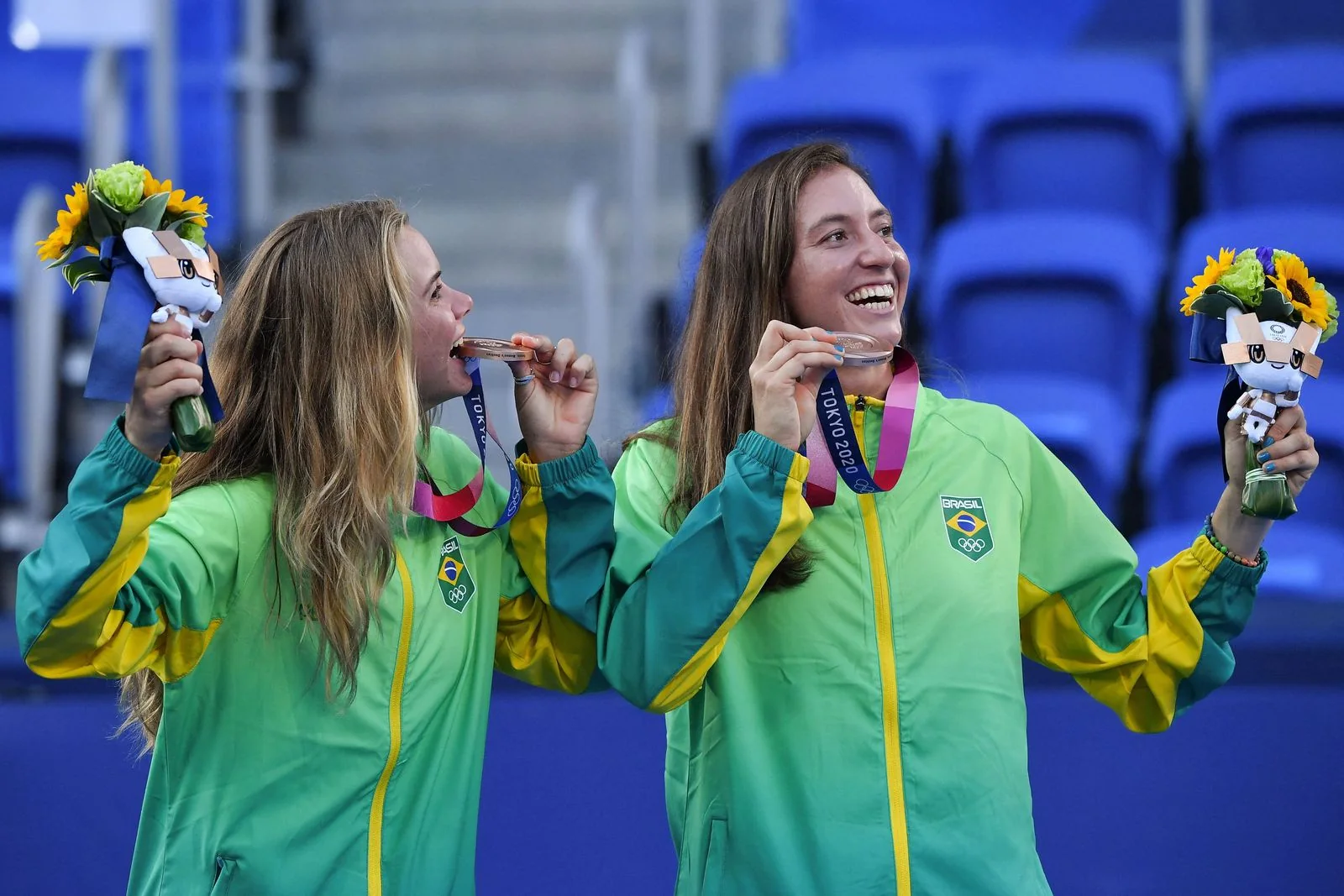
Her Olympic partnership with Laura Pigossi produced a national milestone. In the Tokyo 2020 edition, held in 2021, they won Brazil's first Olympic tennis medal. The bronze-medal match on 31 July ended 4-6, 6-4, [11-9] against Elena Vesnina and Veronika Kudermetova. They saved four match points. The ITF's match report records the achievement and the deciding match tiebreak.
Tour partnerships need not be national pairings. Stefani teamed with Canada's Gabriela Dabrowski to win Dubai on 21 February 2026, beating Laura Siegemund and Vera Zvonareva 6-1, 6-3. The WTA's Dubai final report describes their reunion that season. A Brazilian flag beside Stefani's name therefore does not mean her partner will also represent Brazil.
Women's doubles and mixed doubles are separate events
Stefani also won the Australian Open mixed doubles championship with Rafael Matos on 27 January 2023. Their final against Sania Mirza and Rohan Bopanna finished 7-6(2), 6-2. They became the first all-Brazilian doubles team to win a Grand Slam title, according to the WTA's Australian Open report. That title came in mixed doubles, where a woman and a man form each pair.
When checking a tournament, open the actual draw category before comparing results. Women's singles, women's doubles and mixed doubles have separate brackets. A player can finish her singles campaign while still having a doubles match ahead. A mixed doubles trophy should appear under mixed doubles in a career summary; adding it to a women's doubles title total would describe a different record.
For a doubles match, search both teammates' names. The pair is the match entry, while the weekly ranking belongs to each player. This simple distinction helps explain why a favourite player's ranking page and the tournament's list of teams look different. It also makes it easier to follow Stefani when she appears beside a partner other than Pigossi.
Laura Pigossi's singles and Olympic story
Laura Pigossi's Olympic bronze is memorable, but her singles record deserves its own place in a Brazilian rankings guide. She reached a career-high singles ranking of No. 100 in August 2022. On the official list dated 12 October 2026, she was the highest-ranked Brazilian in singles at No. 243. Those statements describe different moments; neither number replaces the other.
Her first WTA Tour singles final came at Bogota in April 2022. Pigossi entered through qualifying and beat defending champion Camila Osorio 7-5, 7-6(2) in the semifinals. The WTA's semifinal report also records match points saved earlier in her run. Qualifying was the beginning of that tournament journey, rather than a separate consolation competition.
Tatjana Maria won the final on 10 April, 6-3, 4-6, 6-2. Both finalists had qualified, and Pigossi was ranked No. 212 that week. The Bogota final report gives the result. It is a useful example of why a current ranking helps describe a field but cannot tell you who will reach Sunday's final.
On 3 December 2023, Pigossi won her first WTA 125 singles title in Buenos Aires, defeating Maria Lourdes Carle 6-3, 6-2. She had survived a third-set tiebreak against Renata Zarazua in the semifinals. The WTA's championship report identifies the event level, opponent and score. A WTA 125 championship is a professional achievement with its own category; it should not be relabelled as a WTA 250 title.
For a quick career comparison, keep three separate entries: best singles ranking, best singles tournament results and doubles achievements. Pigossi's top-100 milestone belongs in the first; Bogota and Buenos Aires belong in the second; Olympic bronze belongs in the third. That arrangement makes a player record easier to understand than a single list of trophies and ranking numbers without dates.
Her official player profile separates singles, doubles and WTA 125 highlights. Check the label above any large ranking number on a profile: the page may open with doubles statistics selected. If you are comparing Pigossi with Carolina Alves or Gabriela Ce in singles, use the same singles list and the same ranking date for all three. Comparing one player's singles number with another's doubles number produces a misleading national order.
Maria Bueno and the longer Brazilian tennis story
A current country filter cannot show the whole history of Brazilian women's tennis. Maria Esther Bueno won seven major singles championships: Wimbledon in 1959, 1960 and 1964, and the U.S. Championships in 1959, 1963, 1964 and 1966. The International Tennis Hall of Fame's record lists those victories and her 19 major titles across singles, doubles and mixed doubles.
Seven and 19 answer different questions. The smaller number is her major singles total. The larger includes her other disciplines. Her doubles achievements included winning all four major women's doubles championships in 1960. The WTA's tribute to Bueno confirms those milestones and her Hall of Fame induction in 1978.
Bueno was recognised as a world No. 1 in the era before the WTA's computer rankings. The first official computer singles list appeared on 3 November 1975, led by Chris Evert. Earlier rankings came from national associations and tennis journalists, as explained in the WTA's rankings anniversary history. Bueno's standing belongs to that earlier history; it should not be rewritten as weeks at No. 1 on the computer list.
This distinction helps with a common comparison. Haddad Maia reaching the modern WTA top ten is a milestone within the computer ranking system. Bueno winning multiple majors is a milestone in an earlier generation. Celebrating one does not erase the other. There is no single current ranking number that captures both careers on equal terms.
When exploring older results, read the tournament's historical name and the event category. The U.S. Championships are part of the history of today's US Open, while a women's doubles victory is separate from a singles victory at the same tournament. For an all-time discussion, compare clearly defined records such as major singles championships. For a question about who leads Brazil this week, return to the dated official ranking. Those two searches serve different interests, and both have a place in following Brazilian tennis.
Following Brazil's players from week to week
A ranking page tells you where a player stands; it does not tell you whether she has a match tonight. Once you have found a Brazilian player, the next useful step is her current event. Use the WTA calendar to find the tournament, then look for her name in the appropriate draw. Select the year before browsing an archive, especially when revisiting a result mentioned in this guide.
Tour events and national-team tennis
Brazilian players compete across several professional levels. A name outside the biggest WTA tournament fields can still be active at WTA 125 or ITF events. The ITF Women's World Tennis Tour forms a professional pathway, and its results contribute to the WTA rankings. Search that tour's calendar and results when a player does not appear in the week's WTA Tour draw.
Billie Jean King Cup is a separate place to follow Brazil as a national team. As checked on 12 October 2026, the official Brazil team page listed a Canada versus Brazil Play-off for 20–21 November 2026. That fixture identifies the countries and dates; it does not confirm which Brazilian player will play each singles match or which two will form the doubles pair.
For a national-team weekend, follow the announced squad and then the playing lineup. For an individual tournament, follow the draw. A familiar tour doubles pairing may be split across opposing national teams, while two Brazilians who seldom partner on tour may play together for Brazil. The competition context matters more than assuming a recent tour partner will appear alongside the same player every week.
Finding a match, a result and a broadcast
- Find the event: check the player's current tournament and whether she is in singles, doubles or both.
- Check today's court schedule: the draw identifies opponents; the order of play places matches on courts and in sequence.
- Read the time label: use a local-time display consistently, and allow for earlier matches finishing late.
- Check the viewing region: choose your country, date and event before opening a broadcaster's link.
- After the match: read the final result and the next round of the draw; a highlights clip is a shorter recap, not a full replay.
Our women's tennis matches today page helps with the match search, while WTA on TV Today helps with viewing options. An entry list is useful before a draw is made, but it is not a promise that a player will compete. Withdrawals and draw changes can alter the answer, so check the event again close to match day.
Brazilian viewing rights also have dates. The WTA announced on 23 July 2026 that CazéTV's agreement for Brazilian rights to all WTA 250, 500 and 1000 tournaments begins in 2027 and runs through 2030. The official announcement describes that future agreement. It should not be treated as a blanket answer for every match in 2026, or as a rights announcement for Grand Slams, Olympic tennis and every other competition.