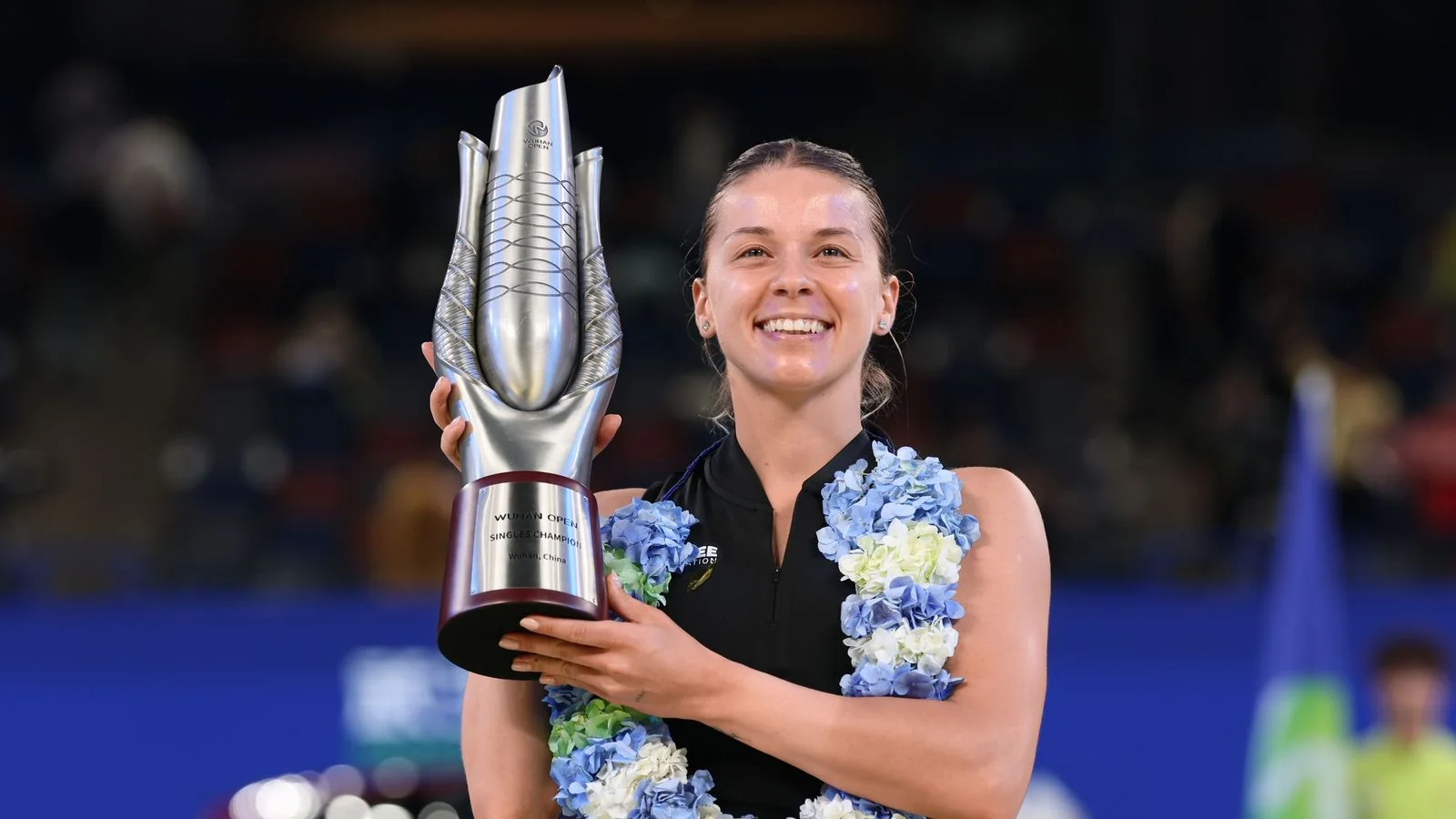
Chwalinska's first WTA title came on a major stage
Maja Chwalinska won her first WTA Tour singles title at the 2026 Wuhan Open, beating Sonay Kartal 2-6, 6-4, 6-2 on October 18. The 25-year-old's breakthrough was a WTA 1000 championship, achieved after a comeback lasting two hours and 43 minutes. It followed her Roland Garros final earlier in the year and showed that her success could extend from clay to hard courts.
The scale of the first title is part of the story. The WTA identifies Chwalinska as the fourth player since the category began in 2009 to win her maiden tour title at WTA 1000 level, following Naomi Osaka, Bianca Andreescu and Victoria Mboko. Most players' first steps into tour-level championship territory take place on a smaller stage.
That comparison describes an unusual route, rather than predicting an identical career. Osaka, Andreescu and Mboko reached their first titles in different circumstances. Their names establish the rarity of the sequence; they do not determine what Chwalinska must win next. Her own season already has its distinctive shape, built around two very large tournament results.
A first WTA title also does not mean a first professional success. Tennis has several competition levels, and players can spend years winning matches below the main tour before lifting a tour trophy. The milestone in Wuhan concerns this level of championship. It should not erase the work that made it possible to compete there.
For Polish tennis, Chwalinska joined Agnieszka Radwanska and Iga Swiatek as a WTA 1000 singles champion. She beat Swiatek in the semifinal, creating a direct link between the country's established champion and its newest winner at the category. The Wuhan tournament guide follows the event as a whole; the player story is about how Chwalinska solved several different competitive problems within it.
How she turned the Wuhan final against Kartal
Kartal won the first set 6-2 and led 2-0 in the second. Chwalinska was facing the possibility of a final in which the opponent's early advantage became decisive before she could establish her own patterns. The eventual score can make the comeback seem cleaner than the process was. The middle set alone took 71 minutes.
Chwalinska credited Kartal with preventing her from playing her best tennis early in the match. That is a useful starting point for understanding the contest: the first-set problem was not simply a champion waiting to arrive. Kartal was imposing a difficult match, and Chwalinska had to change what she was producing.
The second set changed before the scoreline looked comfortable
At 2-0, Kartal saved four break points in the next game before Chwalinska took the fifth opportunity. Getting back on serve did not put Chwalinska in control of the title. It restored a more manageable scoreboard and prevented the deficit from widening. The value of that game lies in keeping the set competitive long enough for further opportunities.
This is why break-point conversion should be read as a sequence rather than a verdict on courage. Four missed chances did not make the fifth irrelevant. A returner who stays engaged can still change the match after several disappointments. For the server, surviving multiple break points does not bank a future hold; the next point still matters.
After winning the second set, Chwalinska finished the decider with five consecutive games. Even then, the last service game demanded work: she saved three break points while serving for the championship. A 6-2 final set records the size of the eventual margin, but it does not say that the closing moments were free of pressure.
The comeback is consequently more revealing than a simple statement that she “found a way.” She repaired the early break deficit, stayed in a long second set, converted a lead in the third and defended that lead against an immediate threat. Those are distinct competitive tasks. Completing all of them in a first title match adds substance to the achievement beyond the rarity of the trophy itself.
The variety behind the breakthrough
“Variety” can become a vague compliment unless it is connected to the problem a shot solves. Chwalinska's Wuhan matches provide specific examples: using depth to regain room, bringing an opponent forward, then changing the direction of movement with a lob. The tactical reading below follows the sequences described in the WTA's match coverage, rather than an assumption that every unconventional shot was automatically effective.
Depth gives the softer shots room to work
In her post-final comments, Chwalinska identified improved depth and greater aggression as parts of her recovery against Kartal. Those ideas fit together. A deeper ball can keep an opponent farther from the net and make a subsequent short ball more demanding to reach. A soft shot played after allowing the opponent to move comfortably inside the court presents a different challenge.
The important contrast is therefore between controlling where the opponent plays and simply hitting slowly. Chwalinska's touch is useful because it can change the opponent's options. Depth and direction help create the situation in which a change of pace has a purpose. Without that preparation, the same drop shot can become an invitation to attack.
The drop shot and lob change the opponent's movement
The WTA's detailed Sakkari quarterfinal report gives a concrete example. During a five-game stretch of the deciding set, Chwalinska used the drop shot-lob combination four times and won the point each time. That small sequence supports a claim about an effective adjustment in that match; it does not establish a season-long success rate.
The pattern makes an opponent solve two different movements. First comes the forward sprint and the need to control a low ball near the net. The next ball can send the player back toward the baseline. Even when the first shot does not win outright, it can change the space available for the next one. The value is in the sequence, rather than the visual appeal of either shot alone.
Another exchange against Sakkari showed improvisation under pressure: the left-handed Chwalinska reached with her right hand for a defensive lob, then finished the point with a backhand. The WTA included the sequence in its official Wuhan shot collection. Its significance is the transition from keeping a rally alive to creating a winning opportunity, not a recommendation to make a non-dominant-hand lob a routine tactic.
Changing pace still requires an aggressive decision
Sakkari also exposed the limits of the softer option. The official quarterfinal account describes second-set defensive drop shots that she reached and answered with winners. That matters because it prevents the match from being reduced to a demonstration in which one style always defeats another. The opponent can adjust, and a shot selected from a poor position can fail.
Chwalinska's creativity had appeared earlier in Singapore too. In the opening round against Rebecca Sramkova, she let a short high ball settle and used a delicate finish rather than taking the obvious overhead. The WTA later selected it as September's Shot of the Month. The choice illustrates touch with time available; the Sakkari lob illustrates improvisation without it. Her appeal comes partly from having answers to both situations, while Wuhan showed the additional task of choosing them effectively across a long match.
The route through Wuhan tested more than one kind of match
Chwalinska opened against Mayar Sherif and then recovered from losing the first set to Marie Bouzkova. Against Iva Jovic, she won 6-4, 6-1. The sequence already required her to do more than repeat a comfortable first-round formula: she had to respond to a bad opening set, then keep control against a highly ranked teenage opponent.
Sakkari presented another kind of test. Winning the first set 6-0 could have encouraged the assumption that the match was effectively solved. Instead, the Greek player improved, took the second set and forced a deciding set that remained tight until the final game. Chwalinska had to create a new solution after the initial one stopped producing the same results.
That reversal is especially useful for understanding her championship week. The final required a comeback from behind; the quarterfinal required her to recover after an early lead had disappeared. Both demand a willingness to treat the current score as a fresh problem. A player's response after losing control can be as revealing as her ability to establish it.
The semifinal against Swiatek added shared history. The two had been junior doubles partners and reached the 2017 Australian Open girls' doubles final together. Their earlier professional singles meeting had come in Stockholm in 2016. Meeting again at this level was consequently more than a routine clash between players sharing a nationality.
Chwalinska saved two set points before winning 7-5, 6-1. Swiatek's leg problem affected the match and was acknowledged in the official report. That context belongs in the account alongside the result. It does not require inventing a healthy rematch or deciding that the victory reveals everything about their relative levels.
Across the week, Chwalinska faced recovery after a poor start, an opponent's mid-match improvement, a familiar champion and a first-time WTA 1000 finalist playing above her entry ranking. The trophy combines those different tasks. Focusing only on the final comeback would miss how many times she had already needed to adapt before reaching championship day.
From the Roland Garros final to a Top 20 debut
Chwalinska began 2026 ranked No. 146. In June, she became the first qualifier to reach the women's singles final at Roland Garros, where Mirra Andreeva won the championship match. That run changed the scale of the conversation around her, but it also created a challenge: how would she respond once a remarkable fortnight became the standard against which subsequent results were judged?
Wuhan gave a substantial second answer. The October 19 rankings moved her from No. 22 to No. 11, her Top 20 debut. Entering the Top 20 at No. 11 sounds unusual only if milestones are imagined as steps that must be taken one place at a time. A large result can carry a player across several positions in one weekly release.
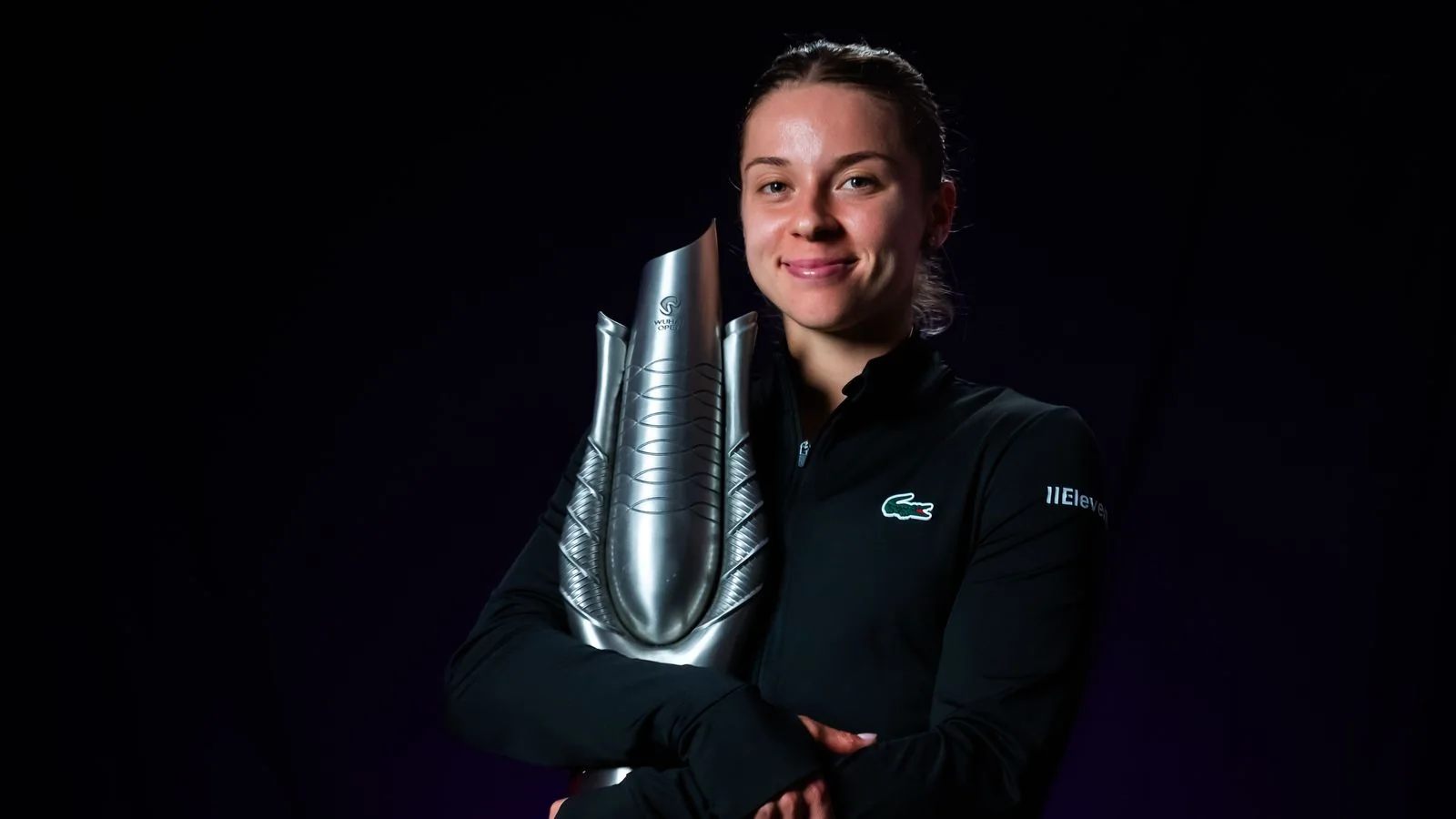
Why two deep runs matter more than a simple win count
Rankings reward event level and progress through a draw, rather than assigning the same value to every match win. A Grand Slam finalist's gross award is 1,300 points; a WTA 1000 singles champion earns 1,000. Those are event awards, not a complete calculation of Chwalinska's counting total, but they explain why her two large results have such influence.
A raw count of tour victories can therefore miss the concentration of achievement. Winning matches deep in the biggest events is different from collecting the same number across several earlier rounds. The ranking system is designed to reflect that difference. A debate about whether a player “looks like” her position should take the actual awards into account.
The sporting evidence is broader than the points. Paris required a qualifying run and an extended clay-court campaign; Wuhan required adapting on hard courts against different opposition. Repeating a deep run in another setting is stronger evidence of transferable competitive skills than repeating one attractive shot in a highlight reel.
The next step is still open. No. 11 is close to the Top 10, but proximity does not make entry automatic. The current singles rankings will reflect her subsequent results alongside those of the players around her. Wuhan has enlarged the foundation of her ranking; future events will determine how she builds on it.
What comes after the title and the fan excitement
There is already an important update to any immediate post-Wuhan preview. Chwalinska withdrew from Tokyo with a left thigh injury, as the WTA reported on October 26. The championship therefore should not be used as a reason to promise that supporters will see her continue the run in Japan. A successful tournament and availability for the next one are separate matters.
The withdrawal does not establish that the Wuhan final caused the problem, and it does not provide a return timetable. What it does change is the next competitive step. Instead of assuming that a new ranking must be tested immediately in another draw, supporters will need to follow her next confirmed appearance through the WTA calendar and the relevant tournament field.
The public reaction after the trophy included suggestions that she deserved a breakthrough or improvement award. Those comments in the fan celebration thread express enthusiasm; they are not an announcement of an award result. The concrete achievements already available are strong enough: a major final, a first tour title and a move to No. 11.
Chwalinska also spoke after the final about how difficult criticism following Paris had been. That context helps explain why a second large result mattered personally as well as competitively. A sudden breakthrough changes how often a player is watched and how quickly an ordinary defeat can be framed as a failure to live up to the new reputation.
Wuhan offers a more useful basis for expectations than either instant superstardom or instant dismissal. Her game produced repeatable tactical sequences, and she adjusted when opponents changed the match. The next question is how often she can bring those solutions across a longer run of events. That is a sporting question worth following, with considerably more evidence behind it than there was before this championship week.