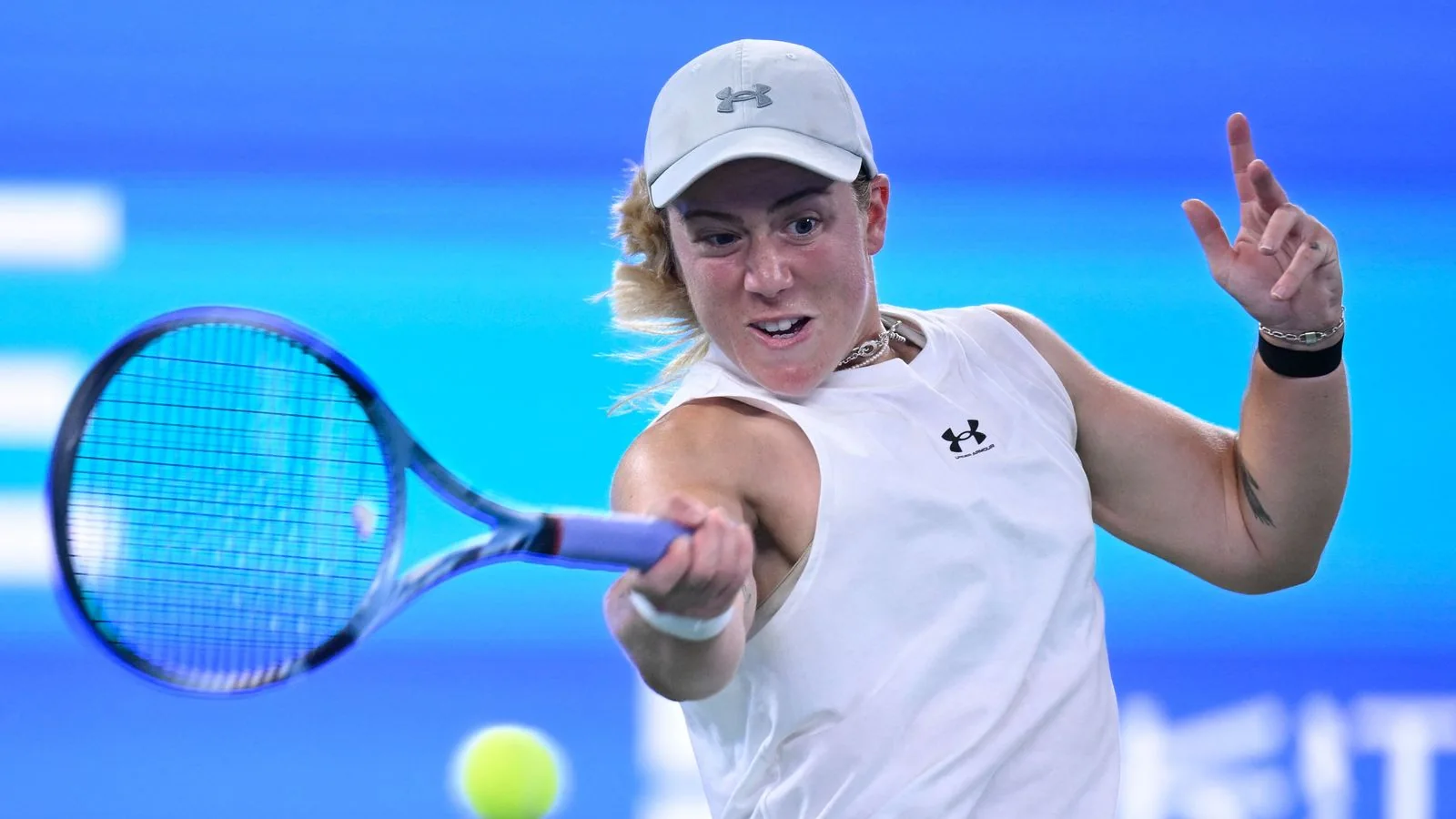
Kartal's Wuhan final changed the scale of her comeback
Sonay Kartal reached the 2026 Wuhan Open final after six months away with a back injury, then climbed from No. 170 to No. 49 in the October 19 WTA rankings. The 121-place rise followed five main-draw victories and her first appearance in a WTA 1000 championship match.
At 24, the British player had already won a tour singles title in Monastir in 2024. Wuhan was therefore a move to a larger competitive stage, rather than the first evidence that she could win at tour level. Her entry ranking made the run surprising, but it did not describe a player with no previous experience of championship tennis.
The historical distinction also needs its proper scope. The WTA identified Kartal as the lowest-ranked player with a ranking to reach a Tier I or WTA 1000 final, while noting the separate case of the unranked Jennifer Capriati at Hilton Head in 1990. Omitting that exception would turn an impressive record into an inaccurate absolute.
She also became the second British woman to reach a final in that Tier I/WTA 1000 lineage since 1990, following Johanna Konta. It is a useful measure of the level reached, without requiring comparisons with every British player's career or predicting that Kartal must follow Konta's results.
The more immediate importance is practical. Instead of using the Asian swing solely to regain competitive rhythm, Kartal left Wuhan with a large result in her rolling ranking. That changes the foundation for future entries and the sporting expectations around her comeback. Understanding how it happened requires looking at the injury interval, the quality of her opponents and what the ranking system actually measures.
The injury break and the decision to return patiently
Kartal's interruption began after a retirement against Elena Rybakina at Indian Wells in March. A back injury kept her away for six months, including the grass season and Wimbledon. She returned in September at the Billie Jean King Cup Finals, then played Beijing before travelling to Wuhan.
In the WTA's comeback interview, she described considering a return around late August but listening to advice from her team and other players who had experienced lengthy injuries. She also acknowledged that training could not fully reproduce the environment of a match. That makes the speed of her competitive progress notable without suggesting the time away had been easy.
The account is about her own decision-making. It does not establish a timetable that another player with a back problem should follow. Nor does the Wuhan result prove that waiting a particular number of additional days caused the success. The useful insight is that her comeback involved preparation and restraint before the matches that became visible to supporters.
Why the ranking dropped while she was away
The WTA ranking is a rolling record of eligible results. While a player is absent, older points can expire and other players continue earning new ones. A falling position during injury therefore does not require a sequence of on-court defeats. Kartal's No. 170 entering Wuhan included the effect of a long interval without the ordinary opportunities to renew her results.
That is why the number could understate the level she produced on returning. A ranking measures an eligible record over time; it is not an instantaneous test of fitness, technique or confidence. The No. 170 was a valid published position, but treating it as a guarantee that she would play like an ordinary opponent at that rank ignored the missing months and her earlier top-level experience.
Five wins made the Wuhan run more than an isolated upset
Kartal's first three wins came against Anhelina Kalinina, Belinda Bencic and Jasmine Paolini. She beat Bencic 6-0, 7-5 and Paolini 6-2, 6-0. Those results gave the run depth before the final weekend: she had already moved through several opponents with substantial tour experience, rather than building the whole story around one surprising score.
Bencic, Paolini, Svitolina and Jelena Ostapenko have all previously held Top 5 rankings. That describes their career level, not their exact rankings in Wuhan. Keeping those measures separate matters. Kartal did not beat four current Top 5 players, but her path did require repeated wins over opponents who knew what a deep run at a major event demands.
The Svitolina quarterfinal tested her response to a lost set
The final official draw records Kartal's quarterfinal victory as 6-2, 2-6, 6-4. She won the opening set, lost the second and had to find the winning margin in a decider. The sequence differs from a comeback after losing the first set: it asks how a player responds when the opponent has interrupted an initially successful match.
Svitolina was ranked No. 6, and the result was Kartal's second career victory over a Top 10 opponent. The ranking milestone is useful, but the match structure adds something the headline cannot show. Kartal had to re-establish a competitive edge after a clear second-set reversal, against a player whose experience made the contest a substantial test.
Two tiebreaks against Ostapenko opened the final
The semifinal finished 7-6(9), 7-6(5) after two hours and 12 minutes. The bracketed numbers are Ostapenko's tiebreak points: Kartal won the first breaker 11-9 and the second 7-5. They are not additional games. The notation explains how a straight-sets result can contain an extended period of uncertainty.
Winning both breakers meant Kartal repeatedly handled the stage at which every point immediately changes the set's direction. That outcome does not reveal an opponent's private mindset or reduce the contest to nerve alone. It does show that Kartal completed the required points against a dangerous opponent and reached the final without needing a third set.
The five wins give the comeback its weight. Some rounds ended with clear game margins, while the later rounds demanded recovery and close-set execution. The Wuhan results guide supplies the wider event context around that sequence.
What the final defeat does and does not change
Kartal led Chwalinska by a set and a break before losing the final 6-2, 4-6, 2-6. The result leaves an obvious competitive frustration: she was ahead and did not complete the title. It also leaves a runner-up finish at the highest tournament category she had yet reached in a final. Both are part of the same week.
The second set was a long contest in its own right. Chwalinska recovered the early break and eventually levelled the match; she then won the final five games of the decider. Kartal still had three break points as Chwalinska served for the title, which the Pole saved. The final was not reduced to a formality as soon as the lead changed.
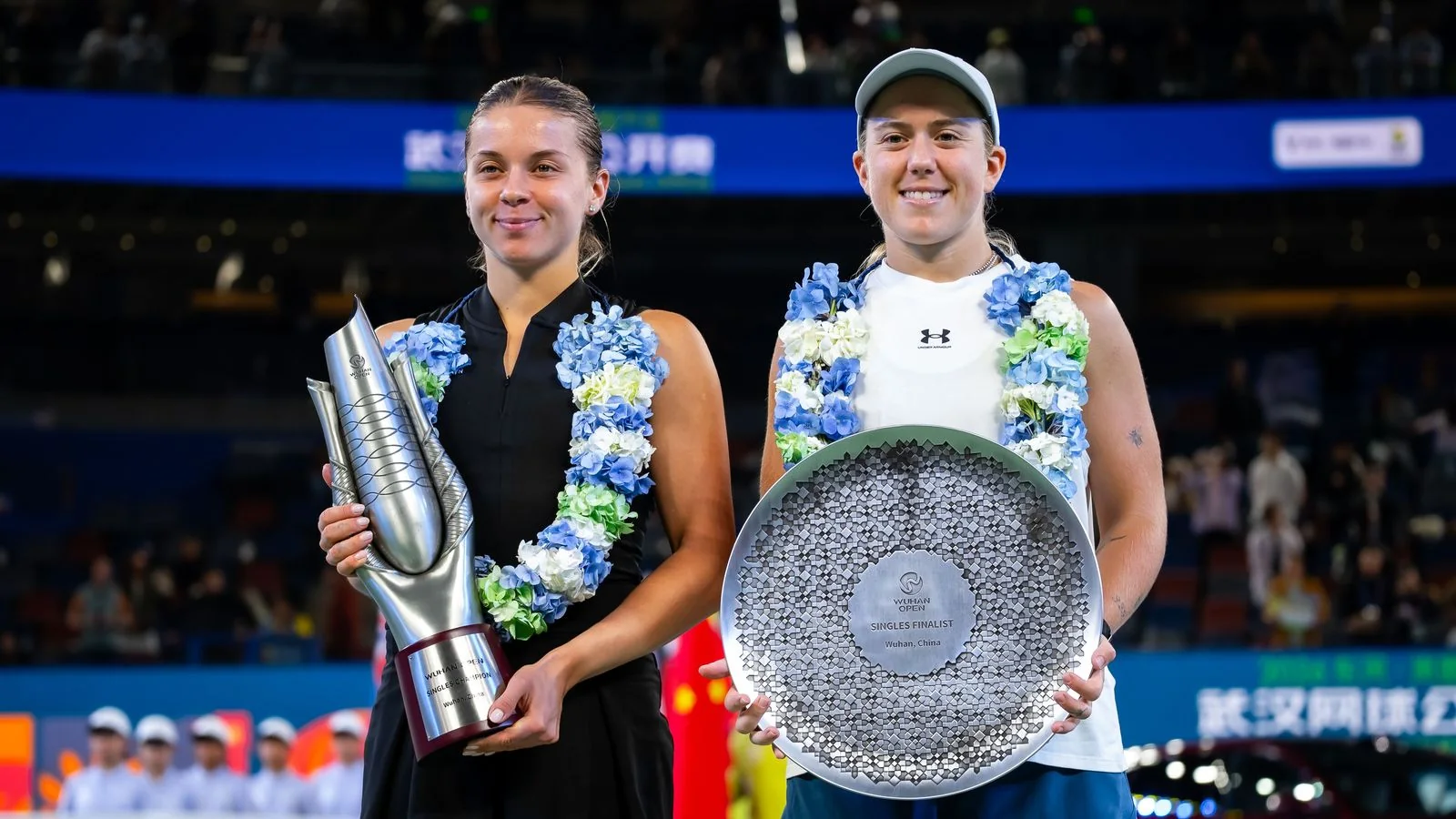
A lead followed by defeat does not, on its own, establish a psychological explanation. The opponent can improve, tactical patterns can change and close games can go the other way. The official account credits Chwalinska's increasing depth and aggression. Assigning the entire reversal to Kartal's nerve would replace that sporting account with a private diagnosis.
Nor did losing the sixth match cancel the previous five. Tournament points reflect the round reached, and a final appearance remains a large result even without the champion's award. The best way to assess Kartal's week is to retain the unresolved task of finishing such a match alongside the demonstrated ability to earn the opportunity in the first place.
Why she climbed from No. 170 to No. 49
The October 19 weekly ranking confirms Kartal's move to No. 49, 121 places above the position she held entering Wuhan. The date matters: it identifies the official release after the tournament. A later ranking page can legitimately show a different position as subsequent events and expiring results change the table.
A WTA 1000 singles finalist receives a gross award of 650 ranking points. That is a large result, especially for a player whose recent record contains a long interruption. The precise change in her counting total also depends on the eligible results already included and anything being removed. The award and the final ranking jump describe related outcomes, but they are not interchangeable numbers.
Ranking places and ranking points are different measurements
The subtraction 170 minus 49 gives 121 places. It does not mean Kartal earned 121 points. Ranking position is the order of players after their totals have been compared. A cluster of similar totals can allow one substantial result to move a player past many opponents at once.
There is no fixed exchange rate between points and places. The same gross award can produce a different movement for another player, or for Kartal at another point in the season. The surrounding totals and the rest of the counting record determine how far the player moves. That is why estimating a future position simply by repeating “another 121 places” would be meaningless.
No. 49 also put Kartal within five positions of her career high of No. 44, reached in July 2025. That comparison shows a return close to a previous ranking peak, even while the Wuhan final itself was a new competitive achievement. Returning to a familiar numerical range and reaching a new tournament milestone can happen together.
For her latest position, use the dated singles rankings. For the scale of the comeback, the October 19 move remains the relevant historical marker: one strong week restored a large part of the ranking ground lost during the absence.
Special Ranking, current ranking and seeding are separate
Comeback stories often use “protected ranking” as shorthand. The WTA rulebook calls the mechanism a Special Ranking. Its purpose is connected to access after a qualifying absence; it should not be confused with the current ranking produced by a player's counting points. Seeding is another question, governed by the relevant draw rules.
Entry protection does not restore a points total
Suppose a returning player has an ordinary ranking below the level needed for an event but holds an eligible Special Ranking that can be used for acceptance. Using it may provide a route into the competition under the rules. It does not award the points she missed while away or put her back at that position in the published weekly ranking.
That distinction explains how a player can appear in a strong main draw with a low current ranking. The entry process and the ranking list answer different questions: one concerns who can enter a particular event, the other orders players by eligible results. The new matches then provide opportunities to earn points in the normal competitive way.
It would also be inaccurate to say that a Special Ranking can never affect seeding. The current 2026 rules include an Additional Seed provision under specific conditions, including eligible draw sizes and a limited period of tournaments after returning. A returning player does not automatically become an ordinary seed simply because she has entry protection, but the rule has more detail than a universal yes-or-no slogan.
A player-specific entry claim needs a draw record
Kartal's final Wuhan draw lists her without a seed number. That is enough to describe her as unseeded. It does not, by itself, establish every detail of the acceptance process or the ranking she submitted to enter. This account therefore does not assign her a specific Special Ranking value or state that a particular protected entry was used without the corresponding acceptance evidence.
The distinction is useful even when the individual entry route is not known. An unseeded player is not necessarily a qualifier. A qualifier is not necessarily using a Special Ranking. A wild card is a separate admission route again. These terms describe specific statuses, so they should not be substituted for one another simply because a comeback player's published rank appears low.
Returning to the Top 50 can improve the basis for future ordinary acceptance, depending on the field, cutoff and ranking date. That is a practical benefit of Wuhan's points. It still does not guarantee a seed or a place at every future event: acceptance deadlines and later results matter. Kartal's progress is best understood as rebuilding an earned ranking, rather than having the old one restored by an administrative shortcut.
The next challenge is sustaining the level across a schedule
Wuhan establishes that Kartal could produce a deep run soon after returning. The next sporting question is how often she can bring that level across several events, with different opponents and recovery intervals. That is a separate test from proving she can win an individual match against a highly ranked player.
Her background already includes a Wimbledon fourth round in 2025 and a WTA 1000 quarterfinal in Beijing that year, according to her official profile. Wuhan extends that record rather than creating a contender from nothing. It also changes the information available to future opponents, who now have a longer sequence of recent matches to consider when preparing to face her.
Kartal described feeling more confident than before the injury in the official Wuhan coverage. That is her assessment of the comeback, not a guarantee about every subsequent match. Confidence can coexist with difficult draws, an opponent's strong performance or an ordinary bad day. A sustained return is built from more than preserving one tournament's emotional high.
Supporters can use the WTA calendar to locate future events and today's match list once an appearance is confirmed. The useful things to watch are competitive continuity, how she handles changes within matches and whether deep results become a more frequent part of the record.
The lasting achievement from Wuhan is already clear: she beat a sequence of experienced opponents, reached a larger final than before and earned a return close to her previous ranking peak. The loss in the final leaves something to pursue. It does not reduce the comeback to a missed trophy.