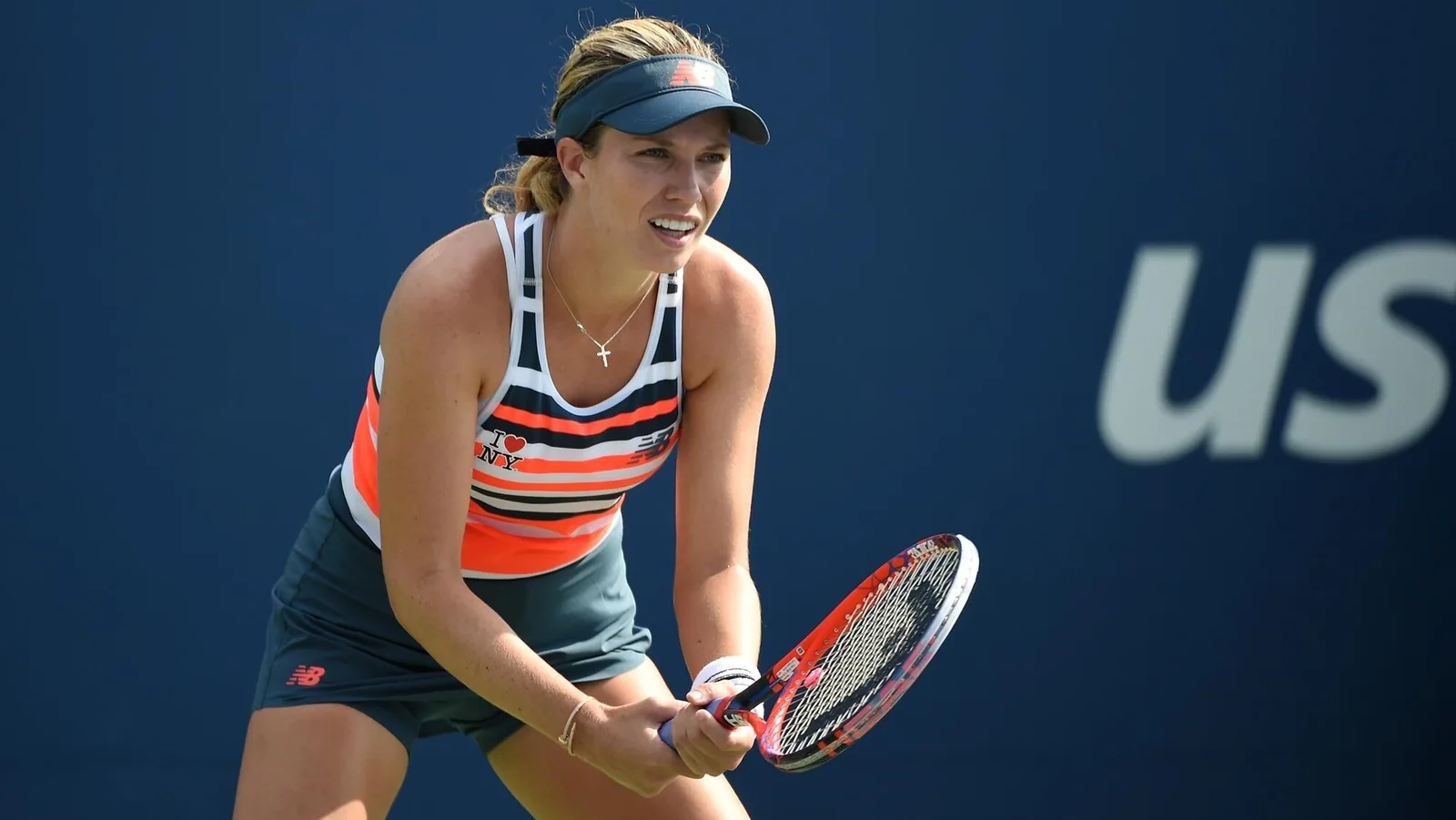
A transfer who made Charlottesville her own
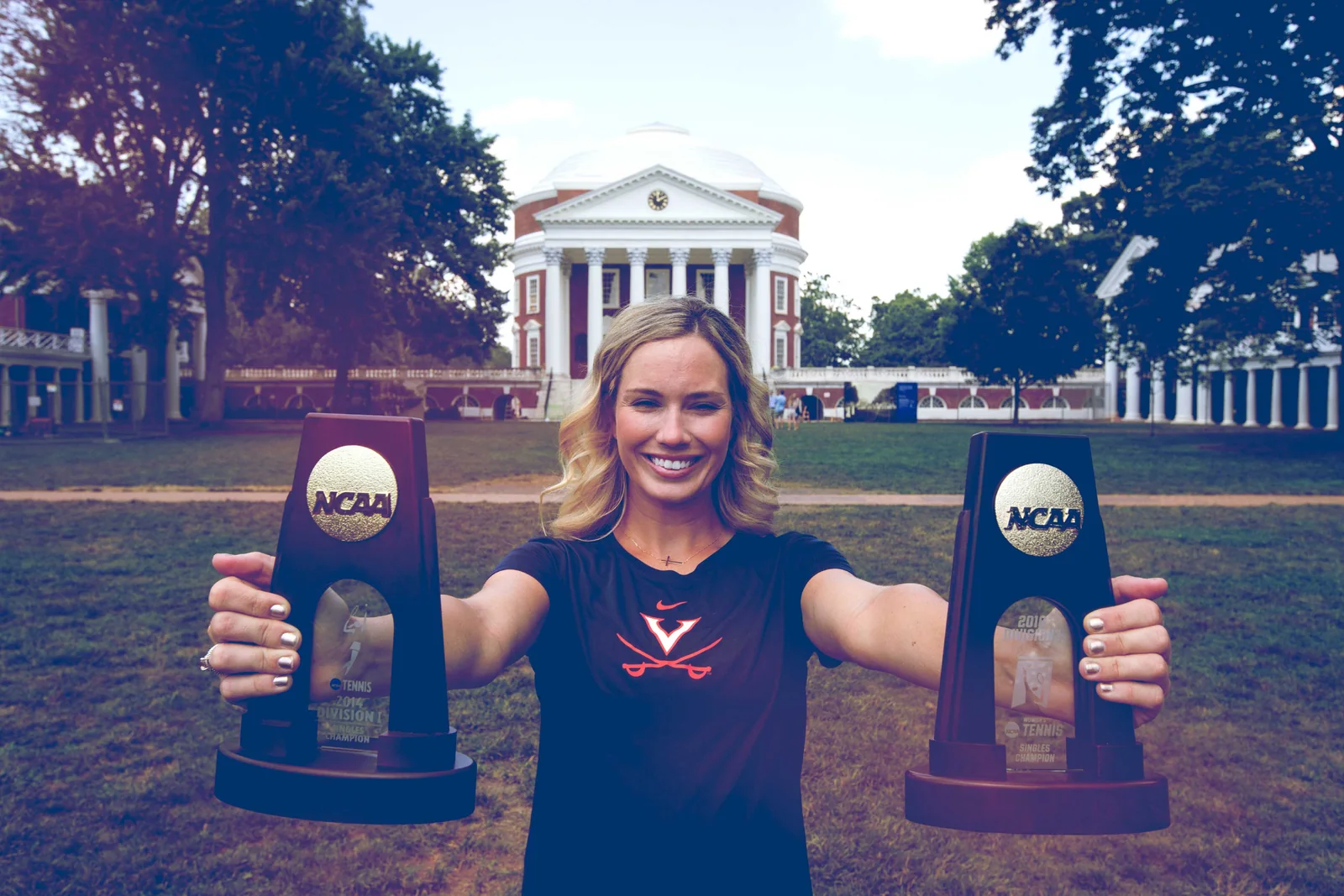
Danielle Collins won two NCAA singles championships at the University of Virginia, in 2014 and 2016. Her connection to Charlottesville also continued after college, through training visits and relationships with the coaches who helped her develop. For a WTA follower, that combination offers a richer introduction to Virginia than a short line on a player profile.
Her college career did not begin there. Virginia’s official historical biography records 125 college singles wins: 24 during her freshman year at Florida and 101 at UVA. That distinction matters when comparing career totals. “College wins” and “Virginia wins” describe different spans, even though her two NCAA singles titles came as a Cavalier.
In a 2020 alumni interview, Collins described Charlottesville as a place to which she remained closely connected. She trained at the Boar’s Head Resort that summer and spoke warmly about former UVA coaches Mark Guilbeau and Troy Porco. The article also records her 2016 graduation with a degree in media studies. These are dated details of her college and post-college life, rather than a claim about where she trains today.
The transfer and the later return belong together. One marks the search for a productive competitive environment; the other shows that an environment can retain value after an athlete has moved into professional sport. The evidence supports that connection without requiring an invented story about every motivation behind the transfer. Her own account gives the coaches an important place in her development, while the match record supplies the measurable results.
That is particularly useful for fans accustomed to judging players through a weekly ranking. A ranking is a snapshot within a defined competition; a university relationship is built from several seasons of work and shared experience. Looking at both prevents a biography from becoming a list of career highs detached from the people and places around them.
It also leaves room for a more interesting question than whether college was a shortcut to professional success. What did the player achieve there, and what continued to matter afterward? Collins provides clear answers: two individual national titles, a substantial Virginia match record and a documented return to a familiar tennis community. Those answers are enough to make the campus part of her story worth exploring.
Two NCAA singles titles with different stories
Collins became Virginia’s first NCAA women’s singles champion in 2014, then won the title again as a senior in 2016. These were individual singles championships. The distinction preserves the scale of her achievement without confusing it with a university team championship or a professional tour title.
| Championship | Final opponent | Collins won | Location |
|---|---|---|---|
| 2014 NCAA singles | Lynn Chi, California | 6–2, 7–5 | Athens, Georgia |
| 2016 NCAA singles | Hayley Carter, North Carolina | 6–3, 6–2 | Tulsa, Oklahoma |
The ACC’s report of the first final explains that Collins recovered from 3–1 down in the second set against Chi. The final score alone might encourage a viewer to imagine a straightforward passage through both sets. The intermediate score shows a specific problem she had to solve: regain control after falling behind rather than merely protect an uninterrupted lead.
The 2016 Virginia match report describes another change of momentum. Collins led Carter 3–0 in the opening set, was caught at 3–3, then won the next three games. She went on to take the second set 6–2 and finish her senior singles season 38–4. Repeating the championship involved recovering within the final, even though the eventual straight-set score looks comfortable.
For a tennis viewer, the two finals suggest a useful way to read a match: look for the response after the opponent has changed the direction of play. A 3–0 lead becoming 3–3 is not the same situation as arriving at 3–3 through six routine holds. The scoreboard reaches the same number, but the player must respond to a different sequence. That does not establish the precise shot selection behind every point; it identifies where a replay or detailed match report becomes especially informative.
The repeat title also deserves more than a shorthand description of “college success.” It arrived two years after the first and against a different final opponent. Maintaining a competitive standard across that interval is a distinct achievement from producing one outstanding week. It does not mean every match between the titles was won, or that later tour success was guaranteed.
That combination—specific results and the ability to restore control within a match—is why the Virginia chapter remains useful to WTA followers. It gives substance to the reputation before the professional highlights take over, while leaving room for the further development and tougher tests that came afterward.
Reading the Miami breakthrough without rewriting her college years
Collins won her first WTA 1000 title at Miami on March 30, 2024, beating Elena Rybakina 7–5, 6–3. The tournament’s official account identifies that victory as a new level of professional achievement for the 30-year-old. It was a different milestone from either NCAA title, reached years after she had finished competing for Virginia.
There is a temptation to draw a straight line from college champion to tour champion and call the later result confirmation of a destiny. The more useful reading is that the college record established one standard of performance, while Miami demanded another against a professional field. The years between the achievements matter. A university title can be important without being treated as a prediction that must eventually come true.
The WTA’s final report gives a specific reason to look beyond the straight-set score. Collins saved four break points while holding for 4–3 in the opening set, then another at 5–5. In the second set, she again saved three break points to hold for 4–3 before breaking for 5–3. Those passages show how much work lay inside service games that ultimately appeared on the scoreboard simply as holds.
That is a practical viewing lesson, not proof that the 2016 college final and the 2024 Miami final followed the same tactical pattern. Different opponents pose different problems. The connection is the question a spectator asks: what happened at the moments when the match could have moved sharply in the other direction? A replay of those games can teach more than a sequence containing only the winner’s cleanest attacking shots.
When browsing our WTA tournament directory, keep event level and date attached to an achievement. An NCAA result belongs to college tennis; a WTA 1000 title belongs to a professional tournament category. Likewise, a ranking mentioned in a March 2024 report describes that time. Consult the dated WTA rankings for the present picture rather than carrying an old position forward.
The same care applies to career plans reported in an old interview. A statement of intention is not a permanent update on a player’s availability. This profile uses Miami as a completed historical milestone, not as evidence of a current entry list or retirement status. Collins’ Virginia achievements stand on their own, and the later professional success adds another chapter rather than replacing them.
A WTA fan’s route into the wider Virginia sports calendar
Collins’ biography gives a tennis fan a reason to become curious about Virginia as a sporting community. Exploring its football team is one possible next step for the reader. That is a connection through the university, not a claim that Collins follows every Cavaliers football game or endorses a particular viewing service.
If you are planning a Charlottesville visit, start by separating the destinations. Virginia football’s home venue is Scott Stadium. The Boar’s Head tennis setting mentioned in Collins’ 2020 interview belongs to a different part of her story. A familiar university name does not mean two events share an entrance, a ticket, a parking arrangement or a practical walking route. Verify the actual venue before building a day around more than one sport.
The official Virginia football schedule is the first place to confirm the Cavaliers’ opponent and event details. For comparing football across the country, CollegeFootballSchedule.net offers a broader schedule view, and its Virginia football page focuses on UVA. CollegeFootballSchedule.net and WTA Schedule are part of the same project. This is a related planning tool, not an independent endorsement by Collins or a substitute for official announcements.
Keep your tennis plans at the same level of detail. The WTA calendar shows tournament date ranges; it does not guarantee a particular player’s entry or tell you when her match will begin. Use today’s WTA matches for the listed matchups and check the event’s latest order of play. A tournament taking place during your trip is only the starting point for deciding what you can actually watch.
The time labels also deserve attention. The football pages display Eastern Time, while WTA match times are converted to your local zone. Read the labels before comparing them, particularly if you are planning from another country. A TBA football kickoff remains unknown until it is announced; entering an arbitrary hour in a personal itinerary can create a conflict that was never present in the published information.
For a remote viewing day, confirm each broadcaster’s availability where you are located. For an in-person visit, add the venue’s current admission and transport instructions after you have chosen the event. Neither approach requires assuming that tennis and football happen together on a given weekend. It simply turns an interest in a player’s university into a plan based on actual fixtures.
Collins’ story makes that curiosity understandable: Virginia was a place where she won major college matches and built relationships she later returned to. A fan can appreciate those tennis achievements first, then decide how far to explore the wider Cavaliers community.