Rybakina vs Swiatek Toronto final time and status
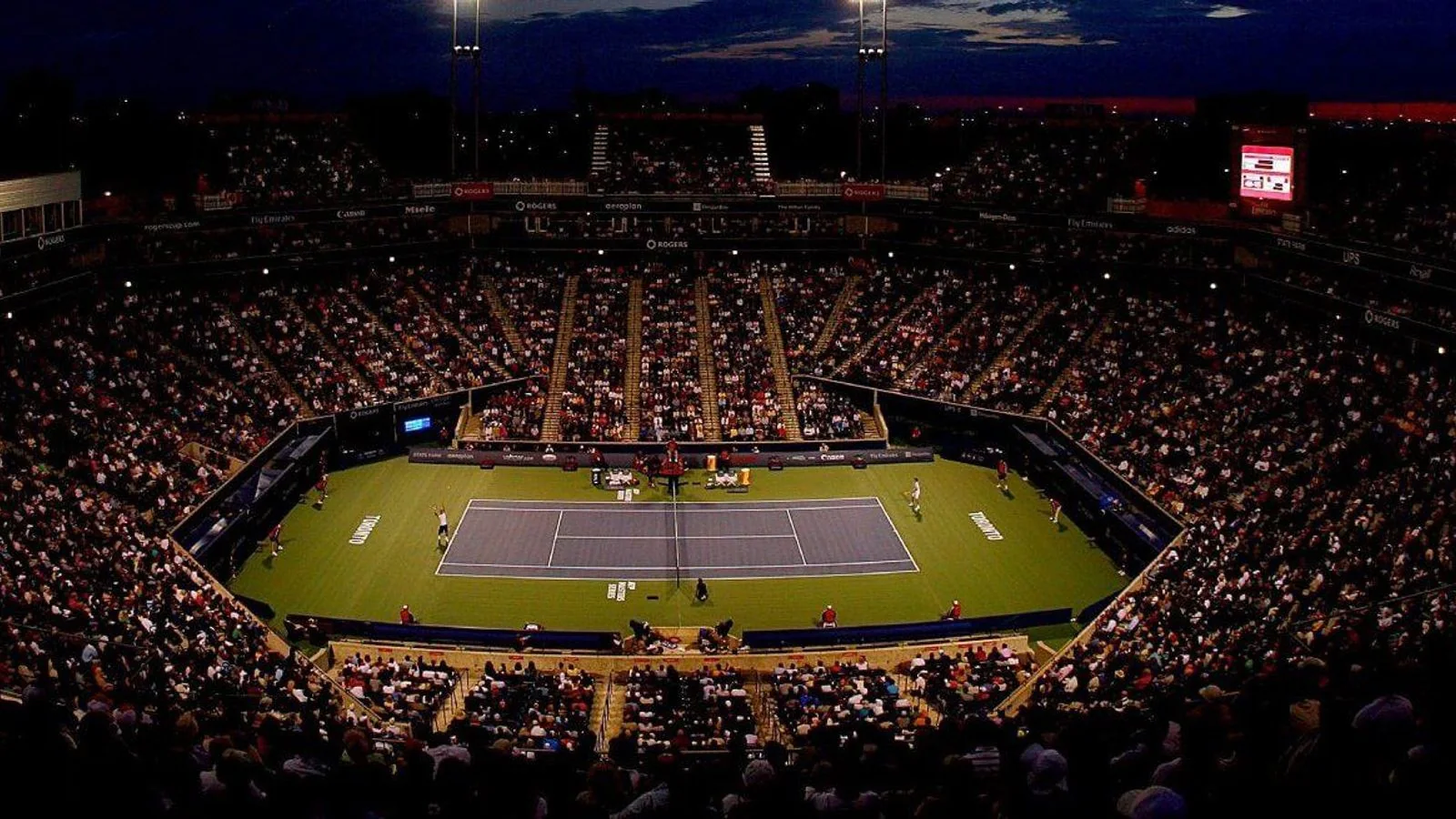
Elena Rybakina will play Iga Swiatek in the 2026 National Bank Open singles final on Thursday, August 13, not before 6 p.m. EDT at Sobeys Stadium in Toronto. That is 10 p.m. UTC, 11 p.m. in the United Kingdom, midnight on August 14 in Central Europe and 6 a.m. on August 14 in China. The official WTA tournament page still listed the event as in progress and on “Day 12 – Final” when this guide was checked on August 13.
Confirmed matchup
No. 2 seed Elena Rybakina vs No. 7 seed Iga Swiatek in the women’s singles championship match.
Scheduled start
Thursday, August 13 at 6 p.m. EDT, with “not before” meaning the court timetable can still move.
The 6 p.m. time is the earliest scheduled start, not a guarantee that the first ball will be struck at exactly 6:00. The doubles final is scheduled earlier at 3:30 p.m., and a long presentation, weather interruption or operational delay can move the singles entrance. Readers attending or watching should recheck the official order of play shortly before the session rather than relying on an old search snippet.
The event uses two date descriptions that are both correct in context. The National Bank Open markets the Toronto tournament as August 1–13 because qualifying began Saturday, August 1. The WTA overview shows August 2–13 for the main event. Main-draw play began Sunday, August 2, and the championship closes the expanded 12-day competition on August 13.
This page is deliberately split into confirmed and pending information. The opponents, venue and scheduled time are confirmed. A final score, champion and match duration remain pending until the WTA or tournament score service marks the match finished. For the latest court status alongside other matches, use the WTA matches today page.
How Rybakina and Swiatek reached the final
Rybakina and Swiatek arrived through contrasting late-round tests. Rybakina had to recover from a set down in both the quarterfinal and semifinal. Swiatek produced a short, controlled quarterfinal before being pushed through three sets in the semifinal. The scorelines matter because they describe how each player solved pressure; they do not, by themselves, prove who will recover better for the championship.
| Player | Quarterfinal | Semifinal | Route signal |
|---|---|---|---|
| Elena Rybakina | d. Naomi Osaka 4-6, 7-6(5), 6-4 | d. Coco Gauff 5-7, 6-2, 6-2 | Two successful recoveries after losing the opening set. |
| Iga Swiatek | d. Diana Shnaider 6-2, 6-1 | d. Elina Svitolina 6-3, 1-6, 6-3 | A quick quarterfinal followed by a reset after a difficult second set. |
Rybakina's quarterfinal against Osaka was the narrowest escape of the four matches shown. She trailed by a set and had to take the second in a tiebreak before closing 6-4 in the third. Against Gauff, she again lost the first set, then limited the American to two games in each remaining set. That pattern supports a resilience point, but it also means she spent two consecutive matches playing deciding sets.
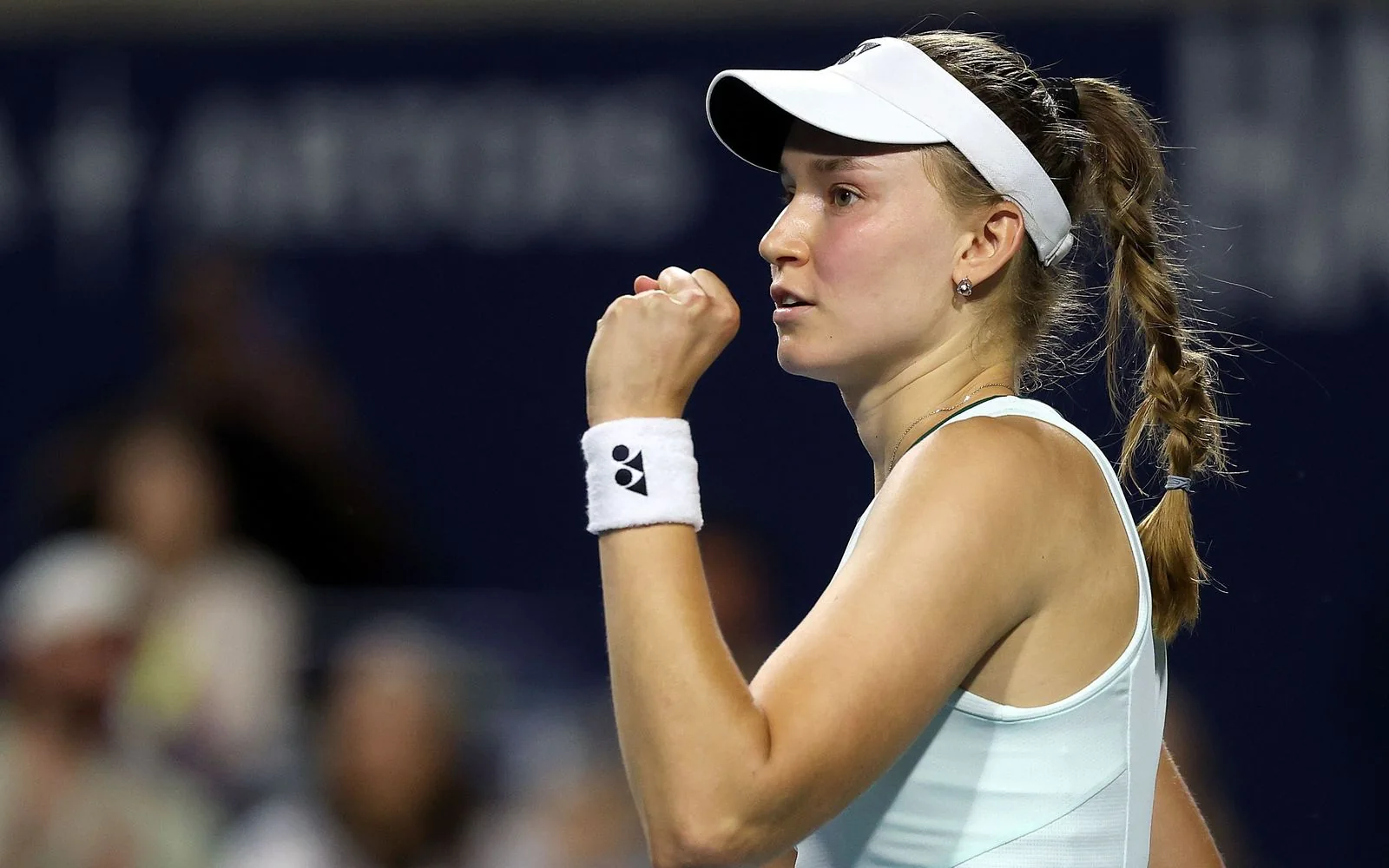
Swiatek's 6-2, 6-1 quarterfinal over Shnaider reduced both court time and emotional turbulence before the semifinal. Svitolina then changed the match by taking the second set 6-1, but Swiatek answered in the decider rather than allowing one poor set to define the result. It put the No. 7 seed into her first final of the 2026 season and gave her a chance to win Toronto for the first time.
Rest calculations should stay modest. Tennis recovery depends on finish time, treatment, sleep and the physical character of the points—not merely the number of sets printed in a draw. Rybakina carries proof that she can reverse a match; Swiatek carries the cleaner quarterfinal and a successful semifinal reset. Those are useful observations, not guarantees.
Head-to-head context before the Toronto final
Rybakina and Swiatek enter the Toronto final tied 6-6 in completed tour-level meetings. That even record, checked on August 13 before the championship match, is a better summary of the rivalry than a claim that either player “owns” the matchup. Their series has moved across hard courts, clay and indoor conditions, with each player finding periods of control rather than one maintaining a permanent edge.
| Evidence before Toronto | Confirmed figure | What it says |
|---|---|---|
| Completed head-to-head | 6-6 | The rivalry is level entering the final. |
| Latest meeting | Rybakina d. Swiatek 7-5, 6-1 | Rybakina won their 2026 Australian Open quarterfinal. |
| Key Australian Open stats | 11 aces; 79.3% first-serve points won | Rybakina's first strike drove her latest win. |
The newest reference point favors Rybakina. At the 2026 Australian Open she beat Swiatek 7-5, 6-1, levelling a series that Swiatek had led 6-5. The WTA statistics show why the score accelerated: Rybakina struck 11 aces, won 79.3% of points behind her first serve and converted four of seven break chances. Swiatek won 60% of first-serve points and converted one of four break opportunities.
Those numbers should inform the Toronto preview without becoming a prediction by themselves. Melbourne offered different weather, balls, court speed and match timing. Toronto also follows two very different semifinal routes. A balanced head-to-head tells us that both players possess repeatable solutions; it does not tell us which player will execute them better on Thursday.
The practical takeaway is to watch the opening return games rather than overreact to the first few points. If Swiatek consistently gets Rybakina's first serve back deep, the match can become a movement and second-shot contest. If Rybakina earns short returns or free points, she can keep rallies inside her preferred first-strike pattern. Their 6-6 record makes that live tactical evidence more useful than a simplistic historical favorite.
Matchup keys: serve, return and first-strike control
The central contest is not simply “Rybakina's serve against Swiatek's return.” It is whether Rybakina can turn enough first serves into short points while still making her second serve difficult to attack. Swiatek's task is to change the geometry early: block the biggest delivery deep, step inside the second serve and make Rybakina strike one more ball from an uncomfortable position.
1. First-serve effect
Rybakina won 79.3% of first-serve points in their latest meeting despite landing fewer than half of her first serves.
2. Second-serve pressure
Swiatek needs depth without overpressing; Rybakina still won 56.7% of second-serve points in Melbourne.
3. First neutral ball
The player who controls the shot after the return can keep points in her preferred pattern.
Rybakina's first-serve percentage can be misleading when read alone. At the Australian Open she landed 49.2%, which appears vulnerable, yet the serves that landed were highly productive. She also survived a 0-40 game early in the first set and then lost only 12 points over her next eight service games. The better live indicator is the combination of first-serve points won and the quality of Swiatek's contact, not the percentage in isolation.
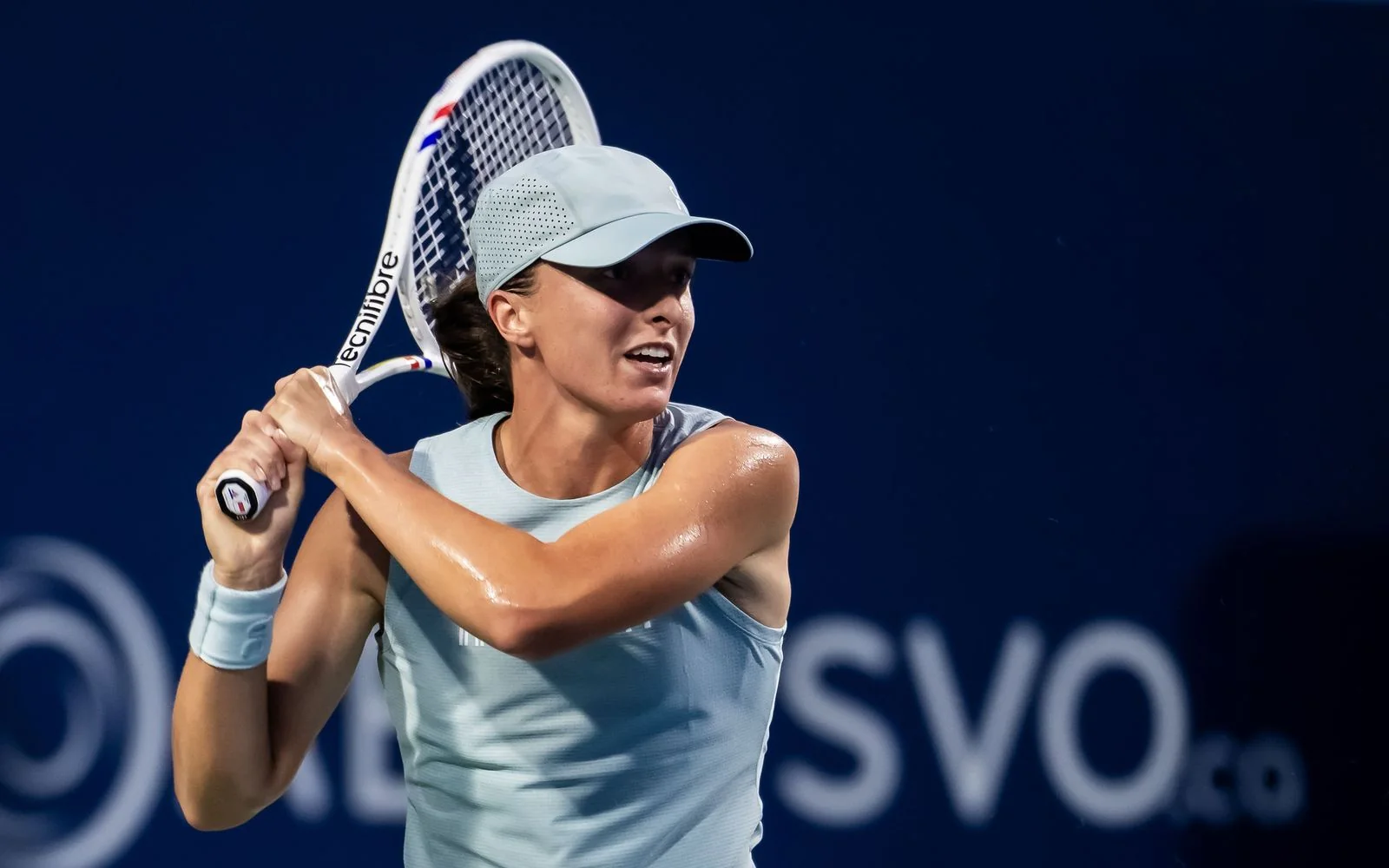
Swiatek can create pressure by standing forward on second serves, but aggression is valuable only if the return lands with usable depth. A rushed miss removes her greatest structural advantage. A deep return through the middle can be just as effective as a line winner because it reduces Rybakina's angle and gives Swiatek time to take the next ball early.
Finally, monitor rally shape rather than counting only winners. Rybakina wants the serve or return to set up a forceful second shot. Swiatek wants to absorb that pace, redirect it and make court coverage matter. If points repeatedly reach a neutral fourth or fifth ball, Swiatek has altered the match. If Rybakina is finishing or commanding points by shot three, her first-strike plan is working. Those observable patterns offer a clearer live reading than any pre-match slogan.
Prize money, ranking points and what the title changes
The Toronto champion earns $1,085,220 and 1,000 ranking points, while the runner-up receives $564,920 and 650 points. Those are each player's total tournament awards for reaching the respective finishing position. They should not be added to the semifinal award as though every round's listed amount were a separate cheque.
| Toronto finish | Ranking points | Prize money (USD) |
|---|---|---|
| Champion | 1,000 | $1,085,220 |
| Finalist | 650 | $564,920 |
| Semifinalist | 390 | $297,315 |
In direct final-match terms, the title is worth a $520,300 difference in gross tournament prize money and a 350-point difference in the Toronto result. That calculation subtracts the finalist totals from the champion totals. It does not account for taxes, team expenses, currency conversion or personal sponsorship bonuses, all of which sit outside the published tournament schedule.
The ranking effect requires a second distinction. A player who wins 1,000 Toronto points does not necessarily add exactly 1,000 to the number beside her name in the next published ranking. WTA rankings use counting rules and existing results; points that are replacing a prior result can change the net movement. The official post-tournament ranking is therefore more reliable than a quick “current total plus 1,000” calculation.
For Rybakina, victory would add a first Toronto singles title to an already strong 2026 season. For Swiatek, it would deliver her first Toronto crown and her first title of the season after reaching the championship match as the No. 7 seed. Either outcome carries the full WTA 1000 champion allocation, but neither guarantees a particular future seed because later events and other players' results continue to shape the rankings.
Toronto's published total commitment is $7,433,076 across the event. The singles-final figures above answer what these two finalists can earn; they should not be mistaken for the entire tournament purse or for the doubles distribution.
How to watch and follow the live score
Start with the official National Bank Open broadcast page because rights differ by country. In Canada, the tournament identifies Sportsnet as its official English broadcaster and TVA Sports as its official French broadcaster. The same page points women's-tennis viewers to WTA TV as an official online option and notes that a subscription is required. Availability, blackout rules and included channels can still vary by account and location.
Final-day viewing checklist
- Confirm the match remains listed not before 6 p.m. EDT on the official order of play.
- Open the broadcaster or streaming service named for your region and check that your plan includes the required channel.
- Keep the WTA Toronto scores page open for official point-by-point status if video is delayed.
- Recheck after the doubles final, because the singles start can move later.
A legal streaming option in one country is not automatically available in another. Before paying, confirm the event, country, device support and whether the subscription includes live WTA matches rather than only clips. A virtual private network does not override a service's terms or local rights. The most accurate choice is the regional broadcaster link exposed on the WTA tournament page.
For scores, use the WTA's Toronto event hub or its global scores page. These show match status and game-by-game progress without requiring a video subscription. The tournament's own daily schedule is the better source for court sequence and operational timing because it explains that schedules evolve throughout the day. Our WTA matches today page provides a convenient daily view, but the official source should settle any conflict.
Do not assume a YouTube search result is a legitimate live feed. The National Bank Open directs fans to Tennis Canada's channel for selected tournament content, yet that does not promise a free full-final stream. Unofficial uploads can disappear, be region-blocked or use misleading thumbnails. Use the official broadcaster for live video and the WTA page for scores.
If you cannot watch live, avoid social feeds and open the official WTA event page later. Highlights and replay access are separate rights products: a broadcaster may offer a full on-demand match, while the WTA or tournament publishes a shorter highlights package. Check the runtime and label before pressing play so you know whether you are opening a full replay or a condensed recap.
Toronto final result, champion and FAQ
Result status: pending
When checked on August 13, the official WTA page still labelled Toronto “In Progress” and “Day 12 – Final,” with no live match and no completed singles-final score displayed. Rybakina and Swiatek were both marked as playing. This guide therefore does not name a champion before the match is complete.
The result should be treated as confirmed only after the WTA score hub marks the match finished or the National Bank Open publishes it. Search snippets and social posts can update out of order, particularly after a delay. Once an official completed score is available, the result box can be updated with the champion, set score and match duration while retaining the pre-match analysis below it.
Is Rybakina vs Swiatek finished?
No completed final was visible on the official WTA Toronto page at the latest check. The match was scheduled for August 13, not before 6 p.m. EDT.
Who is favored?
There is no single official WTA betting favorite. Prices vary by regulated sportsbook and time. The tennis evidence is balanced: the head-to-head is 6-6, while Rybakina won the latest meeting.
Has either player won Toronto before?
Neither finalist has a Toronto singles title. Rybakina is playing her first Toronto final, and Swiatek is seeking her first championship at the event.
What does “not before 6 p.m.” mean?
It means 6 p.m. EDT is the earliest planned start. Earlier court activity, weather or operational delays can push the first point later.
Where will the final score appear?
Use the official WTA Toronto scores page first. The event's match schedule and reputable rights-holding broadcasters are useful cross-checks.
Regardless of the result, the match brings together the clearest strengths of two elite hard-court players: Rybakina's serve-led first strike and Swiatek's ability to turn returns into immediate pressure. The most honest preview is not a guaranteed winner. It is a set of signals to watch—and a firm boundary between what was confirmed before the final and what still had to happen on court.