Guangzhou Open 2026 dates and finals schedule
The 2026 Guangzhou Open runs from 26 October through 1 November at Nansha International Tennis Center in Guangzhou, China. It is a women's WTA 250 tournament on outdoor hard courts. The WTA's pre-event Asian Swing guide schedules the singles final for Sunday 1 November, not before 4:30 p.m. China Standard Time, after a doubles final listed for 2 p.m. that day. At the 26 September research cutoff, there is no 2026 daily order of play, draw or match result yet.
These published final windows are the clearest current schedule facts. The week-long date range does not mean a particular player will compete every day, and the listed final times do not assign a court or opponent to anyone in September. A draw must be published and matches played before the finalists are known. During tournament week, the official daily order should be checked for changes, especially because outdoor matches can be delayed.
Tournament week and China time
The WTA's 2026 event page gives the 26 October–1 November duration. Its location field confirms Guangzhou, and the surface is hard court. All published final times in the WTA Asian Swing guide use China Standard Time, UTC+8. This is also the standard clock in Beijing, Hong Kong and Singapore during the event. A viewer elsewhere should convert from the tournament's local time only once; many score apps automatically display the viewer's device time zone.
For a first-round or quarterfinal start, the current week dates are insufficient. The 2026 order-of-play page says no daily order is available yet. Qualifying may have its own timing and the main draw can span multiple courts. Check the selected date's order after publication, rather than assuming a player appears on the first calendar day. The WTA calendar can place this event among other tour stops, but its year-specific order is the match-level source.
Sunday singles and doubles finals
Both title matches are planned for Sunday 1 November, but they are different competitions with different announced times. The doubles final is listed at 2 p.m. local time; the singles final has a not-before 4:30 p.m. window. A not-before time is an earliest planned start, not a guarantee that the first serve will occur at exactly 4:30. If the preceding match runs long or play is interrupted, the later match may slide. The final order of play will make any revised sequence clearer.
| 2026 milestone | Published plan | Current status |
|---|---|---|
| Tournament week | 26 Oct–1 Nov | Dates listed by WTA |
| Doubles final | 1 Nov, 2 p.m. CST | Teams pending |
| Singles final | 1 Nov, not before 4:30 p.m. CST | Finalists pending |
The time-zone label matters because “CST” can also mean Central Standard Time in North America. Here it means China Standard Time, UTC+8. A reader in North America should use the numerical UTC offset or a trusted converter to avoid a many-hour mistake. The official schedule remains the final check close to match day.
The 2026 Guangzhou draw and entry list are pending
As of 26 September, the WTA has not posted a 2026 Guangzhou player list or draw. Its year-specific player page says the list is not available, and its draw page says the final bracket is not available. That is a meaningful answer to searches for “Guangzhou Open draw 2026”: there is presently no verified first-round pairing, seeded path or doubles team to reproduce. A completed 2025 bracket may appear near a 2026 search result, but it belongs to a different edition.
What is confirmed about draw size
The official event overview gives a planned 32-player singles draw and 16-team doubles draw. Those figures describe the competition format, not a finalized collection of entrants. The singles places will include players admitted through the relevant entry routes, but the specific names, seeds and first-round opponents require the actual draw. Similarly, the number 16 tells you how many doubles teams the tournament is set up to hold; it says nothing about who will partner whom.
The 2026 player-list page currently shows only its “not available yet” message. Ann Li won the 2025 title, and other players appeared in last year's draw, but neither fact confirms a 2026 entry. An athlete may change plans, withdraw, use a different event in the same week or be affected by qualifying. Do not convert last season's finalists into this season's projected first round without a current official list.
When to revisit the brackets
The WTA 2026 draw page says final tournament draws are confirmed three days before play starts. With the event dated to begin 26 October, around 23 October is a sensible time to revisit the page. That is an approximate check point, not an announced draw ceremony hour. The page itself will establish when the singles and doubles brackets are actually usable, and late substitutions may still be reflected.
When a bracket appears, check the year selector and competition tab before reading names. The draw maps an entrant's possible path; it does not guarantee she will play on a particular date or court. A daily order of play is the next document for that question. A score page comes after the match to establish what actually happened. Keeping these three sources separate prevents a projected opponent from being presented as a played match.
Results: 2026 has not begun and Ann Li won 2025
The 2026 Guangzhou Open has no match results or champion yet. The tournament begins on 26 October, and the WTA's 2026 scores page currently says scores will appear once play starts. Ann Li's victory over Lulu Sun belongs to the completed 2025 edition. It is the latest historical result, not a preview score or a 2026 outcome.
Where 2026 scores will appear
During tournament week, use the official 2026 scores page to distinguish matches that are scheduled, live and finished. The year segment in its URL is a useful safeguard: /guangzhou/2026/scores is the page for the upcoming edition. A date or round selector can narrow the list once matches populate. If a score is still live, it cannot yet establish who advanced; a completed score and an updated bracket together give the clearest result.
The current 2026 score page also displays older highlight videos. Several are labeled “Guangzhou 2025,” including Ann Li's championship reel. These videos are valuable history, but their presence beside an upcoming 2026 header can fool a quick reader. Treat the actual score rows and their dates as match results, and use the year selector to review old editions deliberately. If a first-round match ends by retirement or walkover, retain that notation rather than converting it into an ordinary straight-sets victory.
What happened in the 2025 finals
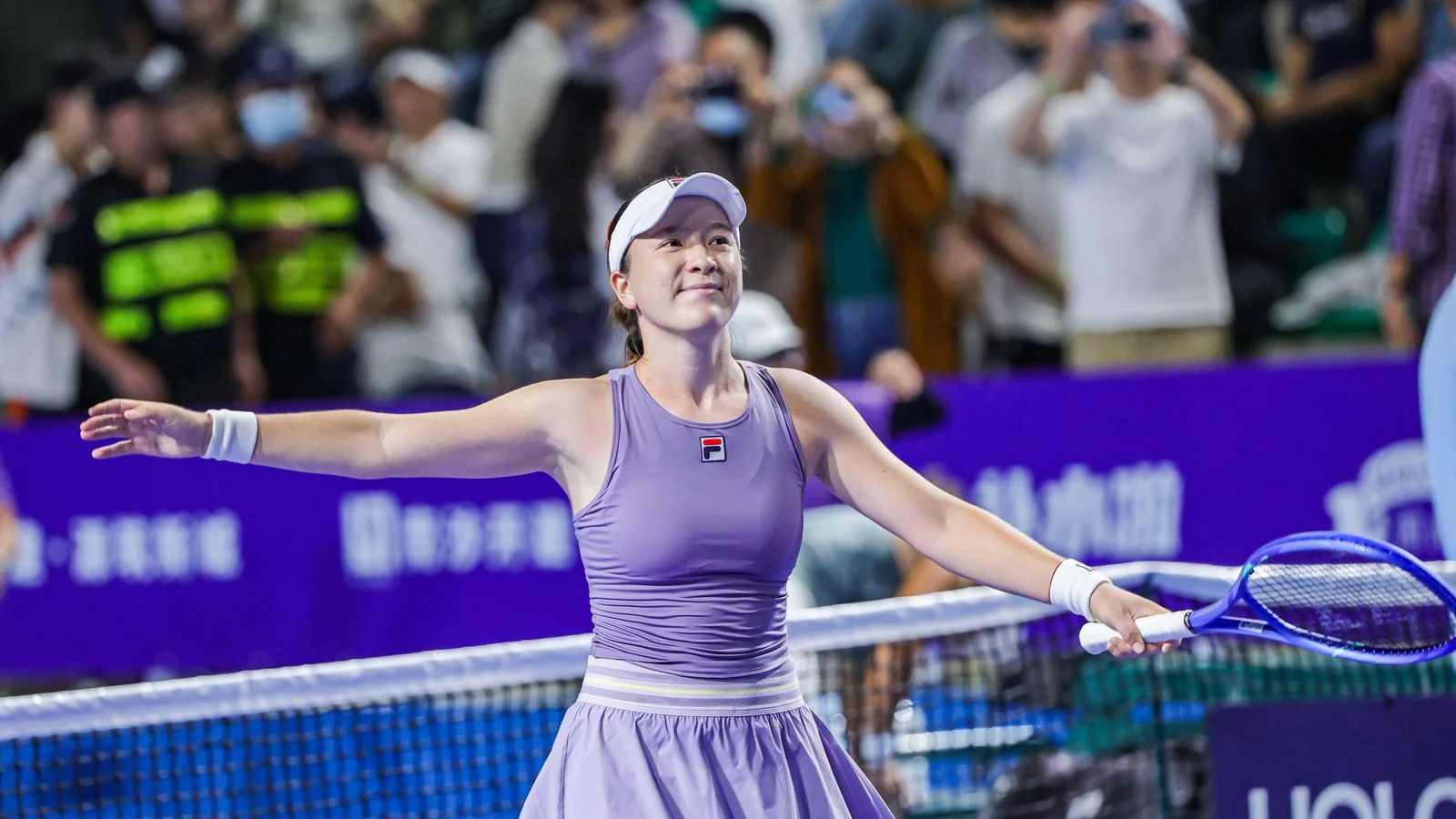
In the 26 October 2025 singles final, No. 2 seed Ann Li beat qualifier Lulu Sun 7-6(6), 6-2. The WTA final report says Li won the opening tiebreak after falling behind 3-0 in it and saved all five break points she faced in the first set. She had reached that final without dropping a set, then completed the title match in two sets. It was her first WTA singles title since Tenerife in 2021 and her second career tour-level singles title.
Sun's path matters to the result. She came through qualifying and reached the final, meaning the 2025 event had a qualifier playing for the trophy. It does not imply the same 2026 field or matchup will recur. The win is a reference point for Guangzhou's recent history while the new player list, draw and scores are empty. If Li appears in future 2026 materials, her 2025 title may add context, but it is not evidence of an automatic place in the new final.
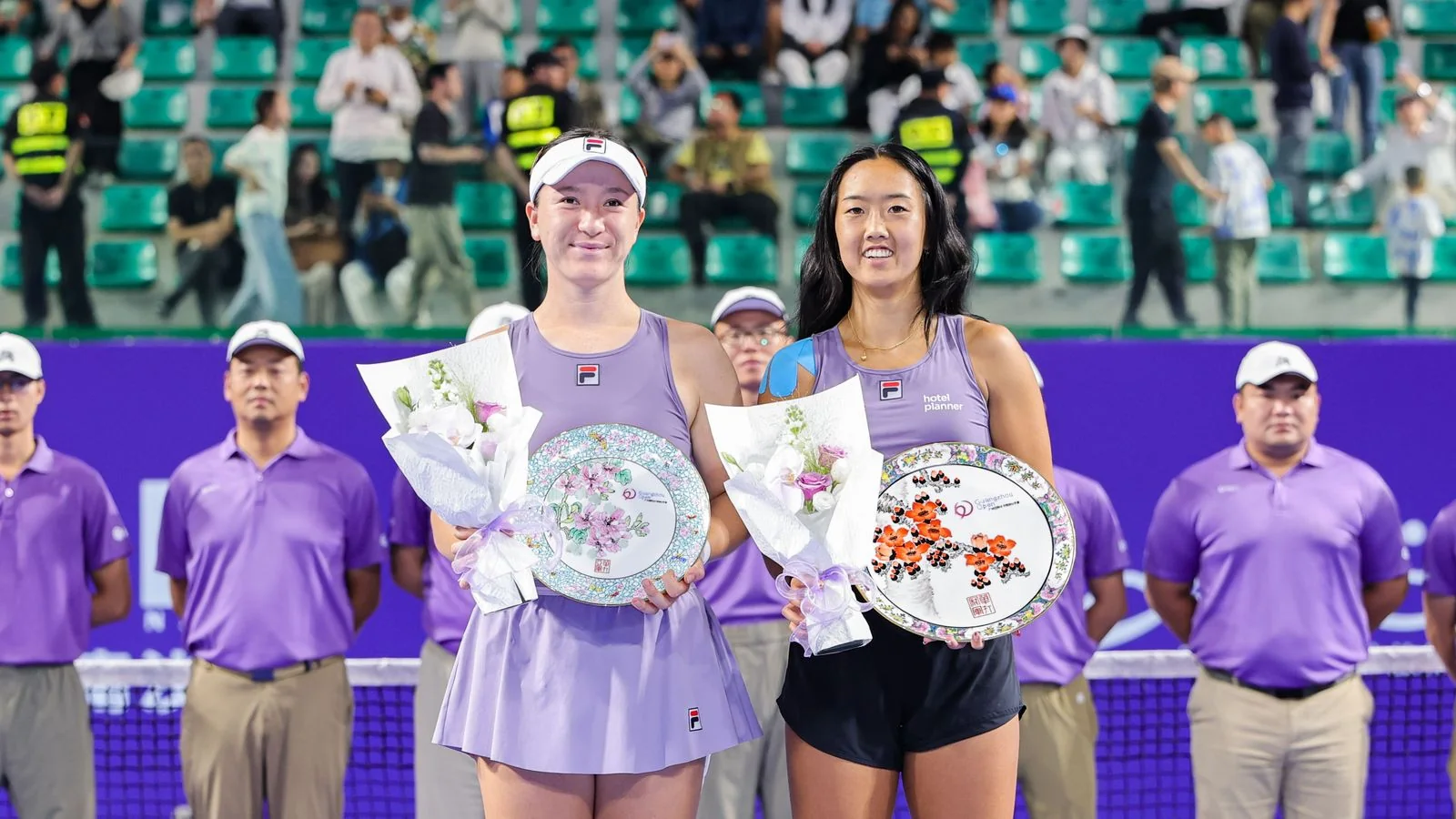
The 2025 doubles title went to Katarzyna Piter and Janice Tjen, who defeated Eudice Chong and Liang En-shuo 3-6, 6-3, [10-5]. The final was a separate competition from Li's singles match, and the bracketed deciding score is a match tiebreak. Both 2025 champions should be named with discipline when comparing editions: the singles winner was Li; the doubles winners were Piter and Tjen. The 2026 winners will be known only after the new finals finish.
The Nansha venue and Guangzhou event identity
The Guangzhou Open is played at Nansha International Tennis Center in Guangzhou, on outdoor hard courts. The WTA describes it as the event formerly called the Guangzhou International Women's Open, a name still common in search queries. It joined the women's tour calendar in 2004, when Li Na won the inaugural title. These names refer to the Guangzhou women's event, whose 2026 edition is a WTA 250; they do not identify every tennis tournament held in China.
The distinction matters because the China Open in Beijing is another WTA event with a broader international search footprint. In 2026, Beijing is a WTA 1000 scheduled from 30 September to 11 October at the China National Tennis Center. Guangzhou follows later, from 26 October to 1 November, with a 32-player singles draw instead of Beijing's 96-player draw. Both are hard-court stops in China, but their dates, venues, brackets, ranking points and prize figures are separate. A “China Open today” result in early October does not describe a Guangzhou match in late October.
For practical planning, choose the city and tournament page before checking a schedule. A Guangzhou score should live on the WTA URL containing /1023/guangzhou/2026/; a Beijing score has a different event identifier and city. The site's 2026 Guangzhou tournament listing provides the local event card, while this guide explains which official pages will become useful as the draw and daily order appear. That avoids mistaking the 2025 Guangzhou final, the 2026 Beijing China Open, or another Chinese city event for the new Nansha competition.
Outdoor hard courts also make conditions relevant to the schedule. A rain interruption may shift a session or require a revised court allocation, so the event's weekly dates cannot replace a live daily order of play. Fans watching remotely should use the same Guangzhou-specific official pages as those attending Nansha. The naming and venue check is simple, but it prevents several common errors in a fast-moving tournament week.
How to follow a Guangzhou match
Use three different tools for three different questions during Guangzhou week. The draw identifies opponents and round paths; the daily order of play identifies court and planned start; the score page shows the match in progress and its eventual outcome. None of the 2026 match-level pages is populated at the current cutoff. The site's WTA matches today view can help scan the broader tour, but a Guangzhou-specific claim should still be checked against the WTA's 2026 event pages.
Check the daily order of play
The official 2026 daily order currently says no data are available. Once published, select the day and inspect the named match, court and match position. “Not before” is a lower time boundary, and a match listed after another on the same court can begin later if the first runs long. An outdoor event can also be interrupted by weather. For a ticketed session or a timed live stream, recheck the order on match day rather than relying solely on an earlier screenshot.
The announced Sunday finals windows do not establish the times for first-round or semifinal matches. A player who appears on a draw line still needs a daily order to reveal when she is scheduled. If a media search result says “Guangzhou Open 2026 schedule” but links to a WTA page with /2025/order-of-play, switch to the actual 2026 URL before using its details. A wrong-year order can look perfectly complete and still be irrelevant to this edition.
Read a live score and completed result
During play, the official 2026 scores page will carry match status and score updates. A live score can tell you which player leads, but only a finished score tells you who won. The draw then shows which round or opponent comes next. Record whether a result belongs to singles or doubles, whether it is qualifying or main draw, and whether the match ended normally, by retirement or walkover. These distinctions are especially useful when a brief search snippet shows only a player's name and score.
For a quick “results today” check, confirm the displayed date in China Standard Time, UTC+8. In the Americas, a Guangzhou morning match may appear on the prior calendar date locally. The event page's own date is the better key for matching an order entry with a score. Historical highlights may remain visible on the 2026 page; they do not become current scores merely because they share the same screen.
Find regional TV or streaming options
The WTA event page links to “View Broadcasters”, and its where-to-watch page asks readers to check options in their own region. The tour's 2026 partner announcement names broadcasters for several territories, but that broad agreement does not prove every Guangzhou match or court will appear on a particular channel. Rights, subscriptions and individual match listings vary. Choose your location, inspect the broadcaster's Guangzhou schedule near the event, and compare its time with the official order of play.
A listing for a live score is not a video stream. Likewise, a short WTA highlight is not live coverage. Avoid treating an unverified “free stream” search result as a rights holder. For a viewer with limited time, the sequence is simple: find the official match on the order, convert its China time correctly, then confirm that the regional broadcaster lists that specific session. If viewing coverage is unavailable in your territory, the WTA scores page still provides a direct way to follow the result.
WTA 250 points and 2026 singles prize money
Guangzhou's WTA 250 level tells you the maximum published singles ranking points: 250 for the champion. The WTA's 2026 Asian Swing guide lists $37,390 for that singles finish and $22,125 for the runner-up. These are planned result-based amounts for the Guangzhou singles event; no 2026 player has earned them yet because the competition has not started. A final score will eventually identify the champion, while the published table explains the stakes.
Published points and USD payouts by finish
The WTA's event breakdown gives the following 2026 singles values in US dollars. Each row describes a player's finishing stage; the rows are not separate payments or point awards to add together for a finalist. In particular, 250 is the champion's listed points outcome, not 250 plus every number in the earlier rounds.
| Singles finish | Ranking points | Published USD prize |
|---|---|---|
| First round | 1 | $3,065 |
| Second round | 30 | $4,285 |
| Quarterfinal | 54 | $7,025 |
| Semifinal | 98 | $12,331 |
| Finalist | 163 | $22,125 |
| Champion | 250 | $37,390 |
The year-specific tournament overview separately lists $283,347 total commitment. That larger figure describes the event's overall financial commitment and should not be presented as the singles winner's check. The table above is also not a published doubles prize breakdown or a ticket-price list. Those are different questions requiring their own sources. This distinction matters because search pages often put the largest number next to “Guangzhou prize money” without saying what it measures.
All figures here reflect the WTA information available at the 26 September cutoff. If the WTA revises a schedule or payout before play, its current event materials should take priority. For readers comparing Guangzhou with Beijing or Tokyo, check each tournament's level and year rather than transferring one event's point or prize table to another. Guangzhou is a 250; a WTA 1000 draw in Beijing and a WTA 500 event in Tokyo carry different stakes.