Osaka Japan Open 2026 dates and final schedule
The 2026 Kinoshita Group Japan Open is scheduled for 19–25 October 2026 at Utsubo Tennis Center in Osaka. It is the women's WTA 250 event also called the Japan Women's Open. The WTA's pre-event Asian Swing guide places the singles final on Sunday 25 October, not before 1:30 p.m. Japan Standard Time. Its doubles final is listed for Saturday 24 October, not before 3:30 p.m. JST, after the singles semifinals. The 2026 daily order of play and draw are still unavailable at the 26 September research cutoff.
Those finals dates are worth reading carefully. Many tennis events stage both finals on Sunday, but WTA's current Osaka schedule puts the doubles title match on Saturday and the singles title match on Sunday. If you are arranging travel or watching from another country, verify the final order again during tournament week. The advertised “not before” windows provide earliest planned thresholds, not a guaranteed first-ball time.
Tournament week and Japan time
The WTA year-specific tournament page confirms the 19–25 October window. That seven-day range identifies the event, but it does not tell you when a particular entrant will play. First-round pairings, qualifying places and court assignments depend on the draw and then the daily order of play. As of late September, the WTA's 2026 order page says the schedule is not available yet; a “Japan Open 2026 order of play” search result can lead to a page whose address actually contains 2018 or 2025.
WTA's published final times use Japan Standard Time, UTC+9. JST is one hour ahead of China and Singapore, so a 1:30 p.m. Osaka threshold corresponds to 12:30 p.m. in those places. People using a sports app should inspect its displayed zone before converting again; some apps automatically show the viewer's local time. The final order of play is still the source for an actual court assignment and any revised time.
| Milestone | Published 2026 plan | Status at 26 September |
|---|---|---|
| Main tournament | 19–25 October | Dates confirmed |
| Doubles final | 24 October, not before 3:30 p.m. JST | Teams pending |
| Singles final | 25 October, not before 1:30 p.m. JST | Finalists pending |
Singles and doubles title matches
The doubles final is planned to follow Saturday's singles semifinals. That dependency explains why its start is “not before” rather than a fixed appointment: if a semifinal runs long or play is interrupted, the doubles final can begin later. The singles final has its own not-before window on Sunday. Do not merge the two into a generic “Japan Open final at 1:30 p.m.” result, because the competitions involve different entrants and dates.
Once the tournament begins, use the official daily order to check the selected date. The WTA's draw will identify potential and actual opponents; the order tells you which match is scheduled on which court. After a match finishes, the official scores can confirm the result. This sequence keeps a broad pre-event plan from being mistaken for an individual player's itinerary.
Osaka is not the Tokyo Pan Pacific Open
Two women's tour events in Japan appear in consecutive weeks, and a search for “Japan Open tennis 2026” can blur them. This guide follows the Kinoshita Group Japan Open in Osaka, a WTA 250 scheduled for 19–25 October. The Toray Pan Pacific Open in Tokyo is a separate WTA 500 scheduled for 26 October–1 November. The host city and event name are the quickest checks before trusting a schedule, draw, ticket page or result.
| 2026 event | City and dates | WTA level | Singles draw |
|---|---|---|---|
| Kinoshita Group Japan Open / Japan Women's Open | Osaka, 19–25 October | 250 | 32 |
| Toray Pan Pacific Open Tennis | Tokyo, 26 October–1 November | 500 | 28 |
The WTA Osaka event page locates the tournament at Utsubo Tennis Center and identifies a 32-player singles draw. Tokyo has its own tournament page, venue information and 28-player singles draw. A player may enter one event, both or neither; a name on one provisional player list does not put her into the other draw. Results and prize figures must likewise be checked against the correct tournament page. In particular, a Tokyo semifinal during the following week cannot be an Osaka semifinal.
The naming history adds to the confusion: the Osaka event is also called the Japan Women's Open, whereas the Tokyo event's sponsor title includes “Pan Pacific.” Some listings shorten either name to “Japan Open.” For a live update, look for Osaka, WTA 250, 19–25 October before using it in this article. That single check prevents a plausible-looking Tokyo score from becoming a false Osaka result.
The Osaka field and draw before play begins
The WTA lists a 32-player singles draw and 16-team doubles draw for Osaka in 2026. Those are tournament capacities, not completed brackets. As of 26 September, its year-specific draw page says the draw is currently unavailable. Therefore no first-round opponents, seeds, semifinal paths or doubles pairings can yet be reported as final. A provisional player list is useful for following possible entrants, but it cannot answer “who plays whom?”
Provisional names on the WTA player list
The official 2026 player list currently displays names including Paula Badosa, Katie Boulter, Kimberly Birrell, Katerina Siniakova, Clara Tauson, Tereza Valentova and Qinwen Zheng. WTA warns directly on that page that the list is subject to change until the draw is published. These names are provisional entrants, not confirmed first-round participants. The page's dynamic lower section also shows a generic “not available yet” placeholder; that is another reason to avoid treating the cards as a settled final field.
In practical terms, a player card means she is associated with the event's current entry information. It does not confirm travel, fitness, a seed number or a particular court assignment. A late withdrawal, qualifying result or wild card can change the playing field. Nor does a singles name tell you her doubles partner. Once WTA publishes the draw, check the brackets themselves for the accepted entrants and pairings, then revisit if the site marks a replacement or walkover.
When the singles and doubles draws become usable
The WTA's Osaka draw page says final tournament draws are confirmed three days before play starts. The advertised event week begins 19 October, so the useful check window is around 16 October. This is a guide to when to revisit the page, not a promise of a specific release hour or a claim that all qualifying matches have already finished. Until the bracket appears, a search snippet labeled “Osaka draw 2026” may be a blank year page or an older season.
When the draw is live, start with the year in the URL and the tab for singles or doubles. The draw maps possible progression through rounds; it does not by itself supply every match's date or start time. The daily order of play then assigns matches to courts and sessions. If you are tracking one player, check all three steps in that order: current participant status, her draw line, and the order for the date you plan to watch. A seed can have a bracket position days before her precise start time is published.
Results: 2026 is pending, 2025 belongs to Fernandez
There are no 2026 Osaka match results or winners yet. At the 26 September cutoff, the WTA's 2026 scores page says scores are not available until play starts. The tournament is scheduled for 19–25 October. Any completed final appearing in an Osaka search today should be checked for its year before it is called a 2026 result. The most recent completed Osaka singles championship is Leylah Fernandez's 2025 victory over Tereza Valentova.
Where the 2026 scores will appear
The year-specific WTA scores page is the direct place to follow completed and in-progress matches during the week. Its date and round filters will matter once play begins. For a fan asking “Osaka results today,” first confirm that the page URL contains /osaka/2026/scores, then check the date of the match and whether the status says final, live or scheduled. A scheduled listing is not a result, and a live score may still change before the match is complete.
A useful update routine is to pair the scores page with the 2026 draw. A result identifies who won a match; the bracket shows the effect on that player's path. If a player advances by walkover, the notation is different from a played two-set win. Keep qualifying scores, main-draw singles and doubles in their own categories. The final champion should be named only after the tournament's completed final appears on the official year page.
Fernandez's 2025 final in context
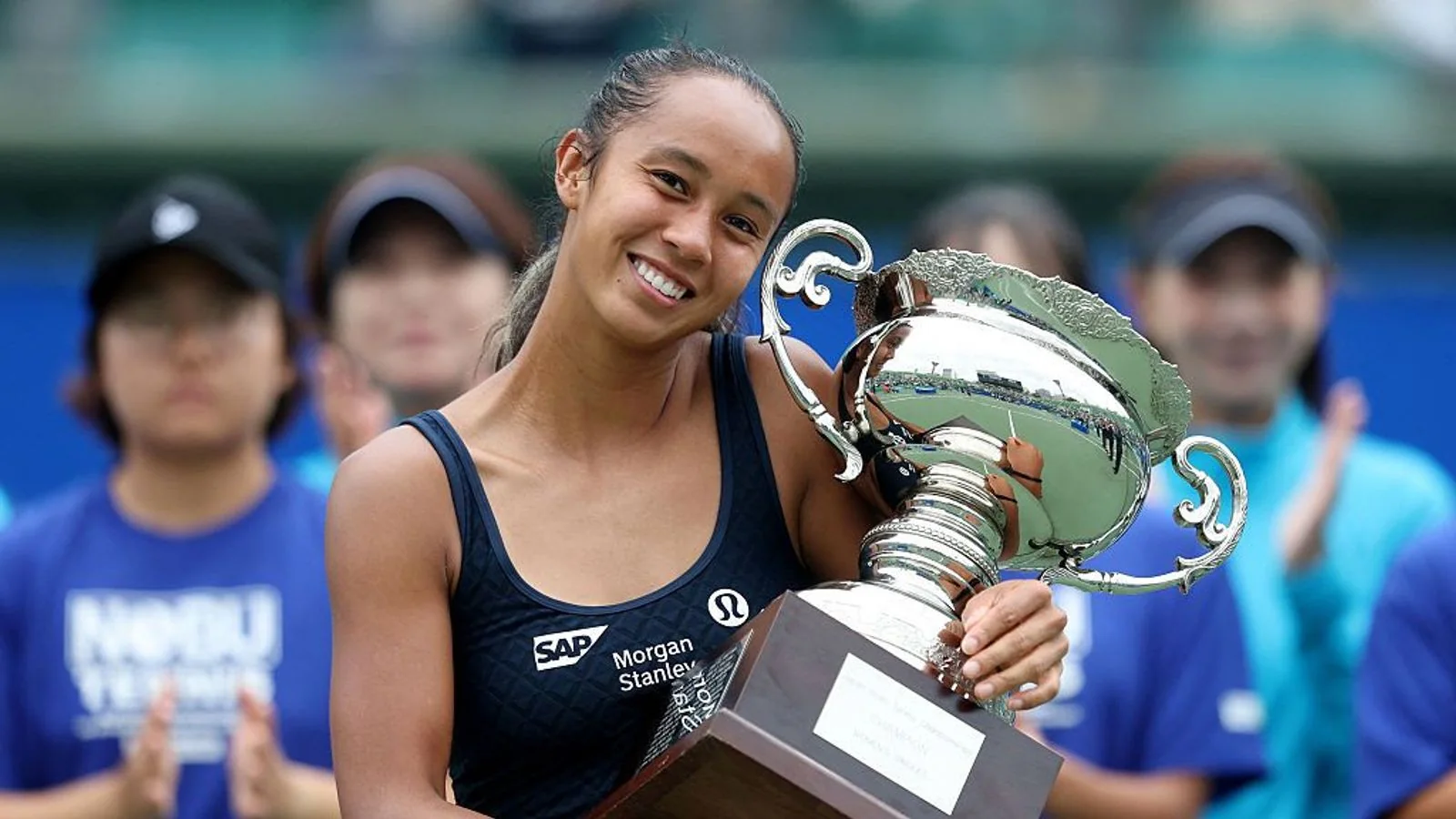
On 19 October 2025, No. 4 seed Fernandez defeated 18-year-old qualifier Valentova 6-0, 5-7, 6-3 in two hours and 11 minutes, according to the WTA final report. The victory gave Fernandez her fifth career singles title and second title of 2025. The score captures a genuine momentum shift: Fernandez took the opening set without conceding a game, Valentova recovered to force a third, and Fernandez closed it after the decider tightened.
Valentova had come through qualifying to reach her first WTA final, so the match was not simply a routine win over an inexperienced opponent. WTA credited her with six wins during the week and a second-set response after losing the first seven games of the title match. Fernandez's championship is relevant background for the next Osaka edition, but it does not make her a confirmed 2026 entrant or defending finalist. A past champion's result is historical context until the new draw and scores exist.
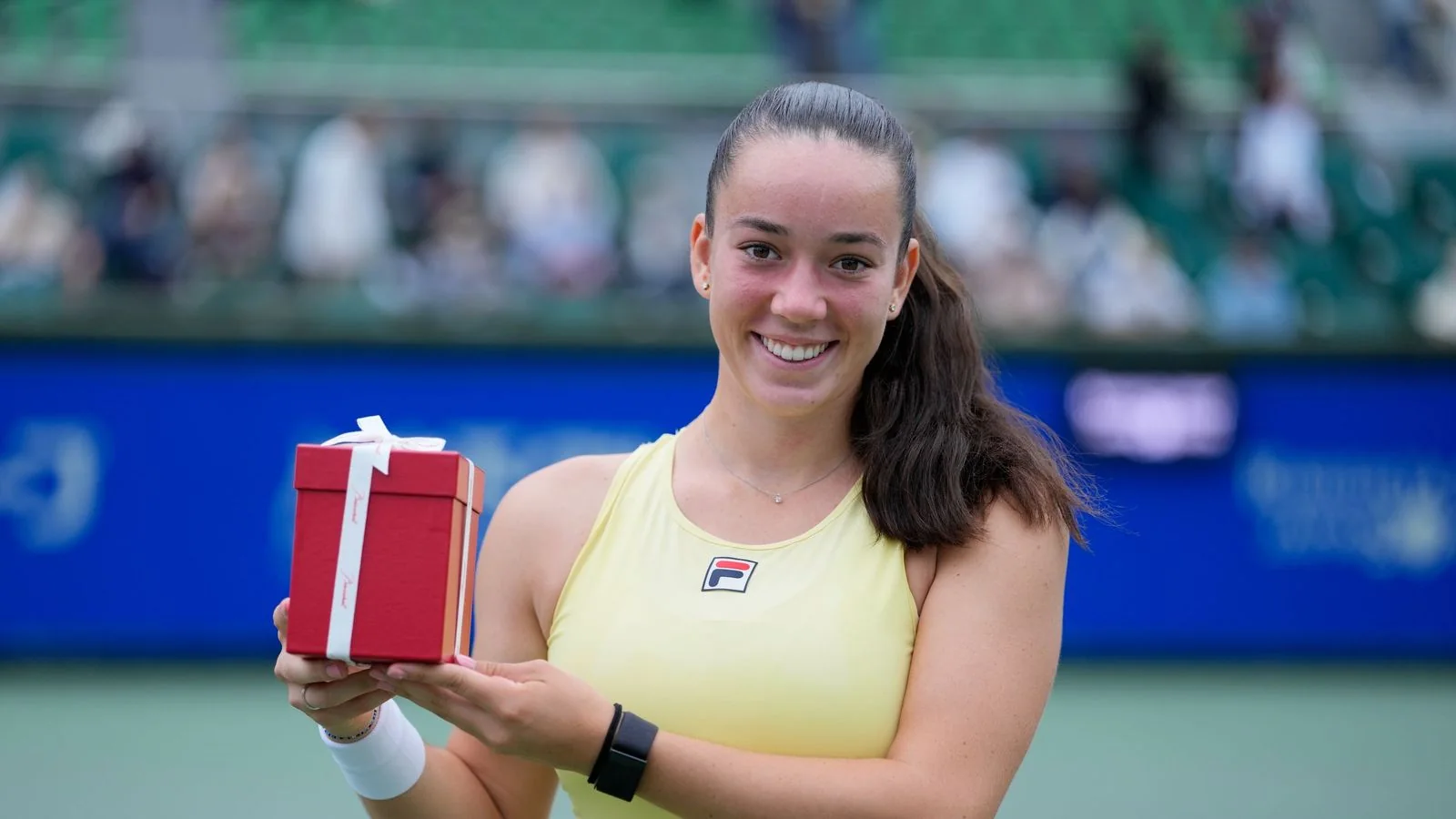
The 2025 doubles title went to Taylor Townsend and Kristina Mladenovic, who beat Storm Hunter and Desirae Krawczyk 6-4, 2-6, [10-5] in the Saturday final. That separate result helps explain why an Osaka “final” search can show more than one champion or date. When reporting 2026 outcomes, identify both the year and whether the score is singles or doubles.
How to follow a match during Osaka week
For a specific player's Osaka match, the broad 19–25 October window is only the starting point. The reliable sequence is draw for opponent, daily order for court and start window, score page for the result. WTA currently has no 2026 Osaka daily order of play, so anyone giving an exact first-round court and time in September is getting ahead of the available information. The WTA calendar places Osaka within the wider tour week, while the year-specific WTA event pages supply its match details. Check the same event year on each page, because WTA also hosts completed 2025 brackets and results.
Daily order of play and live score checks
Use the official 2026 order of play during tournament week. It currently says no order is available. Once the schedule appears, select the relevant date and identify the player's court, match position and any “not before” time. A second match on a court is dependent on the first finishing; even a published time can move because of lengthy matches or interruptions. Osaka uses outdoor hard courts, so weather can also change the plan.
For a remote viewer, check the time zone displayed by the order page or app. The WTA's pre-event finals plan is stated in Japan Standard Time, UTC+9. A local sports app may automatically convert that to your location. During a live session, the year-specific WTA scores page shows the active match and later the final score. The site's WTA matches today view can help scan the whole day's tour schedule. If the Osaka score is still live, refrain from stating that a player has advanced; a set lead can disappear. The next round's pairing is safest to report after the score has become final and the draw updates.
TV, streaming and ticket links
The WTA Osaka page offers a “View Broadcasters” link for regional viewing options. Broadcast rights vary by country, platform and sometimes court, so there is no verified universal “Osaka 2026 live stream” link for every reader. The WTA where-to-watch tool is a better first stop than an unsourced free-stream result. After choosing your region, verify the broadcaster's Osaka listing and the match time on the day. A tour-wide broadcast partner does not by itself establish that every Osaka doubles or outer-court match will be carried.
For attendance, the WTA tournament page's “Buy Tickets” link leads to the official Japan Open organizer site. Its landing page distinguishes Tokyo and Osaka, so choose the Osaka women's tournament and the intended date before buying. The two events run in consecutive weeks but a Tokyo ticket is not an Osaka admission. Check the organizer's live product page for seat categories, availability and final checkout price; a search-result price may be stale or refer to Tokyo. The daily order can still shift after a ticket is bought, so select by the session you want to attend rather than assuming a specific player will appear on one day.
Utsubo venue and WTA 250 stakes
The 2026 Kinoshita Group Japan Open is scheduled on the outdoor hard courts of Utsubo Tennis Center in Osaka. The WTA overview describes a 5,000-seat main stadium court, a 32-player singles draw and a 16-team doubles draw. Its WTA 250 designation explains the ranking-point ceiling for the singles champion. It also helps distinguish this event from the Tokyo WTA 500 the following week, whose draw size, points and financial figures are different.
Venue information matters for planning as well as background. An outdoor event can experience weather delays; the main stadium capacity does not mean every match is held on that court. The daily order of play is needed to identify the assigned court for a specific match, and ticket terms determine access to a given session or area. If a visitor is choosing travel around a finalist, the pre-event Sunday singles final window is useful, but the order of play and any late revisions still govern the visit.
Ranking points and published singles prize money
The WTA's 2026 Asian Swing guide publishes a result-by-result singles points and prize-money table for Osaka. A champion is listed for 250 points and $37,390; the runner-up is listed for 163 points and $22,125. These values describe a player's outcome in the singles event. They are not a ticket price, doubles purse or an amount to add across every round.
| Singles finish | Ranking points | Published USD prize |
|---|---|---|
| First round | 1 | $3,065 |
| Second round | 30 | $4,285 |
| Quarterfinal | 54 | $7,025 |
| Semifinal | 98 | $12,331 |
| Finalist | 163 | $22,125 |
| Champion | 250 | $37,390 |
The event page separately lists $283,347 total commitment for 2026. That tournament-wide figure should not be labeled as the champion's check, and the singles table should not be used to describe what doubles teams receive. All prize figures here reflect the WTA information available on 26 September; the official tournament pages are the right place to check any later revision. Once play begins, these stakes give context to a result, while the score and draw establish who actually earned it.