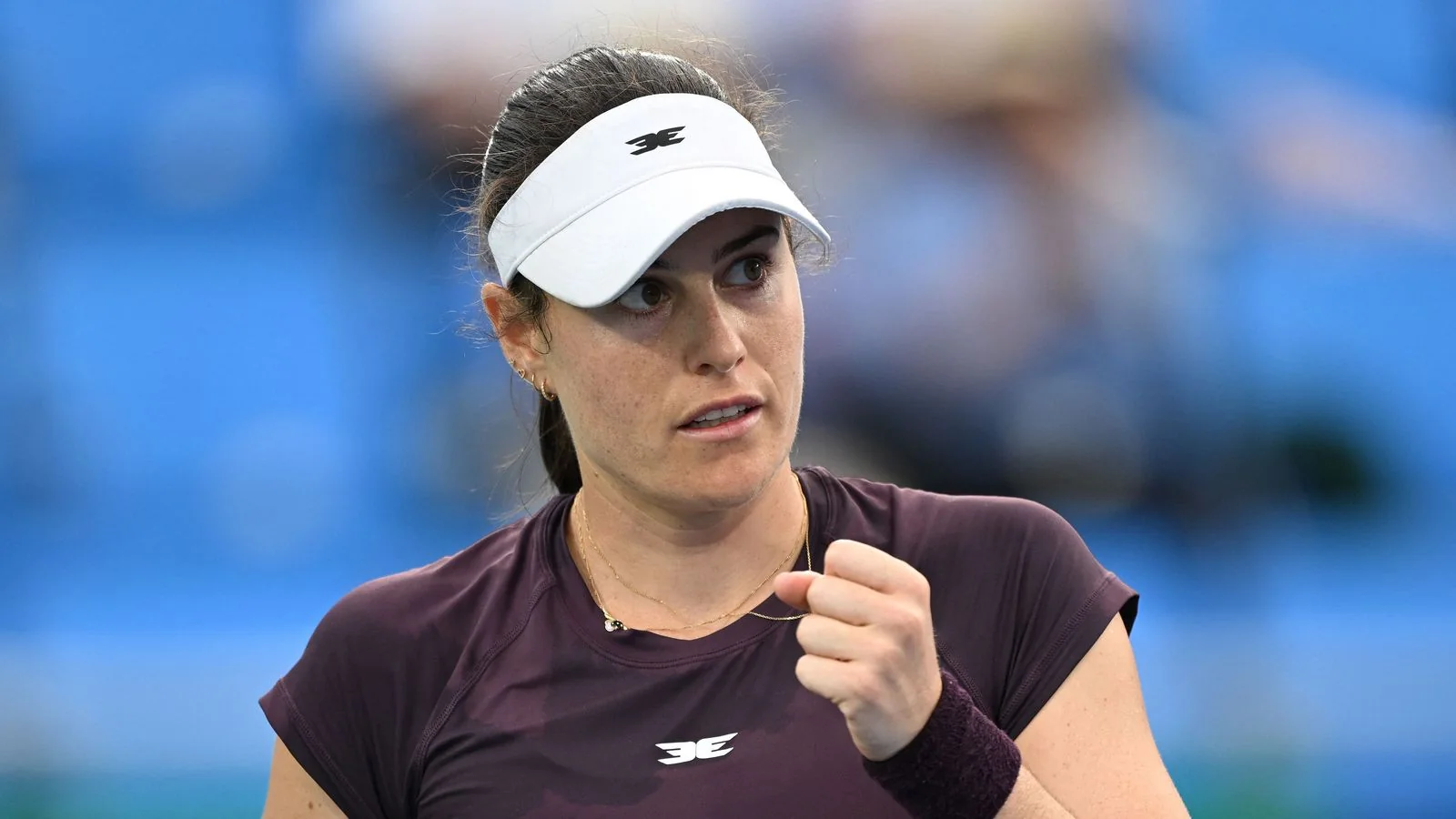
Korea Open 2026 dates and Seoul schedule
The 2026 Korea Open runs from 21 to 27 September in Seoul, with qualifying on the preceding weekend. The WTA lists the women's singles final for Sunday 27 September not before 3:30 p.m. Korean Standard Time and the doubles final for 1 p.m. the same day. These are published event targets, not a guarantee that a match will begin precisely at that minute. Check the official daily order of play for the final court and any revised start.
This is the women's WTA tournament at the Seoul Olympic Park Tennis Center. Searches for “Korea Open” can also surface badminton and other sports. The event identity matters when comparing schedules or a score feed: look for the WTA Korea Open in Seoul, the 2026 edition and the women's singles or doubles draw. The 2026 WTA event badge reads WTA 250, a detail worth checking because some older tournament descriptions still refer to its WTA 500 seasons.
The confirmed tournament window and key rounds
The WTA's 2026 tournament page supplies the main-draw window. Its Asian Swing guide gives both final-day times and the Korean time zone, UTC+9. The draw and daily order of play contain more specific round information as the tournament advances. A useful planning distinction is that the week-long event date is fixed at a high level while a player's exact match date depends on progress and the organiser's daily scheduling.
| Milestone | Published 2026 timing | What to check |
|---|---|---|
| Qualifying | 19–20 September | Qualifying draw and daily court order |
| Main draw | 21–27 September | Singles and doubles bracket |
| Doubles final | 27 September, 1 p.m. KST | Latest order of play |
| Singles final | 27 September, not before 3:30 p.m. KST | Latest order of play and scores |
“Not before” has a specific practical meaning: the singles title match cannot be scheduled earlier than that advertised threshold, but a preceding match or operational change can push the real first ball later. For viewers outside South Korea, convert from KST after verifying the date. For example, KST is one hour ahead of China Standard Time; a nominal 3:30 p.m. KST threshold corresponds to 2:30 p.m. in China. That conversion still does not establish a television start or a guaranteed match start.
How to check today's order of play
Open the WTA order-of-play page and select the date you need. It offers the day's court assignment and match sequence, whereas the draw page shows who plays whom in each bracket position. If the order page displays only a loading state in your browser or in a search preview, do not use a cached snippet as proof of a match time. Try the official page directly again nearer the session, then compare with the WTA score page once play starts.
Planning around a particular player requires two checks. First, use the draw to establish whether that player is still in the competition. Second, use the current daily order to find the assigned court and time. A draw can name a possible next opponent before either player has finished a prior match; it cannot tell you the official start of an unassigned future match. Rain is an added consideration at an outdoor venue, so retain flexibility even after a provisional schedule appears.
The 2026 Korea Open draw
The official 2026 WTA Korea Open draw is the safest place to check the active bracket. It has separate tabs for singles, doubles and qualifying, and updates as matches finish. The event's structured tournament details list a 32-player singles draw and a 16-team doubles draw. The live bracket is more useful than a pre-tournament entry list because withdrawals, qualifiers and results can change the field that actually competes.
Singles seeds and bracket shape
At the checked 2026 draw, Jelena Ostapenko was the No. 1 seed and Kimberly Birrell the No. 2 seed; Lanlana Tararudee, Elena-Gabriela Ruse and Maya Joint were seeded three through five. A seed number gives a player a placement based on the tournament's seeding procedure. It does not guarantee a semifinal place, or even a first-round win. The draw already shows a sharp example: Taylah Preston defeated top seed Ostapenko 6-4, 6-1 in the round of 16. A preview that still lists Ostapenko among likely contenders should therefore be read as a pre-result snapshot.
The bracket begins with the round of 32, then moves through the round of 16, quarterfinals, semifinals and final. On WTA's page, completed matches show set scores; future slots can be blank until both opponents are known. A blank semifinal line is not evidence that a match was canceled, and an upcoming label is not a result. Read the header above the pairing to identify the round before interpreting a score. If a player has advanced by walkover or retirement, use the official match notation rather than inventing a conventional straight-set score.
The tournament overview also includes a free-text historical description that talks about 28 singles players, while its own 2026 event data says “Singles Draw 32.” This is precisely why we use the year-specific structured field and actual 2026 bracket for draw size. The same caution applies to a screenshot shared without a year. A Seoul draw from 2025 can look visually similar yet carry different seeds, rankings and tournament level.
Doubles and qualifying are separate draws
Use the Doubles tab for teams, not as a continuation of the singles bracket. The WTA lists 16 doubles teams in 2026. A pair's first-round result, seed and route to the final are distinct from either partner's singles record. If two players appear beside one another in the doubles tab, that is a team entry; it does not mean they face one another in singles. The final times also differ: WTA's pre-event schedule places the doubles final at 1 p.m. KST on Sunday, before the singles final's not-before-3:30 p.m. window.
The Qualifying tab covers the matches that fed players into the main draw before 21 September. A qualifier can appear in the singles bracket after winning a qualifying place, but the qualifying match record remains in its own tab. This separation matters when counting a player's wins for the week or tracing a path through the event: a main-draw round-one score alone does not tell the whole story of a qualifier's run.
For a clear current view, choose the 2026 year filter first, choose the relevant discipline second, and only then inspect a round. Refresh if a score is incomplete; a search-engine snippet or social post may preserve an older bracket. Readers who need just the current day's matches can use today's WTA schedule, while the complete official draw explains how that match fits into the tournament.
Korea Open results through the latest checked update
At the 26 September research cutoff, the clearest late-week singles update was a WTA headline naming Kimberly Birrell and Maya Joint as the Seoul finalists. The title match is scheduled for Sunday 27 September, so this article does not name a 2026 champion or a final score. The official draw and score pages can update on different schedules: an overview may still label an earlier round even after a newer WTA report identifies the final matchup. Check the live score page for any result after this dated snapshot.
Notable singles results and the finalist picture
The official singles draw records a second-round upset when Taylah Preston beat top seed Jelena Ostapenko 6-4, 6-1. That is a completed bracket result, not a prediction. It illustrates why an entry-list preview or a seed list cannot serve as a live standings page. Birrell and Joint subsequently emerged from the field as the finalists according to the WTA's 26 September match-reaction headline. The WTA described it as the first all-Australian WTA final since 2017.
We do not attach a semifinal score to that headline. The directly readable official bracket snapshot was behind the news update and did not show a fully populated final row when checked. This is a familiar live-data problem: different WTA pages may cache at different times. A score is only useful if it belongs to the correct round, player and completed match. To see the complete path, inspect the singles draw after its remaining cells have filled, or use the WTA score page for the latest individual match record.
South Korean wild cards and home interest
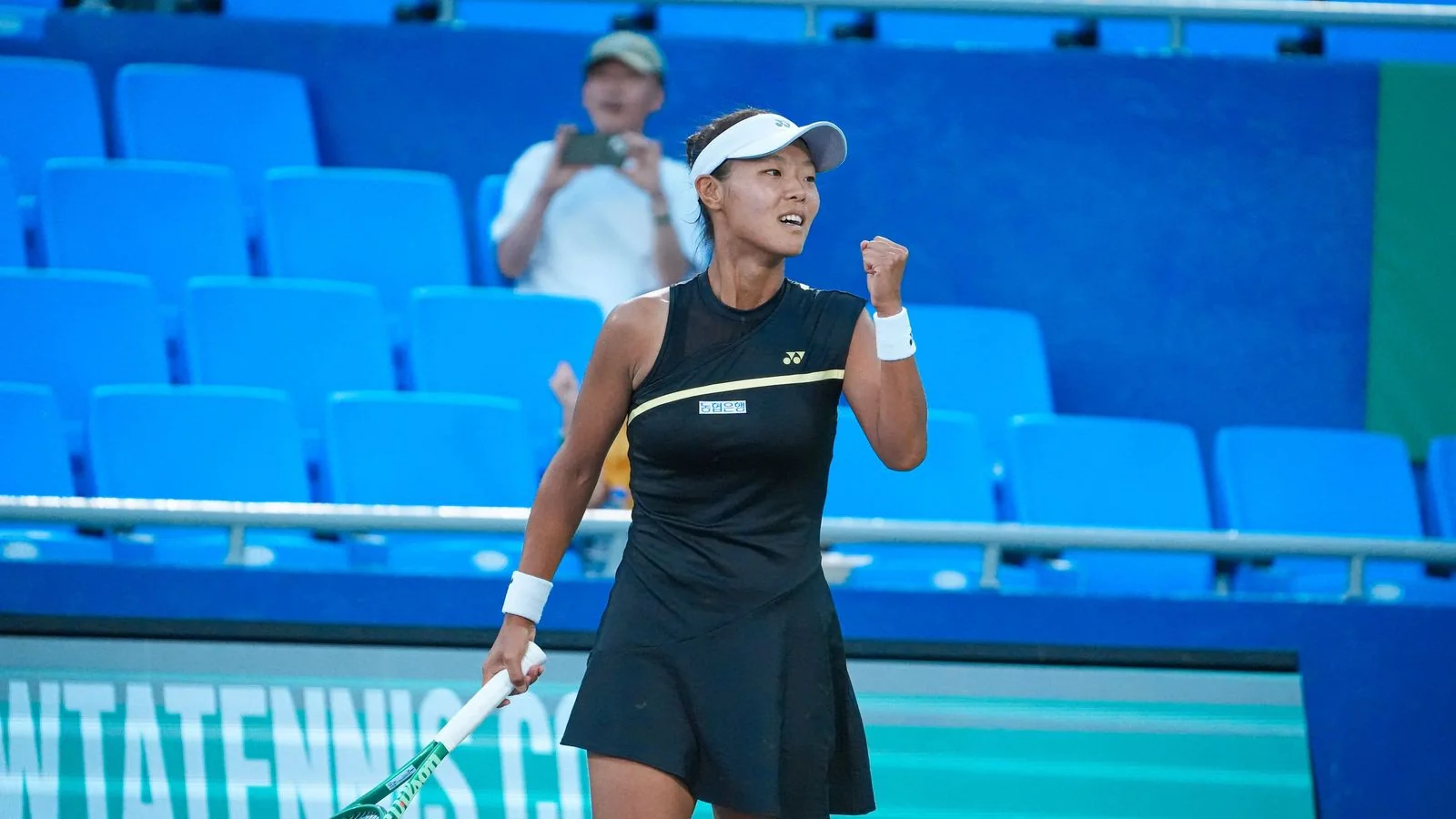
The home story was substantial even without a Korean finalist. WTA reported on 22 September that all three South Korean wild cards won their opening matches. Back Dayeon defeated Yuan Yue 6-3, 4-6, 6-1; Park Sohyun beat Robin Montgomery 7-6(4), 6-3; and Ku Yeonwoo beat qualifier Alevtina Ibragimova 6-3, 6-2. According to the WTA's historical check, it was the first time since 1984 that three South Korean players reached the second round of the same tour-level event.
Their first-round sweep and their later tournament positions are different facts. The WTA draw shows Park, Back and Ku facing seeded opponents in the next round; it should be consulted for their eventual elimination scores. An early-week report saying “all three advanced” should not be reused on finals weekend as if all three were still active. The result remains significant as a home-field milestone because three local players each earned a main-draw win in the same edition.
Doubles results and the separate final
The doubles competition has its own 16-team draw and a separate title match. The WTA's pre-event Asian Swing guide lists the doubles final for 1 p.m. KST on Sunday 27 September, before the singles title match. That timing makes it easy to confuse a live doubles score with a singles result if a generic scoreboard only shows “Korea Open final.” Select the Doubles tab and read both player names on each side of a team pairing before attributing a result.
At the research cutoff, the official draw view did not provide a dependable completed doubles-final result, and Sunday had not begun in Seoul. We therefore leave the 2026 doubles champions and score open until the WTA publishes a completed final. Once available, the right update is to name both members of each team, the score and the date, then check that the match is marked finished. A singles finalist's name can also appear in a doubles context in other events; the discipline and partner cannot be inferred from a name alone.
Where to follow live scores and watch matches
For a live Korea Open match, begin with the WTA 2026 score page. For the matchup's place in the event, switch to the draw. For when and where play is assigned, use the daily order of play. These are three different information products. A live score can be current while a bracket thumbnail or search-engine card still shows yesterday's round.
Official live scores versus the completed draw
A match score tells you the current games and sets or its final result. The draw tells you how the completed result advances a player or team. Neither should be read without the round and discipline. Before sharing a score, check that the page is on 2026, select Singles or Doubles, and look for a completed status if calling it final. If the page is loading or an individual match row is blank, the missing number is not evidence of a cancellation or retirement. Return later or open the corresponding official match page.
The order-of-play page answers a separate question: which court and session have been assigned on a particular date. This helps fans who search for “Korea Open schedule today,” but it should be refreshed close to play. At research time, automated page extraction displayed only a loading message for the order; therefore this guide avoids copying unverifiable exact semifinal court times. The WTA's published final-day windows are useful for broad planning, while the live daily order is the source for the actual lineup.
Our own WTA matches today page can help place Seoul alongside the other women's tour matches, especially for a reader following several tournaments at once. Treat any captured local feed as a convenience and confirm a consequential match result against the WTA page. Dynamic feeds can change in seconds; an article written before Sunday's final cannot function as a real-time scoreboard after the trophy is awarded.
Broadcast availability depends on location
The WTA links from its tournament page to an official where-to-watch guide designed around the viewer's region. Use that guide and your local broadcaster's current listings to check whether Seoul is available on television or streaming where you live. We have not verified a single worldwide platform for this event, and a subscription or territory restriction may apply even when another country's fans can watch it.
Do not confuse a score page, a highlights video and a live match stream. A social result labelled “Korea Open live” might offer only score text, a delayed replay or an unauthorised video link. The official WTA guide currently advertises free WTA Unlocked access for some WTA 125 coverage; Seoul's 2026 event is a WTA 250, so that statement does not establish a free Seoul stream. Check the exact tournament and territory before creating an account or paying for a service.
For people outside Korea, first convert a listed KST match time to their local time, then verify the broadcaster's actual programme start. A broadcast may begin with studio coverage before first ball or join a court after play starts. The tennis order can also move if outdoor conditions delay an earlier match. Using the correct time zone and a current order of play is more dependable than a broad “watch today” search result without a date or region.
Seoul venue, surface and tournament level
The Korea Open is played on outdoor hard courts at Seoul Olympic Park Tennis Center. That identifies both the sport and the physical setting: it is the women's WTA event in South Korea's capital, not a similarly named badminton competition. Outdoor play also explains why a daily schedule is a moving plan rather than a fixed appointment; weather or a long preceding match can affect when the next players take the court.
Olympic Park Tennis Center and outdoor hard courts
WTA's year-specific event page lists Seoul as the host and hard as the surface. Its venue description identifies the Seoul Olympic Park Tennis Center and specifies outdoor courts. The tournament has been part of the WTA calendar since 2004, according to WTA. This is relevant context when someone sees two different Seoul tournament pages: the event has continuity, but the field, draw, dates and level still need to be checked for the particular year.
Hard-court does not mean an indoor roof or a weatherproof schedule. If rain interferes, rely on the organiser's and WTA's live notices rather than moving a planned match time yourself. The WTA's order-of-play page is the right place to see a revised court assignment after any change. Likewise, a venue photograph from an earlier edition is useful for recognising the site but cannot verify today's programme, ticket price or seating map.
Why some pages say WTA 500 while 2026 is WTA 250
The 2026 Korea Open is WTA 250. Both the badge and structured “Level” field on WTA's 2026 tournament page say so. WTA's 17 September Asian Swing guide states the event was a WTA 500 in the previous two seasons but is a 250 for this edition. The year is the key: “Korea Open became a 500 in 2024” is a historical statement, while “Korea Open 2026 is a 250” describes the current competition. The official tournament website still displays 2025 branding and WTA 500 information, so its old dates or prize claims should not be reused for 2026.
Confusion persists even within WTA's own pages. A reusable historical paragraph on the 2026 overview still says the players compete for 500 points, while the current badge says 250. The 2026 Asian Swing guide resolves this more explicitly and lists 250 ranking points for the singles champion. It also gives the Seoul singles champion's prize as US$37,390 and the overall event's structured page shows a total financial commitment of US$283,347. Those are distinct measures; the total commitment is not the amount one player takes home.
Knowing the correct level helps readers interpret the draw and potential ranking effect. A 250 title carries fewer points than a 500 title, even if the tournament's name and venue have not changed. It does not diminish a player's actual match result; it simply prevents an inaccurate points calculation. For broader season context, compare the WTA calendar or the tournament directory with the specific 2026 Seoul page instead of applying a prior year's category to this week.
What to check after the Korea Open final
The 2026 champion will be established by the completed Sunday title match, not by a semifinal headline or a blank final slot in a bracket. At this article's research cutoff, the WTA identified Birrell and Joint as the singles finalists but the title match had not been verified as complete. Once the WTA posts the result, read the finished match row for the winner, runner-up, set score and date, then check that the bracket has advanced the same player to the champion position. The doubles final needs the same check with both members of each team.
Keep years attached to champions. WTA's pre-event Asian Swing article lists Iga Swiatek as the 2025 Seoul winner. That historical result does not identify the 2026 champion, just as a 2025 WTA 500 prize table does not describe the 2026 WTA 250 edition. A search snippet may combine a familiar champion's name with a current event date; open the underlying year-specific record before repeating it.
If you are using this article after 27 September, the official 2026 scores and 2026 draw are the first places to verify the final. If one page lags the other, prefer a completed official match entry or a dated WTA final report over a cached overview label. For a follow-up article or archive update, record the match's local date, exact score and championship discipline; do not silently overwrite a provisional schedule with an unsourced result.
The same discipline applies to the tournament's published 3:30 p.m. KST “not before” singles-final threshold. It is a schedule condition, not the actual match start recorded after play. A final may begin later without making the original WTA preview false. State the source and date for whichever time is being discussed. That distinction keeps a pre-event guide useful while making it clear which facts need a post-event update.