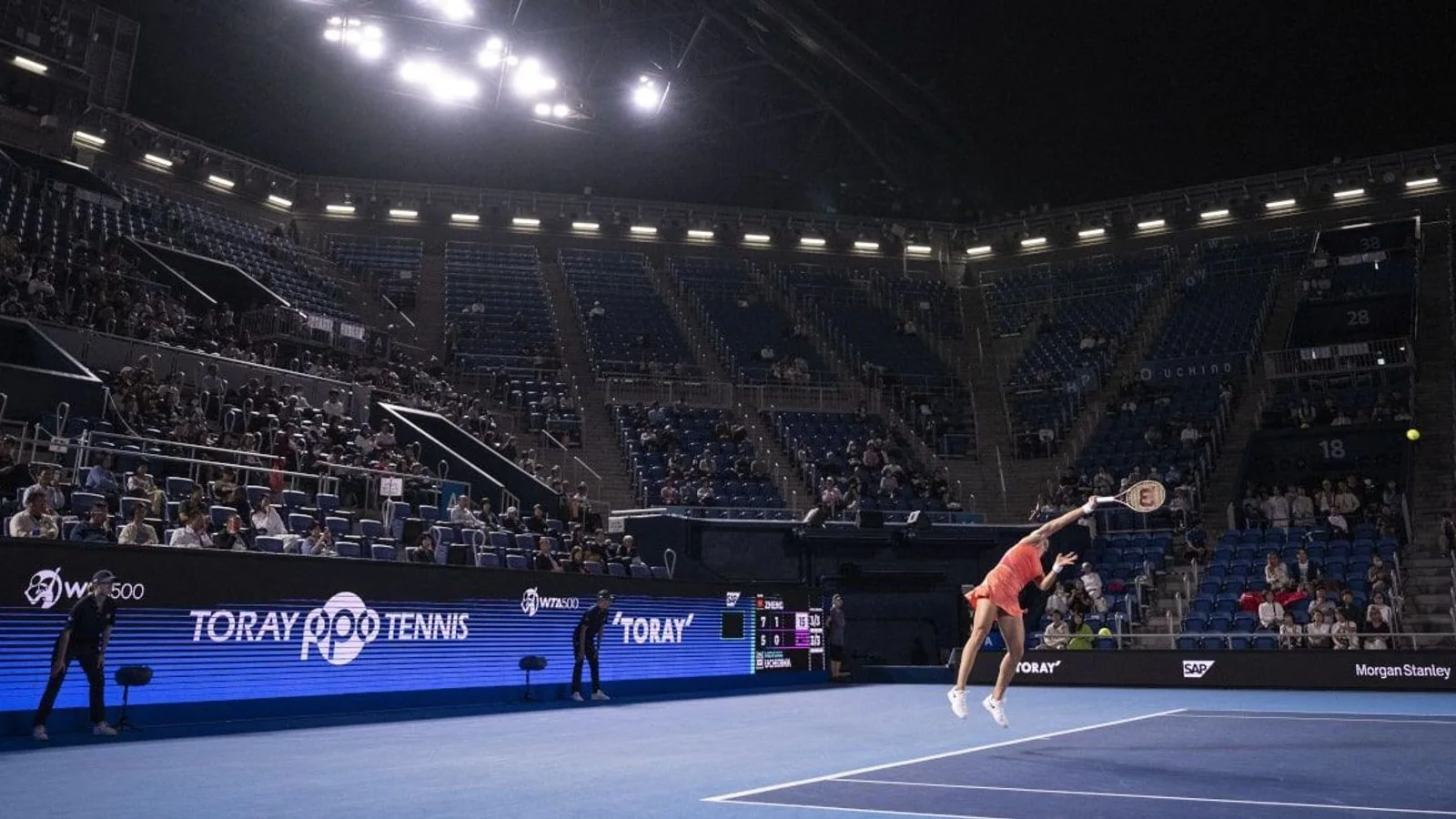
The 2026 Toray Pan Pacific Open is scheduled for October 26–November 1 in Tokyo, with singles qualifying on October 24–25. It is a WTA 500 tournament at Ariake Coliseum and Ariake Tennis Forest Park, with a 28-player singles draw and 16 doubles teams. The singles final is planned for Sunday, November 1 at noon Japan Standard Time; the doubles final follows. At the September 27 JST research cutoff, the 2026 draw, daily order of play and results were still unavailable on WTA pages.
Pan Pacific Open 2026: the direct answer
Qualifying
Oct 24–25
Singles qualifying at Ariake
Main draw
Oct 26–Nov 1
Tokyo WTA 500
Singles final
Nov 1, noon JST
Doubles final follows
The WTA tournament overview confirms the main-draw dates, WTA 500 level, outdoor hard-court surface and draw sizes. The organizer's English outline supplies the preceding two qualifying days and names Ariake Coliseum and Ariake Tennis Forest Park as the venue. These are schedule facts available now; a named player's match day or opponent requires the published draw and order of play.
Search results for “Pan Pacific Open 2026 results” can be confusing this far ahead of the event. The WTA 2026 score page says scores are not available yet, and its 2026 draw page says the bracket is currently unavailable. A 2025 result displayed in a nearby year selector is historical, even if a search title says 2026. Use the year shown on the WTA page itself before treating any score as current.
The rest of this guide separates the organizer's advance round plan from the match-by-match order that comes later. It also explains how the 28-player bracket works, which entrants have been announced and where actual 2026 results should be checked. The WTA calendar can place Tokyo among the late-season tour stops, while the WTA and tournament organizer retain authority over event-specific changes.
Tournament dates, venue and final times
The 2026 Pan Pacific Open has two linked date ranges. The organizer schedules singles qualifying for October 24–25, then the main-draw tournament from Monday, October 26 through Sunday, November 1. The WTA event page displays the main-draw week, while the organizer's 2026 outline includes qualifying. A page showing October 24 does not necessarily contradict a WTA listing that begins October 26; it may be counting the preliminary competition.
Qualifying and main-draw dates
The organizer lists a 24-player singles qualifying draw and a main draw of 28 singles players plus 16 doubles teams. The event is played on hard courts at Ariake Coliseum and Ariake Tennis Forest Park in Tokyo's Koto ward. The published address is 2-2-22 Ariake. Its English directions say Ariake Station and Ariake-Tennis-no-Mori Station on the Yurikamome Line are each about an eight-minute walk; Kokusai-Tenjijo Station on the Rinkai Line is also listed as an eight-minute walk. These details help visitors identify the correct Ariake complex before deciding which court and session they need.
Qualifying determines some places in the singles main draw, but its competitors and outcomes should not be assumed before those matches are played. Likewise, the WTA's 28-player draw figure does not yet identify all first-round pairings. The official draw page is the place to confirm which players enter by direct acceptance, qualifying or other permitted route when the bracket becomes available.
Singles and doubles finals on November 1
The WTA's 2026 Asian Swing guide sets the singles final for Sunday, November 1 at noon Japan Standard Time, with the doubles final to follow. The organizer's session schedule likewise lists a noon match start and 10:30 a.m. door opening on final day. “Doubles follows” is an order of events, not a fixed doubles first-ball time: the length of the singles match and any operational change can shift it.
All those times are Tokyo local time, or JST (UTC+9). A fan abroad should convert from JST using the date of the session, not assume the time shown is local to their own device or region. The organizer explicitly warns that schedules and starting times may change for WTA operations, weather or other circumstances. The announced noon slot is useful for planning, but the daily order of play and venue notices should be checked again close to November 1.
The planned day-by-day match schedule
The tournament organizer has published a useful advance grid for 2026 sessions. It labels the match rounds to be confirmed, so the table below is a plan for each date, not a promise that a specific player will appear on a specific court. The organizer also warns that match numbers, starts and round timing can change. For a fan deciding which day may feature quarterfinals or a final, however, this is more useful than a generic “October 26–November 1” calendar entry.
Round windows from October 26 to November 1
| Tokyo date | Planned singles | Planned doubles | Listed match start (JST) |
|---|---|---|---|
| Mon, Oct 26 | First round | First round | 10:30 a.m. |
| Tue, Oct 27 | First round | First round | 10:30 a.m. |
| Wed, Oct 28 | Second round | First round | 10:30 a.m. |
| Thu, Oct 29 | Second round | Quarterfinals | 10:30 a.m. |
| Fri, Oct 30 | Quarterfinals | Quarterfinals | 10:30 a.m. |
| Sat, Oct 31 | Semifinals | Semifinals | Noon |
| Sun, Nov 1 | Final | Final | Noon |
These entries follow the organizer's 2026 English ticket and match schedule. Its qualifying grid separately puts singles qualifying round one on Saturday, October 24 and round two on Sunday, October 25, with listed 10:30 a.m. match starts on both days. The WTA's announced final-day ordering is more specific: singles at noon on November 1, then doubles. The generic noon session start in the organizer's grid should not be read as a second fixed start time for doubles.
Why the daily order of play can change
The table groups matches by round and day. A daily order of play goes further: it assigns individual matches to particular courts and start windows. The organizer says the order is finalized on the previous evening and posted on its official website. Until that step happens, a supporter cannot reliably say when Naomi Osaka, Elena Rybakina or any other announced name will play. A ticket for a round date is therefore not the same as a guaranteed player-specific appointment.
For October 26–30, the organizer plans four Center Court matches per day at Ariake Coliseum and says the final singles match is scheduled no earlier than 5 p.m. Other matches use show courts. Yet weather, WTA operational requirements and other circumstances can change court assignments, match counts or starts. This is especially relevant to outdoor show courts, where rain can force adjustments. The WTA's 2026 order-of-play page had no data at the September 27 JST research cutoff; check it and the organizer's notices again the evening before attending.
The 2026 Tokyo draw and announced players
A field announcement and a draw answer different questions. The field says who is expected to enter; the bracket places players opposite opponents and reveals the route to the final. At the September 27 JST research cutoff, the WTA's 2026 Tokyo draw page explicitly said the final bracket was not available. Its year selector also includes earlier editions, so a populated 2025 bracket should never be relabeled as 2026.
How the 28-player singles bracket works
The organizer and WTA both specify 28 women's singles places, plus a 16-team doubles main draw. A normal elimination bracket for 28 players fits within a 32-slot opening frame. Four of those slots are byes, allowing four players to begin in round two while the other 24 players contest 12 opening matches. A bye is an automatic advance in the bracket, not an opponent defeated on court. The exact 2026 recipients, seed positions and pairings must come from the actual published bracket.
The WTA's 2025 Tokyo draw is a historical example of first-round byes in this event. It explains the format without proving who will receive them in 2026. The tournament organizer also lists a 24-player singles qualifying competition on October 24–25. Its results will feed into the main draw, but it is too early to assign qualifying winners to particular 2026 bracket lines.
Announced names versus confirmed matchups
The tournament's announced-player page profiles Naomi Osaka, Elena Rybakina and Belinda Bencic. Those names are relevant for fan planning and interest, and Bencic is the previous singles champion. They are still presented before the draw and before the qualifying matches, so the page does not give an Osaka-versus-Rybakina matchup or a promised day of appearance. A player may also withdraw or have her status changed as the event approaches.
The player profiles display ranking numbers tied to dates in June or July. They should not be lifted into an article as current late-September standings. For an up-to-date ranking, use the WTA rankings page; for who plays whom, use the WTA's 2026 draw. A correctly dated roster remains valuable, but it is a different kind of evidence from a signed-off bracket.
The WTA draw placeholder says final tournament draws are generally confirmed three days before play starts. That is a useful reminder to check nearer the event, not a guaranteed 2026 ceremony appointment. Once the official page changes from “Draw Currently Not Available” to a populated bracket, confirm that its selector is set to 2026, then look separately at the singles and doubles tabs. Only then can a specific opening opponent or path to the final be stated as official.
Results, live scores and the 2025 champions
A search for Tokyo scores can return an earlier year's finished matches beside a 2026 event preview. The safest check is the date and edition selector on the official WTA 2026 scores page. At the September 27 JST research cutoff, it explicitly said scores were not available and would appear once play starts. The 2026 draw and order-of-play pages also had no current data. Those statuses are expected several weeks before the October 24 qualifying start.
Where 2026 scores will appear
During the event, the WTA score page is the best place to confirm a completed match, with the 2026 year selected. The draw page then shows how that result changes the bracket; the order-of-play page answers what is scheduled next on a given court. These three pages answer related but different questions. A score shows what has happened, a draw shows the route through the event, and an order tells spectators when a named match is expected. None of those can be replaced by a pre-event player announcement.
For a day with multiple courts, check the organizer's daily notice as well: it says the order of play is finalized the preceding evening and may change for weather or operational reasons. Our WTA matches-today page offers a general tour view, but the official Tokyo event pages should control Tokyo-specific court assignments and completed scores. As play moves from qualifying to the main draw, also check whether the score belongs to qualifying, singles or doubles before calling it a main-draw result.
What Bencic's 2025 win tells us
The most recent completed Tokyo edition is 2025. According to the WTA's October 26, 2025 final report, Belinda Bencic defeated Linda Noskova 6-2, 6-3 for the singles title. The same report says Timea Babos and Luisa Stefani beat Anna Danilina and Aleksandra Krunic 6-1, 6-4 in that year's doubles final. These historical results explain Bencic's defending-champion context, but they do not supply any 2026 result.
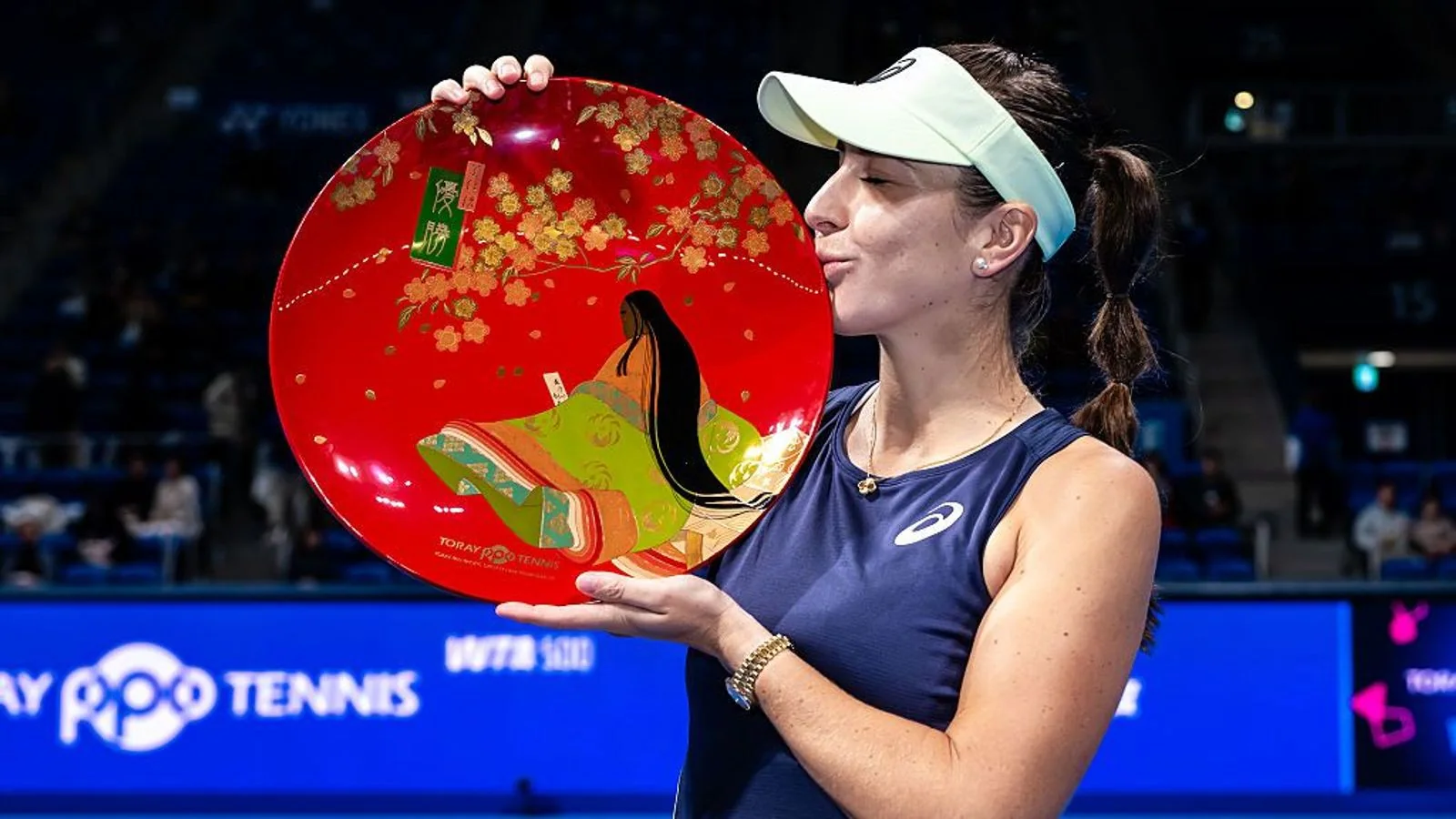
Bencic's 2025 campaign also illustrates why the draw and daily schedule matter. She had a first-round bye, then played her later matches through the final; the WTA recap describes a demanding path before the title match. That story is useful background for understanding the format and returning champion, while the upcoming 2026 bracket may be entirely different. Use 2025 only as a labeled comparison until the 2026 scores become real.
Why Tokyo matters at the end of the Asian swing
The Toray Pan Pacific Open is more than a generic stop labeled “Japan Open” in a search result. The WTA describes the Tokyo tournament as a long-running event whose first edition was in 1973. In 2026 it is an outdoor hard-court WTA 500 at Ariake, and the WTA's Asian Swing guide calls it the final WTA 500 of the season. That position makes the week relevant to players seeking late-season results, ranking points and prize money, even though the final 2026 field and draw are not yet known.
The official 2026 Tokyo overview lists a $1,206,446 total commitment. The WTA swing guide says a Tokyo singles champion earns 500 ranking points and $185,500, with a finalist listed for 325 points and $114,500. Those figures describe scheduled rewards, not money or points already earned by a 2026 player. The WTA 500 label also distinguishes Tokyo from the two China-based WTA 1000 events earlier in October: Beijing and Wuhan each award up to 1,000 points to a singles champion.
Japan has another tour event close by in time, which is a common source of mixed search results. The Japan Women's Open in Osaka is a WTA 250 scheduled for October 19–25, the week before Tokyo's October 26–November 1 main draw. It has a different city, venue, draw and results page. A headline about Osaka's 2026 winner should therefore not be used to answer who won the 2026 Pan Pacific Open in Tokyo. The WTA calendar also places Guangzhou, a WTA 250 in China, in the same week as Tokyo; that too is a separate event.
For someone following the tour, the sequence explains why a schedule can change from week to week. Players can come from earlier Asian events, withdraw, or take a different route as the season nears its close. A provisional name on the organizer's player page is meaningful evidence of intent, but the official Tokyo draw and daily order determine whether and when that player actually appears. The WTA calendar gives the broad sequence; the Tokyo event pages answer the narrow match question.
The best way to read Tokyo's stakes is thus in three layers: a confirmed WTA 500 event and date range; an announced award structure and set of featured player names; and a later official draw, schedule and scores that show what actually happened. Keeping those layers separate lets fans plan around the Ariake week without turning a pre-event guide into a fictional result.
Pan Pacific Open 2026 questions
These answers reflect the official WTA and tournament-organizer pages checked on September 27, 2026 Japan Standard Time. They distinguish information already announced for the Tokyo event from bracket, match and result details that will appear closer to or during play.
Is the Tokyo draw available yet?
No, not at this article's research cutoff. The WTA 2026 Tokyo draws page said “Draw Currently Not Available.” It describes a general expectation that final draws are confirmed about three days before play, but that is not a verified 2026 ceremony time. The organizer has named some intended players and published the 28-player draw size; neither fact establishes an opponent, seed or court. Recheck the official page with its year selector on 2026 as the October 26 main draw approaches.
What time does the singles final start?
The WTA plans the women's singles final for Sunday, November 1 at 12:00 p.m. JST. The doubles final follows the singles final, without a separate fixed first-ball time in the WTA's Asian Swing guide. The organizer's published final-day session also lists a noon match start and 10:30 a.m. doors. Because the schedule is subject to change and the earlier final's length can affect the later match, consult the official order of play and venue update near final day before using the advertised time for travel.
Is the Pan Pacific Open the same event as the Japan Women's Open?
No. The Toray Pan Pacific Open is the Tokyo WTA 500 at Ariake, with the 2026 main draw scheduled October 26–November 1. The Kinoshita Group Japan Open, often called the Japan Women's Open, is a separate WTA 250 in Osaka in the preceding October 19–25 week. Both are women's professional tennis events in Japan, so search snippets can place them together. Check the city, WTA tournament name, level and year before reusing an Osaka match score as a Tokyo result.
For any result query after the tournament begins, go to the WTA's 2026 Tokyo scores. For a player-specific start time, use the 2026 order of play and the organizer's prior-evening update. Those pages can change during the event; the broad schedule in this guide remains the dated planning context.