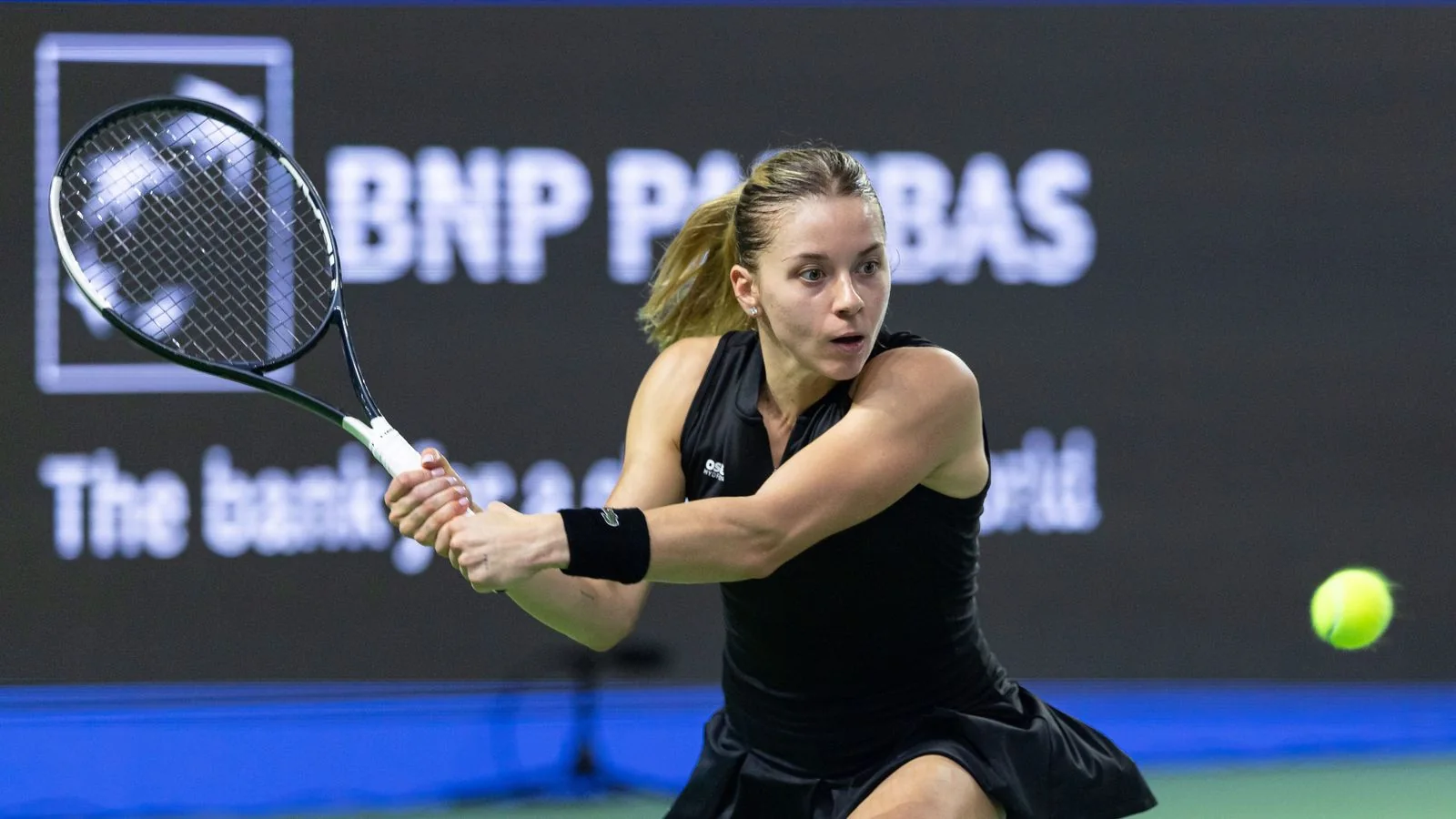
The 2026 Singapore Tennis Open runs from September 21 to 27 at the OCBC Arena in The Kallang. It is a WTA 500 tournament on indoor hard courts. As checked late on September 26 in Singapore, Leylah Fernandez and Talia Gibson had reached the singles final, scheduled for Sunday, September 27, not before 5 p.m. Singapore time. The final score and champion were still unconfirmed at that check.
Singapore Tennis Open 2026 at a glance
When and where
September 21–27, 2026, at OCBC Arena, Singapore. Qualifying preceded main-draw play on September 19–20.
What is at stake
The 2026 edition is a WTA 500 with a 28-player singles draw and 16 doubles teams. The singles champion receives 500 ranking points.
The direct route to the latest result is the official WTA Singapore score page. Use its dated result, then open the official singles or doubles bracket to see how the winner advanced. The WTA's match video and headline already recorded Fernandez's semifinal comeback, while Tennis Australia confirmed Gibson advanced by a walkover. That distinction matters: a walkover places a player in the next round without a completed semifinal score.
Readers searching for “Singapore Open 2026” may encounter older 2025 material or pages for another sport. The tournament discussed here is the women's WTA event at OCBC Arena. Its previous edition was a WTA 250 held earlier in the year; the 2026 event has a different tier and September dates. A useful schedule page should therefore tell you both the date of the source and whether it describes the current event.
There is a practical limit to any article written during a live tournament. A round date can remain correct while a match's court, start time or opponent changes. The round-by-round timetable below gives the framework; for a match you intend to watch today, compare it with the tournament's current order of play and the WTA scores immediately before play. Our WTA matches today page provides another route into the day's tennis slate.
Round-by-round schedule and final weekend
The official pre-tournament schedule assigns a date to each stage, which is more dependable than a recycled “today” search result. All dates below are Singapore local dates. Singapore Standard Time is UTC+8 throughout the event. The round calendar tells you when a phase is planned; the order of play tells you when a particular match is placed on a court.
Singles dates and final time
| Singles stage | Scheduled local date |
|---|---|
| First round | September 21–22 |
| Second round | September 23–24 |
| Quarterfinals | September 25 |
| Semifinals | September 26 |
| Final | September 27, not before 5 p.m. |
“Not before 5 p.m.” is a lower bound in the published plan, not a promise that the first ball will be struck at exactly 5 p.m. The preceding program, ceremonies and any revision to the order of play can move an actual start later. Fans in another country should first convert the local time: 5 p.m. in Singapore is 9 a.m. UTC. It is also important to convert the date, since a Singapore evening match can fall in the morning elsewhere.
The final is a useful fixed point even when the rest of a search result grows stale. If you want to check whether Fernandez and Gibson still occupy the championship match, use the WTA draw rather than a preview article. If you need a score, use the official score page after the match has been completed.
Doubles dates and order of play
The doubles draw follows a different rhythm. Its first round was scheduled for September 21–22, quarterfinals for September 23–24, and semifinals for September 25–26. The doubles final was announced for Sunday, September 27 at 2:30 p.m. Singapore time, ahead of the singles final. This order matters to spectators buying a session or planning a broadcast window, but the current order of play remains the last word on a specific court and start time.
Qualifying took place on September 19–20, before the seven-day main draw. A qualifying result belongs to the same event but does not by itself put a player into the later singles bracket: the qualifying pathway determines who receives the remaining main-draw places. The event also has a separate doubles bracket. When checking an official draw page, select the singles, doubles or qualifying tab deliberately; a familiar player name can appear in more than one competition.
The safest final-weekend sequence is simple: check the local calendar date, open the official order of play for that date, and refresh the official scores near the scheduled start. That avoids treating a round date, a provisional order and a completed result as the same thing.
Singles draw: who reached the semifinals
The 28-player singles field narrowed to two seeded players in the upper semifinal and two unseeded players in the lower one. On September 26, the upper match paired No. 6 seed Leylah Fernandez with No. 5 seed Maja Chwalinska. The lower match paired Tatiana Prozorova with Talia Gibson. Those pairings say more about the late-week story than the original entry list, which changed through withdrawals, byes and on-court upsets.
Fernandez versus Chwalinska
Fernandez entered the semifinal after beating top seed Mirra Andreeva 6-2, 7-5 in the quarterfinals. That score is consequential for the bracket: a projected No. 1 seed final became impossible before the weekend. WTA's match report explains that Andreeva rallied from a second-set deficit before Fernandez broke again to finish the match. The report also says the Canadian had won their earlier 2026 hard-court meeting in Toronto. It is a useful bit of context, but the Singapore result stands on its own.
Chwalinska had removed No. 4 seed and defending champion Elise Mertens 6-2, 6-2. The Polish player reached the semifinal after a dominant second-round win over Oleksandra Oliynykova and a quarterfinal in which she repeatedly varied spin and pace. The two semifinalists therefore arrived by different routes: Fernandez beat the top seed, while Chwalinska took out the woman who had won Singapore in 2025.
By the late September 26 check, the WTA tournament score hub carried a new video and headline saying Fernandez fought back to beat Chwalinska and reach the final. Its bracket widget had not yet supplied a settled set score in the version checked for this article, so a numerical semifinal score is intentionally absent here. The confirmed outcome, rather than a guessed scoreline, is the relevant fact for the final pairing.
Prozorova versus Gibson
Prozorova earned her semifinal place with consecutive three-set victories over Alexandra Eala and Wang Xinyu. Gibson reached the same stage by upsetting No. 7 seed Maria Sakkari 6-1, 4-6, 6-2. Their semifinal did not produce a completed on-court score: the official WTA draw marks a walkover for Gibson, and Tennis Australia reported that Prozorova withdrew. Gibson consequently moved into her first WTA Tour singles final without playing that semifinal.
A draw can show a finalist even when no final-round score exists. That is why it helps to read the small result notation, such as “WO,” instead of assuming every advancement came from a two- or three-set match. The 2026 final pairing was Fernandez versus Gibson as of this check; the title itself remained undecided.
Results that reshaped the bracket
The most useful way to read an in-progress draw is to follow the result that changed each branch. The first week was more than a list of surviving seeds. A top seed, a defending champion and another prominent seed went out in matches with verified scores, while one of the breakout players later withdrew before her semifinal. The distinction between a completed result and an advancement by walkover is essential when summarizing this event.
| Match | Confirmed result | Effect |
|---|---|---|
| Fernandez vs Andreeva | 6-2, 7-5 | Top seed out in quarterfinals |
| Chwalinska vs Mertens | 6-2, 6-2 | Defending champion out |
| Prozorova vs Wang Xinyu | 3-6, 7-5, 6-4 | Prozorova into semifinals |
| Gibson vs Sakkari | 6-1, 4-6, 6-2 | Gibson into semifinals |
The fall of the top and defending seeds
Fernandez's straight-set quarterfinal against Mirra Andreeva removed the No. 1 seed from the upper half. WTA reported that Andreeva recovered from 5-2 down to 5-5 in the second set before Fernandez broke in the final game. That sequence explains why a straight-set score does not necessarily mean a routine finish. The match lasted an hour and 32 minutes.
On the adjacent branch, Chwalinska beat Mertens 6-2, 6-2. Mertens was the 2025 Singapore champion; she had also received a bye and then a walkover from Barbora Krejcikova before playing Chwalinska. A reader comparing only total matches won can miss that unusual route. Chwalinska's victory was still a full completed quarterfinal and put the two players who had removed the strongest remaining seeds into the same semifinal.
Prozorova's route through Eala and Wang
Tatiana Prozorova's second-round win over No. 3 seed Alexandra Eala was 4-6, 7-5, 6-3. WTA reported a duration of three hours and nine minutes and described Prozorova's recovery after trailing by a set and 4-2. She then lost the first set against Wang Xinyu in the quarterfinal but won 3-6, 7-5, 6-4. Two long comebacks in consecutive rounds made her path especially demanding. These are results already played, not a prediction about what would have happened in the semifinal.
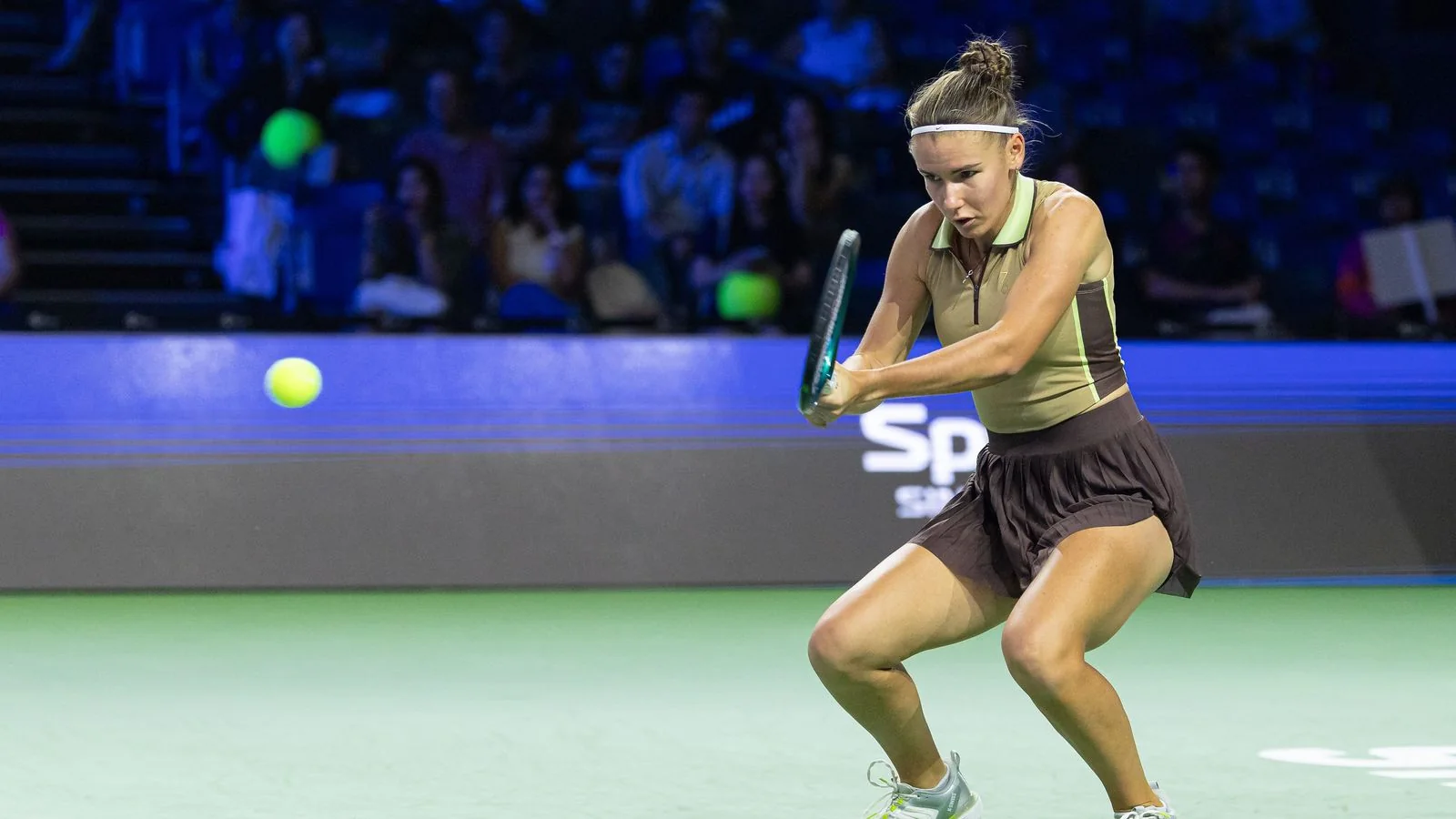
Those wins carried Prozorova to the last four, but the official draw later marked a walkover in her scheduled semifinal against Gibson. That notation means there is no Prozorova-Gibson set score to report. It also explains why Gibson's route to the final combines a played quarterfinal victory over Sakkari with a semifinal advancement that was not decided on court.
How to follow scores and match times accurately
Four related pages answer four different questions. Start with the official order of play if your question is “when and on which court?” Use the WTA scores page for a live or finished match. Open the draw page if you want to know a player's route, possible next opponent or final pairing. Finally, the tournament overview provides level, surface and draw size. A headline is often faster for the latest development, but a bracket is better for seeing the path across rounds.
Choose the date carefully. The WTA order-of-play page has a date selector, so a search engine link can open on an earlier day. A displayed “Day 6” may still be the September 26 semifinal order even if the calendar has rolled into September 27 where you live. Singapore is UTC+8 and does not change clocks for daylight saving during this tournament. Convert the announced Singapore time to your own location only after confirming the correct local date.
Also read the result label. “Upcoming” means a match has not finished; “Finished” should accompany a completed score; “WO” on a draw means a walkover. A retirement is different again: play began, but the match ended before normal completion. These labels avoid errors such as assigning a two-set score to Gibson's semifinal advancement. Because the WTA pages load some match details dynamically, a text-only snapshot can briefly display “Loading” or “No Matches” while other official headlines already describe a result. Refresh the page or open the specific match card before concluding that an event has been canceled.
For a legitimate viewing option, use the WTA tournament page's “View broadcasting options in your region” link. Television and streaming rights differ by territory, and a free clip of highlights is not the same thing as a live match broadcast. If you need a broader view of concurrent events, the site's WTA calendar shows how Singapore fits into the Asian swing. The key habit remains the same: use a dated, official match source for a changing fact and this article for the context around it.
Why the 2026 edition is a WTA 500
Singapore returned to the tour in 2025 as a WTA 250, then moved up to WTA 500 for 2026. That simple timeline resolves a frequent search-result conflict: both labels can appear near the tournament's name, but they refer to different editions. The 2026 level is confirmed by the WTA's event page and The Kallang's venue announcement. Its later September slot also differs from the previous season's early-year staging.
The higher tier changes the stakes of the title. The 2026 singles winner is allocated 500 WTA ranking points and an official gross prize of US$185,500; the runner-up is allocated 325 points and US$114,500. The tournament's published total commitment is about US$1.206 million. That larger number describes the event's commitment and should not be mistaken for the winner's cheque. Nor is the nominal 500-point award necessarily a player's net increase in a rolling ranking: previous results and which tournaments count can change the arithmetic.
Draw size, byes and ranking points
The 2026 singles main draw has 28 places. The top four seeds receive a first-round bye, so a seeded player can appear in the second round without having played a first-round match. This is a feature of the bracket, not a missing score. Other entrants arrive through direct acceptance, wild cards and qualifying. The doubles competition has 16 teams. When comparing a singles result with a doubles result, use the appropriate tab and the relevant points or prize table; they are separate draws.
| Singles finish | WTA points | Official prize |
|---|---|---|
| Champion | 500 | US$185,500 |
| Runner-up | 325 | US$114,500 |
| Semifinalist | 195 | US$66,003 |
The table describes round-specific awards, not an extra bonus stacked on all earlier rounds. It also does not predict who will receive the champion line before the final has been played. A player who exited in a semifinal receives the listed semifinal finish, subject to the tour's applicable rules. For a fan following a late-season ranking race, the tournament points show the opportunity; the dated WTA singles ranking is the place to see the actual published standings after the event is processed.
The tier upgrade helps explain why familiar names such as Andreeva, Fernandez, Mertens and Chwalinska appeared in the 2026 draw. It does not guarantee that the highest seeds will survive: Singapore's own quarterfinal results show how quickly a bracket can diverge from its original seed order.
Singapore Open schedule and result questions
Is Singapore a WTA 250 or WTA 500 in 2026?
It is a WTA 500 in 2026. The tournament returned in 2025 as a WTA 250, which is why older articles and search snippets use that label. Check the year next to any result, ticket page or prize-money table before combining information from separate editions. The 2026 event is at OCBC Arena from September 21 to 27, and its singles title carries 500 ranking points. A 2025 champion remains a past champion; the 2026 champion is established only by the 2026 final.
Are the semifinal and final results confirmed yet?
At the late September 26 Singapore-time check, the final pairing was Fernandez versus Gibson. The WTA score hub reported Fernandez's comeback semifinal win over Chwalinska. The official bracket indicated Gibson advanced by walkover from the scheduled Prozorova semifinal, and Tennis Australia separately confirmed her final berth. A completed set score for Fernandez's semifinal was not available in the WTA bracket extract checked here, so this article does not supply one. The singles final was scheduled for September 27, not before 5 p.m. local time, and no final winner had been verified at the article's cutoff. Refresh the official scores after the final for the completed outcome.
Where is the official draw and when should I check it?
The WTA 2026 Singapore draw is the appropriate place to inspect the singles, doubles and qualifying brackets. Select the desired tab before reading a score. For a same-day start time, the official order of play is more precise than a week-long round calendar. For a completed match, check official scores and verify that the result has a finished status. This sequence becomes especially important around withdrawals and walkovers, when the next opponent can be known before a match has been played.
If a search result appears to contradict a newer official headline, compare its date and the exact competition. A static entry list records who planned to compete; a draw records who actually entered; the order of play records scheduled matches; and the scores record what happened. Keeping those stages separate makes a live tournament easier to follow and prevents yesterday's preview from being mistaken for today's result.