WTA Toronto 2026 draw: the quick answer
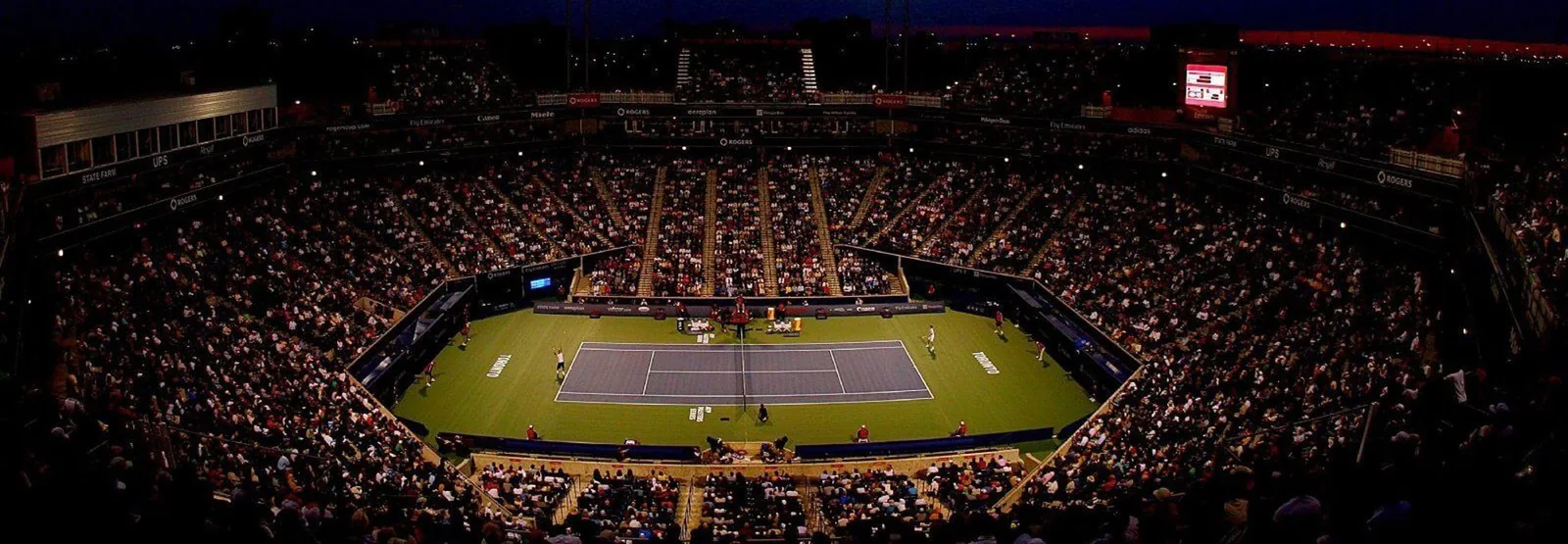
The 2026 WTA Toronto draw is the women’s National Bank Open bracket at Sobeys Stadium. It contains 96 singles players and 32 doubles teams. Qualifying was held on August 1, the WTA main-event window is August 2–13, and the official tournament draw page is the safest place to see who advanced, withdrew or replaced another player. This guide was checked on August 13, 2026; any bracket that was downloaded earlier can be behind the live draw.
Singles
A 96-player main draw with 32 seeds. Every seed received a first-round bye, leaving 64 players in the second round.
Doubles
A separate 32-team knockout draw. Do not read the singles bracket as a guide to doubles entries or seedings.
Official view
On the NBO draw hub, select Women, Toronto and the 2026 edition. The page can otherwise expose the Montreal men’s event.
For the wider event page, field and surface, use our 2026 Toronto tournament page. If your purpose is simply to find a match happening now, the WTA matches today page is faster than scanning every branch. A draw answers “who can meet whom”; the daily order of play answers “when and where will they play.” Keeping those two documents separate prevents most confusion.
The date difference between official pages is deliberate. Tennis Canada promotes an August 1–13 festival because qualifying is part of the spectator event, while the WTA tournament listing shows August 2–13 for the main competition. When saving or printing a bracket, add the download time in Eastern Time. That small note makes it obvious whether later retirements, lucky-loser placements or completed scores may be missing.
How the 96-player singles bracket works
A 96-player draw looks awkward only because tennis brackets are built around powers of two. Toronto uses the space of a 128-line bracket but leaves 32 first-round positions empty as byes. The other 64 players contest 32 opening matches; their 32 winners then join the 32 seeds in round two. From that point the field is a familiar 64-player single-elimination bracket.
| Stage | Players left at start | What happens |
|---|---|---|
| First round | 64 active + 32 byes | The 64 non-bye positions produce 32 winners. |
| Second round | 64 | Each of the 32 seeds enters against a first-round winner. |
| Third round | 32 | Sixteen matches reduce the bracket to the last 16. |
| Round of 16 onward | 16 | Standard knockout progression to eight, four, two and the champion. |
The official NBO breakdown allocates those 96 singles places as 76 direct acceptances, 12 qualifiers and eight wild cards. “Direct” means entry through the applicable WTA ranking list; it does not mean seeded. A qualifier has already won through the separate qualifying competition. A wild card is chosen by the tournament and can land anywhere permitted by the draw rules.
The expansion matters when counting a title run. A seed begins in round two and ordinarily needs six victories to win the tournament. An unseeded player who starts in round one ordinarily needs seven. A qualifier has also played qualifying matches before that. The bracket therefore records position, but it does not show every player’s accumulated workload at a glance. Use the WTA calendar to place the long Toronto event within the wider North American hard-court swing.
Seeds, first-round byes and draw placement
Toronto’s seeds were based on the official rankings of Monday, July 27. Aryna Sabalenka headed the list, followed by Elena Rybakina, Jessica Pegula and Coco Gauff. Iga Swiatek was the No. 7 seed even though the tournament announcement listed her ranking as No. 8. That difference illustrates a useful rule: a seed number describes a player’s position among accepted entrants, while a ranking number describes her position on the Tour’s dated ranking list.
What a seed guarantees
- First-round bye: each of the 32 seeds entered in round two.
- Separated placement: the draw distributes seed bands so the highest seeds cannot meet immediately.
- No guaranteed result: a seed can lose her opening match, and a bye is not recorded as a victory.
Under the WTA draw procedure, the top two seeds occupy opposite ends of the bracket. Seeds three and four are drawn into the two remaining quarter positions; later bands are distributed among prescribed lines. This protects the logic of the seeding system without scripting exact matchups. It is therefore wrong to assume that the No. 3 seed must be in the No. 2 seed’s half before the ceremony, or that rankings alone predict which quarter contains a particular player.
Read a seed label beside a player’s name as a navigation aid. First find her branch, then trace horizontally or vertically—depending on the official viewer—to the next round. If her first listed opponent is the winner of another match, she received a bye. If “RET,” “W/O” or another status appears, consult the official results rather than inferring the cause from the bracket alone.
Ranking and draw snapshots also answer different questions. The current WTA singles rankings may have changed since July 27, but the seed numbers do not get redrawn every Monday. Once the official draw is made, later ranking movement cannot change a player’s original Toronto seed. This distinction is especially important when comparing the published bracket with a player’s live-ranking projection after several rounds.
Qualifying draw, wild cards and lucky losers
The qualifying draw is a competition, not a waiting list. Toronto reserved 12 main-draw positions for players who earned them through qualifying. Those names entered the main bracket with a “Q” marker. Eight other main-draw positions were wild cards selected by Tennis Canada. The official 2026 announcements identified Venus Williams, Bianca Andreescu, Kayla Cross, Katherine Sebov, Cadence Brace, Rebecca Marino, Ariana Arseneault and Carol Zhao among those wild-card recipients.
| Draw label | Meaning | What it does not mean |
|---|---|---|
| Q | Qualified by winning the required qualifying matches | Not automatically seeded in the main draw |
| WC | Received a tournament wild card | Not an exemption from playing the first round unless also seeded |
| LL | Eligible qualifying loser inserted to fill a later vacancy | Not a qualifier and not chosen casually after any loss |
A lucky loser must have entered and competed in qualifying. The WTA rulebook ranks and, in some timing scenarios, randomly orders eligible players according to the round reached, the applicable ranking and when main-draw vacancies arise. That is why the highest-profile qualifying defeat does not always produce the replacement a fan expects. The exact rule is procedural; the final official draw label is the practical answer.
When comparing PDFs, check the small legend and revision time. A draw published before qualifying concludes may display “Qualifier” on a line rather than the eventual name. A later withdrawal can add “LL,” move an alternate into a vacancy or produce a walkover. None of those changes means the original draw was fabricated; it means the competition progressed under its replacement rules.
For ranking-based entry context, consult the dated WTA rankings, but remember that wild-card selections are discretionary and that a qualifier earns her place on court. The cleanest research habit is to keep three documents open: qualifying draw for the route in, main draw for the tournament path, and daily results for what actually happened.
Toronto doubles draw explained
The women’s doubles competition has its own 32-team bracket. The NBO’s official format guide says 30 teams enter directly through the applicable rankings and two pairs receive Tennis Canada wild cards. There is no Toronto doubles qualifying draw feeding this 32-team field. With no first-round byes required to make the numbers work, a team normally needs five match wins to take the title.
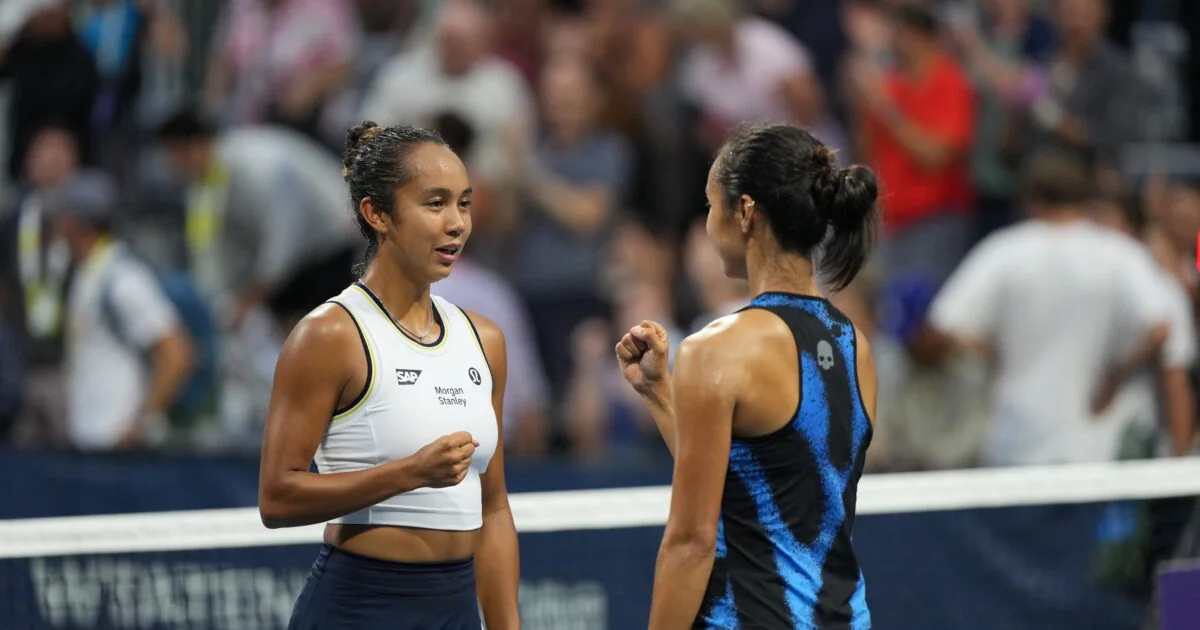
Doubles seeding is not calculated by copying each player’s singles position. The WTA rulebook orders accepted teams using the partners’ combined WTA doubles rankings from the relevant week before the tournament. That means a famous singles player can be unseeded in doubles, while an established specialist team earns a protected place in the draw. Check the WTA doubles rankings when the seeding looks surprising.
Read both partners
The entry belongs to the pair. Search by either surname, then confirm the teammate before tracing the line.
Follow one branch at a time
A team advances together. A later replacement or walkover should be read from the official status, not guessed from a missing score.
The doubles and singles finals may share Championship Night, but their brackets remain independent. A player competing in both can appear in two schedules on the same date; the order of play, not either draw alone, determines court and start sequence. On a printable sheet, label the top “Women’s Doubles — Toronto 2026.” That prevents the most common mix-up: filling a 32-line doubles page with the names from the 96-player singles event.
For score updates, verify the team pairing every round because substitute pairings should never be inferred from social posts or an old entry list.
How to use and print the official bracket
Start with the official National Bank Open draw page and deliberately choose the women’s Toronto event. The tournament runs an ATP event in Montreal at the same time, and a generic URL or saved browser state can display the men’s bracket. Confirm the heading says Women’s Singles — 2026 Edition before saving anything. For doubles, change the game type and repeat the check.
- 1. Set the event: select Women, Toronto, 2026 and Singles or Doubles.
- 2. Refresh once: a cached search result may still say that the draw is unavailable even while live play is underway.
- 3. Expand the view: use a desktop browser or landscape orientation so player names, seed markers and scores remain readable.
- 4. Print or save as PDF: use the browser’s print command, choose landscape, and reduce scale only enough to prevent columns from clipping.
- 5. Label the snapshot: add “Toronto women,” draw type, date and Eastern Time to the filename or top margin.
If the WTA tournament page exposes an official draw PDF, use that file rather than a third-party reconstruction. Official WTA draw assets commonly distinguish singles main draw, doubles main draw, qualifying and order of play, so verify the document heading instead of guessing from a filename. When no official PDF button is visible, printing the live official viewer is safer than inventing a likely URL.
A printed bracket is a snapshot
It will not automatically add a late lucky loser, corrected score, retirement or completed round. Write updates in by hand only after checking the official live result.
For mobile use, saving a PDF is often less convenient than bookmarking the filtered draw page and the today’s WTA matches page. The bracket is best for future pathways; the match list is best for immediate start times and finished scores. Keeping both bookmarks gives you a compact, current tournament dashboard without relying on screenshots circulating on social media.
Round map, draw updates and common questions
The draw unfolds across a longer tournament than Toronto used before the 2025 expansion. The official 2026 session plan assigned first-round play to August 2–3, round two to August 4–5, round three to August 6–7, the round of 16 to August 8–9, quarterfinals to August 10–11, semifinals to August 12 and finals to August 13. Those dates explain why one half of a round may be completed while the other half still looks open.
Is this page a live bracket?
No. It explains the official draw and links to live tools. The NBO and WTA pages control current names, scores and statuses.
Why does a seed have no first-round score?
All 32 seeds had byes. Their Toronto competition began in round two; the bye is not a match win.
When is the bracket final?
The path is set at the draw ceremony, but names and status markers can still change through official replacement and withdrawal procedures.
Where do I find match times?
Use the daily order of play. The draw shows rounds and opponents, not a binding court schedule.
The WTA’s pre-event guide scheduled the August 13 doubles final for 3:30 p.m. and the singles final not before 6 p.m., both Eastern Daylight Time. “Not before” is a boundary, not a promise of an exact first ball. Ceremonies, the earlier final, weather or operational changes can affect the actual start. Check the official order of play on the day.
After Championship Night, a final official draw becomes a useful permanent record because every branch contains an outcome. Until then, treat any printable copy as working paper. For the latest event state, combine the Toronto tournament hub with today’s verified match list. That pair answers the two questions a bracket alone cannot: what is happening now and whether a published time has changed.