
What happened in Gauff's match against Sun Xinran?
Coco Gauff's disputed China Open point was replayed because the courtside LED panels changed during the rally and the chair accepted the hindrance after video review. The decision restored the point; it did not give Gauff an automatic winning point or punish Sun Xinran for wrongdoing. Whether the review procedure feels fair is a separate question from whether a player was entitled to request it.
The result and the point under review
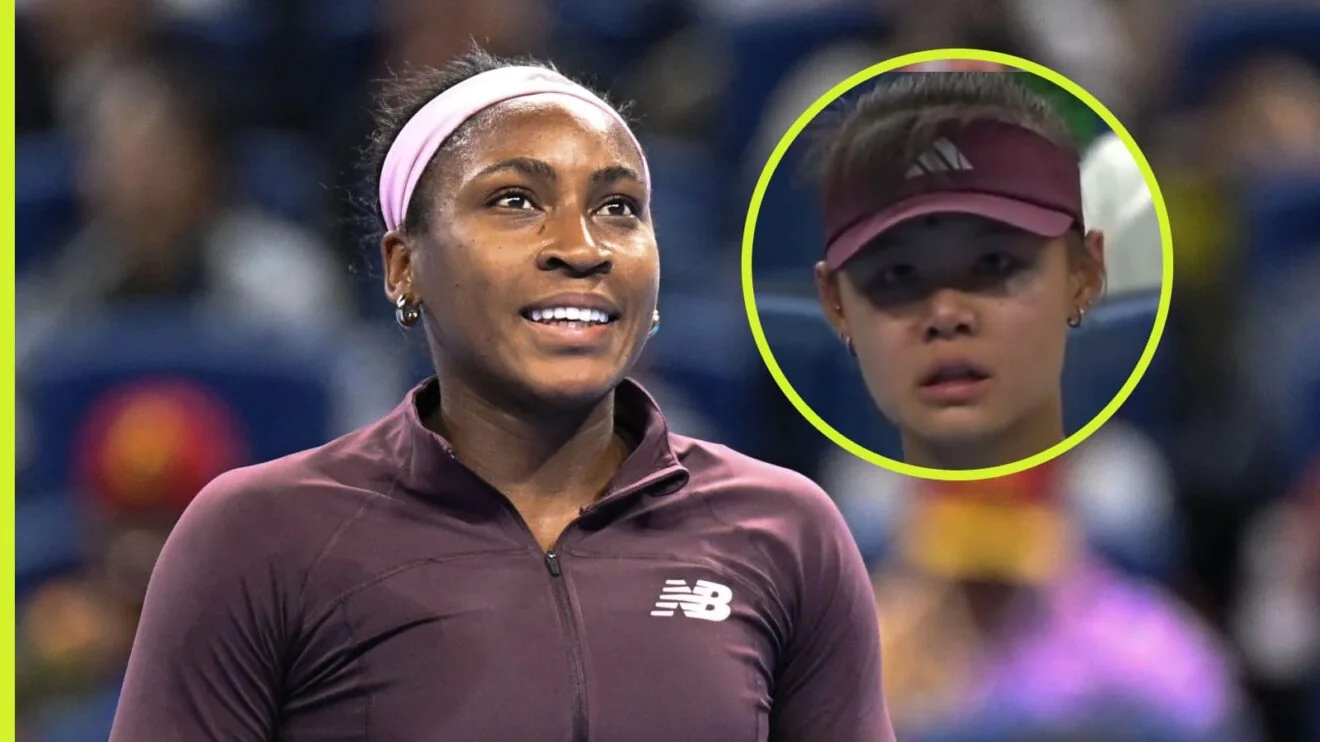
Gauff defeated Sun 7-5, 6-1 in Beijing on October 5, 2026. The official WTA match report locates the incident with Gauff serving at 4-5 in the opening set. Sun appeared to have produced a winner, but the flickering side panels led to a replay. Gauff held for 5-5, then won the set. This matters because some accounts place the disputed rally at 5-5, which changes how readers picture the pressure.
The close first set gave the incident emotional weight. A teenager challenging an established star is already a compelling story; an apparent winner disappearing from the scoreboard makes a natural flashpoint. Yet an apparent winner and a legally completed point are not always the same thing. The official decision concerns the conditions under which that rally took place, rather than which player produced the more impressive last shot.
It is equally important not to rewrite the rest of the match as a certainty. A different decision would have changed the score at that moment. It cannot establish that Sun would then have broken serve, won the opening set or won the match. Those are possible alternative histories, not results that actually happened. Tennis continually requires players to play the next point after a disputed decision.
Viewers wanting the broader match can use the broadcaster's October 5 highlights page, subject to regional access. For the tournament's other rounds, our China Open guide provides the event context. The narrower question here is why an interruption involving advertising could undo an apparent winner, and why the timing of that interruption became so contentious.
Why changing LED boards matter under WTA rules
The WTA's current rulebook restricts when rotating advertising can change. Rear-wall displays can change after games; side-wall displays can change between points. Neither may change once a player is ready to serve. A moving display during a rally therefore raises a tournament-conditions issue before anyone considers the personalities involved.
That is the key distinction between this dispute and a player simply deciding that an ordinary advertisement is irritating. The relevant question is whether the display changed at an inappropriate time, not whether the sponsor's logo was attractive, whether a particular colour was disliked or whether television viewers found the stadium busy. A static court environment and a display that suddenly switches are different circumstances.
Consider an illustrative example rather than a reconstruction of the Beijing point. Two players begin a rally with an unchanged advertising panel beside them. One runs forward and turns toward that side of the court as the display switches. Saying that both players occupy the same court does not demonstrate that they saw the same thing at the same time. Conversely, seeing a switch on television does not prove precisely how it affected either player's next shot. Those limits point toward examining the event and the applicable procedure instead of pretending to measure someone's attention from the sofa.
The most useful prevention is also the least personal: keep the advertising still during play. As an editorial recommendation, display controls should be coordinated with the match rather than leave the athletes and chair to resolve a problem after a rally has begun. That would protect the player making a legitimate complaint and the opponent whose excellent shot might otherwise disappear through a replay.
It is possible to support that prevention while disagreeing about this individual ruling. There is no need to argue that one player deserves distracting conditions because another player appears untroubled. Nor does accepting that a display changed settle every procedural question. Tournament standards describe what the environment should be; the chair still has to decide what consequence follows in the particular point. Keeping those questions separate makes the argument more precise and directs responsibility toward the people who can prevent a recurrence.
Hindrance, a let and video review answer different questions
Three terms became tangled together in the debate. A hindrance is the interference being assessed. A let is an instruction to replay the point. Video review is a means of checking a reviewable incident. A camera does not turn every distraction into a let, and requesting a review does not allow the requesting player to choose the result.
Why replaying a point is different from awarding one
ITF Rule 26 distinguishes deliberate interference by an opponent, which awards the hindered player the point, from qualifying accidental or external interference, which leads to a replay. Its exceptions also matter: ordinary permanent fixtures are not a general escape route whenever a shot goes wrong. The separate signage standards help explain why a changing display became an officiating question in Beijing.
For a simple illustration, imagine a point at 30-all. Awarding the receiver the point makes it break point. Replaying it leaves the next rally starting at 30-all. Either player can then win that rally. To the player who appeared to have hit a winner, a replay understandably feels like something valuable has been removed. But the remedy does not say her opponent played the better tennis. It says the interrupted contest for that particular point must take place again.
This distinction also prevents an unfair accusation against Sun. Nothing about an external-display let requires Sun to have caused the interruption or committed a violation. She can have done everything correctly and still find herself playing the point again. That is exactly why arguments about fairness should examine the remedy, rather than invent misconduct by either competitor.
Video review is separate from electronic line calling
Electronic line calling answers where the ball landed relative to the relevant line. Judgment review addresses incidents such as a double bounce, a touch or a possible hindrance. The official announcement of Wimbledon's 2026 review system describes those different functions. That is a useful comparison of technologies, rather than a substitute for Beijing's own procedures.
When someone says the machine should have settled the Gauff incident, it is worth asking which question the machine is being asked to settle. Ball tracking could show that Sun's shot landed inside the court. That would not by itself decide whether the earlier conditions required the point to be replayed. Our electronic line calling explainer covers the separate disputes that arise over automated in-or-out decisions.
Did Gauff have to stop playing immediately?
The available reporting supports that Gauff signalled before Sun completed the apparent winner. Sky's account says her hand was already raised. Gauff later explained that she reacted when a further flicker confirmed what she had noticed, and that players had been told they could request review after a point. AFP reported that explanation; it should be understood as her account of the procedure.
What is established and what remains disputed
The evidence establishes a reviewed incident and an accepted replay. It does not provide a complete publicly available Beijing-specific review manual from which to announce a universal rule for every WTA event. A familiar instruction to stop immediately in one kind of dispute cannot simply be pasted onto every reviewable situation. Equally, an example from a different tournament cannot prove that all its details applied here.
It helps to separate four moments: the display first changes, a player notices a change, the player visibly signals, and the player formally asks the chair for review. Those moments need not be identical. This is an analytical framework, not a claim that we can identify each one to a fraction of a second in Beijing. A clip can show a raised hand; it cannot directly reveal the moment of perception.
A spectator's strongest objection might still concern the gap between a disruption and its remedy. That is a legitimate procedural concern. But it is different from proving that Gauff knowingly waited to see whether she would win. The latter is a claim about intention that requires more evidence than an unfavourable impression of the point.
For future incidents, listen for what the chair actually announces. Is the disagreement about when the request was made, whether the event happened, whether it affected play or which remedy applies? Each requires different evidence. Arguing that a player should have stopped sooner will not answer whether a display moved; showing that it moved will not automatically settle the request's timing. Treating all of these as one yes-or-no accusation makes a technical disagreement much harder to resolve.
Why fans thought the replay was unfair to Sun
In the discussion of the rally, some viewers objected to the apparent second chance for the player under pressure. Others pointed to Gauff's signal before the last shot, or asked why the advertising changed at all. Those comments demonstrate different concerns within one conversation. They do not measure what all tennis supporters believed.
The strongest version of the complaint is easy to understand without attacking either athlete: Sun did the work needed to construct an apparent winner and then had to do it again. A replay can preserve a rule while creating an uncomfortable sporting experience. Telling a disappointed viewer merely that the rule exists does not explain why the remedy has been designed that way.
The strongest defense also deserves a fair hearing. A player should be able to ask an official to examine an external disruption. Requiring her to ignore it because she happens to be in difficulty would make the availability of relief depend on the expected result of the rally. That would be an awkward principle to apply consistently. A distraction does not become acceptable because the affected player might otherwise lose.
Our editorial view is that a better debate compares those interests directly. A clear request deadline would help players know when to act. A clear explanation to the crowd would help spectators know why the point is being replayed. Reliable control of the advertising would reduce the occasions when either issue arises. These are proposals for clarity, not claims that a new WTA policy has already been introduced.
There is another boundary that does not depend on agreeing with the call. Gauff reported racist abuse after the match, as covered in Reuters reporting carried by RTE. Criticism of the replay procedure does not justify abuse of a player. Our guide to online abuse in tennis addresses that wider problem.
It is possible to feel sympathy for Sun, accept the result, question the timing framework and reject abuse simultaneously. These positions do not cancel one another. The productive question is what instructions would make the same incident easier to handle if the players' roles were reversed. A rule should be understandable before a favourite benefits from it, and a procedural objection should still make sense when a favourite loses the replay.
How to assess the next WTA hindrance controversy
The Gauff–Sun episode is useful because it exposes several questions that short clips tend to compress into one. A player can be unhappy, a request can be permitted, the opponent can deserve sympathy and the procedure can still deserve scrutiny. To follow another disputed call, start with the actual announcement rather than the most dramatic description attached to a video.
Four questions to ask before judging a clip
- What is being disputed? Identify whether it is the ball's landing, a touch, a double bounce, an external interruption or a player's behaviour. A correct in-or-out call will not answer a different complaint about what happened earlier.
- What does the available timeline show? Separate the interruption, the visible signal and the request to the official. Prefer continuous footage with sound to a cropped final shot. Be cautious about claiming knowledge of what a player saw or intended.
- Which procedure applies at that tournament? Use the current official rules and any event-specific instructions. Review access, available camera angles and request requirements should be established for the match in question rather than assumed from another tour's example.
- What remedy was actually announced? A replay, an awarded point and a decision to let the result stand produce different consequences. Check which one occurred before describing a player as having been handed the point.
This is a reader's framework, not an official four-step WTA protocol. Its purpose is to make the evidence easier to assess. If the dispute concerns a narrow procedural detail that has not been published, leaving that detail open is more accurate than choosing whichever rule interpretation helps a preferred player.
For Beijing, the firm conclusion remains limited and clear: the LED issue was accepted after review, the point was replayed, and Gauff won the match. The strongest future-facing criticism concerns preventing changing displays and making review timing easier to understand. Neither requires declaring Sun responsible for an external interruption or treating Gauff's request as proof of cheating.
The official WTA rules page is the starting point when a later incident raises a new question. Use the matches today page to identify the tournament and round before comparing incidents, and the WTA calendar for the broader schedule. The closer the comparison is to the actual setting and procedure, the more useful the discussion becomes.