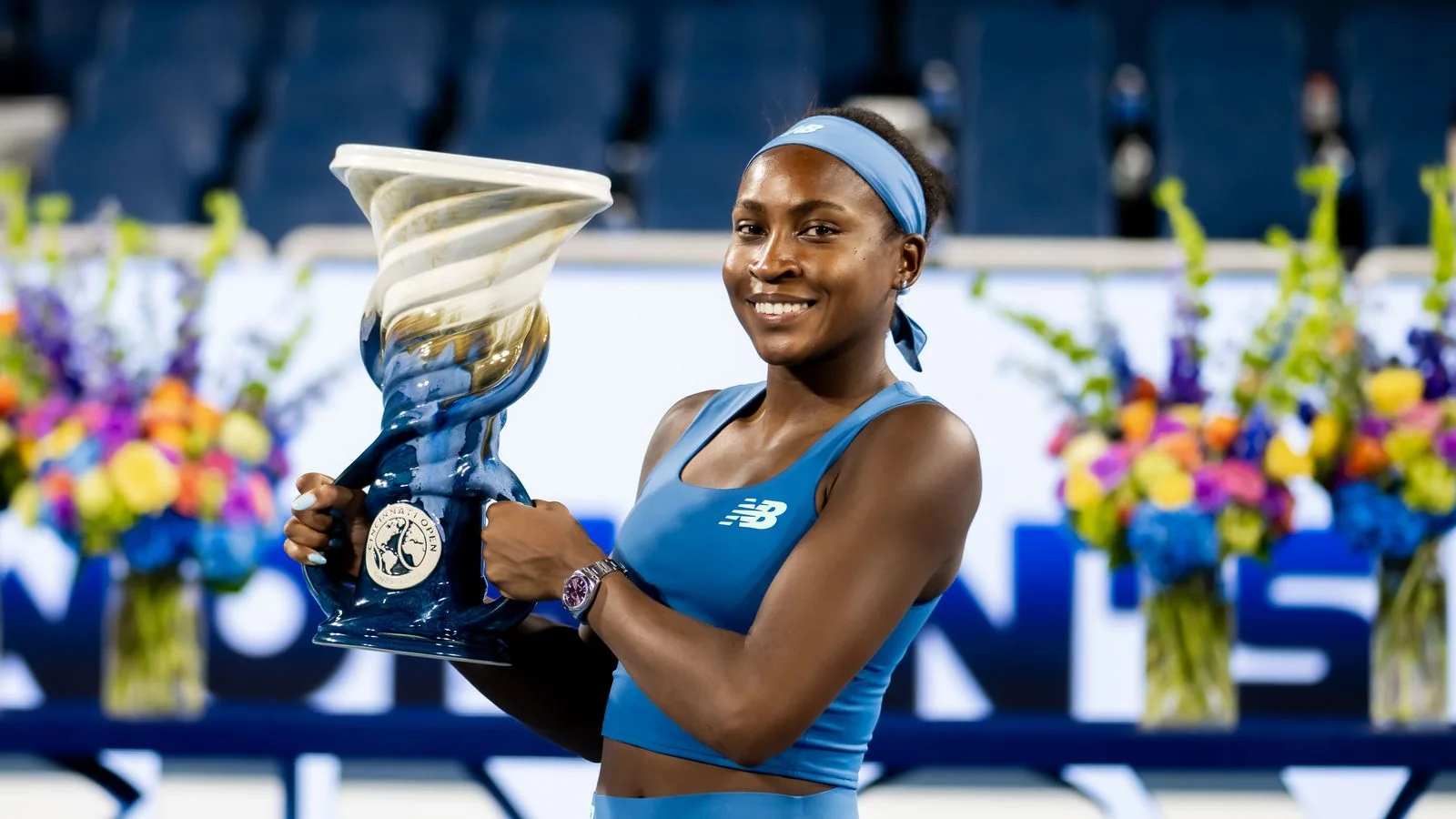
Coco Gauff beat Jessica Pegula 6-2, 6-4 in the 2026 Cincinnati Open women’s final on Sunday, August 23. The No. 4 seed completed the victory in 1 hour and 14 minutes at the Lindner Family Tennis Center in Mason, Ohio, earning her second Cincinnati singles title and her first tour trophy of the 2026 season.
This is a completed-result recap, not a live-score page. The score, champion and tournament path below are final. Readers looking for the full event archive can also open the 2026 Cincinnati tournament page.
Champion
Coco Gauff
Final score
6-2, 6-4
Duration
1:14
Cincinnati 2026 women’s final result at a glance
Gauff entered the final as the fourth seed, one place below third-seeded Pegula, but the match did not follow that narrow seeding difference. Gauff established a 5-0 first-set lead before Pegula got on the board, then closed the opener 6-2. The second set was closer, yet Gauff remained in front. Even when she did not convert her first chance to serve out the championship at 5-2, she avoided a long reset: Pegula held once, and Gauff broke at love in the next game to finish 6-4.
The phrase “straight sets” is accurate, but it should not be read as two identical sets. The opener was defined by Gauff’s immediate separation; the second contained the only late wobble. What connected them was pressure on Pegula’s serve and Gauff’s ability to keep the score moving in her direction. Official WTA reporting says Gauff never trailed at any point in the 74-minute match.
| Match fact | Final record | Why it matters |
|---|---|---|
| Date | August 23, 2026 | Closing Sunday of the WTA 1000 event |
| Winner | Coco Gauff | Second Cincinnati title, after 2023 |
| Runner-up | Jessica Pegula | Second Cincinnati final in three editions |
| Score | 6-2, 6-4 | A completed straight-set final |
How Gauff took control of the final
The final’s defining feature was not one spectacular isolated point; it was how quickly Gauff made Pegula play from behind. A 5-0 first-set lead created an unforgiving scoreboard before the match was half an hour old. Pegula is normally comfortable absorbing pace, redirecting the ball and keeping opponents honest with clean, early contact. In this final, however, Gauff’s defense repeatedly required one more shot while her own willingness to attack prevented defense from becoming passive retrieval.
That combination helps explain Pegula’s post-match comparison of Gauff to a backboard. It was praise for the number and quality of balls coming back, not a claim that Gauff merely waited. The tournament’s recap described an aggressive performance and highlighted her forehand, backhand and serve. The useful tactical reading is therefore balance: Gauff’s movement extended exchanges, but she still had to turn those extended points into pressure rather than surrender court position.
The response at 5-2 mattered
Serving for a title can alter the feel of a match. Gauff did not close on her first attempt in the second set, and Pegula reduced the margin to 5-4. The next game prevented that moment from becoming a genuine reversal: Gauff won four straight return points to break at love. Instead of carrying a missed opportunity into another service game, she finished by applying pressure to Pegula’s serve.
That ending also guards against an overly tidy story. Gauff was dominant overall, but she still encountered a closing test. Her value lay in limiting its duration. A reader reviewing only the 6-4 second set might imagine a long set decided by one late break; the official sequence shows something different—a lead, a failed first finish and an immediate return-game recovery.
Pegula said she did not believe she played badly, and the evidence does not require portraying the runner-up as ineffective. Finals can become one-sided because the winner makes normally sound patterns less rewarding. Here, Gauff’s movement, depth and return presence compressed Pegula’s options. The result was decisive without requiring the false conclusion that every game or rally was easy.
What the official statistics explain
The most revealing number is Gauff’s five breaks from six opportunities. Break-point conversion can fluctuate, but in this match it translated sustained return pressure into a large scoreboard advantage. Pegula had little room for an ordinary service game to become complicated: once a break point appeared, Gauff almost always converted it.
| Official match measure | Gauff | Pegula |
|---|---|---|
| First-serve points won | 65% | 47% |
| Break points converted | 5 of 6 | 2 of 2 |
| Points won in Pegula service games | 32 | — |
| Times taken to deuce on own serve | 1 | Not stated in the official recap |
The first-serve comparison reinforces that pressure. Gauff won 65 percent of points behind her first delivery, while Pegula won 47 percent. This does not mean Gauff’s serve was untouchable—Pegula converted both break chances she created. It means Gauff earned more protection from the first serve across the whole match, and Pegula was unable to generate enough return opportunities to offset the five breaks at the other end.
The 32 return points won by Gauff are another way to see the same contest. They indicate repeated involvement in Pegula’s service games, not simply a lucky cluster of points at the end of sets. At the same time, those figures should remain match-specific. They tell us why August 23 tilted toward Gauff; they do not by themselves prove that either player’s serve or return will perform identically in New York.
It is also important not to fill gaps in the public record. The opened official recaps do not give a complete winners and unforced-errors ledger, so this article does not use invented totals to make the tactical story seem more precise. The verified serve, return and break-point measures are enough: Gauff created more danger in return games and protected her first serve more effectively.
Gauff’s route to the Cincinnati title
The cleanest way to understand Gauff’s week is to start with the only set she lost. As a seeded player in Cincinnati’s 96-player singles draw, she received a first-round bye and opened against Liudmila Samsonova in the round of 64. Samsonova won the first set 6-2. Gauff then reversed the match 6-4, 6-1—and did not lose another set in the tournament.
| Round | Opponent | Gauff result |
|---|---|---|
| Round of 64 | Liudmila Samsonova | 2-6, 6-4, 6-1 |
| Round of 32 | Ann Li | 6-1, 7-6(3) |
| Round of 16 | Marie Bouzkova | 6-3, 6-2 |
| Quarterfinal | Marta Kostyuk | 6-2, 6-2 |
| Semifinal | Sara Bejlek | 6-4, 6-1 |
| Final | Jessica Pegula | 6-2, 6-4 |
That route produced a striking sequence: 12 consecutive sets won after the opening set against Samsonova, with 32 games conceded across the full tournament. Ann Li pushed the second set to a tiebreak, and Bejlek kept the semifinal opener close, but neither interruption became a lost set. By the final, Gauff had accumulated repeated evidence that she could protect a lead and finish in two.
The route also contained different tests. Samsonova forced a comeback; Li required tiebreak execution; Bouzkova and Kostyuk were beaten with progressively clearer scorelines; Bejlek’s unexpected semifinal run demanded focus against an opponent outside the expected marquee names. It would be too simple to say the draw became easy. Gauff still had to solve the opponent presented in each round and then beat the third seed for the title.
For readers comparing this table with another bracket, confirm that the page shows women’s singles rather than doubles or the ATP event. The related WTA Cincinnati draw guide explains the full bracket structure without mixing disciplines.
Pegula’s route to the final
Pegula’s route had a different rhythm. She also received a first-round bye, then beat Simona Waltert and Emma Navarro in straight sets. From the round of 16 onward, every victory required three sets. Sorana Cirstea took the middle set and pushed the decider to 7-5; Amanda Anisimova forced a final-set tiebreak; defending champion Iga Swiatek extended the semifinal to nearly three hours.
| Round | Opponent | Pegula result |
|---|---|---|
| Round of 64 | Simona Waltert | 6-3, 6-2 |
| Round of 32 | Emma Navarro | 7-5, 6-2 |
| Round of 16 | Sorana Cirstea | 6-2, 4-6, 7-5 |
| Quarterfinal | Amanda Anisimova | 6-4, 2-6, 7-6(4) |
| Semifinal | Iga Swiatek | 7-5, 4-6, 6-4 |
| Final | Coco Gauff | 2-6, 4-6 |
The Swiatek victory was particularly significant. Pegula removed the defending Cincinnati champion, stopped a 10-match winning streak and secured her 45th tour win of 2026, which the tournament identified as her 300th career victory. It was also another demonstration of the consistency that placed her in a second Cincinnati final within three editions.
It is tempting to use the workload difference as a complete explanation for the final. The records show that Pegula played three consecutive three-setters while Gauff arrived on a 10-set winning streak. That is valuable context, but it is not proof that fatigue alone decided Sunday. Gauff still had to create five breaks and execute the patterns described above. Pegula, for her part, said Gauff’s level was extremely high rather than presenting the result as merely a recovery problem.
The runner-up result should therefore be read alongside the route, not in place of it. Pegula lost the title match, yet her Cincinnati week included wins over three seeded opponents from the round of 32 onward and a victory over the reigning champion. A final score answers who won; the full path explains why both players reached the last match.
Why this all-American final mattered
Cincinnati had not staged an all-American women’s singles final since 1970. That year, Rosie Casals defeated Nancy Richey 6-3, 6-3. Gauff and Pegula therefore ended a 56-year gap, doing so in a tournament where both already had substantial history: Gauff arrived as the 2023 champion, while Pegula had finished runner-up in 2024.
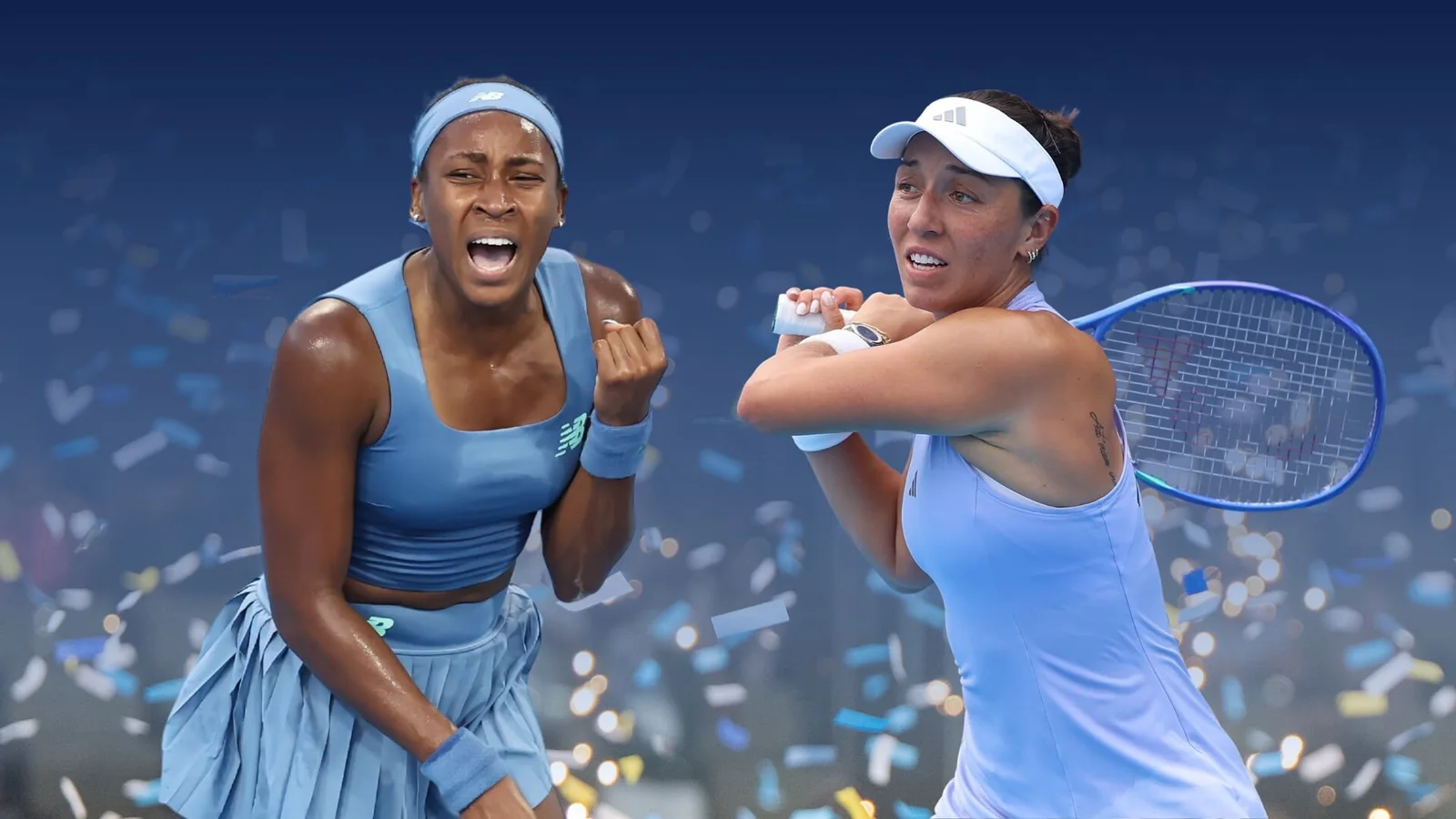
Their familiarity added another layer. Pegula held a 5-4 head-to-head lead before Sunday, but Gauff had won their most recent meeting in a three-set Wimbledon quarterfinal the previous month. Cincinnati leveled the series at five wins each. That progression is more informative than a vague claim that one player “owned” the rivalry: the matchup reached the final with almost no historical separation, then Gauff produced the clearest scoreline of their recent meetings.
They also knew each other as teammates. During 2022 and 2023, Gauff and Pegula reached eight doubles finals together and won five titles. Doubles history can build close knowledge of movement, preferences and competitive temperament, but it does not turn a singles final into a doubles-style contest. Singles removes the shared court responsibilities and asks each player to expose the other’s space alone.
Historical layer
First all-U.S. Cincinnati women’s final since Casals-Richey in 1970.
Rivalry layer
The result moved the career singles head-to-head from 5-4 Pegula to 5-5.
The respectful reactions after the match fit that history. Pegula praised Gauff’s movement and level; Gauff had already described Pegula as both a demanding competitor and a generous senior colleague. None of that reduced the stakes. It made the contrast clearer: two players with shared experience could recognize the quality of the winner’s performance without softening the result.
What the result means after Cincinnati
The achievement list is substantial even before any prediction is attached. This was Gauff’s first title of 2026, her fourth career WTA 1000 trophy and her second championship in Cincinnati. In the Open Era, the official tournament and WTA recaps place only Serena Williams, Victoria Azarenka and Gauff in the group of women who have won this event twice.
The ranking value is concrete as well. A WTA 1000 champion earns 1,000 ranking points, subject to the ranking system’s normal treatment of prior-year points and counted results. Readers should use the current WTA rankings for the resulting position rather than freezing a number from one publication date. Cincinnati also moved Gauff’s season record to 40-13 according to the official tournament recap.
What Cincinnati proves—and what it does not
- It proves: Gauff won six matches, beat the third seed in the final and produced a 12-set winning streak after her opening set.
- It supports: confidence in her outdoor hard-court form entering the next phase of the season.
- It does not prove: that she will reproduce the 2023 Cincinnati-to-US Open double.
The 2023 comparison is unavoidable because Gauff won Cincinnati that summer and then captured her first Grand Slam singles title at the US Open. It is useful history, not a forecast. Different draws, conditions and opponents await in New York. Gauff herself stopped short of treating Cincinnati as an indicator that she would necessarily succeed there, instead emphasizing the confidence gained from solving varied matches.
Pegula’s implications are also more nuanced than a runner-up label. Her week added five victories, including wins over Anisimova and defending champion Swiatek, and confirmed her ability to reach the closing weekend of another major hard-court event. The final exposed how severely Gauff could pressure her serve, but it did not erase the high-level route that preceded it.
The most responsible post-Cincinnati conclusion is therefore narrow and useful: Gauff left Mason with the trophy, 1,000 ranking points available to the champion and strong recent hard-court evidence; Pegula left with another WTA 1000 final and several demanding wins. Future results should be checked on the WTA matches today page, not assumed from this final.
Cincinnati final questions answered
Who won the 2026 Cincinnati Open women’s final?
Coco Gauff won the title. She defeated Jessica Pegula in straight sets on August 23, 2026. The victory was Gauff’s first tournament championship of the season and her second Cincinnati singles title.
What was the Gauff vs Pegula final score?
The final score was 6-2, 6-4 to Gauff. The official duration was 1 hour and 14 minutes. Gauff led 5-0 in the first set and finished the match by breaking Pegula at love in the final game.
How many Cincinnati titles has Coco Gauff won?
Two. Gauff won in 2023 and again in 2026. Those victories put her alongside Serena Williams and Victoria Azarenka as the only two-time women’s champions of the Cincinnati event in the Open Era, according to the official recaps.
What is the Gauff-Pegula head-to-head after the final?
The series is level at 5-5 after Cincinnati. Pegula entered the final with a 5-4 lead, while Gauff had won their previous meeting at Wimbledon in July. Head-to-head records are discipline-specific, so their doubles partnership does not count toward this singles total.
Is the Cincinnati 2026 final still live?
No. The women’s final is complete and this page records the final result. Use the Cincinnati schedule and results archive for the event’s other matches, or the site’s current match page for new WTA play.