Confirmed WTA Finals 2026 singles players
Seven singles players have officially qualified for the 2026 WTA Finals as of October 18: Elena Rybakina, Aryna Sabalenka, Mirra Andreeva, Linda Noskova, Jessica Pegula, Coco Gauff and Elina Svitolina. One singles place remains available. The event takes place November 8–15 at the Indian Wells Tennis Garden in California.
The table records qualification announcements rather than projected seeds. It should therefore be read as a confirmed group of entrants, subject to subsequent withdrawals, rather than a draw or an exact ranking order. The WTA's October 17 Svitolina announcement brings together all seven names and explicitly leaves one spot open.
| Player | Official announcement | Current qualification status |
|---|---|---|
| Elena Rybakina | September 14 | Qualified |
| Aryna Sabalenka | September | Qualified |
| Mirra Andreeva | October 9 | Qualified |
| Linda Noskova | October 9 | Qualified |
| Jessica Pegula | October 14 | Qualified |
| Coco Gauff | October 14 | Qualified |
| Elina Svitolina | October 17 | Qualified |
There will be eight singles entries and eight doubles partnerships. Qualification, participation, seeding and the eventual group draw are separate pieces of information. A qualifier has earned her place; her exact opponents and match dates require later tournament documents. That distinction matters if you are choosing a session specifically to watch one player.
For the tournament's broader date blocks, venue information and match format, use our 2026 WTA Finals schedule guide. This page concentrates on who has qualified, what remains unsettled and how changes to the field should be interpreted.
What the qualified singles field brings to Indian Wells
The seven announced qualifiers already give the tournament several different stories: a defending champion, experienced runners-up, two singles newcomers and a former champion returning after a long absence. Their routes to qualification also underline how the Finals reward a season of results across different surfaces.
Rybakina and Sabalenka: established Finals contenders
Rybakina returns as the defending champion after winning every match at the 2025 Finals. Her September qualification announcement described a striking reversal: she had been the last singles qualifier a year earlier, but became the first in 2026. Australian Open and US Open titles, together with a Stuttgart title, supplied the core of that season.
She is set for a fourth consecutive Finals appearance. That combination of recent success in this format and major titles makes her an obvious reference point for the field, although the current qualification list alone cannot establish her November form or opponents. Her official qualification announcement details the results behind her place.
Sabalenka qualified for a sixth consecutive season. She reached the Finals championship match in both 2022 and 2025, giving her extensive experience of progressing from groups into the knockout rounds. Her 2026 titles at Indian Wells, Miami and Brisbane provide a different qualification story from Rybakina's major-led campaign.
In particular, her spring Indian Wells victory is relevant venue history. It remains a separate tournament from November's Finals, however: a successful BNP Paribas Open campaign does not carry over as a group win, a favorable draw or a guaranteed repeat performance.
Andreeva and Noskova: two debut stories
Andreeva and Noskova were confirmed together on October 9 and are both due to make their singles debuts at the Finals. Andreeva had already qualified for the doubles event with Diana Shnaider in 2025, so “singles debut” is the precise description of her new milestone.
Andreeva's qualification followed her first major singles title at Roland Garros, backed by titles in Adelaide and Linz and a Madrid final. Noskova's breakthrough came on grass: she won Wimbledon and Berlin, with an Indian Wells semifinal providing another significant result on hard courts. The WTA's joint announcement establishes both places.
Their major titles also matter to qualification rules, especially Noskova's position under the Grand Slam champion provision. They do not confer a match advantage once the Finals begin. Each newcomer will start the group competition with the same need to collect wins as the more experienced entrants.
Pegula, Gauff and Svitolina: experience across generations
Pegula and Gauff each secured a fifth consecutive Finals appearance. Pegula was runner-up in 2023 and a semifinalist in 2025; her 2026 qualification campaign included titles in Dubai and Charleston. Gauff brings the experience of winning the 2024 Finals, with her 2026 Cincinnati title another major contribution to her season.
Those records give the American pair different points of reference: Pegula has gone deep at recent editions, while Gauff has completed the full title run. Their October 14 qualification release confirmed them as singles entrants; it does not announce a Pegula–Gauff doubles partnership for this event.
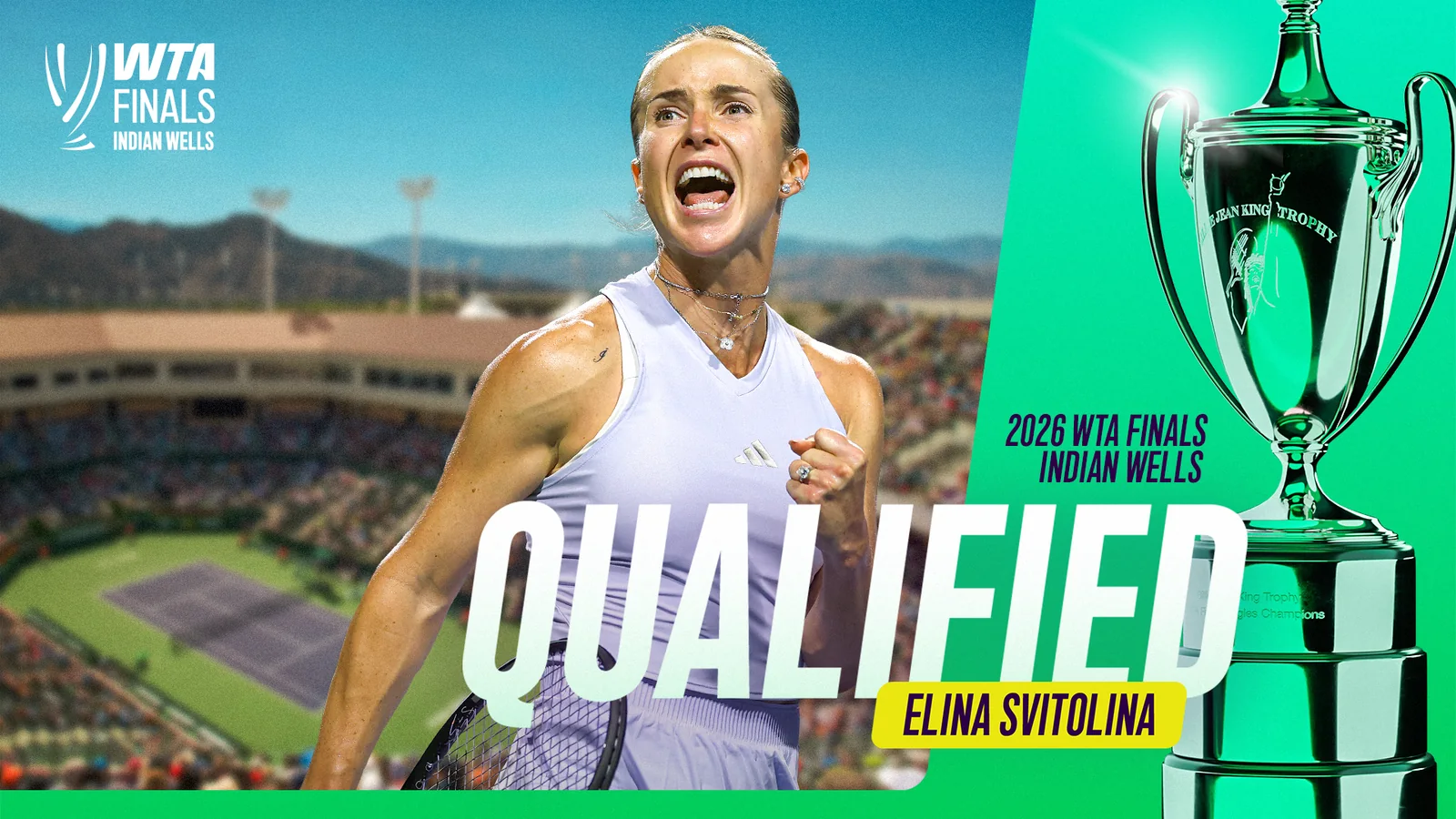
Svitolina adds a longer Finals history. She won the tournament unbeaten in 2018, returned to the final in 2019 and has now qualified for the first time since that 2019 appearance. Her 2026 titles in Auckland and Rome helped create the opportunity for a fourth appearance overall.
Her return means the confirmed field includes champions from three different recent editions: Svitolina in 2018, Gauff in 2024 and Rybakina in 2025. It also puts the singles newcomers alongside players who have already experienced the tournament's decisive weekend. That is useful context for following the draw without turning experience into an unsupported forecast.
Qualified doubles teams and availability
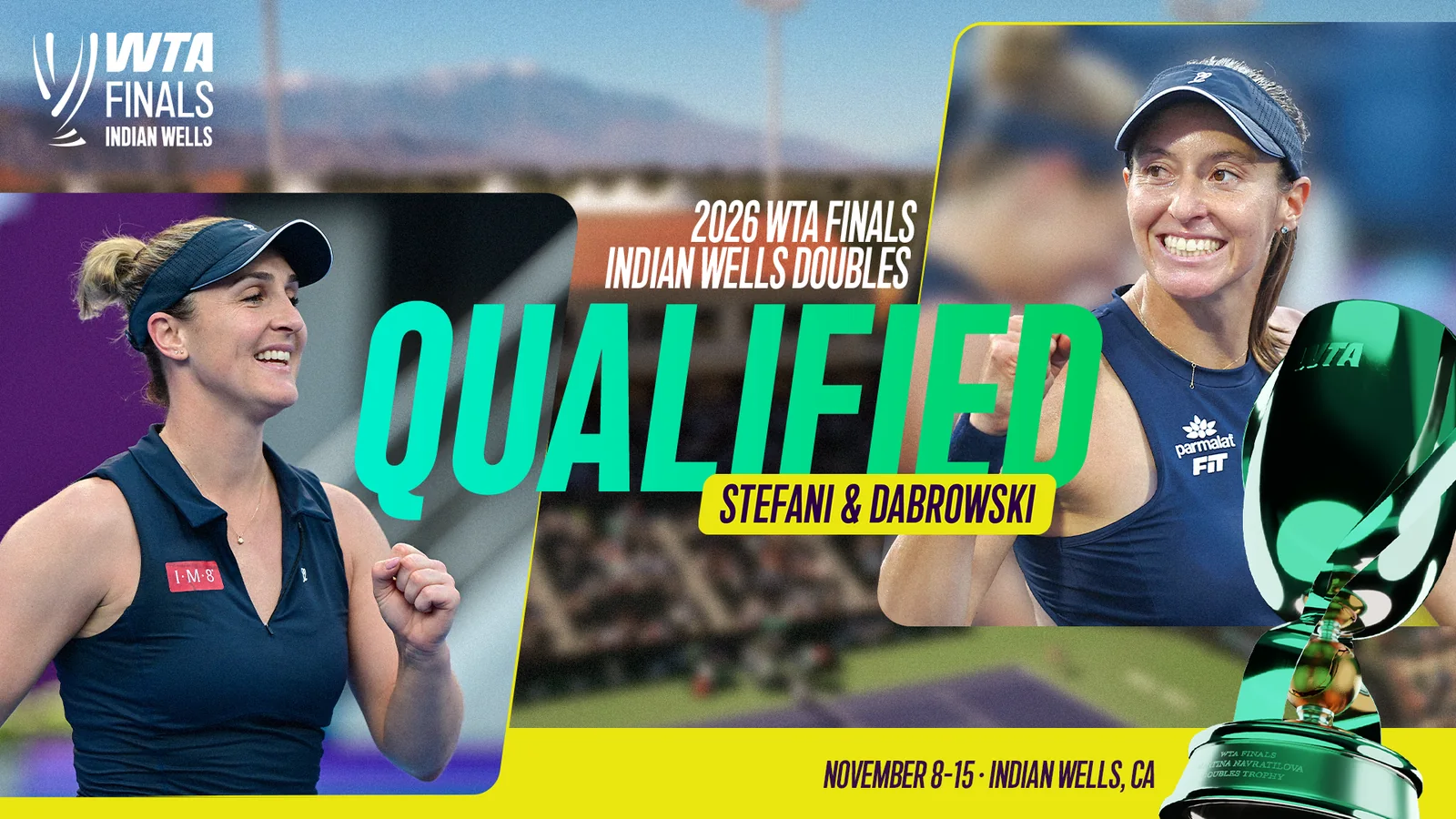
The doubles field requires an extra status check because an early qualifier has already withdrawn. Katerina Siniakova and Taylor Townsend, plus Gabriela Dabrowski and Luisa Stefani, are confirmed qualifiers in the official announcements and remain marked qualified on the WTA's doubles Race page consulted October 18.
Confirmed partnerships, not individual rankings
| Partnership | Qualification announcement | Availability information |
|---|---|---|
| Katerina Siniakova / Taylor Townsend | August | Confirmed qualifier |
| Gabriela Dabrowski / Luisa Stefani | September 3 | Confirmed qualifier |
| Anna Danilina / Aleksandra Krunic | September 3 | Withdrawn; announced October 1 |
This is a dated list of verified announcements, rather than a claim that the full eight-team draw has been released. The official doubles Race leaderboard tracks the developing order of partnerships. A place near the top of that table should be distinguished from an official qualification confirmation and from a player's availability.
Doubles qualification belongs to a specific pair. Siniakova's individual doubles ranking and Townsend's individual ranking do not represent two separate Finals entries. Together they occupy one team place. Similarly, points that a player has earned with another partner do not automatically become points for her Finals partnership.
Dabrowski and Stefani illustrate why team identity and individual experience should be kept separate. Their September announcement confirmed their first Finals together, while noting Dabrowski's title in 2024 and Stefani's runner-up finish the following season. Both have experience of the championship match, but those earlier results came in different partnerships. Their 2026 joint campaign included titles in Dubai, Strasbourg and Eastbourne.
A qualified team can still withdraw
Danilina and Krunic earned qualification before the WTA announced on October 1 that Krunic's knee injury would prevent the pair from playing. The official withdrawal notice explicitly states that both partners will miss the event. Their earlier qualification remains part of the season's history, but they should no longer be presented as an available entry.
That example also explains why an old Race article or qualification graphic can be accurate when published and still give the wrong impression later. An accumulated points total can remain visible after a withdrawal. The later availability announcement determines whether the qualified pair will actually compete.
Danilina cannot be assumed to retain that team place with a different partner. For fans following the remaining doubles contenders, the useful sequence is to check the team Race, read each new qualification or withdrawal announcement, and then confirm the final draw. The site's individual doubles rankings supply broader player context, while the team Race answers the separate qualification question.
Why the eighth singles place is not simply eighth in the Race
The phrase “the top eight qualify” leaves out an important condition. The WTA first takes the top seven eligible singles players in the Race. The next place can go to the highest-ranked current-year Grand Slam singles champion positioned from No. 8 through No. 20 who has not already qualified. If there is no such champion, the next eligible player in Race order takes that place.
Noskova is a useful real example. The WTA's October announcement explained that her Wimbledon title secured a route through either a top-seven finish or the major-champion provision. Her qualification therefore cannot be assessed just by checking whether she is above or below eighth in a particular week's standings.
For someone following the last open berth, this changes the question from “Who is currently eighth?” to “Who can still secure an eligible position after the already-qualified players and the champion provision are accounted for?” Remaining results and availability matter. This guide will name the final entrant when the WTA confirms her, rather than treating a temporary leaderboard position as a completed qualification calculation.
The official Race qualification rules also define a Race Year and eligible results. It is a separate calculation from the rolling singles ranking. Consequently, the current WTA singles rankings help you understand a player's broader position, but the qualification Race remains the relevant competition for a Finals place.
A qualified player can still improve her ranking or eventual seeding before the event. That movement should not be confused with losing a secured place. The open qualification question and the eventual ordering of the confirmed field are related, but they are different developments to follow.
Alternates, withdrawals and replacement players
Race positions do not confirm alternate appointments
No named 2026 alternate appointments are confirmed in this October 18 update. A player shown ninth or tenth in a provisional table is a potential alternate, rather than an announced on-site replacement. The main field must first be settled, and the applicable qualification priorities and availability must be considered.
The 2026 Rulebook provides for two singles alternates and one doubles alternate team once the qualified fields are set. Its selection order can give priority to a second eligible current-year major champion in the No. 8–20 Race range, before moving to the next eligible Race entries. Additional alternates can be designated when needed.
Alternates must meet on-site obligations and be available to substitute through the round-robin stage. That is a defined tournament role with practical responsibilities, rather than simply a label for whoever happens to sit immediately outside the qualifying places. A confirmed alternate also remains distinct from a player who has actually entered the competition.
What changes when a replacement enters a group
A withdrawal removes an entry from the competition and can bring in an alternate. Retiring during a match is a different situation: the Rulebook permits an injured or ill player to continue in the tournament if the tournament physician approves. A mid-match retirement therefore should not automatically be reported as a withdrawal from the entire Finals.
A useful historical example occurred in 2024. Jessica Pegula withdrew with a knee injury after two group matches, and Daria Kasatkina entered as the first alternate for the remaining match against Iga Swiatek. The WTA's 2024 replacement announcement identified the new opponent; it did not restart the entire group.
The subsequent match report explained that the change affected the semifinal qualification scenarios. That is why a substitute's appearance needs more care than simply replacing one name in a standings row. Matches already played, matches still available and the official tie-breaking rules all matter to the group's final order.
For 2026, use the WTA Finals group standings alongside official match results if a replacement occurs. Check the actual player, completed matches and remaining schedule before interpreting her route to the semifinals. The 2024 example explains the process; it does not identify a 2026 alternate or predict a withdrawal.
Following the draw and each player's matches
The official 2026 Finals draw page does not yet show the groups. It currently says final tournament draws are confirmed three days before play begins. Until those groups appear, the seven confirmed singles qualifiers should not be assigned hypothetical opening opponents or advertised as playing on a specific day.
The format provides the next piece of context. Each field is divided into two groups of four, and each entry is scheduled to face the other three in its group. The top two from each group advance to the semifinals, followed by the final. A player who loses her first match can still remain in contention, while the final group order depends on the complete results and any applicable tie-breaks.
Once the draw is available, follow a player in this sequence:
- Confirm her entry and group. Check for a late withdrawal or replacement before relying on an earlier roster.
- Read the daily order of play. The event FAQ says it is typically released on the evening before each competition day; this is not a guaranteed publication hour.
- Check the date and timezone. A California evening match can fall on the next calendar day for overseas viewers.
- Follow the result and group standing. A match win affects the route to the semifinals even when the player still has another group match to play.
The WTA matches today page helps locate the actual matchup during tournament week. If you are attending, consult the event's daily practice schedule separately: practice appearances and competition sessions are different listings. Weather and other circumstances can also change the published playing schedule.
The next meaningful field updates are the last singles confirmation, further verified doubles announcements and the named alternates. After that, the draw turns the roster into a competition with specific opponents. Following those updates in order lets you distinguish a player who has earned her place from a matchup that has actually been scheduled.