Who are the latest WTA Finals champions?
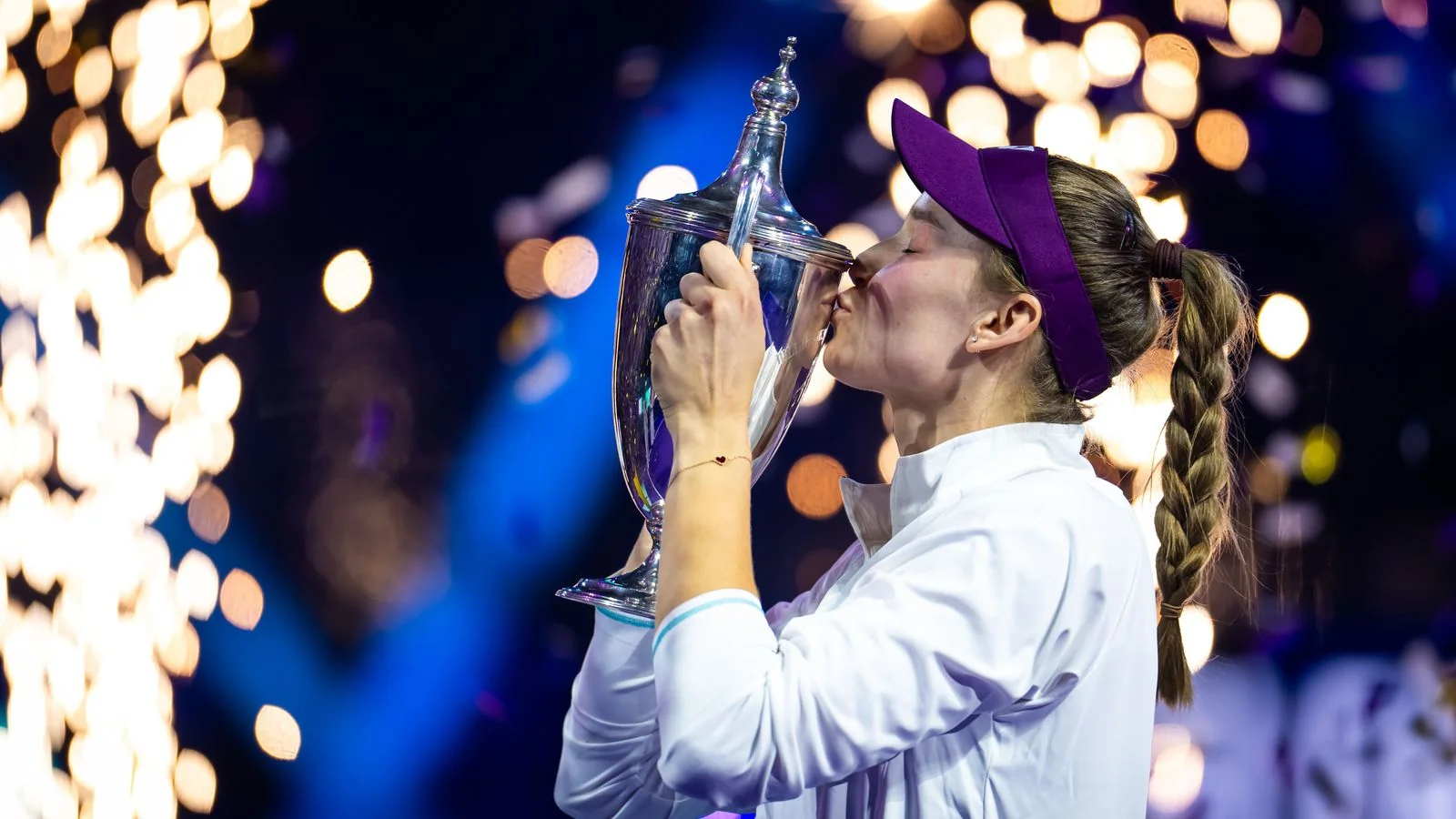
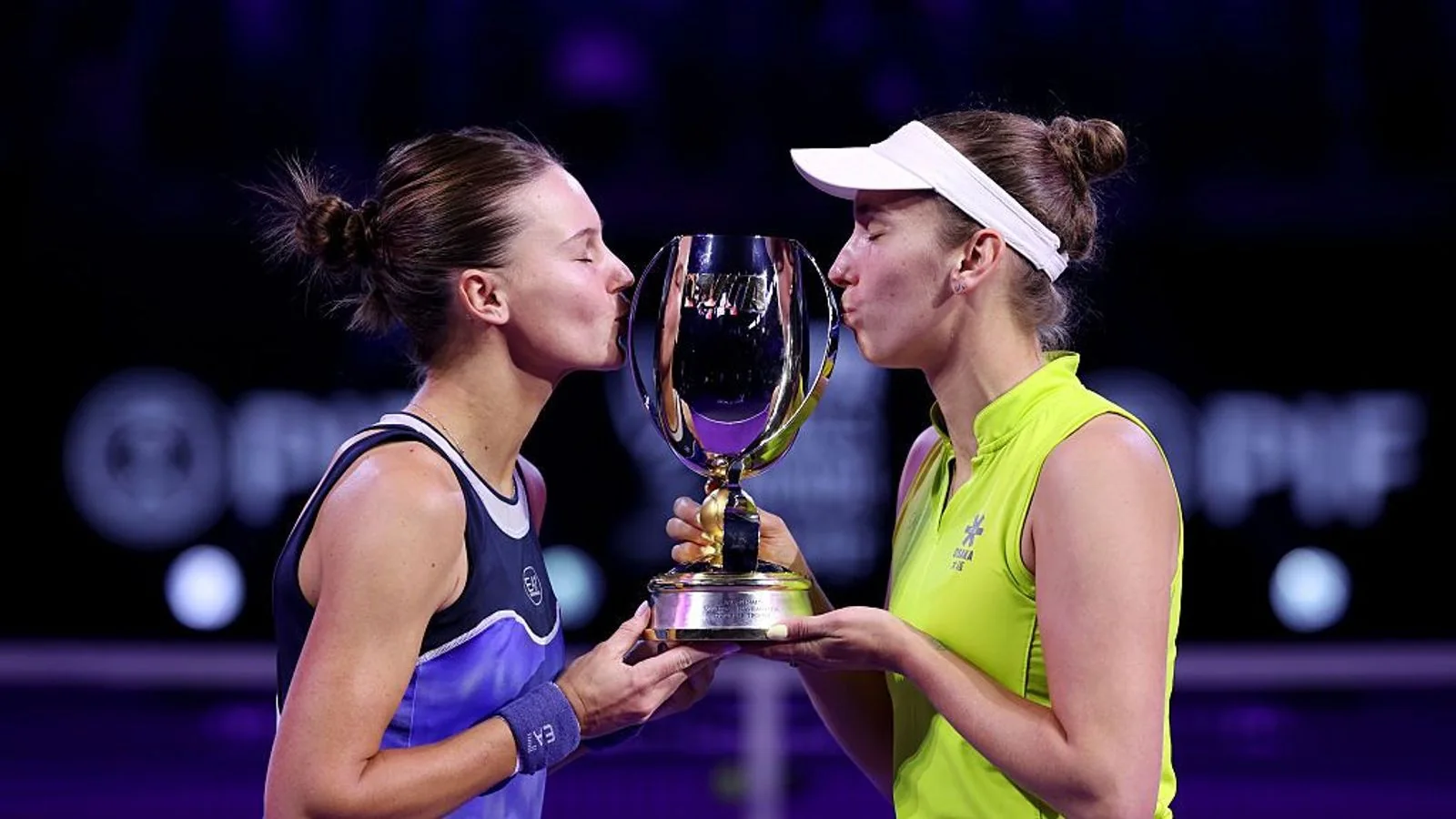
Elena Rybakina is the latest completed WTA Finals singles champion, while Veronika Kudermetova and Elise Mertens are the latest doubles champions. They won the 2025 titles in Riyadh on November 8. This complete champions list runs through 2025; the 2026 tournament has not yet produced a winner as of October 18, 2026.
2025 singles
Rybakina beat Aryna Sabalenka 6-3, 7-6(0) in the final and finished the tournament unbeaten. It was her first WTA Finals championship.
2025 doubles
Kudermetova and Mertens beat Timea Babos and Luisa Stefani 7-6(4), 6-1. They regained a title they first won together in 2022.
A WTA Finals title identifies the winner of the tour's championship tournament. The season-ending world No. 1 is decided by ranking points, so these are different achievements. A player can win the final tournament without finishing first in the rankings, while the top-ranked player can leave without its trophy. The same distinction matters in doubles, where a championship belongs to a partnership but the regular doubles rankings list individual players.
Use the two lists below according to the competition you mean. Singles has one champion per edition; doubles has a winning pair. The tables retain separate rows for the two 1986 editions and identify the cancelled 2020 event. Those details prevent misleading totals when comparing players across generations.
For the upcoming competition, see the 2026 WTA Finals schedule guide. Its dates and field updates serve a different purpose from this historical record. A player who has qualified, leads a group or reaches the final joins this list only after winning the championship match.
Complete WTA Finals singles winners list
The singles competition began in 1972, when Chris Evert won in Boca Raton. The table follows the year in which each championship was played. That is particularly useful for the early spring editions: treating every tournament as a November event would distort the historical sequence. Evonne Goolagong and Evonne Goolagong Cawley are the same player and are listed consistently below.
Singles champions from 1972 to 1999
The first part of the list contains several distinct runs of repeat success. Evert won four of the first six editions, Navratilova became the dominant champion of the following decade, and Seles won three successive tournaments from 1990 through 1992. Graf's five titles were spread across ten editions, from her first victory in 1987 to her last in 1996.
| Edition | Singles champion |
|---|---|
| 1972 | Chris Evert |
| 1973 | Chris Evert |
| 1974 | Evonne Goolagong Cawley |
| 1975 | Chris Evert |
| 1976 | Evonne Goolagong Cawley |
| 1977 | Chris Evert |
| 1978 | Martina Navratilova |
| 1979 | Martina Navratilova |
| 1980 | Tracy Austin |
| 1981 | Martina Navratilova |
| 1982 | Sylvia Hanika |
| 1983 | Martina Navratilova |
| 1984 | Martina Navratilova |
| 1985 | Martina Navratilova |
| 1986 (March) | Martina Navratilova |
| 1986 (November) | Martina Navratilova |
| 1987 | Steffi Graf |
| 1988 | Gabriela Sabatini |
| 1989 | Steffi Graf |
| 1990 | Monica Seles |
| 1991 | Monica Seles |
| 1992 | Monica Seles |
| 1993 | Steffi Graf |
| 1994 | Gabriela Sabatini |
| 1995 | Steffi Graf |
| 1996 | Steffi Graf |
| 1997 | Jana Novotna |
| 1998 | Martina Hingis |
| 1999 | Lindsay Davenport |
The late 1990s brought three consecutive changes of champion: Jana Novotna, Martina Hingis and Lindsay Davenport. That sequence is a reminder that a tournament's history does not divide neatly at the start of each decade. Returning champions and new winners overlapped, and a player could lose a final before finding a way to win it in another season.
Singles champions from 2000 to 2025
The modern list mixes repeat champions with a long recent stretch of first-time winners. Serena Williams won five titles in total, including three in succession from 2012 to 2014. Kim Clijsters won her third in 2010, seven years after her second. Those gaps matter when comparing title totals: repeat success need not mean uninterrupted control of the event.
| Edition | Singles champion |
|---|---|
| 2000 | Martina Hingis |
| 2001 | Serena Williams |
| 2002 | Kim Clijsters |
| 2003 | Kim Clijsters |
| 2004 | Maria Sharapova |
| 2005 | Amelie Mauresmo |
| 2006 | Justine Henin |
| 2007 | Justine Henin |
| 2008 | Venus Williams |
| 2009 | Serena Williams |
| 2010 | Kim Clijsters |
| 2011 | Petra Kvitova |
| 2012 | Serena Williams |
| 2013 | Serena Williams |
| 2014 | Serena Williams |
| 2015 | Agnieszka Radwanska |
| 2016 | Dominika Cibulkova |
| 2017 | Caroline Wozniacki |
| 2018 | Elina Svitolina |
| 2019 | Ashleigh Barty |
| 2020 | Cancelled — no champion |
| 2021 | Garbine Muguruza |
| 2022 | Caroline Garcia |
| 2023 | Iga Swiatek |
| 2024 | Coco Gauff |
| 2025 | Elena Rybakina |
From Agnieszka Radwanska's victory in 2015 through Rybakina's in 2025, each completed edition produced a different first-time champion. There were ten tournaments in that span because the 2020 competition was cancelled. This is a count of editions, not eleven consecutive annual tournaments. It also means the latest names on the list have not yet added a second championship to match the repeat winners above.
For a player's present position, use the WTA singles rankings alongside this record. A past championship remains on the player's career résumé even after its ranking points have expired. Conversely, a high current ranking does not add a trophy to this table. Historical results and today's standings answer separate questions about achievement and form.
Complete WTA Finals doubles winners list
Doubles began in 1973, one year after the singles championship. Read each row as one winning partnership. The order of names does not indicate a lead player, and reversing their order does not create a different team. This matters when comparing archives, which may list the same pair in different orders or shorten one player's name.
Doubles champions from 1973 to 1999
The early history needs a qualification: the 1975-1978 doubles championships were staged separately from the singles competition. They are included here in the historical championship lineage, rather than described as matches held at the singles venue. The WTA's account of Navratilova's Finals career includes her 1977 title with Betty Stove and 1978 title with Billie Jean King in her record total.
| Edition | Doubles champions |
|---|---|
| 1973 | Rosie Casals / Margaret Court |
| 1974 | Rosie Casals / Billie Jean King |
| 1975 (separate event) | Margaret Court / Virginia Wade |
| 1976 (separate event) | Billie Jean King / Betty Stove |
| 1977 (separate event) | Martina Navratilova / Betty Stove |
| 1978 (separate event) | Billie Jean King / Martina Navratilova |
| 1979 | Francoise Durr / Betty Stove |
| 1980 | Billie Jean King / Martina Navratilova |
| 1981 | Martina Navratilova / Pam Shriver |
| 1982 | Martina Navratilova / Pam Shriver |
| 1983 | Martina Navratilova / Pam Shriver |
| 1984 | Martina Navratilova / Pam Shriver |
| 1985 | Martina Navratilova / Pam Shriver |
| 1986 (March) | Hana Mandlikova / Wendy Turnbull |
| 1986 (November) | Martina Navratilova / Pam Shriver |
| 1987 | Martina Navratilova / Pam Shriver |
| 1988 | Martina Navratilova / Pam Shriver |
| 1989 | Martina Navratilova / Pam Shriver |
| 1990 | Kathy Jordan / Elizabeth Smylie |
| 1991 | Martina Navratilova / Pam Shriver |
| 1992 | Arantxa Sanchez Vicario / Helena Sukova |
| 1993 | Gigi Fernandez / Natasha Zvereva |
| 1994 | Gigi Fernandez / Natasha Zvereva |
| 1995 | Jana Novotna / Arantxa Sanchez Vicario |
| 1996 | Lindsay Davenport / Mary Joe Fernandez |
| 1997 | Lindsay Davenport / Jana Novotna |
| 1998 | Lindsay Davenport / Natasha Zvereva |
| 1999 | Martina Hingis / Anna Kournikova |
Notice how several players reappear with different partners. Davenport won three consecutive editions from 1996 to 1998 alongside Mary Joe Fernandez, Novotna and Natasha Zvereva respectively. That is three individual titles, but no single Davenport partnership won all three. Gigi Fernandez and Mary Joe Fernandez are different players, so their names are written out rather than reduced to an ambiguous surname.
Doubles champions from 2000 to 2025
The more recent table shows both successful defences and partnerships formed across national borders. Lisa Raymond and Samantha Stosur defended their title in 2006; Cara Black and Liezel Huber repeated in 2008. Timea Babos won three editions in succession, first with Andrea Hlavackova in 2017 and then twice with Kristina Mladenovic. Hlavackova also appears in records under her married name, Andrea Sestini Hlavackova.
| Edition | Doubles champions |
|---|---|
| 2000 | Martina Hingis / Anna Kournikova |
| 2001 | Lisa Raymond / Rennae Stubbs |
| 2002 | Elena Dementieva / Janette Husarova |
| 2003 | Virginia Ruano Pascual / Paola Suarez |
| 2004 | Nadia Petrova / Meghann Shaughnessy |
| 2005 | Lisa Raymond / Samantha Stosur |
| 2006 | Lisa Raymond / Samantha Stosur |
| 2007 | Cara Black / Liezel Huber |
| 2008 | Cara Black / Liezel Huber |
| 2009 | Nuria Llagostera Vives / Maria Jose Martinez Sanchez |
| 2010 | Gisela Dulko / Flavia Pennetta |
| 2011 | Liezel Huber / Lisa Raymond |
| 2012 | Maria Kirilenko / Nadia Petrova |
| 2013 | Hsieh Su-wei / Peng Shuai |
| 2014 | Cara Black / Sania Mirza |
| 2015 | Martina Hingis / Sania Mirza |
| 2016 | Ekaterina Makarova / Elena Vesnina |
| 2017 | Timea Babos / Andrea Hlavackova |
| 2018 | Timea Babos / Kristina Mladenovic |
| 2019 | Timea Babos / Kristina Mladenovic |
| 2020 | Cancelled — no champions |
| 2021 | Barbora Krejcikova / Katerina Siniakova |
| 2022 | Veronika Kudermetova / Elise Mertens |
| 2023 | Laura Siegemund / Vera Zvonareva |
| 2024 | Gabriela Dabrowski / Erin Routliffe |
| 2025 | Veronika Kudermetova / Elise Mertens |
Kudermetova and Mertens provide a different kind of repeat story. Their two titles came three years apart, with Siegemund and Zvonareva winning in 2023 and Dabrowski and Routliffe in 2024. Their reunion in 2025 restored an earlier championship partnership; it was not a third straight title for either player. Looking at both columns avoids turning a player's familiarity into an inaccurate record.
For current individual positions, visit the WTA doubles rankings. A current rankings table is not a partnership honors list. A player's total can include results earned with several partners, whereas every row here identifies the specific pair that won that edition. Both records are useful, but neither should be substituted for the other.
Who has won the most WTA Finals titles?
Martina Navratilova holds both leading individual records: eight singles titles and 13 doubles titles. Together, those make 21 championships across the two disciplines. Her doubles total is especially striking because it includes success with three different partners rather than one uninterrupted partnership.
Singles leaders and repeat champions
| Player | Singles titles | Winning editions |
|---|---|---|
| Martina Navratilova | 8 | 1978, 1979, 1981, 1983, 1984, 1985, March 1986, November 1986 |
| Steffi Graf | 5 | 1987, 1989, 1993, 1995, 1996 |
| Serena Williams | 5 | 2001, 2009, 2012, 2013, 2014 |
| Chris Evert | 4 | 1972, 1973, 1975, 1977 |
| Monica Seles | 3 | 1990, 1991, 1992 |
| Kim Clijsters | 3 | 2002, 2003, 2010 |
Goolagong Cawley, Sabatini, Hingis and Henin each won twice. These four join the six players above as the only multiple singles champions through 2025. The distinction between consecutive editions and consecutive years is essential for Navratilova: her five-title run from 1983 through November 1986 contains two tournaments played in the final calendar year.
A total also measures something different from a single winning streak. Graf's five victories were separated by other champions; Seles won all three of hers consecutively. Serena combined an early title, another eight years later and a three-edition streak. Each pattern belongs in the historical comparison without requiring a claim that the competitive conditions were identical.
Doubles records: players and partnerships
Navratilova won ten doubles championships with Pam Shriver, one with Stove and two with King. Shriver's ten titles therefore all belong to the same partnership. The pair's total is ten, not twenty: adding both players' individual credits would count each winning edition twice.
King and Raymond follow with four individual doubles championships apiece. Raymond won with Stubbs in 2001, Stosur in 2005 and 2006, and Huber in 2011. Her four titles demonstrate why the name of a partnership matters as much as the total next to an individual. A player can build an outstanding Finals record through several combinations.
When comparing a modern team with Navratilova and Shriver, count titles earned by that exact pair. When comparing one doubles player's career with another's, count all the player's winning partnerships. Those are legitimate comparisons, but they need different columns. A team returning after a break retains its earlier title; changing partners does not transfer the old partnership's trophies to the new one.
Champions in both singles and doubles
Four women appear in both the singles and doubles champions lists: Navratilova, Novotna, Hingis and Davenport. Winning both disciplines during a career is broader than winning both in the same edition. Davenport belongs to the first group because her singles title came in 1999 and her doubles titles in 1996, 1997 and 1998.
Novotna won both championships in 1997, and Hingis did so in 2000 alongside Kournikova in doubles. Navratilova won both in 1978, 1981, 1983, 1984, 1985 and the November 1986 edition. The early 1978 doubles event was separately staged, so that year's double should not be described as two trophies won at the same venue in one week.
Why 1986 appears twice and 2020 has no champion
There were two championships in 1986 because the tour shifted its championship from the spring to the end of the calendar season. The March event ran from March 17 to 23; the November edition ran from November 17 to 23. Both took place in New York, and Navratilova won the singles title at each.
The doubles results show why the two rows must remain separate. Hana Mandlikova and Wendy Turnbull won in March, while Navratilova and Shriver won in November. Removing the March row would erase a genuine championship for Mandlikova and Turnbull. Combining both into one annual winner would also undercount Navratilova's singles titles.
The 2020 gap has a different explanation. The planned Shenzhen tournament was cancelled during the COVID-19 pandemic. There was no played final and no champion in either discipline. It should therefore appear as a cancellation, not as a victory for the previous champion, the ranking leader or a projected qualifier.
Barty and Babos/Mladenovic remain the 2019 champions. Muguruza and Krejcikova/Siniakova became the next winners when the Finals returned in Guadalajara in 2021. Saying the 2019 champions retained their trophies during the interruption can be understandable conversationally, but it does not give them an additional 2020 title.
Counting the singles competition from 1972 through 2025 gives 54 completed editions: 54 calendar years, one extra tournament in 1986 and one cancellation in 2020. That arithmetic describes completed tournaments, rather than the number of different champions.
The year alone is therefore insufficient for every historical comparison. Use “March 1986” or “November 1986” when identifying those champions, and preserve the cancellation when scanning a run of consecutive seasons. These small labels keep both title totals and winning streaks intelligible.
What the champions list tells us about the Finals
The champions list records who finished the tournament with the trophy; it does not describe every step of the winning campaign. In the modern round-robin format, a champion can recover from an early defeat. Radwanska won the 2015 title after a 1-2 group record, then victories in the semifinal and final. Her place in the table is just as valid as that of an unbeaten champion.
That example changes how to read an upset during the event. A group-stage defeat can reduce a player's margin for error without ending the title bid. The group table determines who reaches the semifinals, and the knockout matches determine the champion. A historical winners table compresses all of those different paths into one name.
The list also cannot tell you how close a final was. Gauff's 2024 championship required a deciding-set tiebreak against Zheng Qinwen after she lost the first set. The entry “Coco Gauff” preserves the achievement but leaves out the match's tension. To compare individual finals, add the final score and match context rather than treating all straight sets or all three-set matches as equally comfortable or difficult.
In doubles, the strongest clue is often the continuity of a partnership. Several successive entries with the same two names show repeat achievement together. One name recurring alongside several partners shows adaptability and sustained individual success. Neither pattern automatically tells us that one era had a stronger field, and neither requires comparing players using rankings from different dates.
Recent history provides a useful question for the next edition: will another first-time singles champion emerge, or will a previous winner add a second title? The ten-edition run since 2015 is an observation, not a forecast. The outcome still depends on qualification, availability and the matches played at that tournament.
Use the WTA calendar to place the next championship within the season, and the 2026 WTA Finals standings to follow the competition once play begins. Until its finals are completed, the latest winners remain Rybakina in singles and Kudermetova/Mertens in doubles.