
A WTA “zero-pointer” is a zero result that must occupy a place in a player’s ranking record after she misses a commitment tournament under the applicable rules. It does not simply subtract a fixed number from her total, and it is not automatically the same thing as a withdrawal fine. The practical effect depends on the event, the player’s age and eligibility, when she withdrew, whether an exception applies, and which results would otherwise count.
The four terms to keep separate
Mandatory status creates a participation obligation; automatic entry puts an eligible player into the field; a late-withdrawal penalty can include money or other consequences; and a zero result affects the ranking calculation. One situation can trigger more than one of them, but none is a universal synonym for the others.
This guide applies the published 2026 WTA rules and uses the February 2026 Dubai withdrawal debate as context. It explains the framework for fans; it cannot determine an individual player’s confidential medical evidence, fine appeal or final ranking treatment.
What does “mandatory” mean on the WTA Tour?
“Mandatory” describes a commitment rule with sporting and financial consequences. It does not mean an injured player must walk onto court, and it does not eliminate the right to withdraw. The WTA rulebook connects the obligation to a player’s ranking-based acceptance, age and other eligibility conditions. When those conditions apply, missing the event can create a result recorded as zero, a fine, or another consequence specified for the timing and reason.
This is why a withdrawal list alone cannot tell fans who “broke the rules.” A player can be absent because she never qualified for direct acceptance, falls under an age restriction, has a protected status, withdrew before or after a particular deadline, or obtained relief through a process that is not public. Tournament announcements generally identify an injury or schedule change; they rarely disclose the full disciplinary file.
Automatic entry is not a guarantee that a player will compete
Under the 2026 rules, a player who qualifies by ranking for the main draw of a WTA 1000 Mandatory tournament is entered automatically. That removes a routine entry decision and gives the tournament early certainty about its field. The player can still withdraw through the rulebook process. The important question then becomes when she withdrew and which commitment or withdrawal provisions apply.
Automatic entry also should not be confused with seeding. Entry decides whether a player is in the field; seeding is based on the relevant ranking and organizes the draw. Fans can follow the current list on the WTA singles rankings, but a ranking shown today may differ from the ranking used at the event’s entry or seeding deadline.
Commitment rules and ranking result rules are separate
The commitment chapter tells a player which tournaments she is expected to play. The ranking chapter tells the tour how to count actual results and required zeros. A late-withdrawal chapter can add a monetary consequence. Those systems overlap, yet they answer different questions.
For readers, the safest sequence is: confirm whether the event was a commitment tournament for that player, check her acceptance status and age, identify the withdrawal timing, then ask how the ranking rule treats the resulting zero. Jumping directly from “she withdrew” to “the WTA deducted points” skips most of the analysis.
Which tournament commitments matter in 2026?
The 2026 rulebook places WTA 1000 Mandatory events and certain WTA 500 appearances inside the commitment system. It also requires a singles qualifier for the WTA Finals to play under the Finals rules. The obligation is personal: the same tournament can be a commitment event for one player and not another because ranking at the entry deadline, age, acceptance route and protected status differ.
| Event group | Basic 2026 commitment | Key qualification |
|---|---|---|
| WTA 1000 Mandatory | Play when accepted through an applicable main-draw route | Age, long-term injury, years of service and other rules can change treatment |
| WTA 500 | Up to six commitment events, based on acceptance opportunities | Ranking at the entry deadline and several counting alternatives matter |
| WTA Finals | A singles qualifier must play under the Finals provisions | Separate qualification, alternate and withdrawal rules apply |
WTA 1000 Mandatory commitments
The rulebook covers players accepted as direct entrants and also names qualifiers, special exempts, lucky losers and players using a Special Ranking. It further addresses a player who would have been a direct acceptance but was ineligible. That breadth prevents a simple rule based only on the published seeded-player list.
Fans looking for the event sequence can use the 2026 WTA 1000 schedule. The list shows where the commitments occur; the rulebook decides how a particular absence is treated.
WTA 500 commitments and age distinctions
For WTA 500s, the maximum requirement is six when a player is accepted—or would have been accepted—into six or more main draws at their entry deadlines. If the number is five, four or fewer, the stated requirement falls with it. A player ranked No. 51 or lower at a particular WTA 500 entry deadline does not treat that event as a commitment tournament merely because she might otherwise appear.
The rules provide additional ways to satisfy the total. Qualifying or wild-card participation can count, United Cup participation counts, and in defined circumstances a player ranked 31-50 can use up to two same-week WTA 250 appearances. One on-site medical withdrawal paired with required promotional activity can also count once per year. These details are why “six WTA 500s for everyone” is an inaccurate shortcut.
What is a WTA zero-point penalty?
A zero-pointer is best understood as an occupied slot in the ranking calculation. It does not appear as “minus 500” or another automatic deduction. The player receives zero for the relevant obligation, and the rules require that zero to count. The harm comes when that required zero prevents another positive tournament result from filling the same part of the ranking record.
A counted zero versus subtracting points
Imagine a fictional player has a 180-point result that would otherwise complete her set of countable results. A mandatory zero enters a required position and the 180-point result no longer contributes. Her total is effectively 180 points lower than it would have been without the zero. Another player might displace only a 30-point result; a third might have a protected exception. All three zeros display as zero, but their practical costs differ.
Before
A positive result occupies the last eligible counting place.
Penalty
The rule requires a zero result to count in the relevant category.
Effect
The positive result may be pushed outside the calculated total.
This is also why a week-to-week ranking movement cannot be attributed to one penalty by looking only at the headline total. Other points may expire, new results may enter, and mandatory result categories can change at the same update.
How long different zeros can remain
The 2026 ranking rules say a WTA 1000 Mandatory commitment zero must count and remain for 52 weeks unless the player is meeting her requirement for that Tour Year. A WTA 500 commitment zero also must count, but the rule describes replacement once the player has WTA 500 results in the following Tour Year. Long-term injury and other provisions can modify the normal treatment.
Readers should therefore avoid a universal “the zero disappears after the next event” claim. The event category, Tour Year and player status decide the replacement path. The current ranking table shows the outcome, while the official breakdown and rulebook are needed to explain why.
What happens when a player withdraws?
A withdrawal starts a process rather than one automatic punishment. Officials must identify the event category, the player’s commitment status, the time of notice, the reason and supporting material, and whether she competes elsewhere. The result can involve no penalty, a fine without a zero, a counted zero without the consequence assumed by fans, or several consequences together.
Deadline timing changes the analysis
The rulebook contains precise timing distinctions. One clear illustration appears in the provisions for players under 17 at WTA 1000 Mandatory events. An eligible young player who opts out before the main-draw entry deadline avoids both a zero and late-withdrawal penalties. If she withdraws after that deadline but before qualifying begins or the main draw is made—whichever occurs first—the rules say no zero applies, although a late-withdrawal consequence may. A still later withdrawal can bring both.
That example should not be copied onto an adult player, because the age rules deliberately reduce commitments for developing athletes. It does show why the timestamp matters. “Withdrawn from Dubai” is not enough information to reproduce a ruling. The entry deadline, draw status and individual category are part of the answer.
Fines, zeros and same-week exhibitions
A monetary fine penalizes the late change and the disruption it causes. A zero governs ranking treatment. The rulebook also addresses a player who opts out or withdraws from a WTA 1000 Mandatory event and then plays an exhibition or non-WTA competition in the same week. In the cited provision, that choice produces a zero and applicable late-withdrawal consequences. The aim is to prevent a player from avoiding a tour commitment merely to accept another playing opportunity.
Excused withdrawals offer flexibility, but the label is easy to misread. The 2026 procedures limit their use and state that an excused withdrawal can still receive a zero when the ranking rules require one. “Excused” can remove or replace a particular withdrawal consequence without cancelling every commitment obligation.
Do not diagnose a penalty from social media
A player’s public injury statement does not disclose medical records, appeal decisions, prior withdrawals or the entry route used. Reliable reporting can describe the announced reason; only the governing record can establish the final fine and ranking treatment.
What exemptions and protections exist?
The commitment system is not identical for every player. The 2026 rules modify obligations for younger athletes, long-serving players and competitors returning from a sufficiently long injury. Special Ranking provisions can also affect how a player enters an event. These are defined protections with conditions, rather than a general power to ignore the calendar whenever rest would be useful.
Age eligibility and years of service
A player under 17 is not required to play WTA 1000 Mandatory commitment tournaments. At age 17, the obligation is capped at four and scales with the number of events into which she is accepted through the listed routes. From age 18, the adult WTA 1000 requirements apply. WTA 500 commitments begin on a different timetable: under-18 players are exempt, and the rule describes a transition through the start of the first Tour Year after the 18th birthday.
At the other end of a career, a player who is 34 or older on January 1 qualifies for the Years of Service rule described in the commitment section. She does not receive a zero for missing WTA 500 commitment tournaments that year. She still must play applicable WTA 1000 Mandatory events and can receive zeros for missing them. Longevity therefore narrows the burden; it does not remove the entire commitment system.
Long-term injury and Special Ranking
The long-term injury rules matter after an absence reaches the required duration and the player satisfies the detailed conditions. The ranking chapter says some WTA 1000 Mandatory zeros occurring during the qualifying injury period need not count, and it reduces the WTA 500 commitment requirement in defined circumstances. The exact treatment depends on the dates of absence and return—including whether the player competes elsewhere—so an eight-week headline alone is not a final ruling.
A Special Ranking helps a returning player enter tournaments using a protected reference point. It is not the same as freezing her ordinary live ranking. The rulebook even addresses a player entering a mandatory event with a Special Ranking and then withdrawing before qualifying, showing that entry protection and zero treatment must be read together.
Medical, pregnancy and parental-return cases also contain private information. Fans can explain the published framework without demanding a diagnosis or assuming that a visible practice session disproves an approved absence. The meaningful public question is whether the tour’s rules provide a fair, consistent route back while preserving credible tournament fields.
Why are players and tournaments arguing about the rules?
Both sides need something the calendar cannot always deliver. A tournament sells tickets, hospitality and broadcast packages around a strong field; a late withdrawal can damage that promise. A player has to protect her health and prepare for the next major assignment. Mandatory events make fields more dependable, but a system that rewards appearing while physically depleted can produce poor matches and more mid-event retirements.
Dubai’s 2026 withdrawals
The conflict became unusually visible at the Dubai Duty Free Tennis Championships in February. The National reported 10 withdrawals and three retirements from Friday through the following Tuesday. Aryna Sabalenka withdrew with a right-hip injury, while Iga Swiatek cited a schedule change; other players had separate announced reasons. Combining those cases into a single accusation would erase material differences.
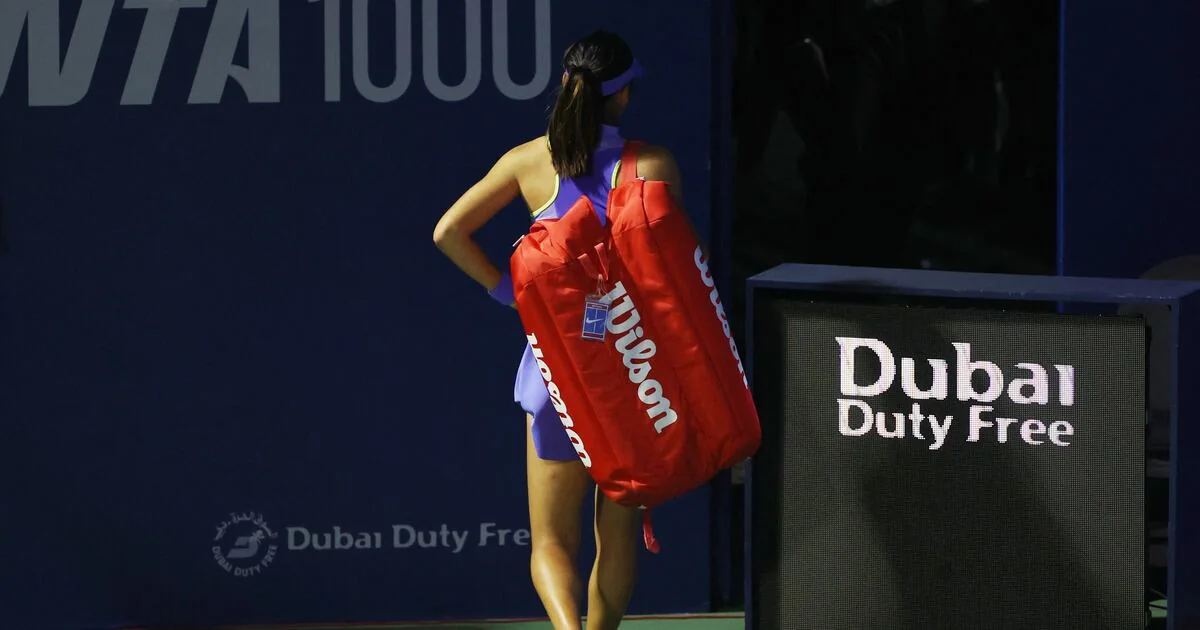
Tournament director Salah Tahlak argued that sanctions should be stronger, including a ranking consequence beyond the system he described. His concern is understandable: organizers make commercial decisions before knowing whether a star will be able or willing to compete. Yet the 2026 rulebook already contains fines, zeros and detailed withdrawal procedures. The policy question is whether additional punishment would improve attendance or merely change how players manage physical risk.
Competing needs of recovery and dependable fields
A player who arrives unready may retire after a few games, depriving the replacement list of a chance and giving fans a shorter contest. A player who withdraws early creates a cleaner sporting solution but a louder marketing disappointment. The rules must encourage honest, prompt decisions without turning medical judgment into a public loyalty test.
Longer WTA 1000 events add another concern. Two-week formats can give days off during one event while occupying more calendar space around travel and the next tournament. Players differ: some need matches to find rhythm, while others need a full training block. The WTA’s own interviews before Grand Slams show there is no universal preparation plan.
The best evaluation therefore tracks outcomes, not just withdrawals. Did fields remain competitive? Were alternates admitted early enough? Did retirements fall? Did players receive real recovery time? A commitment system succeeds when it produces healthy elite competition, not simply when every advertised name appears on an entry list.
Could the WTA commitment system change in 2027?
Yes, but the announced review is not itself a rule change. In February 2026, WTA chair Valerie Camillo said feedback showed that the calendar did not feel sustainable under the physical, professional and personal pressure of elite competition. The tour created a Tour Architecture Council chaired by Jessica Pegula to examine the calendar, player commitments and the wider structure, with initial recommendations intended for consideration as early as 2027.
What the Tour Architecture Council can examine
A meaningful review could look at the number and placement of required events, the length of expanded WTA 1000 tournaments, travel between regions, the notice available to alternates, and how commitment relief works after injury. It could also examine whether a penalty produces the desired behavior. If a zero encourages an exhausted player to start and retire, its formal participation goal may conflict with match quality and health.
Another useful question is predictability. Tournaments need enough certainty to market a field; players need a clear route to rest without guessing how an appeal will be treated. Publishing plain-language examples alongside the legal rulebook would help both fans and stakeholders distinguish a legitimate absence from a strategic scheduling choice.
What fans should verify before drawing conclusions
Until the WTA publishes a new rulebook, the 2026 provisions remain the correct source for 2026 cases. A future calendar announcement may change dates without changing commitments, while a rulebook update can change obligations even if the same events remain on the schedule. Check both.
- For event dates: use the official announcement and the WTA calendar.
- For a future season: separate confirmed information from projections in the 2027 calendar guide.
- For an individual withdrawal: look for the player or tournament statement, then avoid inferring a private appeal outcome.
- For rankings: compare the dated official breakdown before and after the update instead of subtracting an assumed penalty.
The best reform will not be the one that makes every fan happy after a star withdraws. It will be the one that produces more healthy matches, earlier replacement decisions and understandable rules while preserving strong fields across the season.
WTA mandatory tournament FAQ
Does a zero-pointer subtract points from a player?
It records zero and must count in the applicable part of the ranking. The total can fall because a positive result is displaced, but the rule is not a universal negative deduction. The effective loss depends on the result that otherwise would have counted and on other changes in that week’s ranking.
Can an injured player receive a zero?
Yes, depending on the commitment, timing and protection that applies. Long-term injury provisions can remove or reduce certain obligations after their conditions are satisfied. A routine withdrawal for an announced injury does not automatically reveal whether those provisions apply, and an excused withdrawal can still coexist with a required zero.
Is a fine the same as a ranking penalty?
No. A fine is financial; a zero changes the ranking calculation. Withdrawal timing and conduct can create one or both. Reports that say a player “faces penalties” should be checked for which type they actually identify.
Will the rules be different in 2027?
Possibly. The WTA created a council to develop recommendations that could be considered for 2027, but that announcement did not adopt a new commitment table. Use the next official rulebook for the rule and the official calendar for dates.
The durable lesson is to resist a one-line verdict. “Mandatory” describes an obligation; “automatic entry” describes placement in the field; “withdrawal” starts a fact-specific process; and “zero” describes ranking treatment. When fans separate those terms, they can debate the policy itself instead of accusing an individual player on incomplete information.
Rules and public reporting checked September 6, 2026. The WTA can amend its rules, and individual disciplinary or medical records may remain confidential.