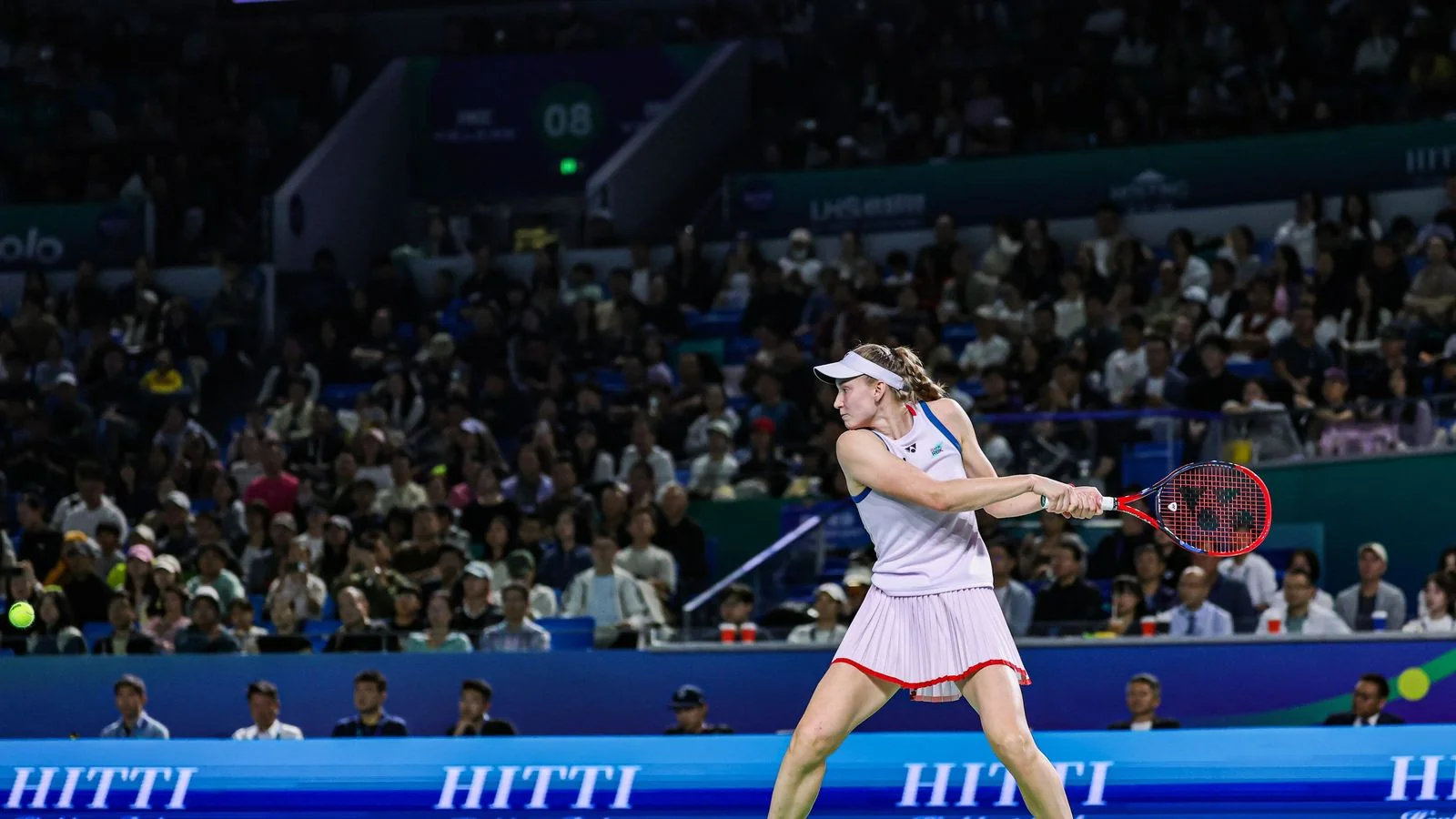
What Rybakina needs to secure the 2026 year-end No. 1
Elena Rybakina can guarantee the 2026 WTA year-end No. 1 ranking with one match victory in Tokyo. If she leaves Tokyo without a win, one victory at the WTA Finals would also secure it. Those are the sufficient conditions announced by the WTA on October 26; she does not need to win either tournament.
This update is dated October 29, 2026, before a decisive Tokyo result has been confirmed here. Rybakina's opening opponent is fellow Kazakh Yulia Putintseva, who advanced past Maria Sakkari. The condition should therefore be read as a live opportunity, with the completed match result determining whether the opportunity has become an achievement. A fixture listing alone does not establish that she has clinched.
The Tokyo route and the WTA Finals fallback
Rybakina is the top seed at the Toray Pan Pacific Open and received a first-round bye. Her first match is consequently in the second round. The bye moves her through the bracket without a contest; the one-win scenario refers to winning an actual match. This distinction matters when headlines use phrases such as “one round away” or when a draw page already places a seeded player in the last sixteen.
The official WTA clinching explanation also leaves her another route at Indian Wells. Even an opening defeat in Japan would not remove her ability to finish the job herself. The year-end event provides a separate opportunity, rather than requiring her to wait for a rival to lose.
There is an important logical difference between saying a result guarantees something and saying it is the only possible way it can happen. A sufficient condition tells supporters what Rybakina can do to eliminate uncertainty. It does not provide every possible combination of losses, withdrawals and other players' results. Treating those two statements as interchangeable creates much of the confusion in late-season ranking discussions.
For the immediate sporting question, keep the task small: follow her first completed Tokyo match. A championship run would bring additional benefits, but the ranking threshold announced this week arrives much earlier in the draw. Our Tokyo tournament guide follows the wider event around that individual opportunity.
Why being world No. 1 does not settle the year-end race
World No. 1 describes the player leading the published rankings at a particular time. Year-end No. 1 describes the leader when the season's ranking contest is settled. A player can reach the summit during the year and later be overtaken. Conversely, the player who eventually finishes first need not have led for the greatest number of weeks.
That makes the word “secure” useful. It means the remaining possibilities cannot dislodge the leader. A healthy advantage is evidence of a strong position; mathematical certainty is a more specific claim. The difference is especially visible near a tournament offering a large points haul to a small field of direct competitors.
Rolling rankings and the season Race measure different periods
The standard singles ranking works over a rolling period, generally 52 weeks, with rules determining which results count. The Race focuses on the current season. Late in October, a rolling total can still contain last season's WTA Finals result, while the current season's Finals has yet to be played. Those are legitimate totals for different purposes.
Consider a hypothetical player carrying points from last November. They belong in the relevant rolling ranking until their scheduled removal, but they do not become points earned this January through October. Adding the old total to every remaining opportunity would give that player credit for a result outside the season being compared.
Likewise, the removal of an old result is not a new on-court defeat. It is the ranking system moving its measuring window. This helps explain why a player can win a tournament without a similarly dramatic increase in the rolling total: an earlier result may be disappearing or being replaced. Our singles rankings provide the current ordering; always identify which table a discussion is using.
Year-end No. 1 and WTA Finals champion are separate honours
The WTA Finals is a tournament with its own trophy. Its eight-player singles field first competes in two groups, with qualifying players advancing to the knockout rounds. The champion must succeed within that event's format. Year-end No. 1 depends on the eligible points accumulated across the season, including relevant Finals results.
A player can therefore finish the year first without winning the final tournament. Another player can lift the Finals trophy while remaining behind in total season points. Neither outcome contradicts the other: one rewards the tournament performance, the other the broader points record. Rybakina's immediate ranking target should not be described as though it automatically awards the Indian Wells title or guarantees a place in its championship match.
How to read the points gap without making a false calculation
The October 26 standings show why two apparently plausible calculations can lead supporters in different directions. In the standard ranking, Rybakina has 9,501 points and Aryna Sabalenka 7,550. In the season Race, the corresponding figures are 8,001 and 6,550. The first gap is 1,951; the second is 1,451. Both subtractions are correct, but they describe different starting positions.
| October 26 snapshot | Rybakina | Sabalenka | Gap |
|---|---|---|---|
| Rolling singles ranking | 9,501 | 7,550 | 1,951 |
| Season Race | 8,001 | 6,550 | 1,451 |
An unbeaten WTA Finals singles champion can collect 1,500 points. Starting from that Race snapshot, 6,550 plus 1,500 equals 8,050, which is 49 above 8,001. This is an illustration of why the season comparison still matters, rather than proof of a complete future scenario. It deliberately holds Rybakina's starting total still and assumes the maximum for Sabalenka.
Using the 1,951 rolling gap against the Finals maximum without accounting for expiring results would make the contest look settled too early. Using a live projection from one player and an unchanged weekly total from another creates a different error. The date, the table and the treatment of results all need to match.
Gross tournament points are not always net ranking gains
A points chart gives the award for reaching a round. It does not always tell you how much a player's counting total rises. If an eligible new result replaces an existing result, the improvement is the difference between the two. In a purely hypothetical example, a 100-point result replacing 40 points improves the total by 60, not 100.
That example is not Rybakina's Tokyo breakdown. It explains why independently reproducing the precise threshold requires her eligible results and the applicable counting rules, rather than a bracket alone. The WTA rankings explanation provides the points framework. For this week's practical condition, the tour's specific one-win announcement is more useful than an improvised calculation that silently assumes every new point is additional.
How Rybakina built a position she can settle herself
Rybakina's 2026 title collection combines the Australian Open and US Open with Stuttgart and Ningbo. The two majors supplied the largest individual title awards available in the regular season, while the other victories demonstrate that her success was not confined to those two fortnights. Stuttgart's clay setting also gives the title list a broader surface context than a run of hard-court trophies alone.
Her official player record also lists runner-up finishes at Indian Wells and Toronto this season. Titles understandably dominate headlines, but deep finishes short of a trophy contribute to a ranking campaign too. The distance between players is built from the eligible results, not a simple count of championships. Two players with the same number of titles can have very different totals because of event level and what happened in their other tournaments.
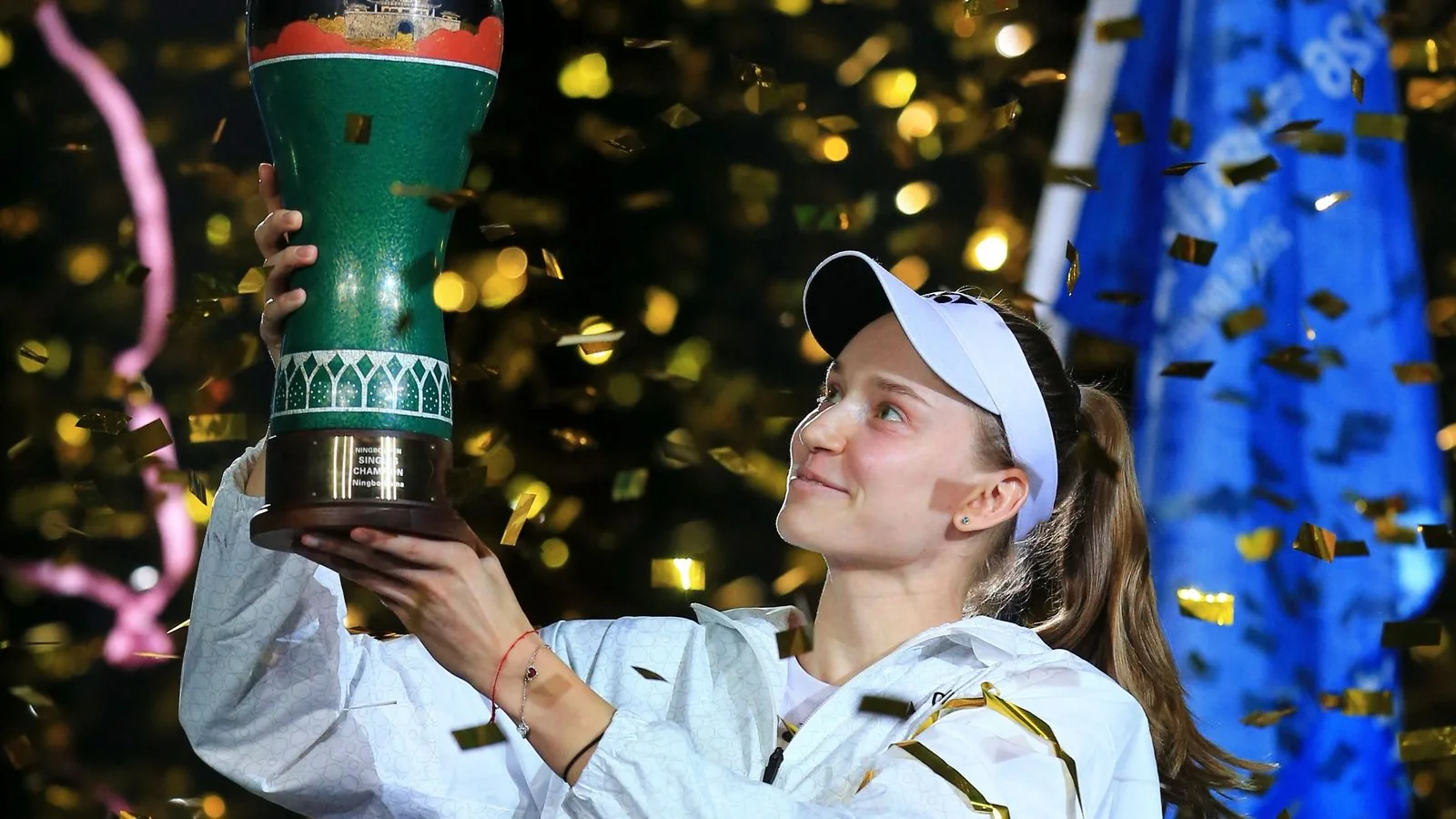
Ningbo offered a timely demonstration of match readiness. On October 25 she beat Leylah Fernandez 6-2, 6-2 in 76 minutes, holding serve throughout the final. That score supports a narrow conclusion: she controlled that particular final convincingly. It does not establish that every physical concern had disappeared or that her next opponent would present the same patterns.
The title was her first successful singles title defence. Repeating a win is a distinct challenge because the previous performance sets expectations without giving any advantage once the new matches begin. The significance here is sporting continuity: she returned to a place where she had already succeeded and completed another winning week, rather than merely relying on the reputation of the earlier result.
She first became world No. 1 on September 14, according to the WTA's historical records. Reaching that position and then producing another title gives her late-season opportunity its narrative force. The season has moved from pursuit of the top ranking to the task of protecting a lead until no remaining result can overturn it.
Still, the ranking calculation and the assessment of form should remain separate. A strong final can make supporters more confident about Tokyo, but it cannot substitute for a completed result there. Likewise, the one-win threshold describes her points advantage; it is not a prediction that Putintseva will be an easy opponent or that the match will follow the Ningbo scoreline.
What a loss, withdrawal or rival's win would mean
A Tokyo defeat would mean that Rybakina had not used the earliest announced opportunity. It would not, by itself, mean Sabalenka had won the year-end race. The remaining schedule and the totals still matter. Supporters should be especially cautious about reacting to a single result as though it automatically transfers an entire season's honour to the next player.
The same care applies to a withdrawal. Leaving an event changes the opportunities still available; it does not erase previously earned results merely because a player stops competing. Normal expiry and counting rules continue to operate. Whether a player is medically able to enter a later event is a separate question from whether her existing points will be enough.
Nor should the ranking incentive be treated as a medical recommendation. A player can have a strong reason to seek one more victory while still needing to make an individual decision with her team about fitness. The points scenario cannot establish the condition of a foot, the risk of a match or the correct recovery plan. This article makes no prediction about those decisions.
A missed chance is different from losing control of the race
At the Finals, the initial round-robin stage also changes how a loss is understood. An opening defeat does not automatically eliminate a player in the way it would in an ordinary knockout draw. Subject to remaining in competition, another group match can provide a later opportunity. Winning one match and qualifying for the semifinals are nevertheless different targets.
For Sabalenka, the maximum available points represent a ceiling, not a forecast. Treating an unbeaten title as already earned compresses several difficult matches into a number. A scenario calculation deliberately examines what could happen at that ceiling; a match preview should instead assess the actual opponents and circumstances. Mixing those exercises can make a conditional calculation sound like a prediction.
Fans following both players can keep two separate questions in view: has Rybakina achieved a result that makes her unreachable, and what results are still possible for everyone else? Once the first answer is yes, subsequent matches remain meaningful for the Finals title, other ranking positions and the players' seasons. The ranking milestone settles one contest while the tennis continues.
Following the decisive result and the official confirmation
The next useful update is a final match status, followed by the WTA's recognition of the ranking milestone. A projected live ranking can indicate where the points are heading, but a screen showing a player ahead during a match does not make the result final. The distinction matters most when a headline can change from “can clinch” to “has clinched” within an afternoon.
Use today's WTA matches to locate the contest and the tournament's current order of play for scheduling. Tennis times move when earlier matches run long, and a stated start time may be approximate or marked “not before.” Tokyo's local time should also be kept separate from the time displayed by a viewer's device. None of those scheduling changes alter the one-win condition itself.
Once the match has ended, read the completed result rather than an older draw preview. A preview may still say Rybakina will face Sakkari or Putintseva because it was written before their match. That wording was appropriate at publication but no longer identifies an unresolved opponent once the earlier contest is complete. Dates explain the difference; they do not necessarily indicate that one of the reports was originally wrong.
The same principle applies to the points table above. It is an October 26 comparison used to explain this week's race, not a promise that those numbers will remain the latest totals. The permanent value of the comparison is learning to distinguish rolling points, season points and potential additions. The current figures belong on the updated rankings table.
If the milestone remains open after Tokyo, the next setting is the WTA Finals at Indian Wells, scheduled for November 8–15. The qualified-player guide covers the field, while the WTA calendar places the event in the remaining season. A confirmed ranking announcement can arrive before the final tournament ends; the trophy matches will still decide their own champion.
For now, Rybakina's advantage gives her an unusually clear target. One completed victory at either of the announced opportunities removes dependence on other players' best possible outcomes. Until that result is established, the accurate description is that she is on the brink of securing her first year-end No. 1 finish.